Skip to Content Facebook Feature Image

New energy meets over 97 pct of China's incremental power demand in 2025

China

China

China

New energy meets over 97 pct of China's incremental power demand in 2025

2026-02-03 17:27 Last Updated At:02-04 14:37

New energy generation accounted for 97.1 percent of China's newly added electricity consumption in 2025, underscoring its dominant role in meeting power demand, according to data released by the China Electricity Council (CEC) on Monday.

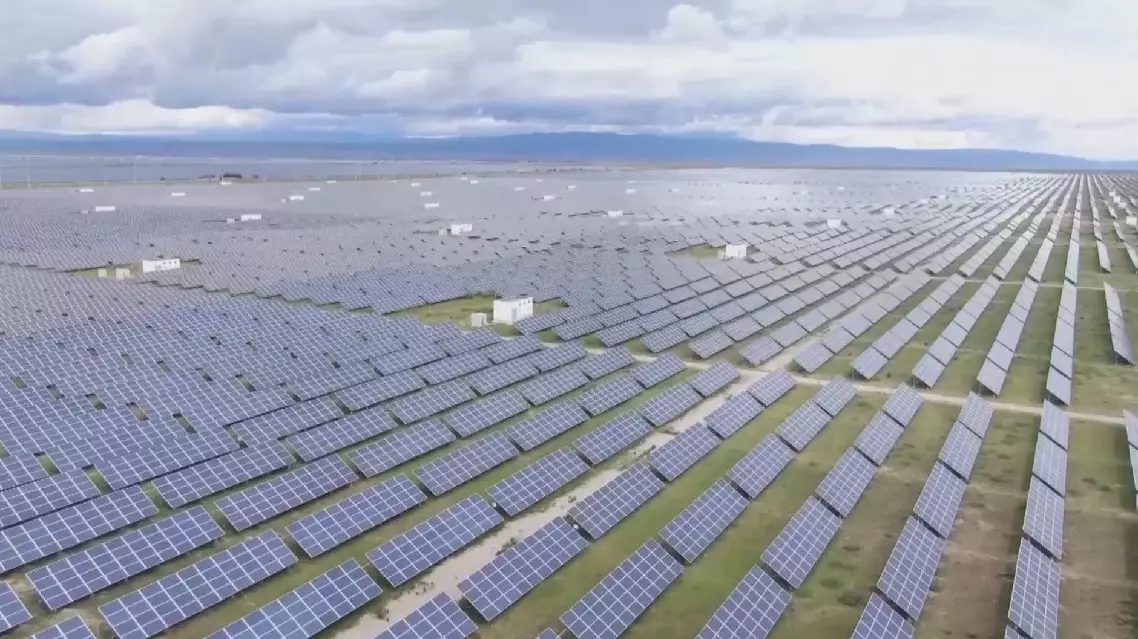
According to CEC, China added 550 million kilowatts of power generation capacity nationwide in 2025, of which wind and solar power contributed a combined 440 million kilowatts, accounting for 80.2 percent of the total newly installed capacity. Wind, solar and biomass power together generated 97.1 percent of the country's incremental electricity supply, making new energy the main driver of power consumption growth.

Investment in power grid construction continued to expand. In 2025, total investment in grid projects reached 639.5 billion yuan (about 92.06 billion U.S. dollars), up 5.1 percent year on year. Driven by the development of large-scale wind and solar power bases, investment in ultra-high-voltage (UHV) direct current transmission projects rose sharply, with direct current project investment up 25.7 percent year on year, while investment in alternating current projects increased by 4.7 percent year on year.

Meanwhile, cross-regional and cross-provincial electricity transmission recorded steady growth. In 2025, cross-regional power transmission reached 998.4 billion kilowatt-hours, up 7.9 percent year on year, while cross-provincial transmission exceeded 2.12 trillion kilowatt-hours, an increase of 6.3 percent.

Looking ahead, CEC forecast that China's installed solar power capacity will surpass coal-fired power capacity for the first time in 2026. By the end of 2026, the combined installed capacity of wind and solar power is expected to account for about half of the country’s total power generation capacity.
New energy meets over 97 pct of China's incremental power demand in 2025

New energy meets over 97 pct of China's incremental power demand in 2025

Global food commodity prices climbed for a second consecutive month in March, driven mainly by higher energy costs linked to escalating conflict in the Middle East, the Food and Agriculture Organization of the United Nations (FAO) said in report released on Friday.

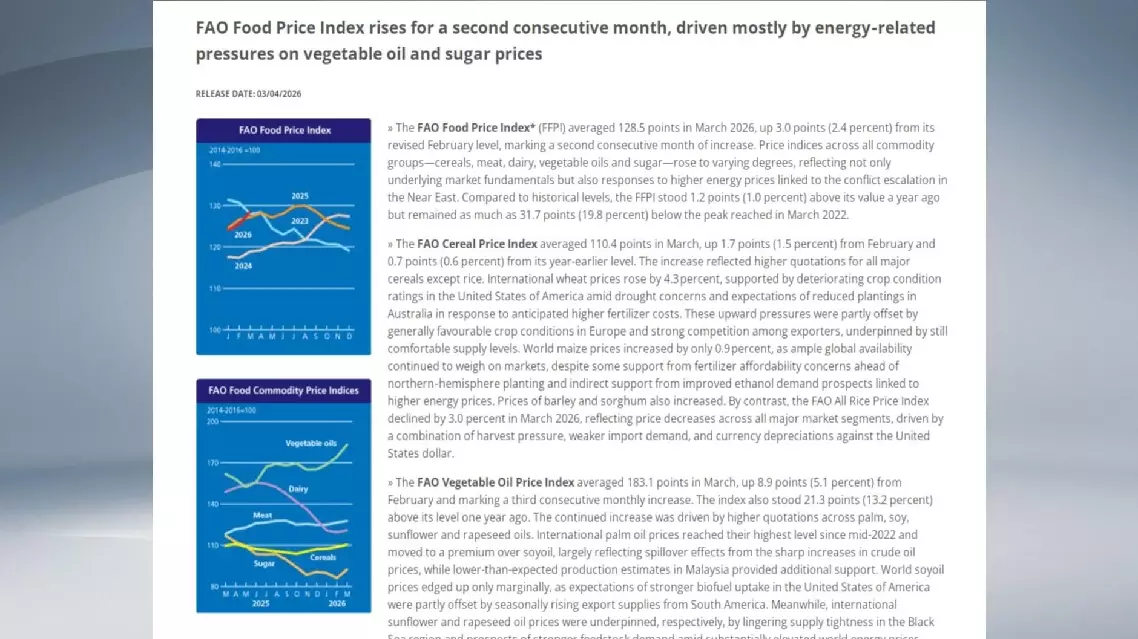
The FAO Food Price Index, which tracks monthly changes in the international prices of a basket of globally traded food commodities, averaged 128.5 points in March, up 2.4 percent from February and 1.0 percent above its level a year ago.

According to the report, the FAO Vegetable Oil Index and Sugar Price Index showed the largest increases, up 5.1 percent and 7.2 percent, respectively.

The FAO Cereal Price Index increased by 1.5 percent from the previous month, driven primarily by higher world wheat prices, which rose 4.3 percent.

The FAO Meat Price Index rose by 1.0 percent from the previous month, and the FAO All-Rice Price Index declined by 3.0 percent in March, according to the report.

FAO stated that rising energy and fertilizer prices have been driving up agricultural input costs.

If the conflict stretches beyond 40 days, farmers will have to choose to farm the same with fewer inputs, plant less, or switch to less intensive fertilizer crops, according to FAO Chief Economist Maximo Torero.

These choices will hit future yields and shape food supply and commodity prices for the rest of this year and beyond, Torero said.

Global food prices rise for 2nd consecutive month in March amid Middle East conflict: FAO

Global food prices rise for 2nd consecutive month in March amid Middle East conflict: FAO

Recommended Articles