Skip to Content Facebook Feature Image

Iran and US agree to hold nuclear talks Friday in Oman as Trump delivers blunt warning to Khamenei

News

Iran and US agree to hold nuclear talks Friday in Oman as Trump delivers blunt warning to Khamenei
News

News

Iran and US agree to hold nuclear talks Friday in Oman as Trump delivers blunt warning to Khamenei

2026-02-05 09:20 Last Updated At:09:30

DUBAI, United Arab Emirates (AP) — Nuclear talks between Iran and the United States will take place Friday in Oman, the Iranian foreign minister said, as tensions between the countries remain high following Tehran's bloody crackdown on nationwide protests last month.

The announcement Wednesday by Iranian Foreign Minister Abbas Araghchi came after hours of indications that the anticipated talks were faltering over changes in the format and content of the talks. U.S. President Donald Trump, meanwhile, sent a blunt warning to Iran’s Supreme Leader Ayatollah Ali Khamenei ahead of the talks.

“I would say he should be very worried,” Trump said of Khamenei in an interview with NBC News.

Turkey had been working behind the scenes to host talks in Istanbul with regional countries taking part and discussions focused on issues like Iran's ballistic missile program and other concerns.

Early Wednesday, a regional official said Iran was seeking a “different” type of meeting focused exclusively on the issue of Iran’s nuclear program, with participation limited to Iran and the United States. The official spoke on condition of anonymity because they were not authorized to brief the media.

A similar series of talks had been hosted last year by Oman, a sultanate on the eastern edge of the Arabian Peninsula that long as served as an interlocutor between Iran and the West. Those talks ultimately broke down in June as Israel launched what became a 12-day war on Iran that included the U.S. bombing Iranian nuclear sites.

A White House official, who spoke on condition of anonymity as they were not authorized to discuss the talks publicly, confirmed the talks would happen in Oman. The official said several Arab and Muslim leaders urged the Trump administration on Wednesday not to walk away from talks even as Iranian officials pressed to narrow their scope.

The official added that the White House remains “very skeptical” that the talks will be successful but has agreed to go along with the change in plans out of respect for allies in the region.

Alan Eyre, a former U.S. diplomat once involved in past nuclear negotiations with Tehran, similarly offered a skeptical opinion of talks succeeding.

“Opting for indirect talks is the diplomatic equivalent of a surgeon taking a hit of ether and then putting on gloves before a difficult surgery,” Eyre wrote on X.

Tensions between the countries spiked after Trump suggested the U.S. might use force against Iran in response to the bloody crackdown on nationwide protests last month that killed thousands of people or if Iran conducted mass executions of detained demonstrators. The U.S.-based Human Rights Activists News Agency reported Wednesday that over 50,000 people also had been arrested over the protests.

Trump also has been pushing Tehran for a deal to constrain its nuclear program.

Iran’s reformist President Masoud Pezeshkian on Tuesday said he had instructed the foreign minister to “pursue fair and equitable negotiations” with the U.S., in the first clear sign from Tehran it wants to try to negotiate. That signaled the move is supported by Supreme Leader Ayatollah Ali Khamenei, who has the final say on all matters of state and previously dismissed any negotiations.

U.S. Secretary of State Marco Rubio said the U.S. hoped to discuss a number of concerns beyond the nuclear issue, including discussions on Iran’s ballistic missiles, support for proxy networks across the region and the “treatment of their own people.”

“The leadership of Iran at the clerical level does not reflect the people of Iran. I know of no other country where there’s a bigger difference between the people who lead the country and the people who live there,” he told reporters.

Vice President JD Vance told “The Megyn Kelly Show” that diplomatic talks with Iran are challenging because Khamenei oversees Tehran’s political system and declines to speak directly with Trump, unlike the leaders of China, North Korea or Russia.

Vance said Trump’s bottom line is that Iran cannot be allowed to develop a nuclear weapon, asserting that other states in the region would quickly do the same.

Iran long has insisted its nuclear program is peaceful. However, Iranian officials in recent years have increasingly threatened to pursue the bomb and had been enriching uranium up to 60% purity, a short, technical step away from weapons-grade levels of 90%.

Vance said he believed Trump would work to “accomplish what he can through non-military means. And if he feels like the military is the only option, then he’s ultimately going to choose that option.”

On Tuesday, a U.S. Navy fighter jet shot down an Iranian drone that approached an American aircraft carrier. Iranian fast boats from its paramilitary Revolutionary Guard also tried to stop a U.S.-flagged ship in the Strait of Hormuz, the narrow mouth of the Persian Gulf, the Navy said.

Iran did not formally acknowledge either incident, which strained but apparently did not derail hopes for talks with the U.S.

On Wednesday, Iranian military chiefs visited a missile base in an attempt to highlight its military readiness after the 12-day war devastated Iran’s air defenses. The base holds the Khorramshahr missile, which has a range of more than 2,000 kilometers (1,250 miles) and was launched toward Israel during the war last year.

Also Wednesday, Turkish President Recep Tayyip Erdogan reiterated Turkey’s opposition to foreign intervention in neighboring Iran, calling for the resolution of issues through dialogue.

Turkey has been urgently working for the past week to bring the U.S. and Iran to the negotiating table, and was previously expected to host the talks.

“We believe that external interventions involving our neighbor Iran would pose significant risks for the entire region,” Erdogan said during a visit to Cairo. “Resolving issues with Iran, including the nuclear file, through diplomatic means is the most appropriate approach.”

Associated Press writers Suzan Fraser in Ankara, Turkey, Melanie Lidman in Jerusalem, Farnoush Amiri in New York, and Aamer Madhani and Moriah Balingit in Washington contributed to this report.
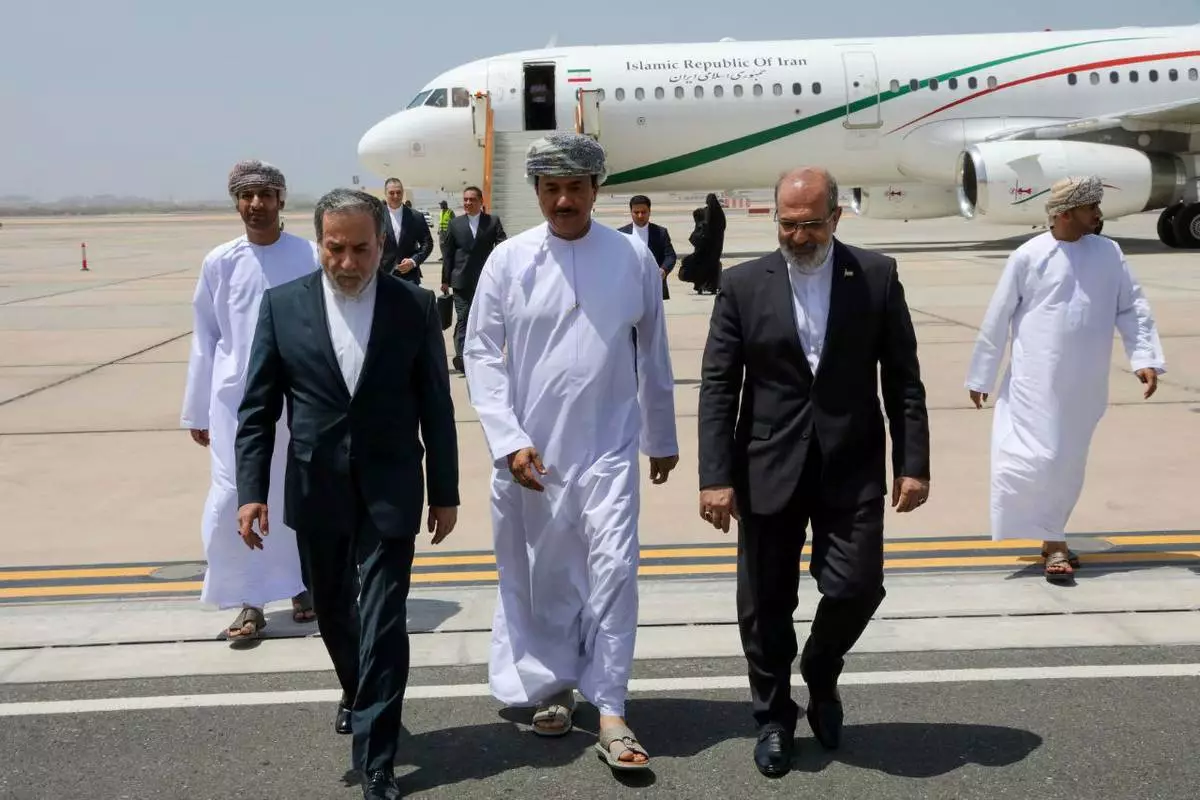
FILE - In this photo released by the Iranian Foreign Ministry, Iranian Foreign Minister Abbas Araghchi, left, is welcomed by an unidentified Omani official, center, upon his arrival at Muscat, Oman, for negotiations with U.S. Mideast envoy Steve Witkoff, as Iranian Ambassador to Oman Mousa Farhang walks at right, May 11, 2025. (Iranian Foreign Ministry via AP, File)
FILE - In this photo released by the Iranian Foreign Ministry, Iranian Foreign Minister Abbas Araghchi, left, is welcomed by an unidentified Omani official, center, upon his arrival at Muscat, Oman, for negotiations with U.S. Mideast envoy Steve Witkoff, as Iranian Ambassador to Oman Mousa Farhang walks at right, May 11, 2025. (Iranian Foreign Ministry via AP, File)

NASHVILLE, Tenn. (AP) — A new Tennessee law has eased up on two longstanding financial hurdles for people with felony sentences who want their voting rights back, including a unique requirement among states that they must have fully paid their child support costs.

The Republican-supermajority Legislature approved the Democratic-sponsored change, which now lets people prove they have complied for the last year with child support orders, such as payment plans. The legislation also unties the payment of all court costs from voting rights restoration.

Advocates for years have sought various changes to Tennessee’s voting rights restoration system at the statehouse and in court. They say loosening these two rules marks the biggest rollback of restrictions to voting rights restoration in decades.

“This is huge and this is history,” said Keeda Haynes, senior attorney for the advocacy group Free Hearts led by formerly incarcerated women like her.

Most Republicans voted for it and Democrats supported it unanimously. The law took effect immediately upon Republican Gov. Bill Lee's signature last week.

“I think people are at a point where they want to just remove the barriers out of the way and allow people to be fully functional members of society,” said Democratic House Minority Leader Karen Camper, a bill sponsor.

In 2023, the state decided gun rights were required to restore the right to vote, and shelved a paperwork process that didn't require going to court. Election officials said a court ruling made the changes necessary, though voting rights advocates said officials misinterpreted the order.

Last year, lawmakers untangled voting and gun rights. But voting rights advocates opposed some of the bill's other provisions, such as keeping the process in the courts, where costs can rack up if someone isn't ruled indigent.

Easing up on the financial requirements uncommonly split legislative Republicans. For instance, Senate Speaker Randy McNally voted against it, while House Speaker Cameron Sexton supported it, noting that people aren't getting forgiveness on making their payments.

“They need to continue paying that, and as long as they do, then there’s a possibility (to restore their voting rights)," Sexton said. "I really think that’s harder for people to argue against than maybe what something else was.”

Republican Rep. Johnny Garrett, who voted no, said in committee his vote would hinge on whether “there still can be an (child support) arrearage owed beyond that 12 months.”

For some, backed-up child support payments could reach hundreds or thousands of dollars, and court costs could be hundreds or thousands more, said Gicola Lane, Campaign Legal Center's Restore Your Vote community partnership senior manager.

Advocates credited their narrowed focus, omitting goals such as automatic restoration of rights, no longer tying restitution payments to voting rights, or offering a path for certain people to restore their right who are permanently disenfranchised, including those convicted of voter fraud or most murder charges.

The bill passed the Senate last year and the House this year.

Lawmakers gave the child support requirement final passage in 2006 within an overhaul bill that also created a voting rights restoration process outside of court. Critics said the child support rule penalized impoverished parents.

Democrats were then narrowly hanging onto legislative leadership in both chambers. Republicans held a slim Senate majority but GOP defectors voted for a Democratic speaker.

Last year marked the dismissal of a five-year-old federal lawsuit over Tennessee’s voting-rights restoration system. Free Hearts and the Campaign Legal Center represented plaintiffs in the long-delayed case, which saw some election policy changes along the way.

Roughly 184,000 people have completed supervision for felonies and their offenses don't preclude them from restoring their voting rights, according to a plaintiffs expert’s 2023 estimate in the lawsuit. About one in 10 were estimated to have outstanding child support payments, and more than six in 10 owed court courts, restitution or both, the expert said.

Both Republican and Democratic-led states have eased the voting rights restoration process in recent years. Some states have added complexities.

In Florida, after voters approved a constitutional amendment in 2018 restoring the right to vote for people with felony convictions, the Republican-controlled Legislature watered that down by requiring payment of fines, fees and court costs.

Voting rights are automatically restored upon release in nearly half of states. In 15 others, it occurs after parole, probation or a similar period and sometimes requires paying outstanding court costs, according to the National Conference of State Legislatures. In Maine and Vermont, people with felonies keep their voting rights in prison, the NCSL says.

Ten other states including Tennessee require additional government action. Virginia ’s governor must intervene to restore voting rights of people convicted of felonies. In some states, including Tennessee, certain conviction types render someone ineligible.

However, Virginia lawmakers this year have passed a proposed state constitutional amendment to ask voters whether they want automatic voting rights restoration after someone is released from prison. Kentucky lawmakers have proposed a similar change for voters' consideration that would automatically restore voting rights after certain completed sentences, including probation.

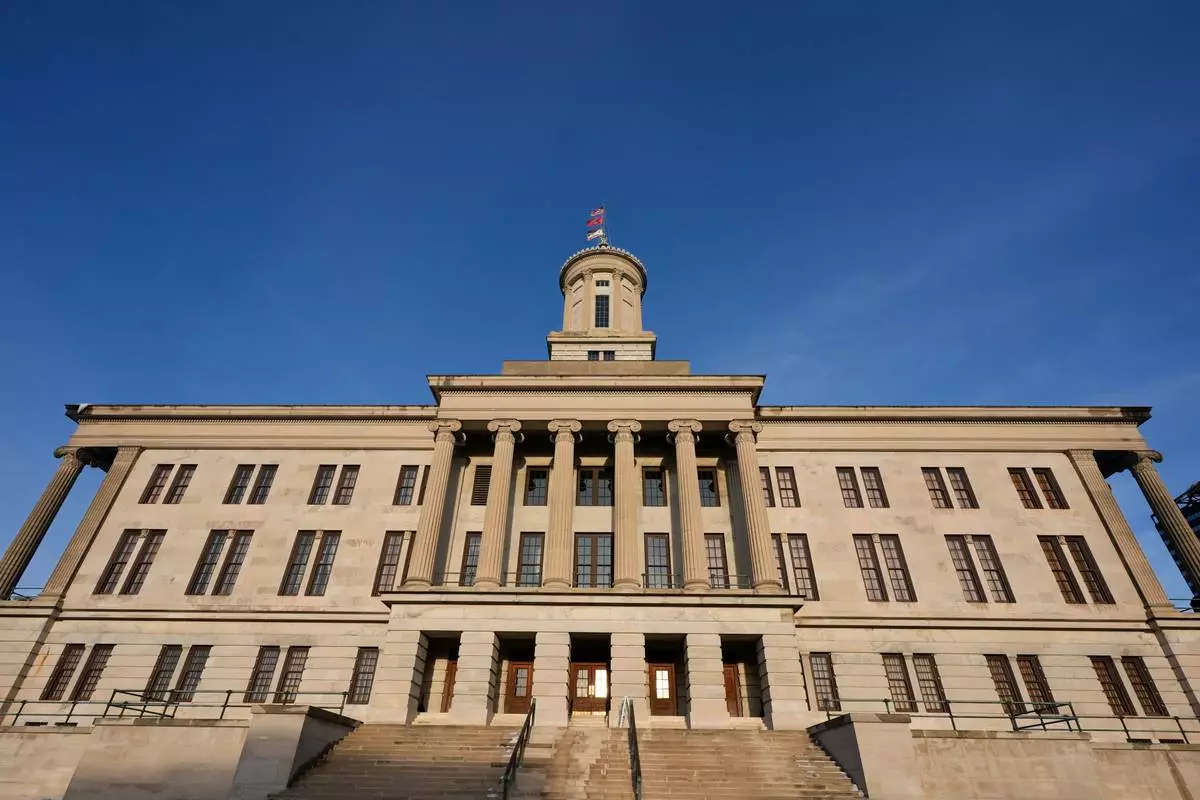
FILE - The Tennessee Capitol is seen, Jan. 22, 2024, in Nashville, Tenn. (AP Photo/George Walker IV, File)

FILE - The Tennessee Capitol is seen, Jan. 22, 2024, in Nashville, Tenn. (AP Photo/George Walker IV, File)

Recommended Articles