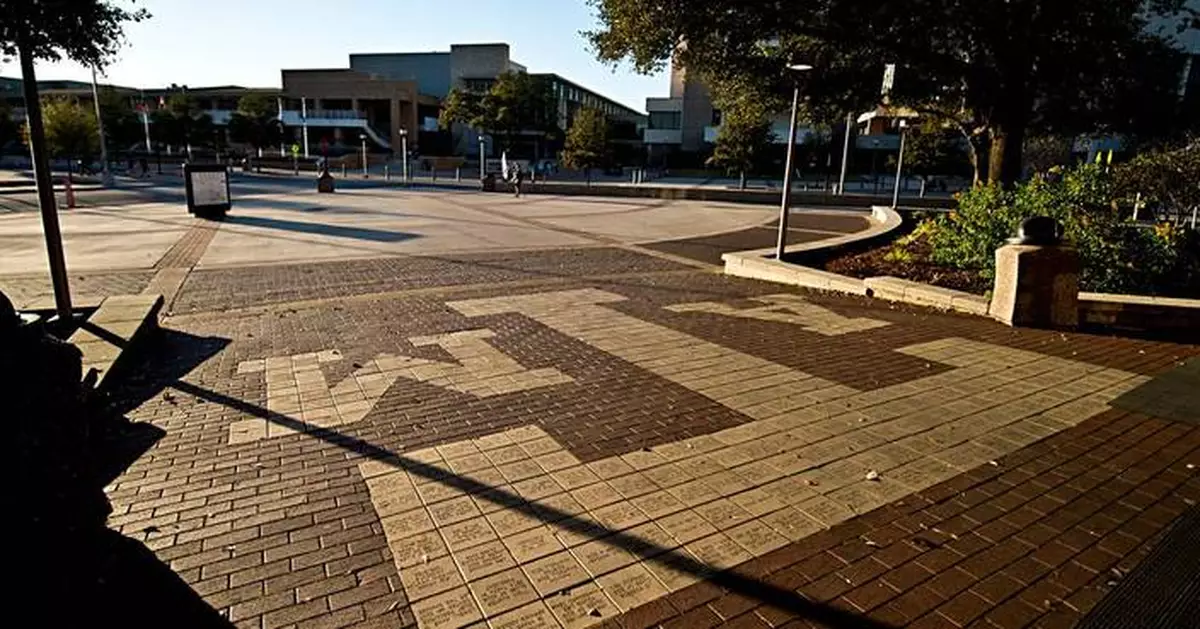
HOUSTON (AP) — A Texas A&M University professor who was fired last year after a controversy over a classroom video that showed a student objecting to a children’s literature lesson about gender identity sued the school on Wednesday, alleging the university violated her rights by bowing to political pressure calling for her ouster.
Melissa McCoul was a senior lecturer in the English department with over a decade of teaching experience. Republican lawmakers, including Gov. Greg Abbott, had called for her termination after seeing the video, which showed a student questioning whether the class discussion last July was legal under President Donald Trump’s executive order on gender.
The video roiled the campus and led to sharp criticism of university president Mark Welsh, who later resigned, but didn’t offer a reason and never mentioned the video in his resignation announcement.
The university upheld McCoul's firing even after two separate, independent university groups determined Texas A&M violated her right to due process and did not have cause to terminate her employment.
“Today I did something that would have been inconceivable a year ago – I’ve sued Texas A&M to hold it accountable for violations of my Constitutional rights to free speech and due process of law. There’s no satisfaction in doing this, only sadness,” McCoul said in a statement. The lawsuit was filed in federal court in Houston.
Chris Bryan, the vice chancellor for marketing and communications for the Texas A&M University System, said Wednesday that school officials are aware of the lawsuit but have not reviewed it.
“As this is pending litigation, we will not comment further, but we intend to vigorously defend against the claims,” Bryan said in a statement.
Named in the lawsuit as defendants were Welsh, Interim President Tommy Williams, Texas A&M University System Chancellor Glenn Hegar and the Texas A&M System’s Board of Regents.
After McCoul’s firing, Hegar ordered an audit of courses at all 12 schools in the system.
McCoul’s lawsuit comes less than a week after Texas A&M University announced it is ending its women’s and gender studies program, changing the syllabuses of hundreds of courses and canceling six classes as part of a new policy that limits how professors can discuss some race and gender topics.
Other university systems in Texas have also placed restrictions on classroom instruction or have begun internal reviews of course offerings following a new state law.
In her lawsuit, McCoul pushed back on claims by Texas A&M officials that she failed to follow instructions to change her course content to align with the course catalog description. McCoul said her course content was "100 percent aligned with the catalog description, course description.”
“The explanations offered for Dr. McCoul’s termination are inconsistent and nonsensical because they are untrue. Dr. McCoul was terminated because of the so-called ‘liberal,’ ‘woke’ themes she explored in her courses,” according to the lawsuit.
McCoul described teaching at Texas A&M as her “dream job.” She had been at the university since 2017. In her lawsuit, she is seeking reinstatement and monetary damages.
“Despite how I was treated, I still love the institution, my former colleagues, and the students of A&M. I hope that this lawsuit will cause the University to think twice about treating others similarly,” McCoul said.
__
Follow Juan A. Lozano: https://x.com/juanlozano70
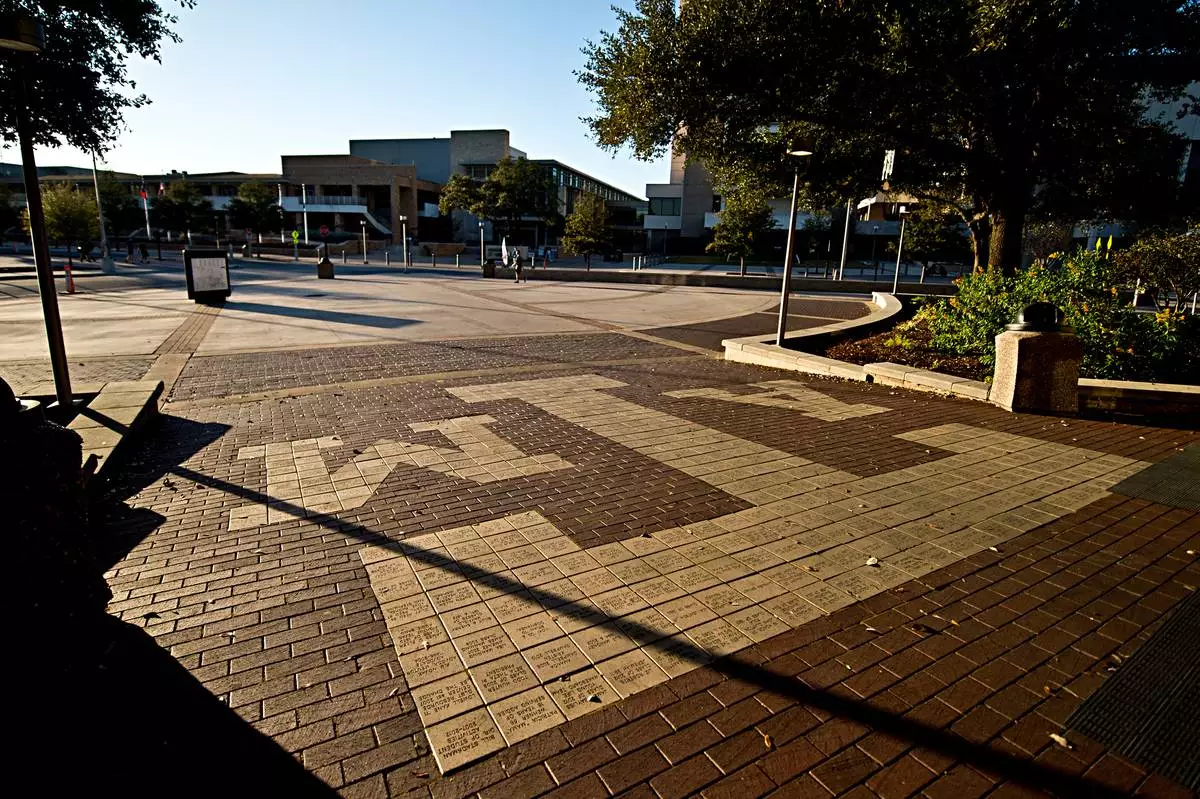
FILE - The sun sets over Texas A&M Campus, just outside Rudder Tower, Feb 12, 2016, in College Station, Texas. (Timothy Hurst/College Station Eagle via AP, File)
ATLANTA (AP) — The Georgia General Assembly ended its annual session early Friday without a plan for new equipment to overhaul the state's voting system by a July deadline, plunging into doubt the future of elections in the political battleground.
The lawmakers' failure to offer a solution after months of debate raises uncertainty about how Georgians will vote in November and leaves confusion that could end in the courts or a special legislative session.
“They’ve abdicated their responsibility,” Democratic state Rep. Saira Draper said of inaction by Republicans who control the legislature.
Currently, voters make their choices on Dominion Voting machines, which then print ballots with a QR code that scanners read to tally votes. Those machines have been repeatedly targeted by President Donald Trump following his 2020 election loss, and Trump’s Georgia supporters responded by enacting a law in 2024 that bans using barcodes to count votes.
But state law still requires counties to use the machines. No money has been allocated to reprogram them, and lawmakers failed to agree on a replacement.
“We’ll have an unresolvable statutory conflict come July 1,” said House Governmental Affairs Committee Chairman Victor Anderson, a Cornelia Republican who backed a proposal to keep using the machines in 2026 that Senate Republicans declined to consider.
Republican House Speaker Jon Burns said he would meet with Gov. Brian Kemp and “take his temperature” on the possibility of a special session.
Kemp spokesperson Carter Chapman said he Republican governor will examine the situation.
“We’ll analyze all bills, as well as the consequence of those that did not pass,” Chapman said Friday.
House Republicans and Democrats backed Anderson's plan, which would have required that Georgia choose a voting process that didn't use QR codes by 2028. Election officials preferred that solution.
“The Senate has shown that they’re not responsible actors,” Draper said. She added that Lt. Gov. Burt Jones, a Trump-endorsed Republican running for governor, seemed more interested in keeping Trump's backing than “doing right by Georgia voters.”
A spokesperson for Jones didn't immediately respond to a request for comment early Friday.
Joseph Kirk, Bartow County election supervisor and president of the Georgia Association of Voter Registration and Election Officials, said he’ll look to the secretary of state for guidance and assumes a judge will rule to instruct election officials how to proceed.
“This is uncharted territory,” he said.
Robert Sinners, a spokesperson for Republican Secretary of State Brad Raffensperger, who is also running for governor, said officials are “ready to follow the law and follow the Constitution.”
Burns told reporters that his chamber was seeking to minimize changes this year.
“You can’t change horses in the middle of the stream,” Burns said.
Anderson said without action, the state could be required to use hand-marked and hand-counted paper ballots in November.
Election officials say switching to a new system within just a few months, as advocated by some Republicans, would be nearly impossible.
“They made no way for this to happen except putting a deadline on it," Cherokee County elections director Anne Dover said of the switch away from barcodes. Dover said one problem under some plans is that a very large number of ballots would have to be printed.
Lawmakers seemed more concerned about scoring political points than making practical plans, Paulding County Election Supervisor Deidre Holden said.
“If anyone is resilient and can get the job done, it’s all of us election officials, but the legislators need to work with us, and they need to understand what we do before they go making laws that are basically unachievable for us,” Holden said.
Supporters of hand-marked paper ballots say voters are more likely to trust in an accurate count if they can see what gets read by the scanner.
Right-wing election activists lobbied lawmakers for an immediate switch to hand-marked paper ballots, but the House turned away from a Senate proposal to do so.
Anderson said he wasn’t sure if a special session could escape those political crosswinds, but said Georgia lawmakers must fix the problem.
“This is a legislative problem,” Anderson said. “It’s a legislative solution that has to happen.”
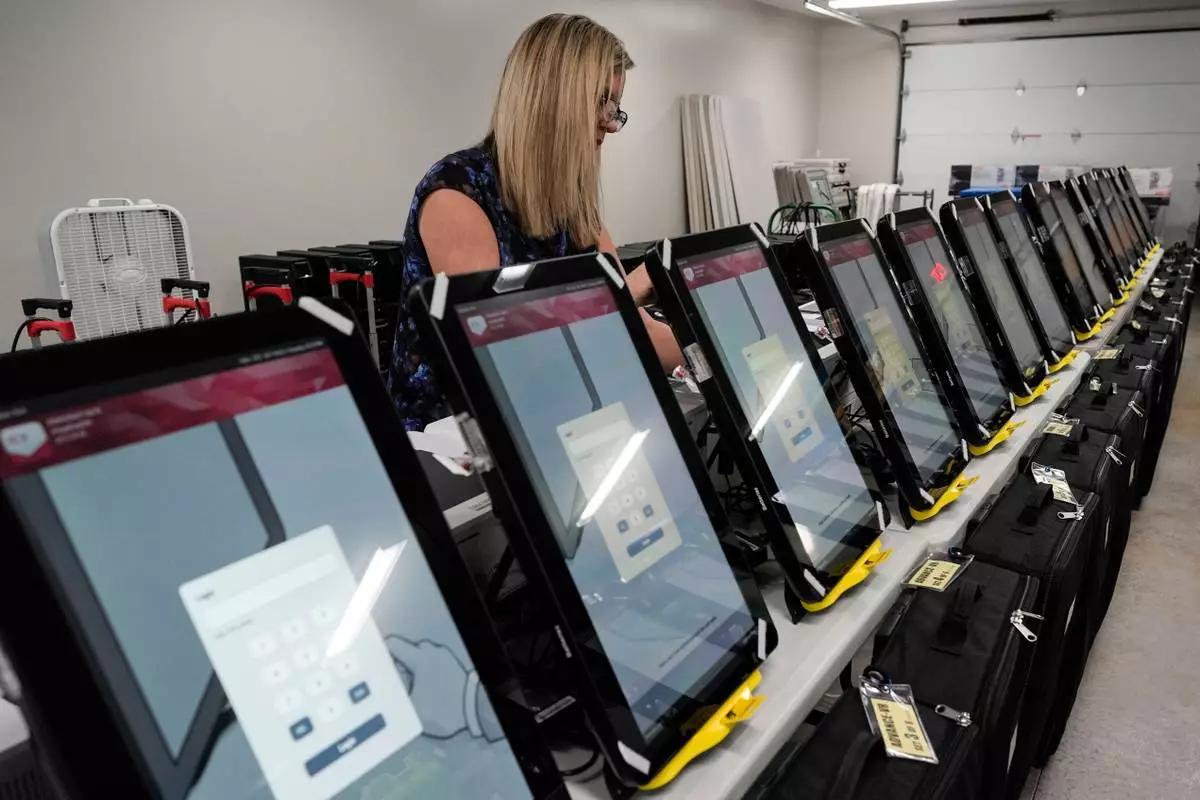
FILE - Voting machines are seen at the Bartow County Election office, Jan. 25, 2024, in Cartersville, Ga. (AP Photo/Mike Stewart, File)