LIVIGNO, Italy (AP) — Ask freestyle skier Colby Stevenson if he likes big air, the most high-flying event in a sport full of them, and his answer is short and to the point.
“No,' he said. ”I have no real use for it."
Click to Gallery
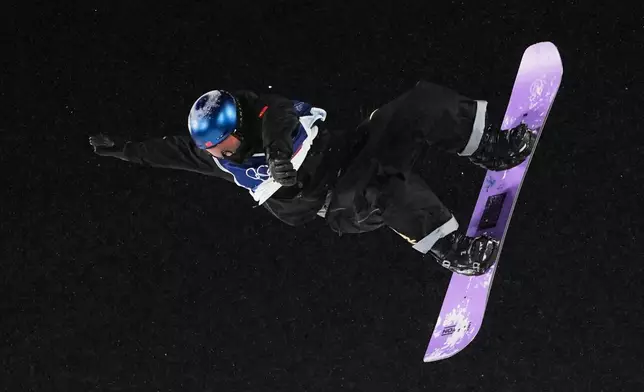
China's Su Yiming practices during a snowboard big air training session at the 2026 Winter Olympics, in Livigno, Italy, Wednesday, Feb. 4, 2026. (AP Photo/Lindsey Wasson)

China's Yang Wenlong practices during a snowboard big air training session at the 2026 Winter Olympics, in Livigno, Italy, Wednesday, Feb. 4, 2026. (AP Photo/Lindsey Wasson)
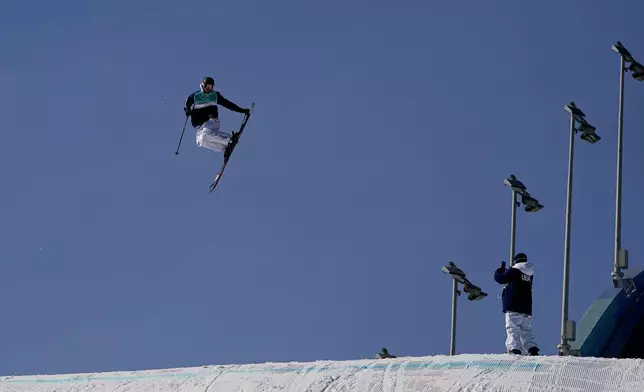
FILE - United States' Colby Stevenson trains for the men's freestyle skiing big air competition at the 2022 Winter Olympics, Sunday, Feb. 6, 2022, in Beijing. (AP Photo/Jae C. Hong, File)
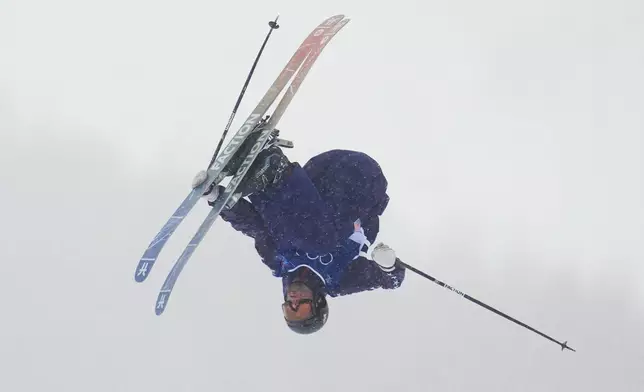
United States' Alex Hall practices during a slopestyle training session at the 2026 Winter Olympics, in Livigno, Italy, Wednesday, Feb. 4, 2026. (AP Photo/Abbie Parr)
Which makes him pretty much like a lot of his action-sports brethren — all of them adrenaline junkies — who will grace the 50-meter-high hill (165 feet) built on a scaffolding at the Winter Olympics in Livigno over the next two weeks.
The one key exception: Stevenson is the defending Olympic champion.
“I felt like I was going to war that morning,” Stevenson said of what goes down as the crowning athletic achievement of his career. “I was trying a trick I had never done and I was just like, ’I’m either going to land this, or go away in an ambulance.'”
The Olympics added this event to the snowboard program in 2018, then the freestyle skiing schedule four years after that. The thought was that asking a few hundred athletes to hurl themselves up to 20 meters (65 feet) in the air, then try to land after completing somewhere between three and six spins and flips, would make for great viewing in person and on TV. Which it does.
It's also dangerous, and the stakes were brought into stark focus during training Wednesday night when one of Canada's greatest snowboarders, Mark McMorris, had to be carried off the mountain on a stretcher after a nasty fall. Canadian officials said McMorris wasn't badly injured, though he pulled out of Thursday night's qualifying round with hopes of getting ready for slopestyle on Feb. 16.
McMorris' three Olympic bronze medals all came in slopestyle — which is big air's more stylistic and arguably less-dangerous cousin.
Last month in an interview with The Associated Press, McMorris was asked what the point of big air really was: “It’s an event that, you see it, and you just go ’Wow!'” he said.
Because the number of athletes at the snowpark was getting out of hand, organizers decided they would place anyone who qualified for slopestyle — which incorporates big jumps into a longer, more technical contest — into the big air event as well. The AP's informal survey of about a dozen riders in the leadup to the Games all ended with the same conclusion: They got into the sport for slopestyle; doing big air is part of the deal.
“Look for people approaching things in different ways, people thinking outside the box, and then look for individuality,” said freeskier Alex Hall, when asked what people should appreciate about his sport.
It's more possible in slopestyle. Hall's winning run in China four years ago goes down as one of the most original in the sport's history — a daring mix of jumps off the sides of the kickers, instead of straight-on, and vertebrae-testing twists that changed direction in midair.
“Everyone’s going to be trying things differently, and just appreciate that,” he said.
The debate surrounding big air infiltrates pretty much every corner of a sport that wrestles with the need to “go big” vs. the innate desire of these athletes to show they are more than acrobats on snow.
Eileen Gu, the freeski star who won gold in big air and silver in slopestyle at the last Olympics, said, “Yeah, slopestyle,” when asked which event she preferred. She wasn't surprised to have so much company.
“I've only competed in big air twice at a World Cup level,” Gu said. “As far as the reason I'd expect that to be the answer is that slopestyle embodies the essence of the sport. It offers the opportunity for an individual to highlight a multiplicity of skills.”
While slopestyle is art on a canvas, big air is theatre in the round, its surge underpinned by the idea that you can build a hill almost anywhere and bring the high-flying flips off the mountain and into the city. Fenway Park and the Rose Bowl have hosted big air contests. In 2018, when the event debuted at the Olympics in South Korea, organizers brought the snowboarders off the mountain, closer to the main Olympic cluster.
More notably, Beijing four years ago held big air on the site of a reclaimed steel mill. Skiers and snowboarders flew in front of a tableau of skyscrapers and an out-of-commission smokestack. It was a Chinese example of urban renewal; the property also served as the headquarters for the country's Olympic organizing committee.
There was no such plan for these games. Livigno is five hours from Milan by train and bus. Instead, workers built the massive scaffolding adjacent to the slopestyle course and the halfpipe. Skiers and snowboarders use an elevator to get to the top, snap on their gear and hold their breath.
About the only technical requirement in this event is that they spin in different directions on at least two of their three jumps. Other than that, stomp a good landing and may the most spins win.
Ollie Martin, the 17-year-old U.S. snowboarder who became the first rider to land jumps with 2,160 degrees of spin in both directions, could end up bringing one of those massive tricks to the big air final, set for Saturday.
Truth be told, he said he'd be just as happy getting oohs and aahs for what he does on the slopestyle course. He has been on podiums in both events over the past two winters. Does he like big air?
“I do,” he said. “Just less than slopestyle.”
AP Winter Olympics: https://apnews.com/hub/milan-cortina-2026-winter-olympics
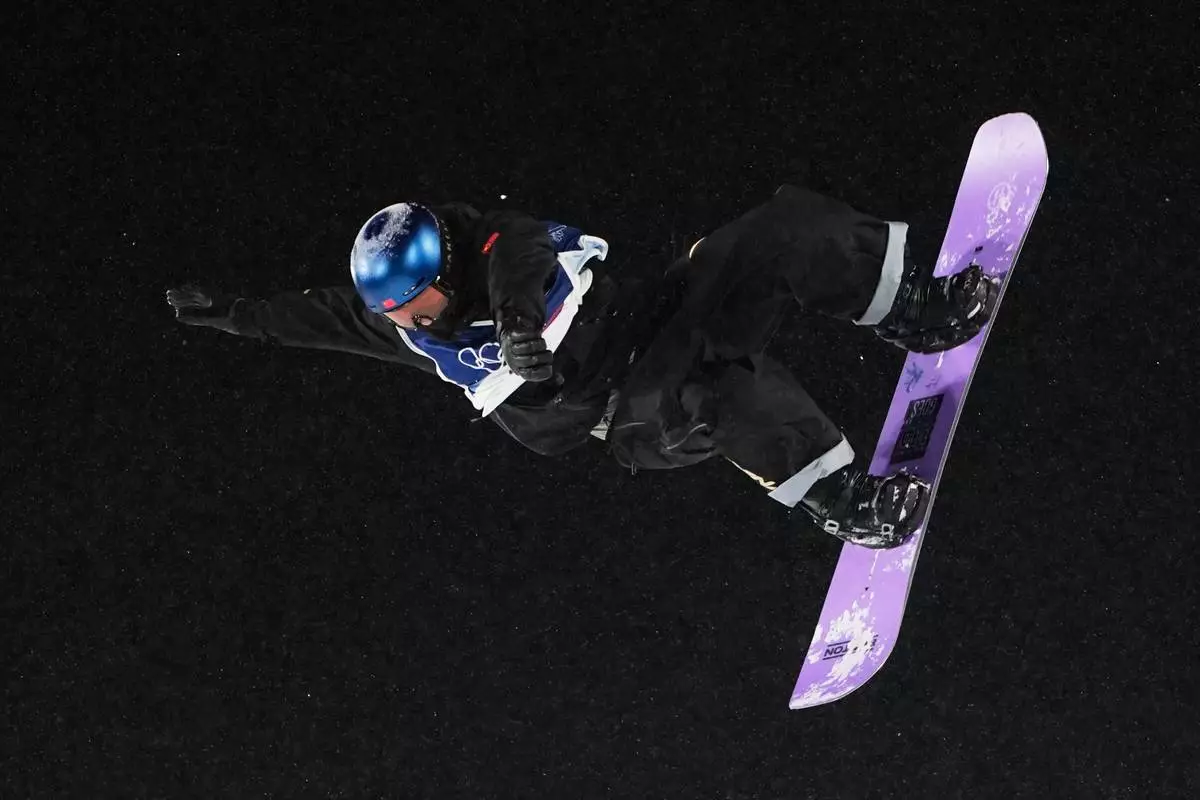
China's Su Yiming practices during a snowboard big air training session at the 2026 Winter Olympics, in Livigno, Italy, Wednesday, Feb. 4, 2026. (AP Photo/Lindsey Wasson)
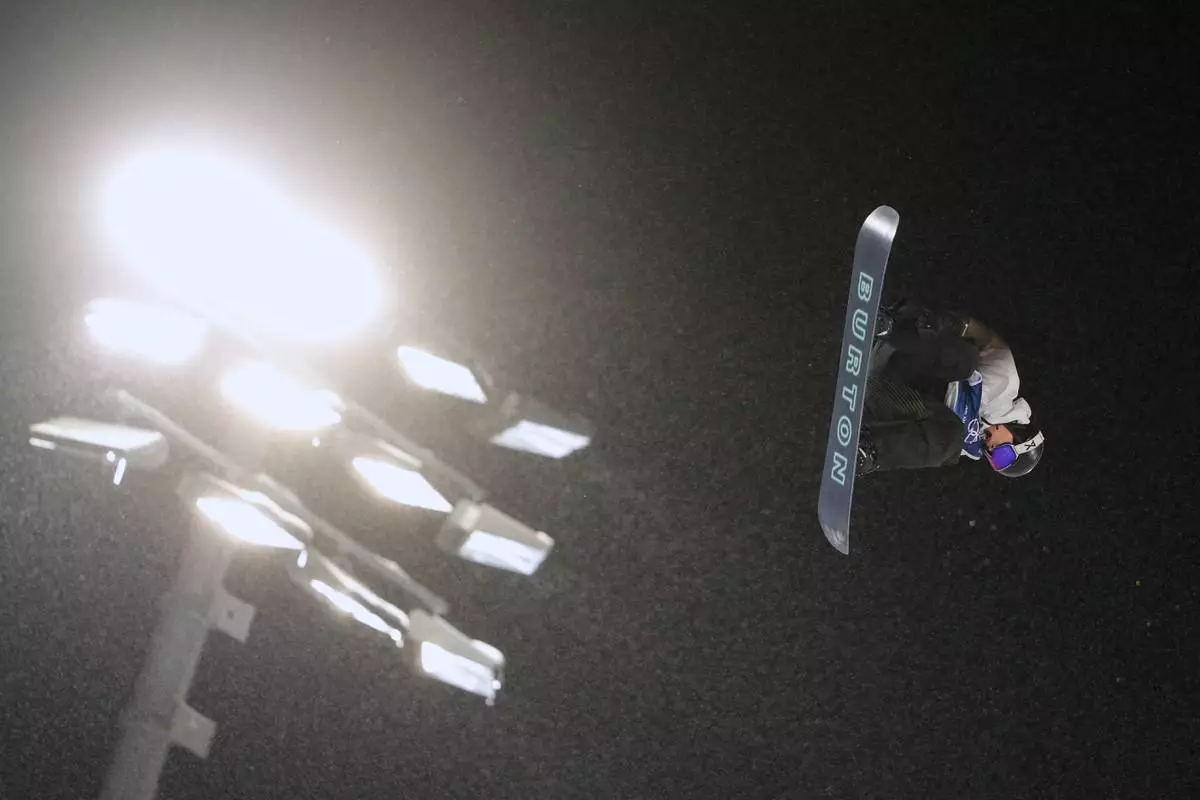
China's Yang Wenlong practices during a snowboard big air training session at the 2026 Winter Olympics, in Livigno, Italy, Wednesday, Feb. 4, 2026. (AP Photo/Lindsey Wasson)
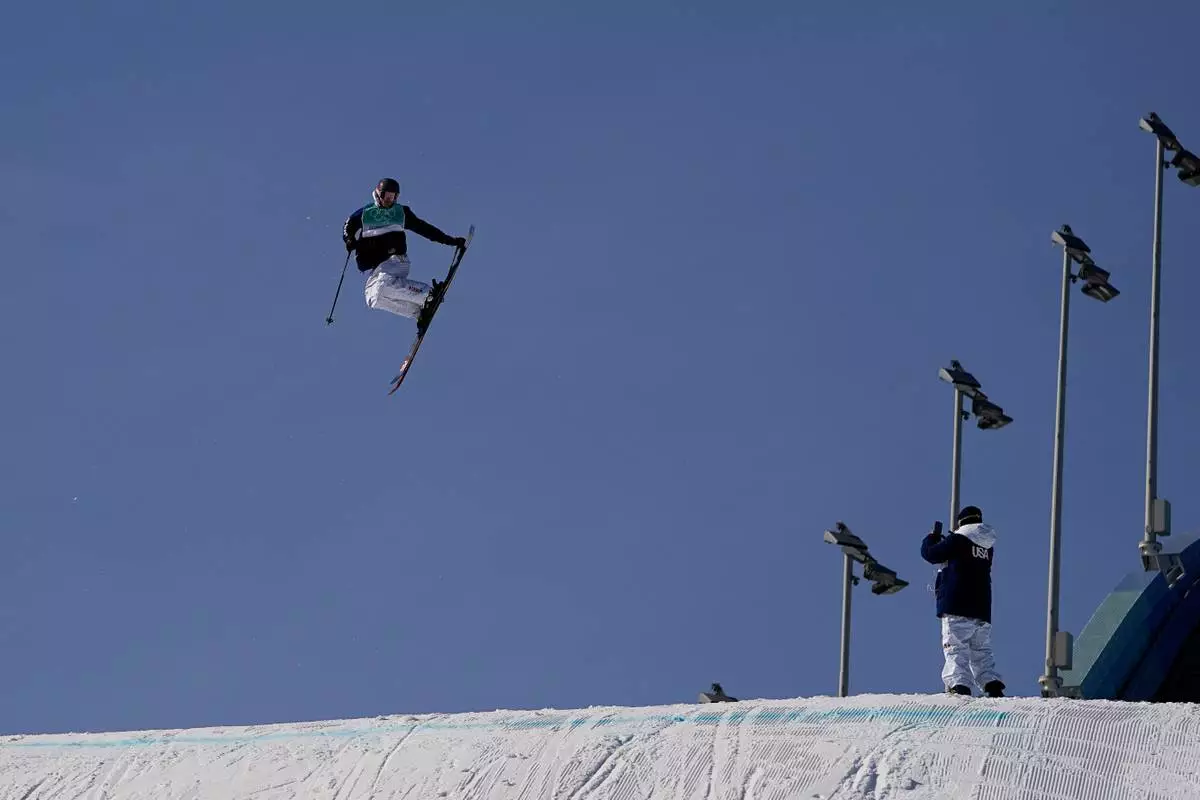
FILE - United States' Colby Stevenson trains for the men's freestyle skiing big air competition at the 2022 Winter Olympics, Sunday, Feb. 6, 2022, in Beijing. (AP Photo/Jae C. Hong, File)
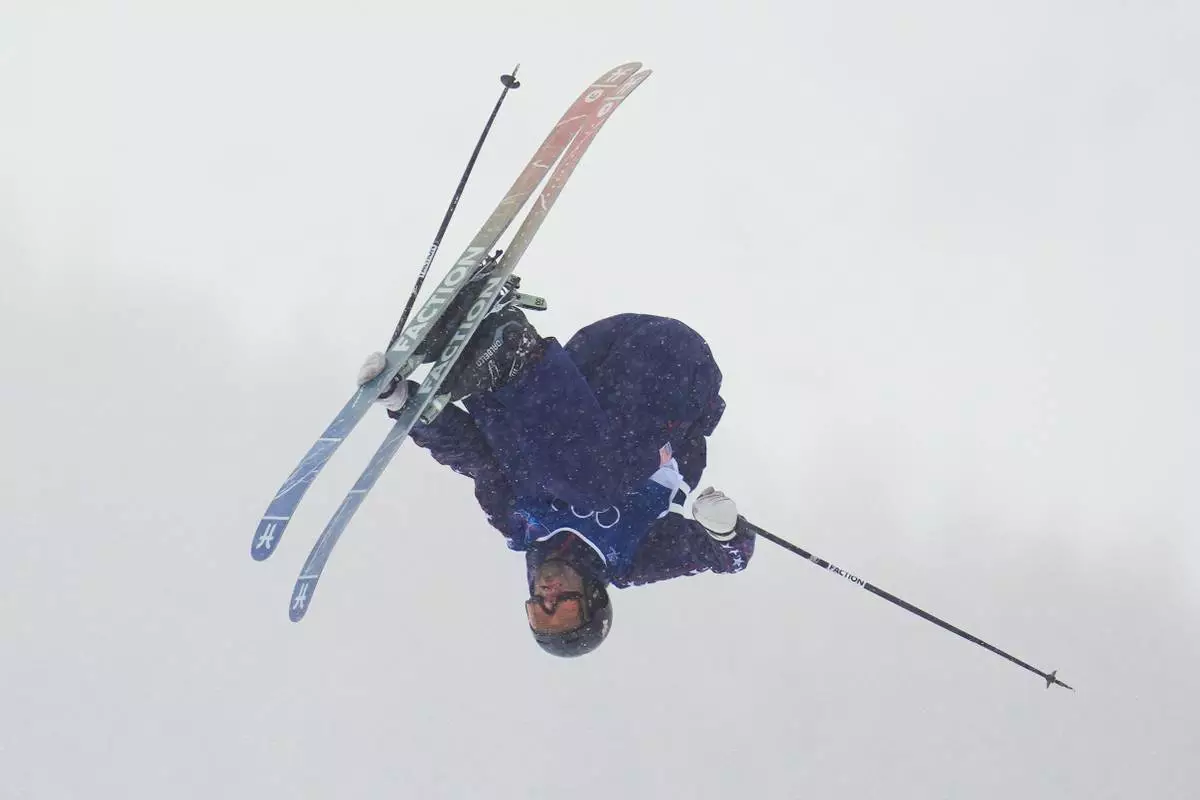
United States' Alex Hall practices during a slopestyle training session at the 2026 Winter Olympics, in Livigno, Italy, Wednesday, Feb. 4, 2026. (AP Photo/Abbie Parr)
The two artificial intelligence startups behind rival chatbots ChatGPT and Claude are bracing for an existential showdown this year as both need to prove they can grow a business that will make more money than they're losing.
The fiercest competition between the two AI developers, along with bigger companies like Google, is a race to win over corporate leaders looking to adopt AI tools to boost workplace productivity. The rivalry is also spilling into other realms, including the Super Bowl.
Anthropic is airing a pair of TV commercials during Sunday's game that ridicule OpenAI for the digital advertising it's beginning to place on free and cheaper versions of ChatGPT. While Anthropic has centered its revenue model on selling Claude to other businesses, OpenAI has opened the doors to ads as a way of making money from the hundreds of millions of consumers who get ChatGPT for free.
Anthropic’s commercials humorously mock the dangers of manipulative chatbots — represented as real people speaking in a stilted and unnaturally effusive tone — that form a relationship with a user before trying to hawk a product. The commercials end with a written message — “Ads are coming to AI. But not to Claude.” — followed by the opening beat and lyrics of the Dr. Dre song “What’s the Difference.”
In a sign they struck a nerve, OpenAI CEO Sam Altman said in a social media post that he laughed at the “funny” ads but blasted them as dishonest and threw shade at his competitor's smaller customer base.
“Anthropic serves an expensive product to rich people,” Altman wrote on X. He also boasted that more Texans “use ChatGPT for free” than all the people in the United States who use Claude.
Chiming in to directly challenge Anthropic CEO Dario Amodei was OpenAI's president and co-founder Greg Brockman, who questioned whether Anthropic was truly committing to never selling Claude “users’ attention or data to advertisers." Amodei, who rarely posts on X, did not respond.
The rivalry has existed ever since Amodei and other OpenAI leaders quit the AI research laboratory and formed Anthropic in 2021, promising a clearer focus on the safety of the better-than-human technology called artificial general intelligence that both San Francisco firms wanted to build. That was before OpenAI first released ChatGPT in late 2022, revealing the huge commercial potential of large language models that could help write emails, homework or computer code.
The competition ramped up this week as both companies launched product updates. OpenAI on Thursday launched a new platform called Frontier, designed to be a one-stop shop for businesses adopting a variety of AI tools, including those not made by OpenAI, that can work in tandem, particularly AI agents that work autonomously as “AI co-workers” on someone's behalf.
“We can be the partner of choice for AI transformation for enterprise. The sky is the limit in terms of revenue we can generate from a platform like that,” Fidji Simo, OpenAI’s CEO of applications, told reporters this week.
Anthropic earlier in the week jolted the stocks of legal-software companies with an update to its Cowork assistant that could help automate the work of drafting legal documents.
“Both OpenAI and Anthropic are really trying to position themselves as a platform company,” said Gartner analyst Arun Chandrasekaran. “The models are important, but the models aren’t a means to an end.”
The two startups aren't just competing with each other. They also face competition from Google, which is both a leading developer of a powerful AI model, Gemini, and has its own cloud computing infrastructure backed by revenue from its legacy digital advertising business. They also have complicated relationships with Amazon, which is Anthropic's primary cloud provider, and Microsoft, which holds a 27% stake in OpenAI.
The first choice for businesses looking to adopt AI agents is typically cloud computing “hyperscalers” like Microsoft, Google and Amazon, which offer a package of services, while AI model providers like Anthropic and OpenAI “tend to come in second place,” said Nancy Gohring, a senior research director at IDC.
But there's an opening because none of the players are giving businesses what they want, which are stronger security and compliance assurances to enable the more widespread use of AI agents that can access corporate systems and data.
“Adopting AI and agents is inherently somewhat risky,” Gohring said.
There's also the AI division of Elon Musk’s newly merged SpaceX and its chatbot, Grok, which is not yet a viable contender for business customers. Musk has long set his sights on challenging the market dominance of OpenAI, which he co-founded and is now suing in a court case set for trial in April.
SpaceX, OpenAI and Anthropic are among the world's most valuable privately held firms and Wall Street investors expect any, or all of them, could become publicly traded within the next year or so. But unlike SpaceX, which has its rocket business to fall back on, or established tech giants — like Amazon, Google and Microsoft — both Anthropic and OpenAI must find a way to make enough from selling AI products to pay for the huge costs in computer chips and data centers to run their energy-hungry AI systems.
It’s not that Anthropic and OpenAI aren’t making money or growing their product lines. The private firms don’t publicly disclose sales but both have signaled they are making billions of dollars in revenue on their existing products, including paid chatbot subscriptions for individual users.
But it costs a lot more money to fund the computing infrastructure needed to build these powerful AI models and respond to the millions of prompts they get each day. OpenAI, in particular, has said it owes more than $1 trillion in financial obligations to backers — including Oracle, Microsoft and Nvidia — that are essentially fronting the compute costs on the expectation of future payoffs.
For some, the wait will likely be worth it.
“Profitability matters, but not as a near‑term decision factor for investors who remain focused on scale, differentiation and infrastructure leverage,” said Forrester analyst Charlie Dai. “Both companies continue to post heavy losses, yet investors still back them because the frontier‑model race demands extraordinary capital intensity.”
Denise Dresser, OpenAI's newly hired chief revenue officer, told reporters this week that the company's priority is “building the best enterprise platform for all industries, all segments.”
“I don’t think we’re thinking about it from a revenue standpoint, but truly from a customer outcome standpoint,” she said, in part reflecting the “sense of urgency” she's heard from CEOs who want a smoother way of applying AI.
“There’s a recognition that AI is becoming a core operating advantage,” Dresser said. “They don’t want to be on the wrong side of that shift.”
FILE - Dario Amodei, CEO and co-founder of Anthropic, attends the annual meeting of the World Economic Forum in Davos, Switzerland, Jan. 23, 2025. (AP Photo/Markus Schreiber, File)
FILE - Sam Altman, co-founder and CEO of OpenAI, testifies before a Senate committee hearing on Capitol Hill in Washington on May 8, 2025. (AP Photo/Jose Luis Magana, File)