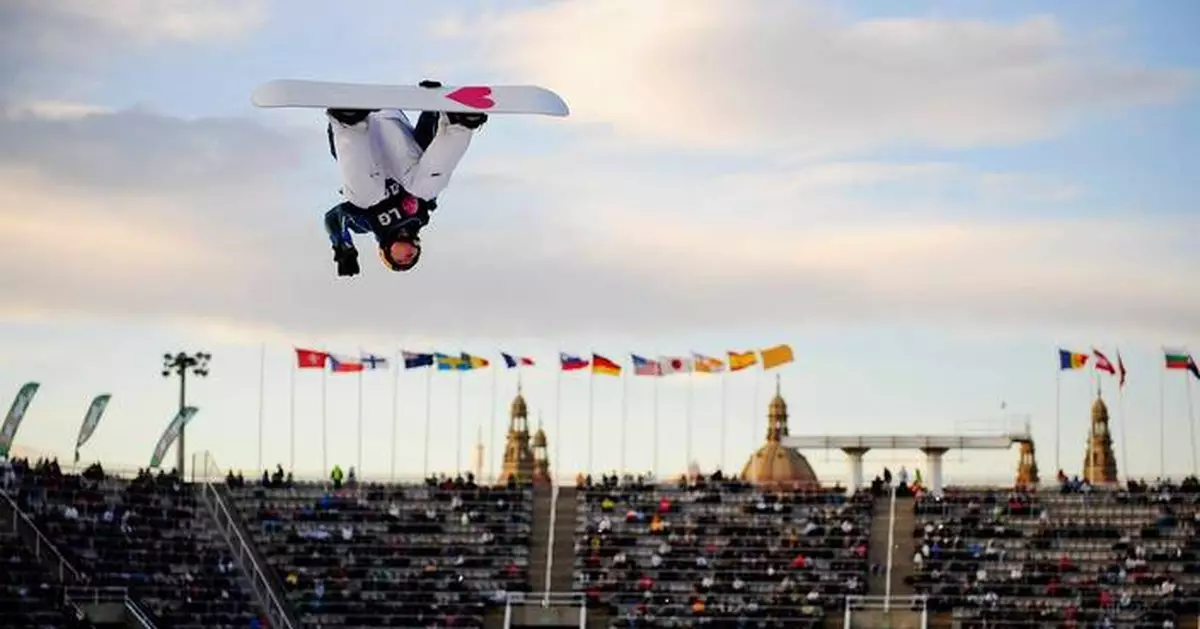
LIVIGNO, Italy (AP) — Getting ready for his third Olympics spread across a lifetime of snowboarding, 37-year-old halfpipe rider Louie Vito recounts his injuries — only the worst of the worst — like he's checking items off a grocery list.
“I snapped my femur in half when I was 14," he said. “Rode with my L-5 (vertebra) almost torn all the way through. I broke my back and rode with that until the cortisone wore off.”
As Vito knows, there is a direct correlation between an athlete's love of a sport and the pain that athlete is willing to suffer to play it. In so-called extreme sports, like the snowboarding and freeskiing contests going on at the Milan Cortina Winter Olympics this month, the pain is virtually guaranteed.
A rash of injuries in the lead-up to the Games, including two involving defending halfpipe champions Chloe Kim and Ayumu Hirano and another involving one of the sport's greats, Mark McMorris, has brought into sharp focus the risks these athletes take by flipping and twisting above rock-hard slabs of snow for a living.
“You're in an action sport, or in an extreme sport," said 19-year-old American halfpipe rider Bea Kim, “so it comes with the territory.”
It is rough territory.
A Washington Post analysis of IOC studies conducted after the past four Winter Olympics found the most injury prone sport in the Games is big air skiing (28.1%). Five of the six most injury-riddled sports are in the snowpark, where snowboarding and freeskiing take place.
In 2018, defending halfpipe champion Iouri Podladtchikov — the iPod — suffered a concussion and broke his nose after slamming against the bottom of the pipe and skidding limply to the bottom in a terrifying scene at the Winter X Games. He didn't make it to the Olympics and has rarely been seen again in a high-stakes contest.
That same year, Shaun White suffered a gruesome slam into a halfpipe wall during training in New Zealand and had to be airlifted off the mountain to have 62 stitches across his face.
For more than a decade, nobody pushed this sport harder than White, upping the ante on the difficulty of the tricks, which went along with the expansion, circa 2010, of the halfpipe from an 18-foot to a 22-foot wall.
The injury "took me from a trajectory of where, I'm like, ‘I know I’m going to win,' to a place where I had people in my corner, people whose opinion I really respect, saying, ”Why are you still doing this? It's time to retire,'" White said.
White did go on to win that year, and the road from the helicopter to his third gold medal turned into one of the most inspiring tales from those Olympics and his entire career.
Hirano, who upped the ante by adding the triple-cork — three flips — to the halfpipe lexicon, could produce a similarly inspiring comeback, but the timing was dire. At a key tuneup contest in Laax, Switzerland, a mere three weeks ago, the Japanese champion crashed. His face was bleeding as he staggered off the halfpipe.
“My heart aches for you. You will come back stronger with me. I’m glad you’re alive," his brother said on social media shortly after the fall.
Reports are that Hirano broke his nose and pelvis. He plans on defending his title, but has revealed little about the injury.
"I just have to trust what I’ve built up to this point so far and ride the way I’m capable of riding,” he said.
As does Kim, who battled shoulder problems all season that eventually resulted in a torn labrum suffered on the same halfpipe in Laax. Like Hirano, she has resumed training and will be in Livigno. Her prospects for a third straight gold medal have gone from near-lock to something less than that.
McMorris turned out to be OK after a scary crash during big air training Wednesday. He'll be back on the slopestyle course next week.
This latest mishap will barely register on his list of most gruesome accidents: broken ribs in slopestyle, a shattered femur in big air, and the worst of all from a backcountry ride when he slammed into a tree, broke 17 bones and was placed in a medically induced coma.
"If an athlete gets hurt, and gets a chance to get close to 100% again and do what you love, then why wouldn’t you try?” he explained in an interview four years ago.
Freestyle skier Eileen Gu's mere presence at the Olympics can, at least in part, be credited to the late Sarah Burke.
Burke was the Canadian freestyle skier who lobbied fiercely to get women's halfpipe skiing onto the Olympic program. She succeeded but, shortly after, suffered a fatal crash during training, some two years before the sport debuted on the Olympic stage.
One of Gu's two Olympic gold medals came in halfpipe four years ago. Since then, she has broken her collarbone and her tibia (that one caused by what she called “interference” on a slope in New Zealand). She said she was most profoundly affected by a concussion last year “because I define so much of who I am by my brain.”
So, why does a 22-year-old with a Stanford diploma in her future, some 10 million followers on social media and a promising modeling career, if she wants it, keep flinging herself across halfpipes, rails and jumps that can do so much harm?
“I love this. I really love this," Gu explained. “Part of the thing I love is the risk. It's overcoming it and being smart about it and finding a way through. If everybody was immortal and nobody could do anything wrong, there would be no fun in this sport.”
Associated Press writer Jennifer McDermott contributed to this report.
AP Winter Olympics: https://apnews.com/hub/milan-cortina-2026-winter-olympics

FILE - Sarah Burke, of Canada, reacts after failing to place in the top-three finishers in the slopestyle skiing women's final at the Winter X Games at Buttermilk Mountain, Jan. 28, 2010, outside Aspen, Colo. (AP Photo/David Zalubowski, File)
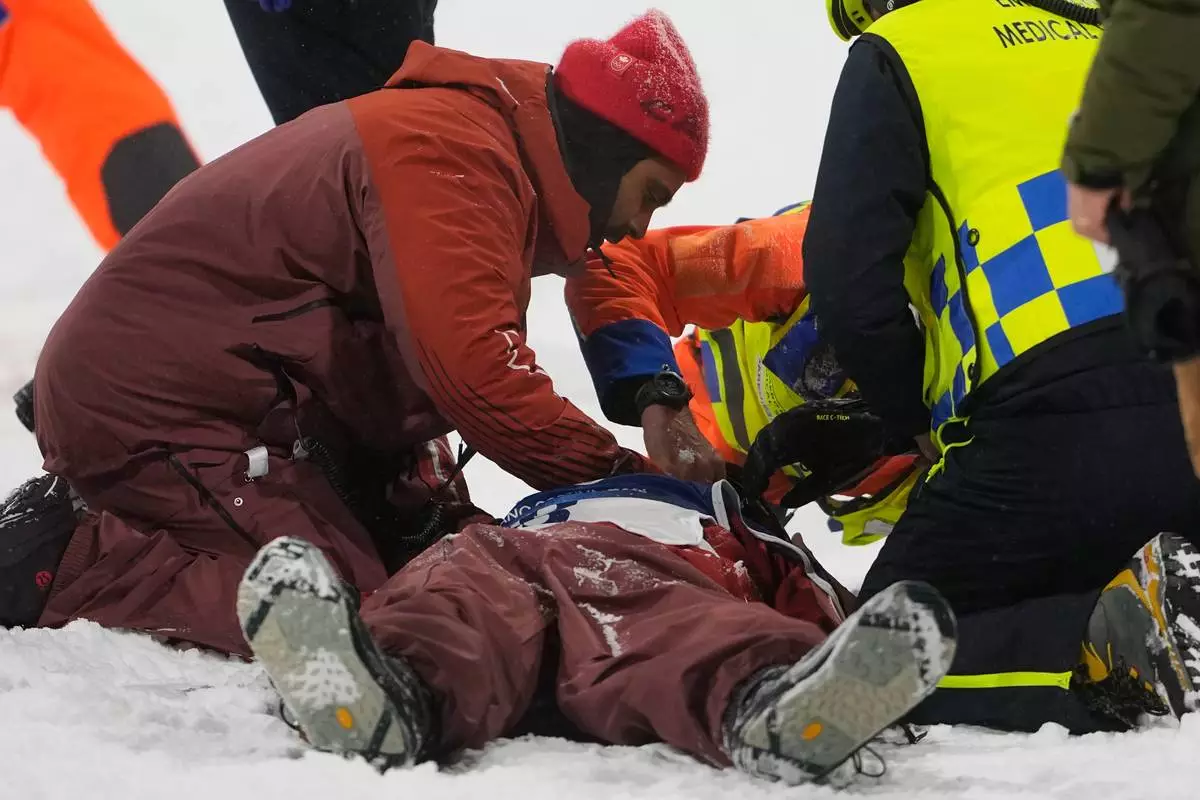
People tend to Canada's Mark McMorris after crashing during a snowboard big air training session at the 2026 Winter Olympics, in Livigno, Italy, Wednesday, Feb. 4, 2026. (AP Photo/Lindsey Wasson)
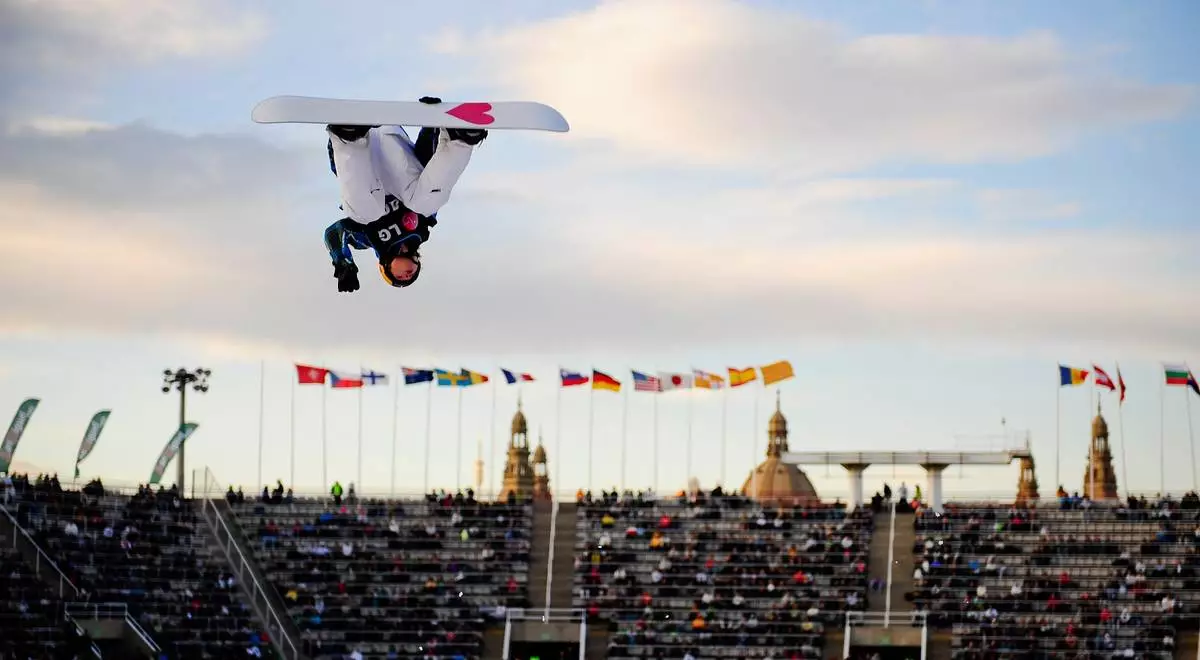
FILE - Iouri Podladtchikov from Switzerland in action during the qualification heat of the International Ski Federation (FIS) World Cup snowboard big air competition as part of the Snow Show festival at the Olympic Stadium in Barcelona, Spain, Saturday, Nov. 7, 2009. (AP Photo/David Ramos, File)
WORO, Nigeria (AP) — Weeks after residents of two Nigerian villages ignored a letter from militants announcing they would come to spread their extreme form of Islam, gunmen arrived on motorbikes and embarked on a 10-hour frenzy of killing.
The attackers went from door to door, shooting and setting homes and shops ablaze in the mostly Muslim villages of Woro and Nuku. Later, residents told The Associated Press, they went into a mosque, announced the call to prayer and shot everyone who turned up.
In the deadliest attack in Nigeria in several months, the extremists rounded up villagers, tied their arms behind their backs, lined them up and shot them in the heads. Authorities say they slaughtered at least 162 people, while villagers say the toll is higher and that the men kidnapped many others.
The attack is the latest in a surge in violence in the state of Kwara, as well as other conflict hot spots, as armed groups in Nigeria challenge the state's authority and compete with one another.
Immediately before the attack, life had been quite normal in the quiet neighboring villages, where most residents are farmers, roughly 500 kilometers (300 miles) from the state capital.
Umar Bio Kabir, a 26-year-old schoolteacher, was playing football with his friends when they saw the attackers. They ran for their lives, but not everyone who was playing made it.
“God said I would survive or else I would have been among the dead,” he said.
According to several residents interviewed by the AP, the killing went on for the next 10 hours.
Residents said they had no help throughout the operation, and no security operatives showed up.
“We did not see anybody from when it started in the evening till the morning when it ended,” said Iliyaus Ibrahim, a farmer in the village whose brother died and whose pregnant sister-in-law was kidnapped along with her two children.
Reached by phone, Kwara state police spokesperson Adetoun Ejire-Adeyemi said: “That is not possible. Security operatives were on ground.” She would not say anything further.
Only about 20 men remained in the villages by Thursday, left with the arduous task of burying scores of dead people. Though the official toll is 162, residents told the AP they have buried nearly 200 people and have more to bury, including completely charred remains.
Kabir joined in burying several of his close friends in Woro. “Even as I am speaking to you, we have not finished packing the bodies. There are not enough people left in the village. Yesterday, we loaded bodies into two Hilux (pickup) trucks. Today, we are doing it again,” he said.
Two days after the killings, a body still lay in blood on Thursday. The remaining men said they were too tired to return to the site.
Residents struggled to breathe as the harmattan wind blew the ashes of burned houses and shops, with a lingering stench of blood. Zinc roofs clattered lightly against each other in the wind, the only sound in the dead-quiet village.
Survivors were gathering their essentials onto bikes, taxis and trucks and heading away from the village to restart life elsewhere.
Zakari Munir had come into Woro to help his brother pack to move to Kaiama, where the local government office is located. He pointed to a section of burning buildings and told the AP: “Everyone who lived here has been killed.”
The attack in Kwara, which borders Benin, has sparked concerns about the spread of Nigeria’s security crisis. The armed groups were previously confined to regions farther north, but analysts say they have moved their operations south as military pressure and territorial competition among groups ramp up.
Nigeria now plays host to multiple armed groups, both homegrown and cross-border. The West African nation has been fighting an insurgency for more than a decade, with Boko Haram and its splinter group, the Islamic State of West Africa Province, in addition to several amorphous groups commonly referred to as bandits.
In 2024, the Nigerian military announced the presence of the Lakurawa group, which had come from Niger, and in 2025 Jama’at Nusrat al-Islam wal-Muslimin claimed its first attack on Nigeria, in Kwara. The wider area of West Africa and the Sahel is also facing multiple threats from various Islamic extremist groups.
Several thousand people have been killed in Nigeria's protracted conflict, according to data from the United Nations. Analysts say not enough is being done by the government to protect its citizens.
On Wednesday, the Nigerian government announced a new military operation in Kwara to stem the spread of the crisis there. Last year, Nigerian President Bola Tinubu announced a state of emergency, aiming to add thousands more police officers.
Nigeria has been a focus of the U.S. government recently after President Donald Trump accused the West African nation of not protecting Christians from an alleged genocide. The Nigerian government rejected the claim, and analysts say the claim simplifies a very complicated crisis that targets people regardless of their faiths.
In Woro and Nuku, for instance, the Muslim victims appear to have been killed for resisting the preachings of the extremists.
Nigeria has entered a partnership with the U.S. on military cooperation. The U.S. launched airstrikes against militants affiliated with the Islamic State group on Dec. 25 and has provided Nigeria with weapons.
On Friday in Kaiama, Maryam Muhammed and other survivors gathered for Islamic prayers for her husband, one of the victims. The 57-year-old also lost her house.
Muhammed was taken by the attackers before being let go in the pandemonium. In the morning, she looked for her husband, who had been responsible for performing the call to prayer at the local mosque. She searched through still-smoldering bodies until she found him.
“When I did not hear his voice (at the mosque) when the day broke,” she said, “I knew there was trouble.”
——
Adetayo reported from Lagos, Nigeria
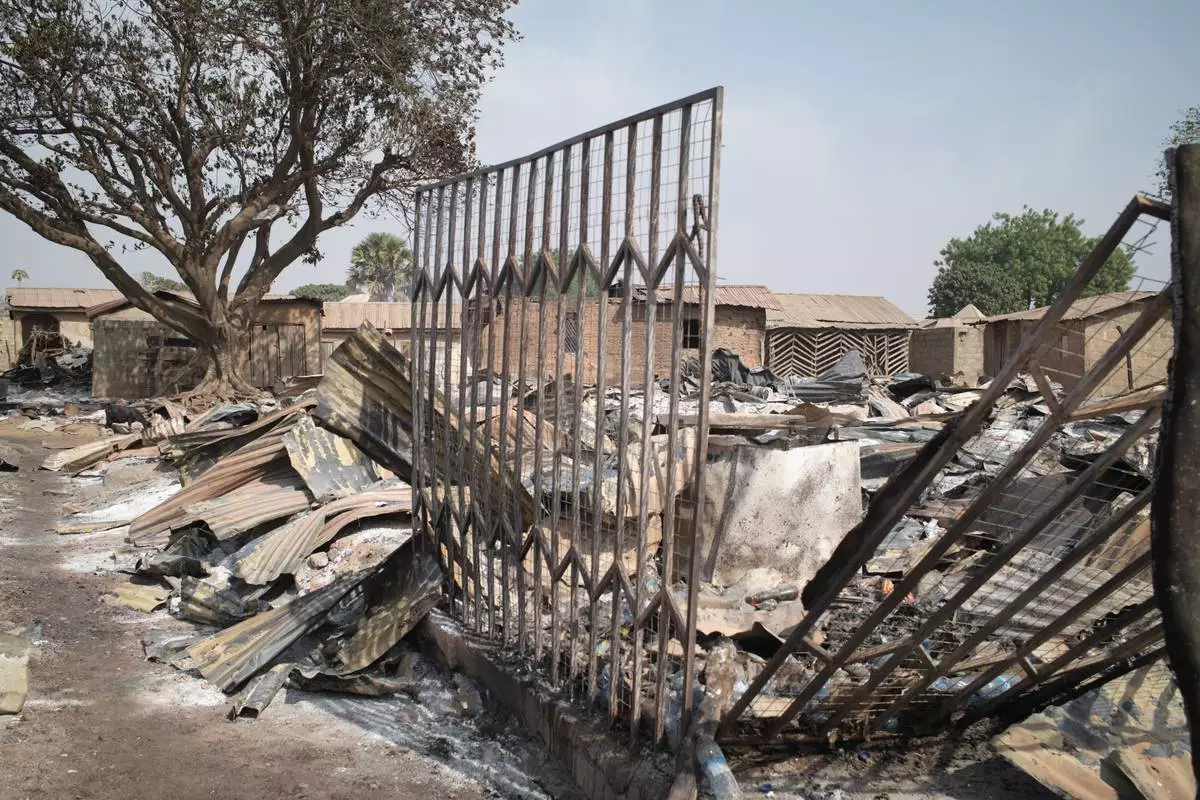
Homes sit in ruins days after an attack in the village of Woro, Nigeria, Thursday, Feb. 5, 2026. (AP Photo/Pelumi Salako)
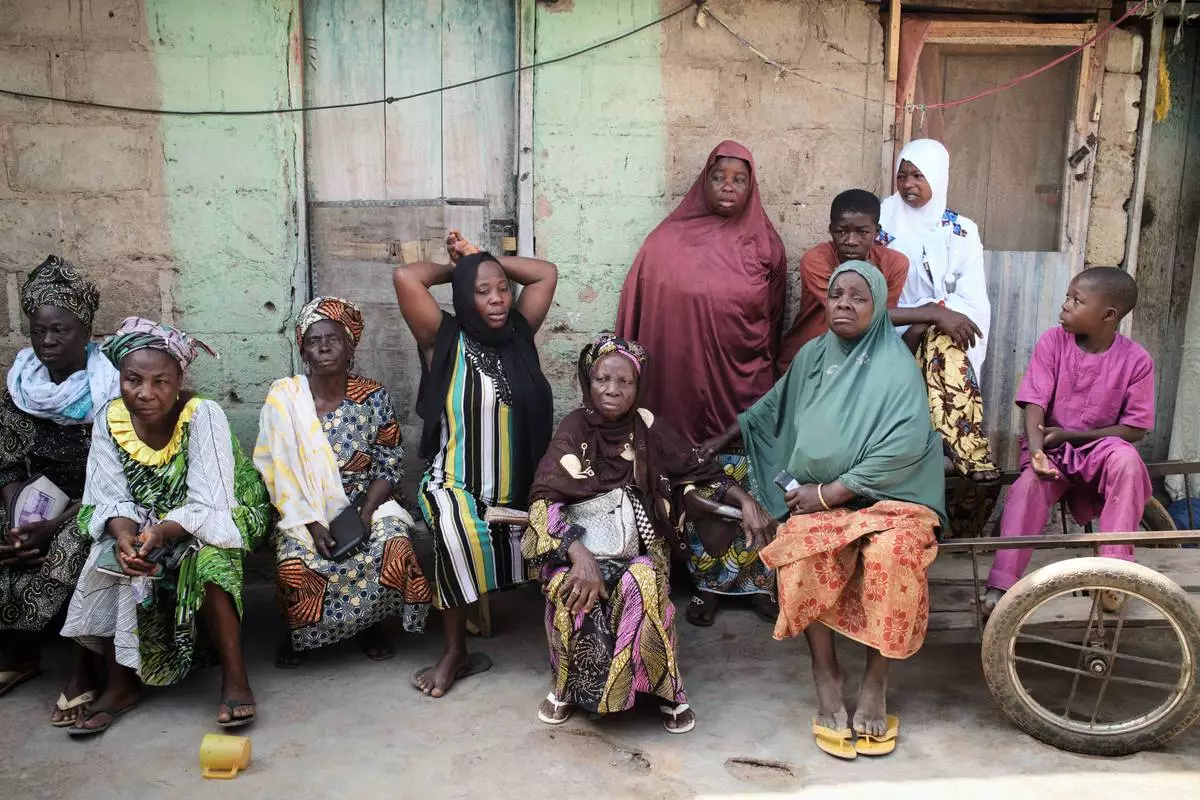
Survivors gather on the third day of Islamic prayers for one of the victims of an extremist attack, in Kaiama, Nigeria, Friday, Feb. 6, 2026. (AP Photo/Pelumi Salako)
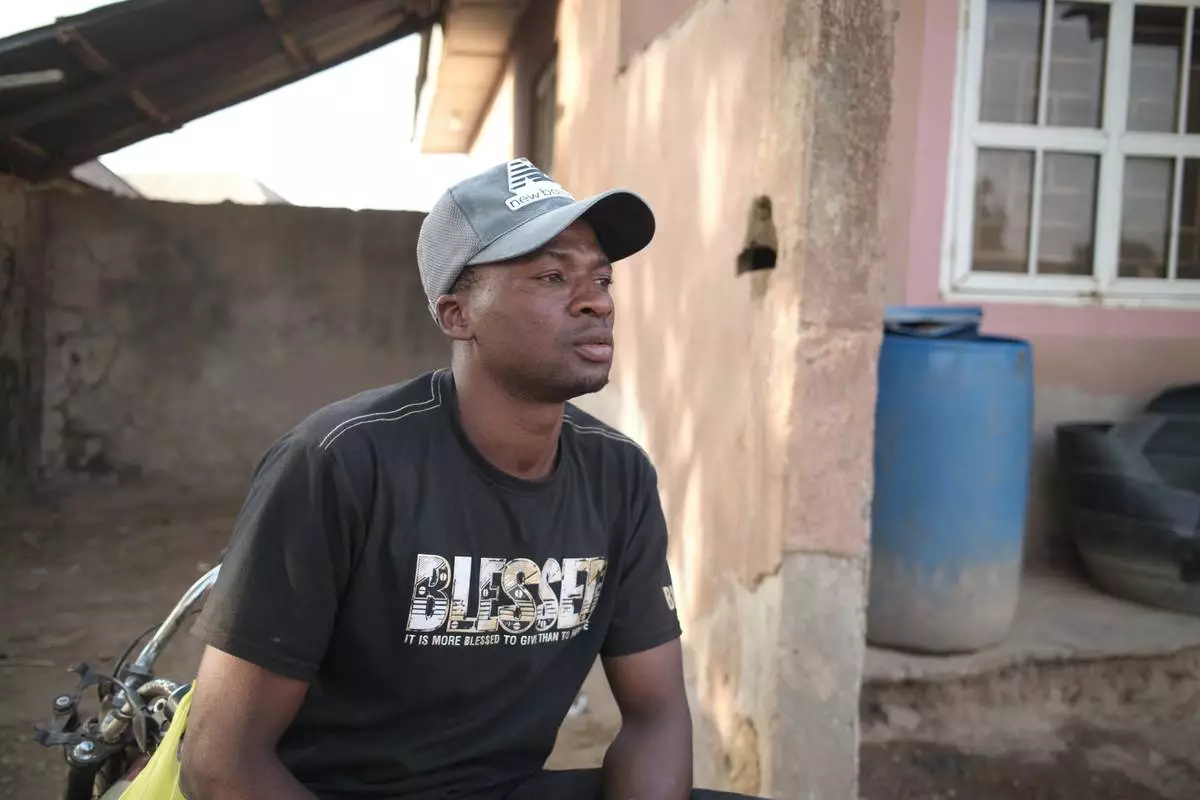
Umar Bio Kabir, a 26-year-old schoolteacher who survived by running when the attackers arrived in the village of Woro, looks on in Woro, Nigeria, Thursday, Feb. 5, 2026. (AP Photo/Pelumi Salako)
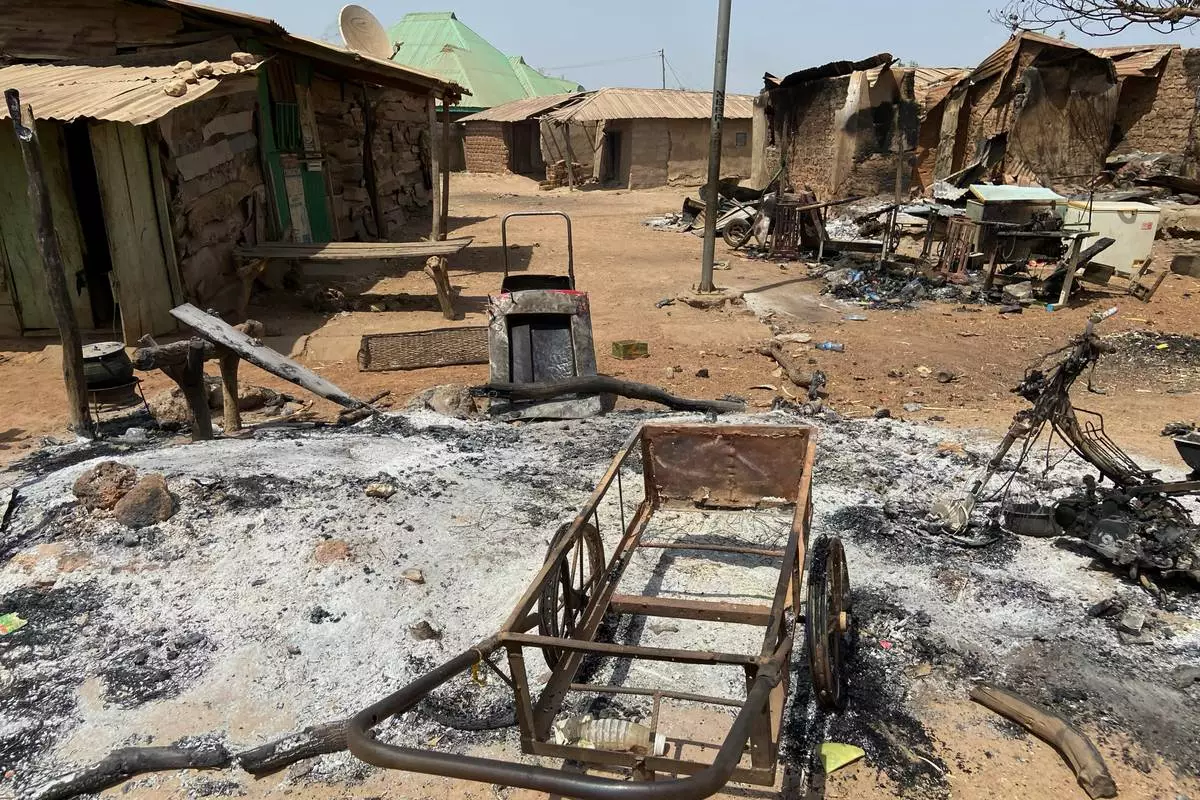
Burned homes and tools stand on an ash covered ground, days after an attack in the village of Woro, Nigeria, Thursday, Feb. 5, 2026. (AP Photo/Musa Salim)
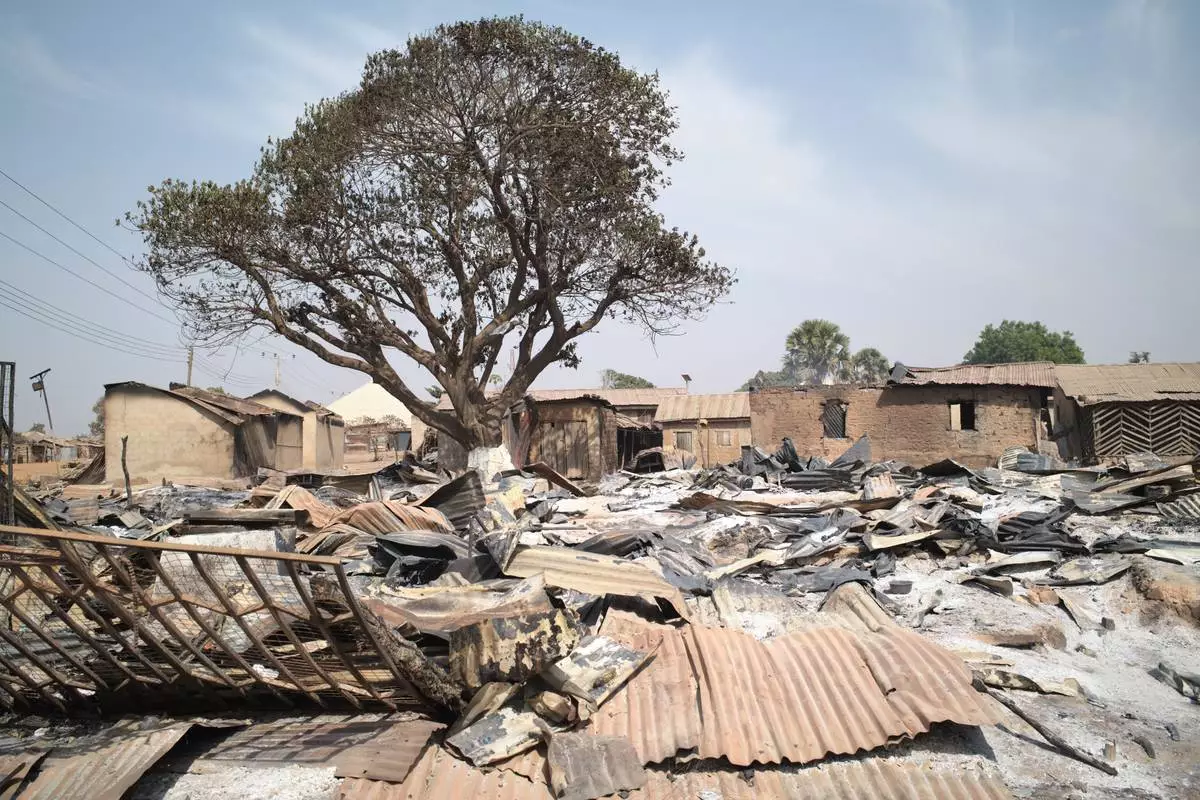
Razed homes are seen days after an attack that left dozens dead in the Muslim-majority village of Woro, Nigeria, Thursday, Feb. 5, 2026, that officials said was targeted for refusing extremist ideology. (AP Photo/Pelumi Salako)