Skip to Content Facebook Feature Image

A deputy chief of Russia's military intelligence service was shot and wounded in Moscow

News

A deputy chief of Russia's military intelligence service was shot and wounded in Moscow
News

News

A deputy chief of Russia's military intelligence service was shot and wounded in Moscow

2026-02-06 20:31 Last Updated At:20:40

MOSCOW (AP) — A deputy chief of Russia's military intelligence agency was shot and wounded in Moscow on Friday in an attack that follows a series of assassinations of senior military officers that Russia has blamed on Ukraine.

Lt. Gen. Vladimir Alekseyev was hospitalized after being shot several times by an unidentified assailant at an apartment building in northwestern Moscow, Investigative Committee spokesperson Svetlana Petrenko said in a statement.

She didn’t say who could be behind the attack on the 64-year-old who has served as the first deputy head of Russia’s military intelligence agency, known as the GRU, since 2011.

He was decorated with the Hero of Russia medal for his role in Moscow's military campaign in Syria and in June 2023 was shown on state TV speaking to mercenary chief Yevgeny Prigozhin when his Wagner Group seized the military headquarters in the southern city of Rostov-on-Don during his short-lived mutiny.

The shooting came a day after Russian, Ukrainian and U.S. negotiators wrapped up two days of talks in Abu Dhabi, United Arab Emirates, aimed at ending the nearly 4-year-old conflict in Ukraine. The Russian delegation was led by Alekseyev's boss, military intelligence chief Adm. Igor Kostyukov.

President Vladimir Putin was informed about the attack, said Kremlin spokesman Dmitry Peskov, who added that law enforcement agencies need to step up protection of senior military officers during the conflict in Ukraine.

Ukrainian authorities haven't commented on the attack.

Asked about the shooting, Russian Foreign Minister Sergey Lavrov said it would be up to law enforcement agencies to pursue the investigation but described it as an apparent “terrorist act” by Ukraine intended to derail peace talks.

The business daily Kommersant said the attacker, posing as a delivery person, shot the general twice in the stairway of his apartment building, wounding him in the foot and the arm. Alekseyev tried to wrest away the gun and was shot again in the chest before the attacker fled, the report said.

Since Moscow sent troops into Ukraine in 2022, Russian authorities have blamed Kyiv for several assassinations of military officers and public figures in Russia. Ukraine has claimed responsibility for some of them.

In December, a car bomb killed Lt. Gen. Fanil Sarvarov, head of the Operational Training Directorate of the Russian Armed Forces’ General Staff.

In April, another senior Russian military officer, Lt. Gen. Yaroslav Moskalik, a deputy head of the main operational department in the General Staff, was killed by a bomb placed in his car parked near his apartment building just outside Moscow.

A Russian man who previously lived in Ukraine pleaded guilty to carrying out the attack and said he had been paid by Ukraine’s security services.

Days after Moskalik’s killing, Ukrainian President Volodymyr Zelenskyy said he received a report from the head of Ukraine’s foreign intelligence agency on the “liquidation” of top Russian military figures, adding that “justice inevitably comes” although he didn’t mention Moskalik’s name.

In December 2024, Lt. Gen. Igor Kirillov, the chief of the military’s nuclear, biological and chemical protection forces, was killed by a bomb hidden on an electric scooter outside his apartment building. Kirillov’s assistant also died. Ukraine’s security service claimed responsibility for the attack.
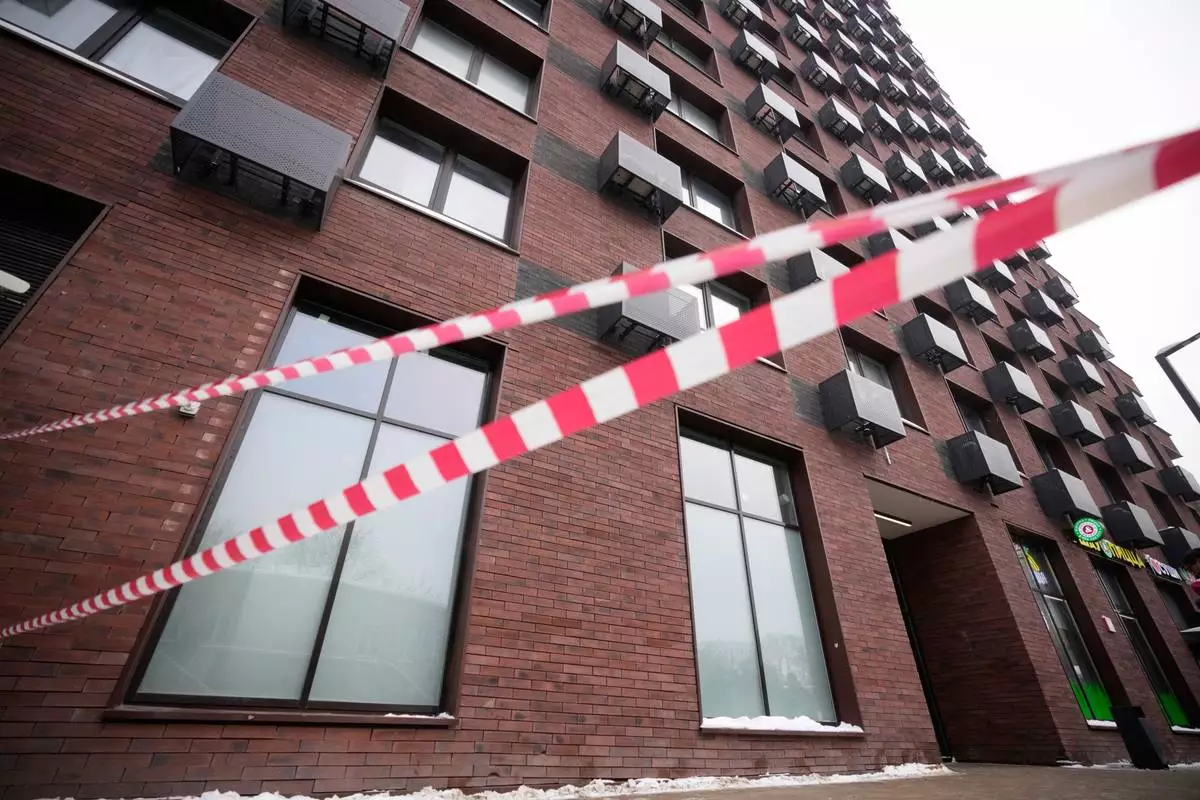
A view of the apartment building where deputy chief of Russian military intelligence Lt. Gen. Vladimir Alekseyev was shot and wounded, in Moscow, Russia, Friday, Feb. 6, 2026. (AP Photo/Pavel Bednyakov)
A view of the apartment building where deputy chief of Russian military intelligence Lt. Gen. Vladimir Alekseyev was shot and wounded, in Moscow, Russia, Friday, Feb. 6, 2026. (AP Photo/Pavel Bednyakov)

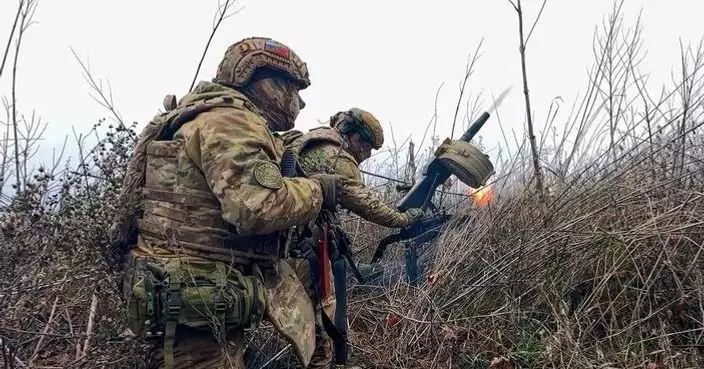
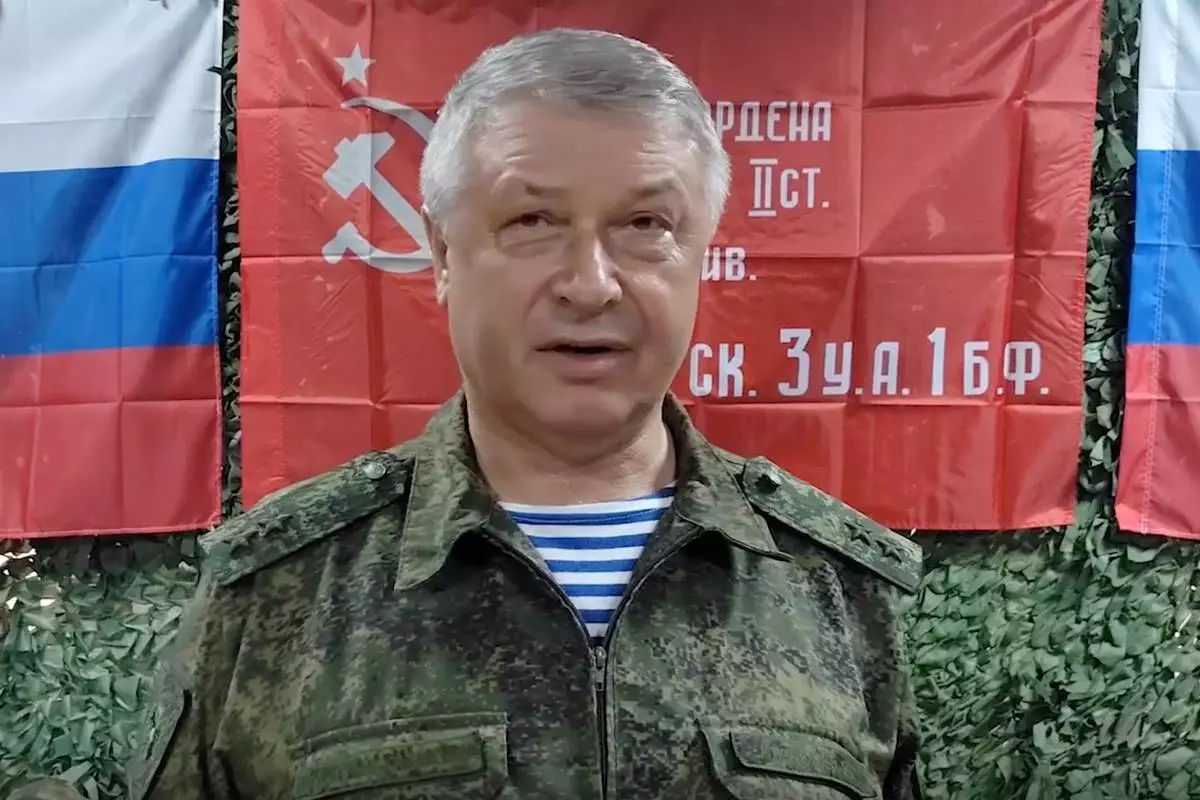
In this image made from video provided by Russian Defense Ministry Press Service, on Jun. 23, 2023, Lt. Gen. Vladimir Alekseyev speaks to servicemen on an undisclosed location. (Russian Defense Ministry Press Service via AP)
In this image made from video provided by Russian Defense Ministry Press Service, on Jun. 23, 2023, Lt. Gen. Vladimir Alekseyev speaks to servicemen on an undisclosed location. (Russian Defense Ministry Press Service via AP)

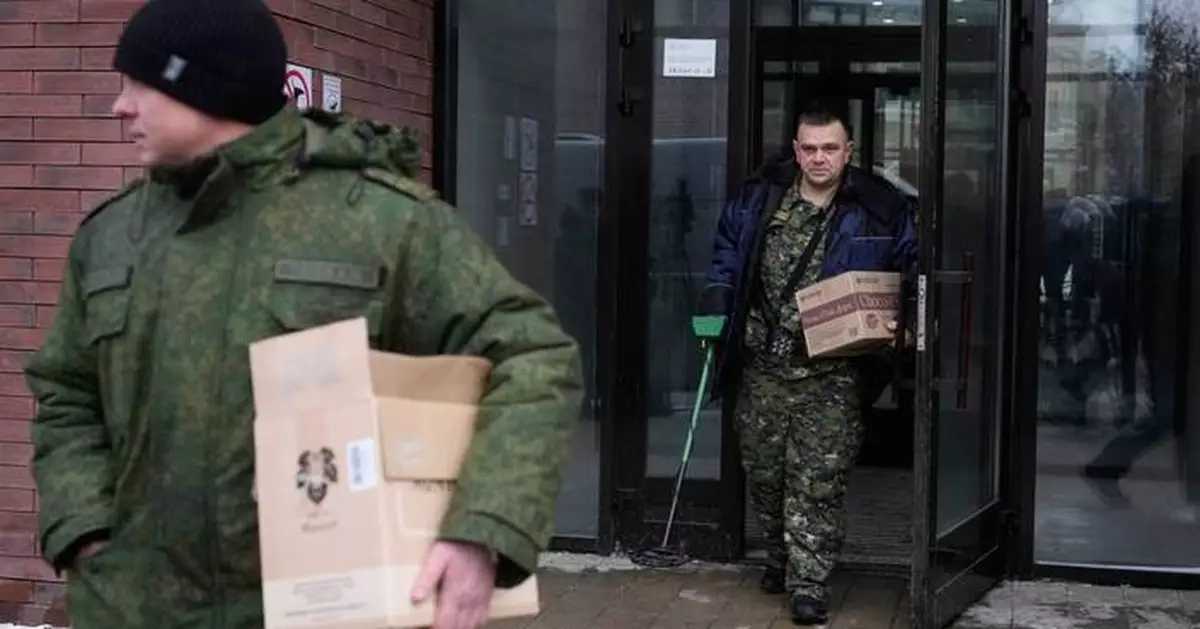
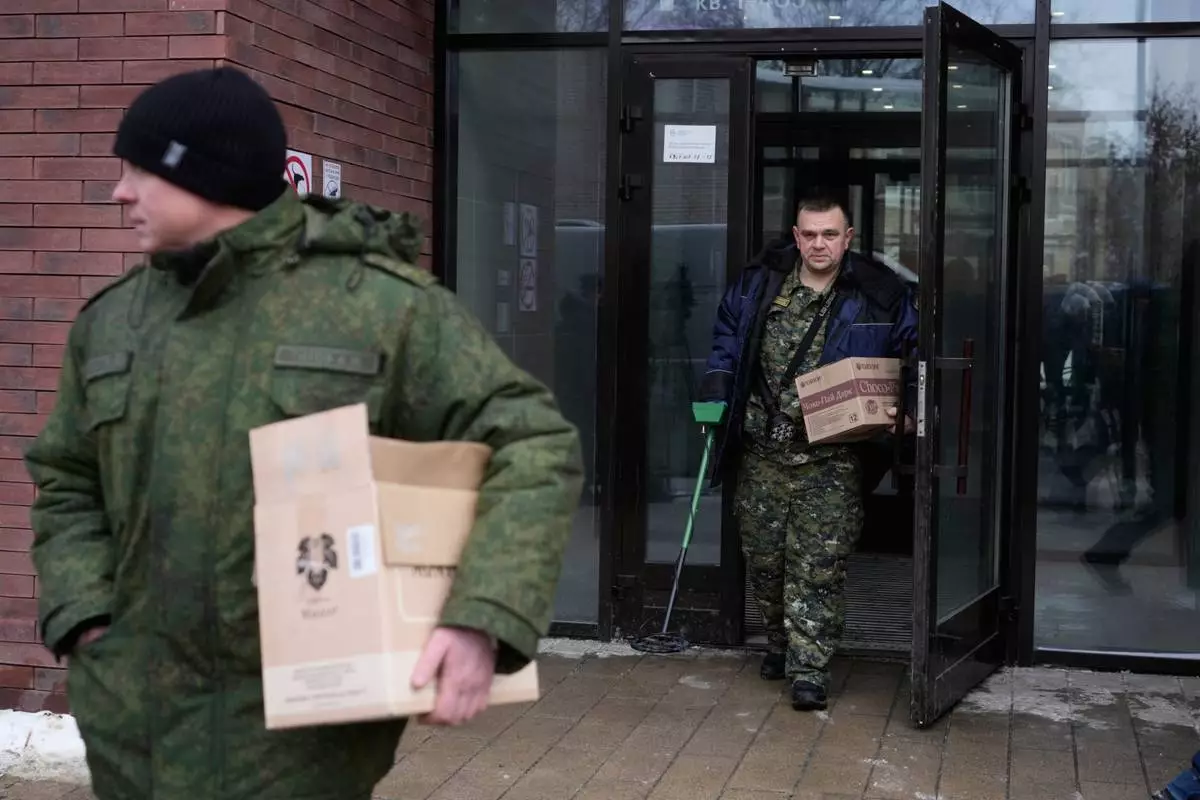
Investigators leave an apartment building where deputy chief of Russian military intelligence Lt. Gen. Vladimir Alekseyev was shot and wounded, in Moscow, Russia, Friday, Feb. 6, 2026. (AP Photo/Pavel Bednyakov)

Investigators leave an apartment building where deputy chief of Russian military intelligence Lt. Gen. Vladimir Alekseyev was shot and wounded, in Moscow, Russia, Friday, Feb. 6, 2026. (AP Photo/Pavel Bednyakov)
MOSCOW (AP) — Russian and U.S. negotiators discussed the expiration of the last remaining nuclear arms pact between the two countries and agreed on the need to quickly launch new arms control talks, the Kremlin said Friday.

The New START treaty terminated Thursday, leaving no caps on the two largest atomic arsenals for the first time in more than a half-century and fueling fears of an unconstrained nuclear arms race.

A senior U.S. diplomat told an arms conference in Geneva on Friday that a future nuclear pact should also involve China and again accused Beijing of covertly conducting nuclear tests.

Russian President Vladimir Putin has declared his readiness to stick to the treaty’s limits for another year if Washington followed suit. U.S. President Donald Trump has ignored the offer and argued he wants China to be a part of a new treaty, which Beijing has rebuffed.

“Rather than extend ‘NEW START’ (A badly negotiated deal by the United States that, aside from everything else, is being grossly violated), we should have our Nuclear Experts work on a new, improved, and modernized Treaty that can last long into the future,” Trump posted Thursday on his Truth Social network.

Russian and U.S. negotiators discussed the issue in the United Arab Emirates, where Russian, Ukrainian and U.S. delegations held two days of talks on a peace settlement in Ukraine, Kremlin spokesman Dmitry Peskov told reporters Friday.

“There is an understanding, and they talked about it in Abu Dhabi, that both parties will take responsible positions and both parties realize the need to start talks on the issue as soon as possible,” Peskov said.

Asked to comment on a report by Axios claiming Russian and U.S. negotiators discussed a possible informal deal to observe the pact's limits for at least six months, Peskov responded that any such extension could only be formal.

“Obviously its provisions can only be extended in a formal way,” Peskov said. “It's hard to imagine any informal extension in this sphere.”

Moscow views the treaty’s expiration Thursday “negatively” and regrets it, Peskov said Thursday. At the same time, he emphasized that “if we receive constructive responses, we will certainly conduct a dialogue.”

Even as New START expired, the U.S. and Russia agreed Thursday to reestablish high-level, military-to-military dialogue following a meeting between senior officials from both sides in Abu Dhabi, the U.S. military command in Europe said.

The link was suspended in 2021 as relations between Moscow and Washington grew increasingly strained before Russia sent troops into Ukraine in February 2022.

New START, signed in 2010 by then-President Barack Obama and his Russian counterpart, Dmitry Medvedev, was the last remaining pact in a long series of agreements between Moscow and Washington to limit their nuclear arsenals, starting with SALT I in 1972.

New START restricted each side to no more than 1,550 nuclear warheads on no more than 700 missiles and bombers deployed and ready for use. It was originally set to expire in 2021 but was extended for five years.

The pact envisioned sweeping on-site inspections to verify compliance, although they stopped in 2020 because of the COVID-19 pandemic and never resumed.

In February 2023, Putin suspended Moscow’s participation, saying Russia couldn’t allow U.S. inspections of its nuclear sites at a time when Washington and its NATO allies openly declared a goal of Moscow’s defeat in Ukraine. At the same time, the Kremlin emphasized it wasn’t withdrawing from the pact altogether, pledging to respect its caps on nuclear weapons.

By offering in September to abide by New START’s limits for a year, which would buy time for both sides to negotiate a successor agreement, Putin said the treaty’s expiration would be destabilizing and could fuel nuclear proliferation.

Trump has indicated he would like to keep limits on nuclear weapons but wants to involve China in a potential new treaty.

In his first term, Trump tried and failed to push for a three-way nuclear pact involving China. Beijing has balked at any restrictions on its smaller but growing nuclear arsenal, while urging the U.S. to resume nuclear talks with Russia.

Thomas DiNanno, a top U.S. diplomat in charge of arms control said Friday that the expiration of the last nuclear arms pact between Russia and the United States marks the “end of an era” of what he described as “U.S. unilateral restraint" and insisted that Trump wants a “better agreement” that would also involve Beijing.

“As we sit here today, China’s entire nuclear arsenal has no limits, no transparency, no declarations and no controls,” DiNanno told the Conference on Disarmament, a U.N.-backed organization, in Geneva. He added that ”the next era of arms control can and should continue with clear focus, but it will require the participation of more than just Russia at the negotiating table.”

DiNanno, Under Secretary of State for Arms Control and International Security, also accused Beijing of covertly conducting nuclear tests. “Today, I can reveal that the U.S. government is aware that China has conducted nuclear explosive tests, including preparing for tests with designated yields in the hundreds of tons,” he said.

DiNanno stated that China’s army “sought to conceal testing by obfuscating the nuclear explosions because it recognizes these tests violate test ban commitments.”

The comment follows earlier U.S. statements accusing Beijing of covertly conducting nuclear tests.

Ambassador Shen Jian of China accused the United States of “shifting the blame.”

Earlier this week, Beijing urged the U.S. to resume nuclear talks with Russia and accept its offer to stick to New START limits, while rebuffing an American push to include China in any extension of the treaty.

“China’s nuclear forces are not at all on the same scale as those of the U.S. and Russia, and thus China will not participate in nuclear disarmament negotiations at the current stage,” Foreign Ministry spokesperson Lin Jian said Thursday in Beijing.

Keaten reported from Geneva. Ken Moritsugu in Beijing contributed to this report.

FILE - U.S. President Barack Obama, left, and his Russian counterpart Dmitry Medvedev, right, shake hands at a news conference at the Prague Castle in Prague, Czech Republic,, April 8, 2010, after signing the New START treaty reducing long-range nuclear weapons. (AP Photo/Mikhail Metzel, File)

FILE - U.S. President Barack Obama, left, and his Russian counterpart Dmitry Medvedev, right, shake hands at a news conference at the Prague Castle in Prague, Czech Republic,, April 8, 2010, after signing the New START treaty reducing long-range nuclear weapons. (AP Photo/Mikhail Metzel, File)

FILE - This photo taken from a video distributed on Dec. 9, 2020 by the Russian Defense Ministry Press Service, shows a rocket launch as part of a ground-based intercontinental ballistic missile test at the Plesetsk facility in northwestern Russia. (Russian Defense Ministry Press Service via AP, File)

FILE - This photo taken from a video distributed on Dec. 9, 2020 by the Russian Defense Ministry Press Service, shows a rocket launch as part of a ground-based intercontinental ballistic missile test at the Plesetsk facility in northwestern Russia. (Russian Defense Ministry Press Service via AP, File)

Recommended Articles