WASHINGTON (AP) — Denver Mayor Mike Johnston regularly games out responses to threats like destructive tornadoes or hazardous waste leaks. He's added a new potential menace: the federal government.
When President Donald Trump deployed National Guard troops to some U.S. cities last year over the objection of local leaders, Johnston said his tabletop exercises expanded to consider what might happen if federal officials took aim at Denver, which the Trump administration has sued for limiting cooperation on deportations. The city now prepares for the impact of federal activity on everything from access to schools and hospitals to interference with elections.
“We used to prepare for natural disasters,” Johnston, a Democrat, said in an interview. “Now we prepare for our own federal government.”
A half-dozen state and local officials from both major political parties over the past week described an increasingly hostile relationship with Washington. While there's inherent tension between city, state and federal governments over power, politics and money, the current dynamic is unlike anything they've experienced, particularly after federal agents killed two U.S. citizens in Minneapolis last month.
While partnerships are still in place, the officials said the Minneapolis killings have hardened opposition to excessive federal power.
“This is unprecedented,” said Jerry Dyer, the Republican mayor of Fresno, California, and a former police chief. “I've never seen federal law enforcement come to the cities, whether it's National Guard or ICE, and police cities without a level of cooperation from local police.”
The tensions have upended longtime Republican arguments that the federal government should leave local governance to the states under the 10th Amendment to the U.S. Constitution. Now a Republican president is articulating a muscular federal approach over the protest of Democrats.
“There's no question that the Trump administration has repeatedly violated the Constitution and how it deals with states,” Kentucky Gov. Andy Beshear, a Democrat, said in an interview.
“My hope,” he added, “is that we are quickly approaching our McCarthyism moment where even Donald Trump’s supporters are going to recognize this has gone too far.”
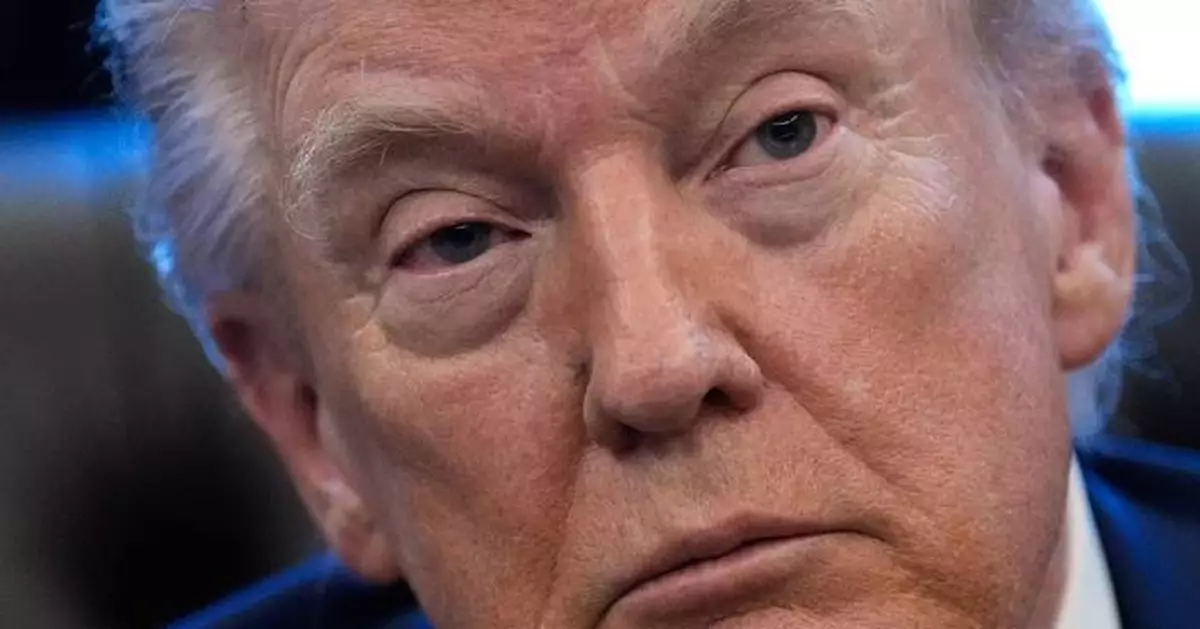
Trump has expressed frustration at reflexive resistance from Democratic mayors and governors, insisting this week that he doesn't want to force federal law enforcement on communities. He prefers to work with officials like Louisiana GOP Gov. Jeff Landry, who requested National Guard troops to patrol New Orleans.
The president's willingness to use federal power is often issue-based, favoring states in areas like abortion or education while embracing a strong federal role on immigration and elections.
Trump said this week that Republicans should “nationalize” elections, a power the Constitution expressly gives to states. White House press secretary Karoline Leavitt said he was referring to a push that voters prove they are U.S. citizens, though Trump still described states as an “agent for the federal government.”
“That’s not what the Constitution says about elections,” Sen. Rand Paul, R-Ky., told MS NOW.
Beshear and the 23 other Democratic governors released a statement Thursday objecting to “interference from the federal government.” In the interview, Beshear pointed to Paul's comments as an example of bipartisan agreement.
“Rand and I don't agree on a lot,” he said.
Paul and some other Republicans, including Govs. Phil Scott of Vermont and Kevin Stitt of Oklahoma, have also expressed concern about the immigration operation in Minnesota.
Trump has taken preliminary steps to ease tensions, replacing Immigration and Customs Enforcement and Department of Homeland Security leaders in Minneapolis with Tom Homan, the administration's border czar. Homan is withdrawing 700 of the roughly 3,000 federal officers deployed around Minneapolis, though Trump and Vice President JD Vance reject any suggestion of a federal drawdown.
Minneapolis Mayor Jacob Frey said the continued presence in the Twin Cities of thousands of federal officers contradicts his demand that the administration end its operation there. In a sign of the frustration between local and federal officials there, the rhetoric has taken on militaristic tones.
Trump has referred to federal law enforcement in Minneapolis as “soldiers.” Homan has described agents as being “in theater,” a military phrase typically used in reference to a conflict zone. During a quick trip to Washington last week to address fellow mayors, Frey spoke of an “invasion” and “occupation" in his city.
“We are on the front lines of a very important battle,” he said.
At the same event, Elizabeth Kautz, the Republican mayor of suburban Burnsville, Minnesota, said she now carries her passport around the city she’s led since 1995.
“With the introduction of ICE, our cities are no longer safe,” she said.
That's also how it feels to leaders in places far from Minneapolis, even if they haven't been targeted by ICE.
“What I can't tolerate is the approach to immigration operations in a place like Minneapolis that are causing people to look over their shoulder in cities like Allentown,” said Matt Tuerk, the Democratic mayor of Allentown, Pennsylvania, which has a large Latino population. “Even though you're not in Allentown, you're having an impact.”
The immigration crackdown is one element of Trump's work to dramatically reshape the U.S. government's priorities and operations at home and abroad. Trump and his supporters describe a need to strictly enforce immigration laws in the U.S. and end social safety net programs they say are prone to fraud. The president's foreign policy has shown little patience for longstanding alliances or diplomatic niceties that are seen as out of step with U.S. interests.
That's manifested most clearly in Trump's push for Denmark to cede control of Greenland to the U.S., a demand that brought the NATO alliance to the brink in January. Canadian prime minister Mark Carney spoke at the time of a “rupture” between the U.S. and its allies that would be difficult to repair.
For some local leaders in the U.S., that sense of a seismic shift felt familiar.
“It’s profoundly changed,” Cincinnati Mayor Aftab Pureval, a Democrat, said of his views toward the federal government. “Given that the administration has used partisan politics and used the power of the federal government and its various agencies to put pressure on mayors and local officials not to follow the law but to follow their politics is absolutely new and it’s absolutely affecting trust at every level.”
While foreign leaders can explore a shift in alliances, as some are actively considering, that's nearly impossible for local leaders in the U.S., whose budgets are tied to federal funding. Those funds have been unstable during Trump's second term as Washington has canceled grants that he considered wasteful or out of line with the administration's priorities, prompting some mayors to turn to philanthropy for help.
But nothing can replace the power of the federal government, said Tuerk, who described defending grants by connecting the money to the administration's priorities, including job creation.
“When we're like, 'Hey, don't take away this grant that is designed to get people to work,' I hope that message is getting through,” he said.
Los Angeles Mayor Karen Bass called the federal shift “absolutely historic.” Trump has fiercely criticized her, issuing an executive order last month deriding her wildfire response and pressing to “cut through bureaucratic red tape” to speed up reconstruction.
In an interview, Bass, a former member of Congress, said she turns to administration officials she knew from her time in Washington.
“I’m fortunate,” she said. “I have an ability to have a relationship.”
But as January came to a close, local officials in Minnesota seemed exhausted.
“You think about, ‘Why us?’” said Jim Hovland, the nonpartisan mayor of the Minneapolis suburb Edina. “We've had a historically really good relationship with the federal government, and it's really sad to see it fray.”
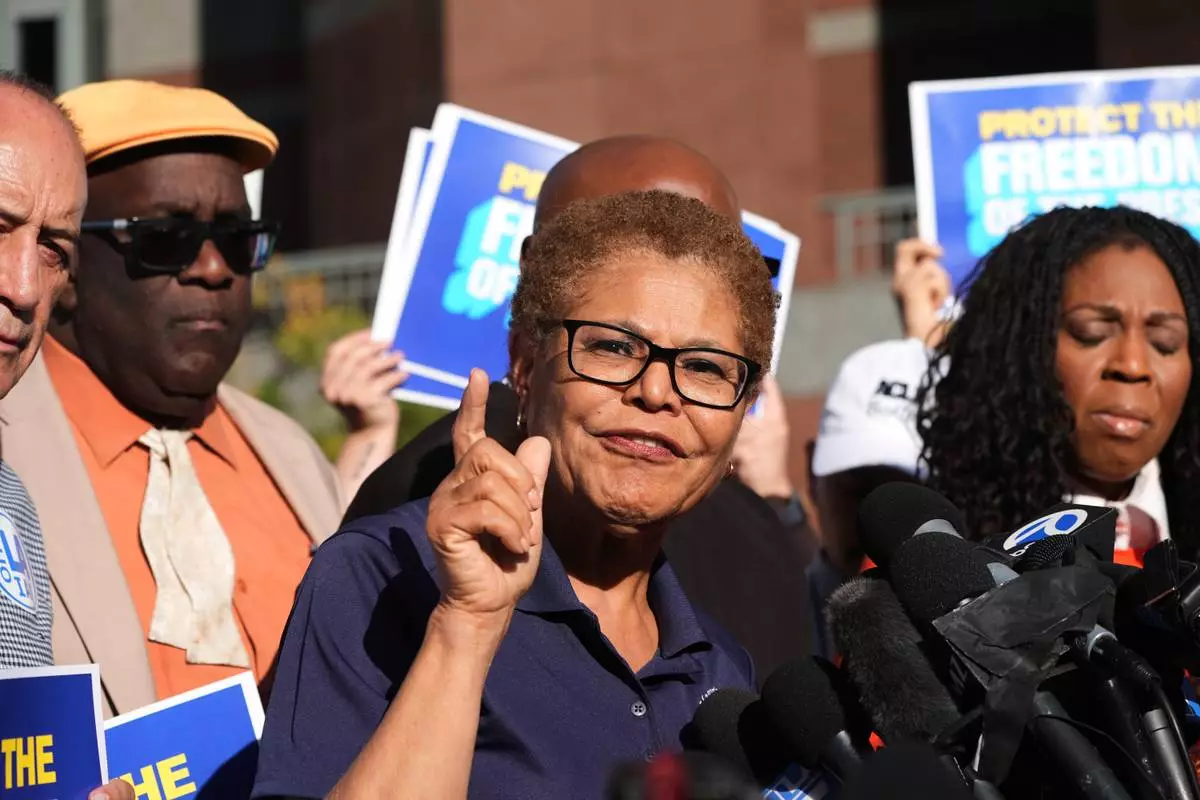
Los Angeles Mayor Karen Bass speaks to the media outside the Edward R. Roybal Federal Building in Los Angeles on Friday, Jan. 30, 2026. (AP Photo/Damian Dovarganes)
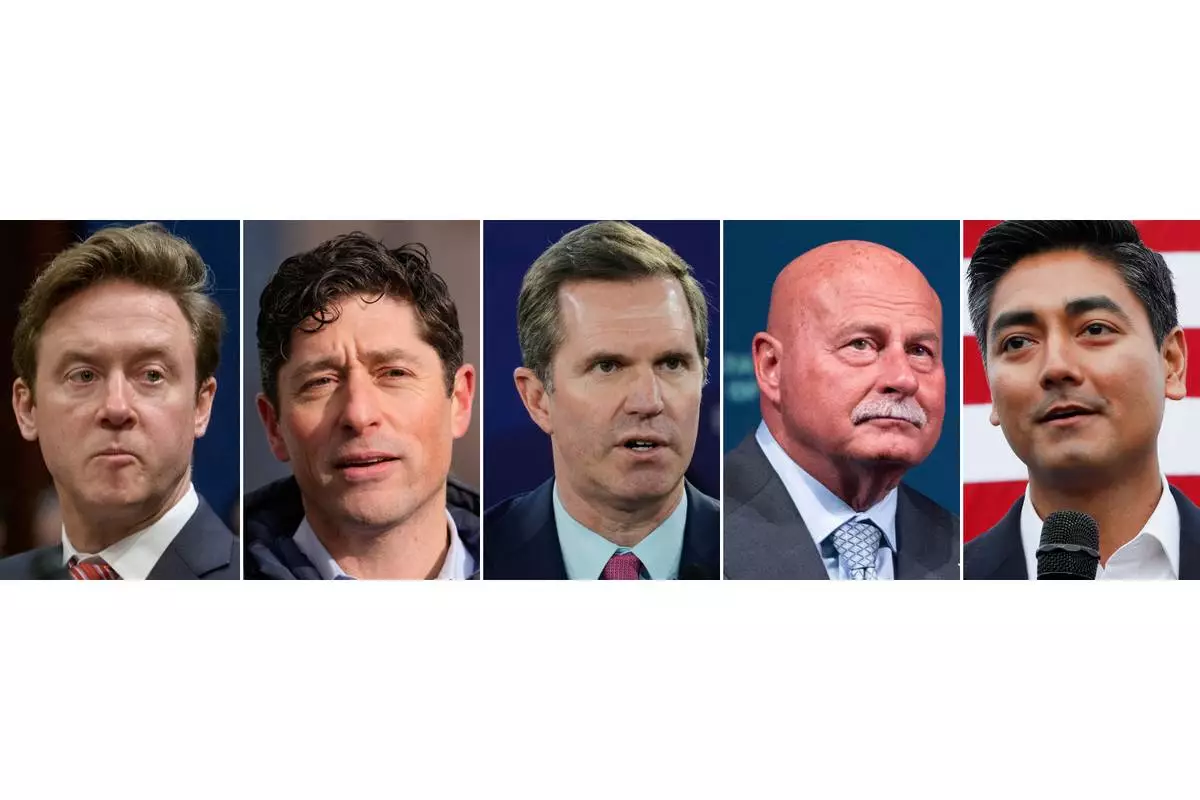
This photo combination shows, from left, Denver Mayor Mike Johnston, March 5, 2025, in Washington, Minneapolis Mayor Jacob Frey, Jan. 10, 2026, in Minneapolis, Kentucky Gov. Andy Beshear in Davos, Switzerland, Jan. 21, 2026, Fresno, Calif. Mayor Jerry Dyer, Jan. 28, 2026 in Washington, and Cincinnati Mayor Aftab Pureval, Nov. 4, 2018 in Cincinnati. (AP Photo/Rod Lamkey, Jr., Jen Golbeck, Markus Schreiber, Kevin Wolf, John Minchillo)
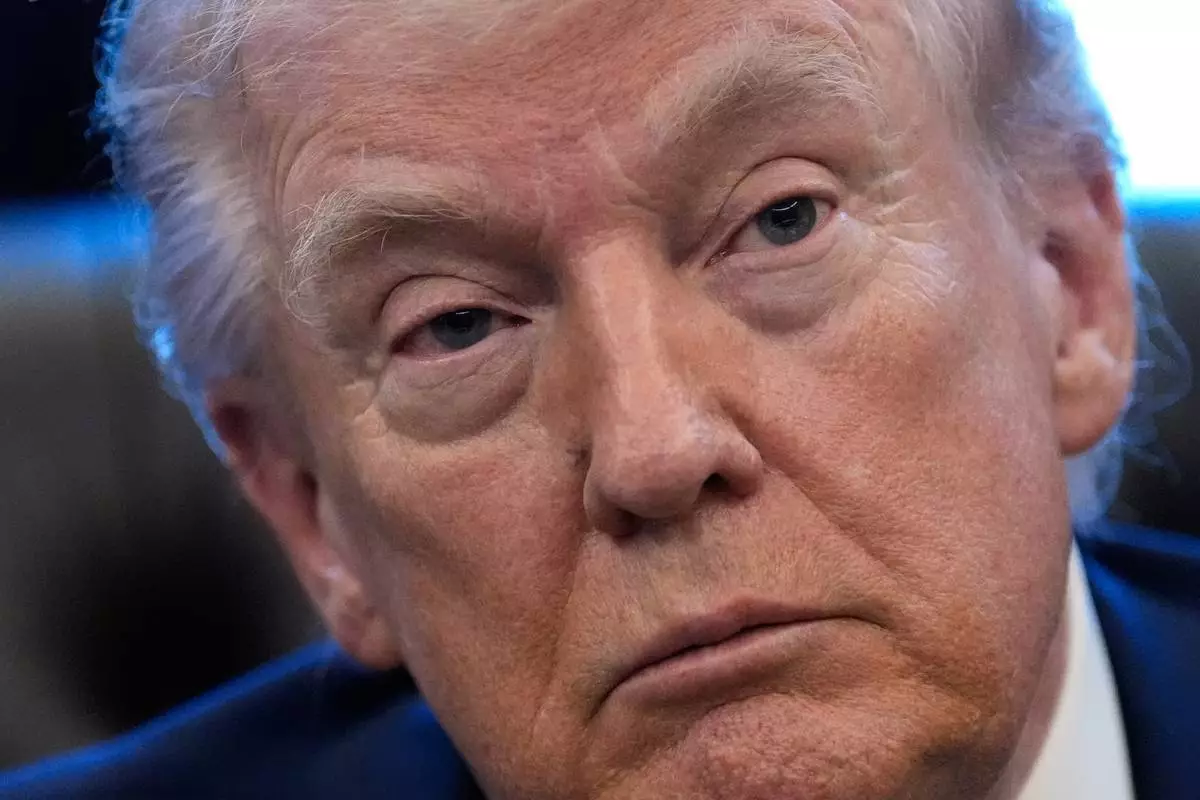
President Donald Trump listens to a question from a reporter as he speaks in the Oval Office of the White House, Monday, Feb. 2, 2026, in Washington. (AP Photo/Alex Brandon)