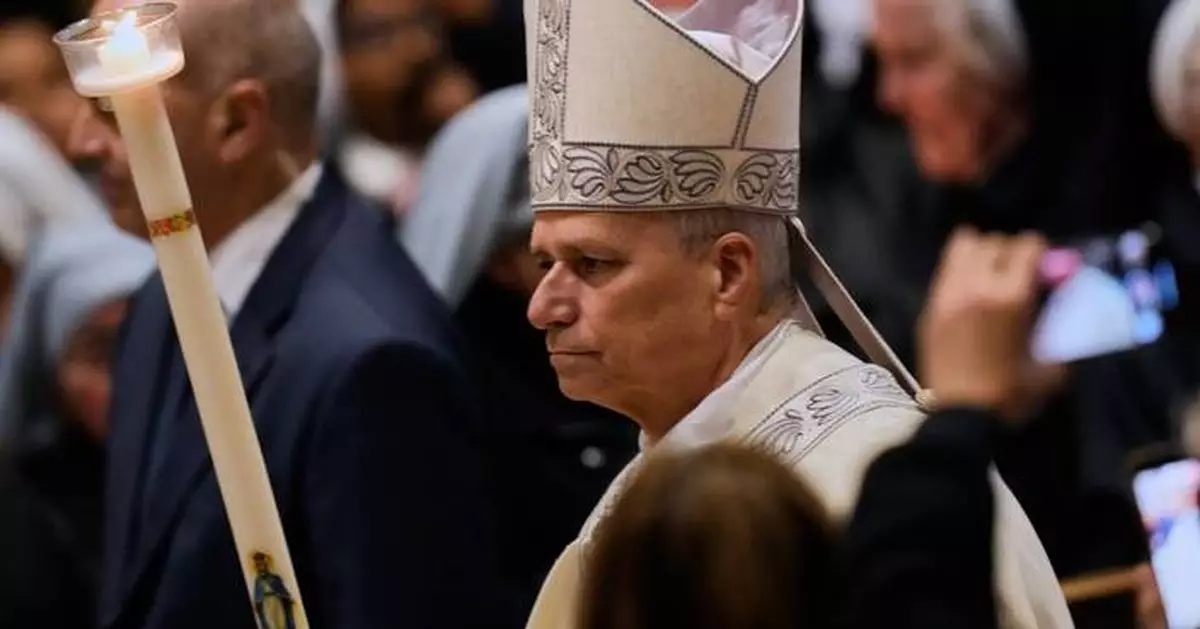
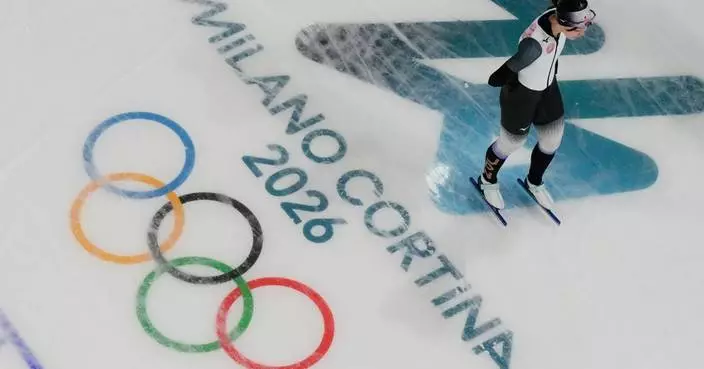
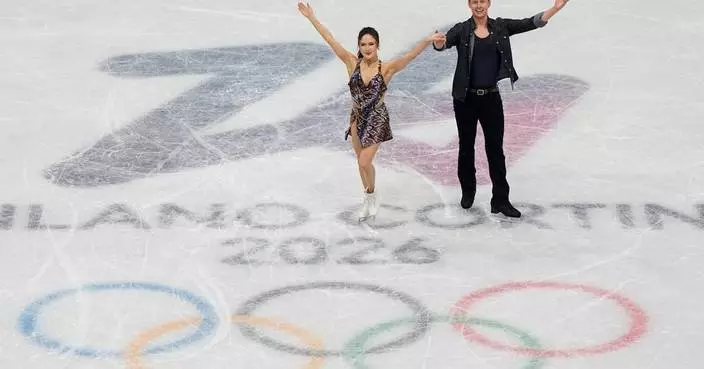
ROME (AP) — Pope Leo XIV, an avid tennis player and sports fan, marked the start of the Winter Games on Friday by extolling the positive values of sport and fair play while warning that the pursuit of profits and performance risked corrupting sport entirely.
In a message entitled “Life in Abundance” issued on the same day as the Milan Cortina opening ceremony, Leo traced the history of Christian philosophers and popes who identified sports and leisure activity as beneficial for both physical and spiritual development.
And he repeated his call for world leaders to respect the ancient tradition of an Olympic truce.
But drawing on his own experience as an athlete, Leo delved into a nuanced exploration of the value of sports and the risk when the “dictatorship of performance” posed by doping, match-fixing and other forms of corruption win out over fair play.
“Such dishonesty not only corrupts sporting activities themselves, but also demoralizes the general public and undermines the positive contribution of sport to society as a whole,” he warned.
He called for sport to be accessible, to both poor people and women especially, and for fans to refrain from turning sport into a fanatical religion. Athletes, too, he said, must refrain from narcissism and becoming obsessed with their image and success.
“The cult of image and performance, amplified by media and digital platforms, risks fragmenting the person, separating body from mind and spirit,” he warned.
True sport, he said, calls for a “shared ethical accord” between competitors, where the rules of the game are accepted and the integrity of the contest is respected.
“Accepting the limits of one’s body, the limits of time and fatigue, and respecting the established rules means recognizing that success comes from discipline, perseverance and loyalty,” he said.
Popes have a long history of engaging the sporting world to promote values of peace, solidarity, and friendship, with the Olympics offering them regular opportunities to recall the ancient tradition of an Olympic truce.
On Sunday, Leo called for an Olympic truce to accompany the Games, urging especially world leaders to take the opportunity of the Games to “make concrete gestures of detente and dialogue.”
Leo, 70, is famously sporty: He religiously plays tennis and swims at his country house where he escapes from Monday to Tuesday each week, and is a longtime fan of the Chicago White Socks baseball team.
Before becoming pope, then-Cardinal Robert Prevost would also work out at the Vatican-area Omega gym two to three times a week, with hourlong sessions focusing especially on posture and cardiovascular health, according to his personal trainer at the time. Prevost’s workouts, described as suitable for a man in his 50s, would last up to an hour and focus especially on the treadmill and exercise bike, trainer Valerio Masella told The Associated Press last year.
When Leo was elected, the Italian Open was underway and one of Leo’s first audiences was with former No. 1 tennis player Jannik Sinner of Italy, who gave him a racket.
Leo drew on his experience as a tennis player in his message Friday, noting the cultural and spiritual benefits of the so-called “flow experience,” of being challenged beyond one’s level, that both fans and players alike can experience in a prolonged tennis rally.
“The reason this is one of the most enjoyable parts of a match is that each player pushes the other to the limit of his or her skill level,” Leo wrote. “The experience is exhilarating, and the two players challenge each other to improve; this is as true for two ten-year-olds as it is for two professional champions.”
But Leo's athleticism and attention to the spiritual and social values of sport is nothing new.
St. John Paul II, who was elected pope at the age of 58, was an avid skier and mountain trekker.
Pope Benedict XVI preferred solitary walks in the mountains. Pope Francis wasn’t athletic at all – he was known as “hard foot” as a child because of his poor soccer skills — but he was a lifelong fan and member of the Argentine soccer club San Lorenzo.
Francis also spoke out frequently a bout the positive values of teamwork and camaraderie in sport, especially for young people, and during his pontificate the Holy See began fielding track and cycling athletes in international competitions as team Atletica Vaticana.
Last year, on the occasion of the 2025 Holy Year, the Giro d’Italia passed through the Vatican.
Francis also warned of the downside of sport, especially at the professional level, often calling out doping, match-fixing and corruption that he said had tarnished people’s trust in fair play.
Associated Press religion coverage receives support through the AP’s collaboration with The Conversation US, with funding from Lilly Endowment Inc. The AP is solely responsible for this content.
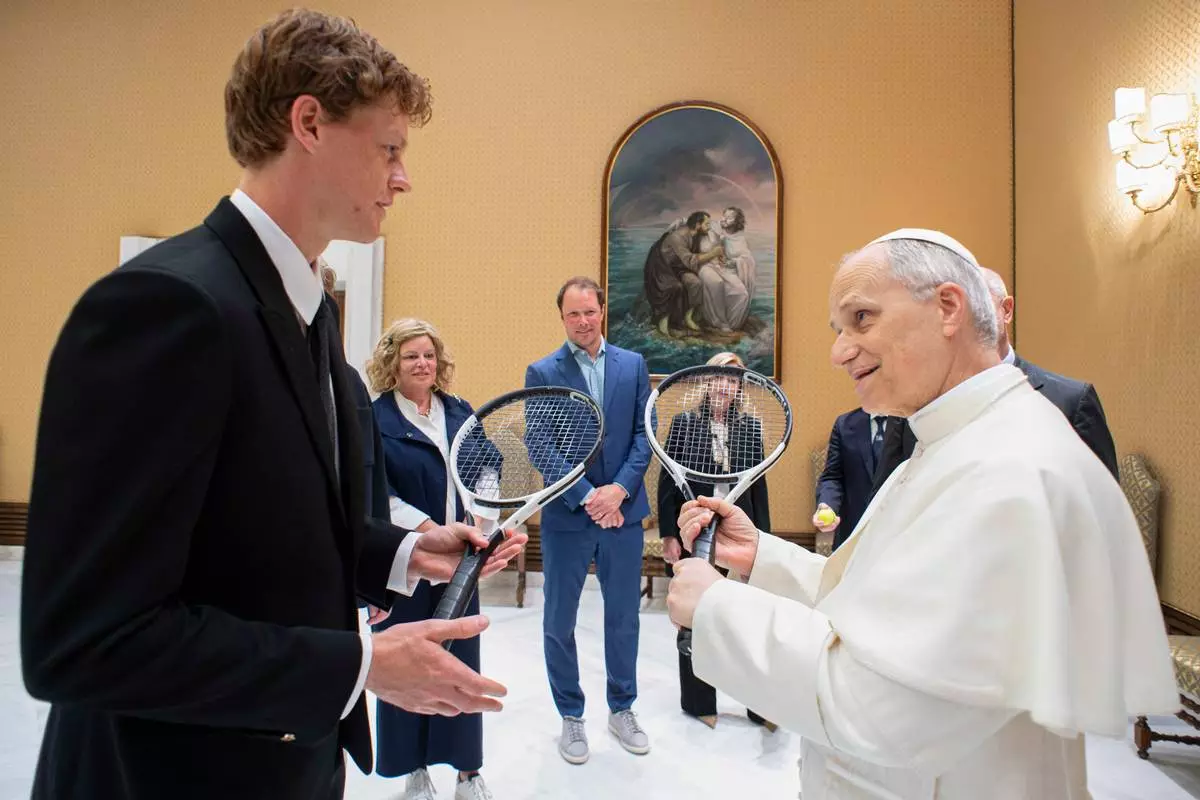
FILE - Italy's Jannik Sinner, left, shares a light moment with Pope Leo XIV on the occasion of their meeting at the Vatican, Wednesday, May 14, 2025. (Vatican Media via AP, File)
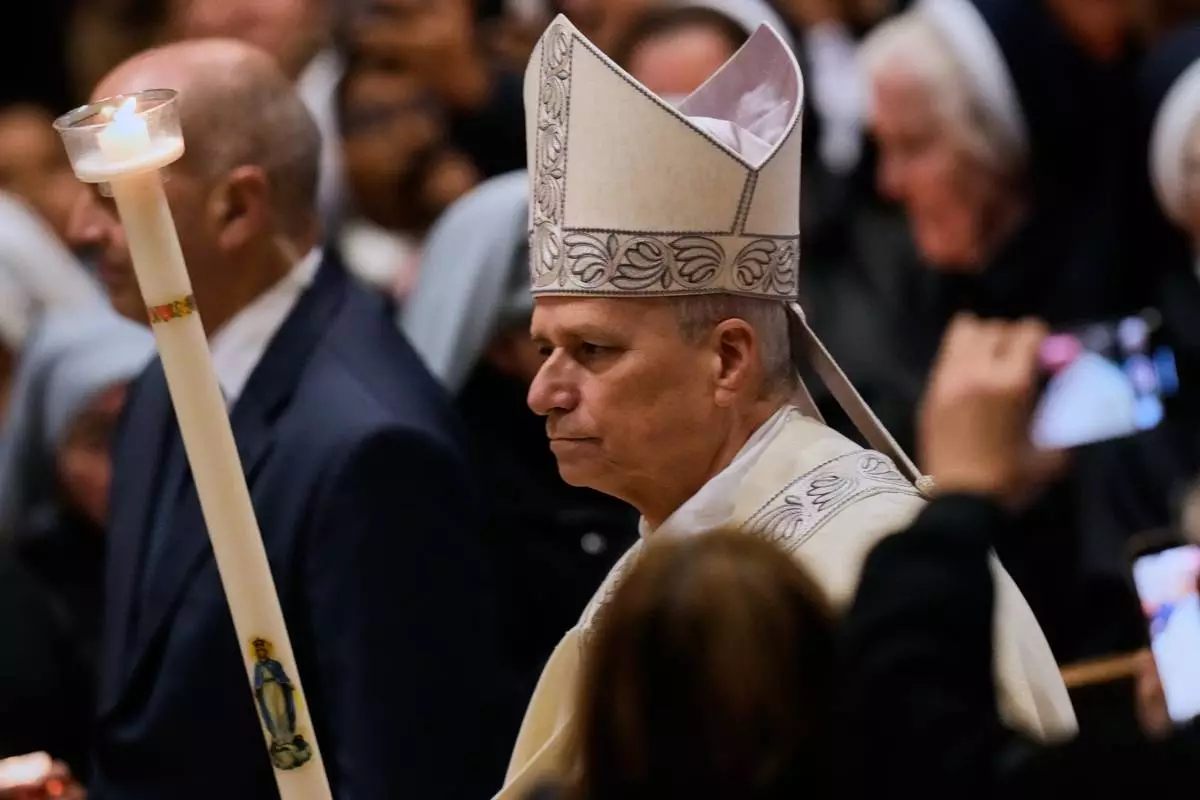
Pope Leo XIV arrives to preside over Mass in St. Peter's Basilica at the Vatican on the Cathilic feast of the Presentation of the Lord, Monday, Feb. 2, 2026. (AP Photo/Gregorio Borgia)
The pursuit of a gold medal that has eluded the U.S. men's hockey team since the “Miracle on Ice” in 1980 appears to be on sound footing.
The return of the NHL players after their absence from the last two Winter Games ought to provide a significant boost, but the inclusion of one of player in particular checks a unique box.
Brock Nelson, the 34-year-old center for the Colorado Avalanche and first-time Olympian, hails from Warroad, Minnesota. He is the eighth Olympic hockey player native to the tiny lakeside town a few miles from the Canadian border that has supplied players for both of the previous men's teams to win gold.
Nelson's grandfather, Bill Christian, and great uncle, Roger Christian, were first-line forwards on the 1960 squad that beat the Soviet Union and Canada to take the title in Squaw Valley, California. Nelson's uncle, Dave Christian, led the famed 1980 team in assists on the way to the improbable semifinal victory over the Soviet Union and gold medal win over Finland in Lake Placid, New York.
“It’s hard to explain Warroad, just the environment there. You just grow up playing hockey. Hockey is a way of life," Nelson recalled before a recent Avalanche game. “Thinking back to my early memories of the game, it’s just growing up with the same guys and playing outside on the river at a buddy’s house or my grandparents' house.”
Living in a harsh winter climate with fewer than 2,000 people will naturally steer a youngster toward the ice. It's all over town, of course.
From the mouth of Lake of the Woods, the Warroad River snakes through the middle of the city limits, a few blocks from the headquarters of Marvin Windows and Doors, the employer as synonymous with the town as the sport of hockey. The river is regularly groomed for skating for miles by a network of volunteers. If the outdoor conditions are unfavorable, chances are someone around will have a key to one of the two indoor rinks.
“It’s pretty cold up there, so not a whole lot going on. I feel like it’s hunt, fish or hockey. You get involved in it early and have that camaraderie with the group, the families,” Nelson said. "It holds a special place in my heart. I feel like hockey’s life up there, and everyone’s kind of involved in some capacity.”
Another one of Nelson's great uncles, Gord Christian, played on the Olympic team in 1956. Bill Christian and Roger Christian also were on the 1964 team. They started the Christian Brothers hockey stick manufacturing business after that, an equipment line that provided jobs for dozens of aspiring players in the area over five decades until it was eventually bought by a Canadian company.
“Growing up, we all worked for Brock's grandpa,” said David Marvin, who also had Bill Christian as his bantam level coach as a middle-schooler and is now the girls hockey coach for Warroad High School. “They were our neighbors and our friends. We didn’t need NHL idols or people to look up to. We had them here, and we continue to have them here, and I think that's what sets Warroad apart.”
Marvin's niece, Gigi Marvin, won a gold medal with the U.S. women's team in 2018 and played in three Olympics. She recently retired from the Professional Women's Hockey League.
Her high school classmate, T.J. Oshie, had a 16-year career in the NHL, but he was probably best known for his four shootout goals in six attempts to beat host Russia in the 2014 Winter Games. The U.S. team took fourth place that year, making him the only Warroad native who didn't leave the Olympics with a medal. Gord Christian (1956) and Henry Boucha (1972) brought silvers back to town.
There's a reason Warroad has branded itself as Hockeytown USA, even though the title originated in Detroit.
Including the current squads, Minnesota has supplied the Olympic men's teams with 130 different players to factor in multiple selections since the first U.S. entry in the Winter Games in 1920, according to an Associated Press review of the all-time Team USA rosters. The women's competition began in 1998, and Minnesota has produced 15 players for that program.
For a place with such a miniscule slice of the population, Warroad has sure provided an outsized boost. The next town over, Roseau, can't be forgotten, either. Including Neal Broten from the 1980 squad, Roseau has supplied the men's teams with seven Olympians. That means 15 players coming from within a 25-mile radius of a region about a six-hour drive from the Minneapolis-St. Paul metro area.
Being so close to Canada, the people of Warroad have plenty of friends across the border. When the Olympics or any international competition is ongoing, the banter and needling will kick in amongst the fans of the two rival squads. Regardless of rooting interest, an area with so many rink rats makes Olympic hockey appointment viewing.
One of David Marvin's assistant coaches is Blayke Nelson, the younger brother of Brock Nelson. He has been closely examining schedules for months, with the Warroad girls aiming for the state tournament on the same weekend as the men's medal games in Milan.
“Wouldn't it be cool if Brock won a gold medal in the morning and we won a state championship in the afternoon? You dream about that scenario,” David Marvin said. “What a wonderful story it is for Brock. This has been a goal of his for a long time, to represent the U.S. in the Olympics. It's going to be really special for their family. I just marvel at genetics sometimes."
AP Sports Writer Pat Graham contributed from Denver.
AP Olympics: https://apnews.com/hub/milan-cortina-2026-winter-olympics

FILE - This Sept. 16, 2009 photo shows the outside of Marvin Windows and Doors manufacturing in Warroad, Minn. (Glen Stubbe/Star Tribune via AP, File)
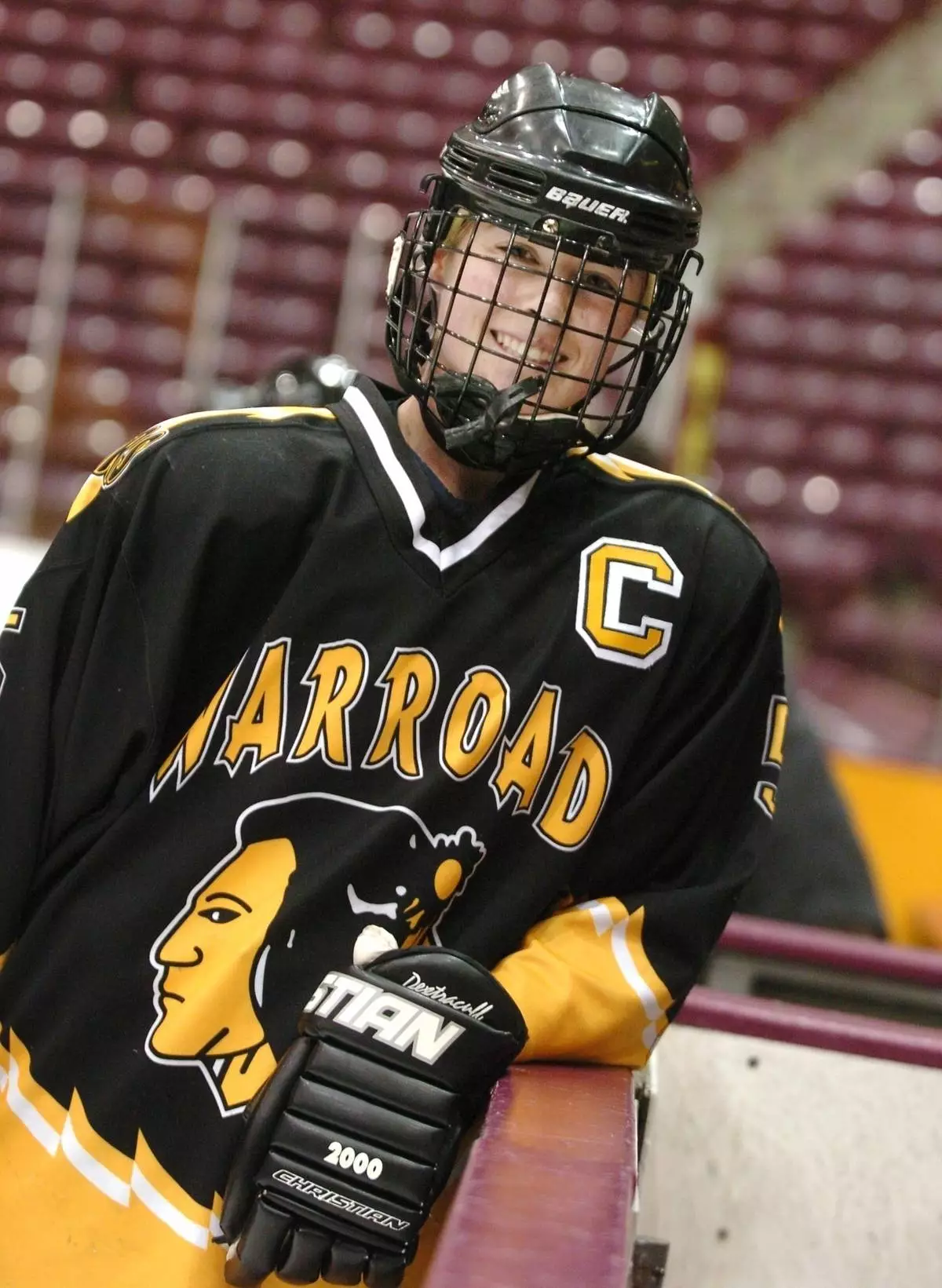
FILE - Gigi Marvin, a senior center at Warroad High School, poses for a photo Dec. 27, 2004, at Mariucci Arena in Minneapolis, where she plans to play hockey next year with the University of Minnesota. (Chris Polydoroff/Pioneer Press via AP, File)
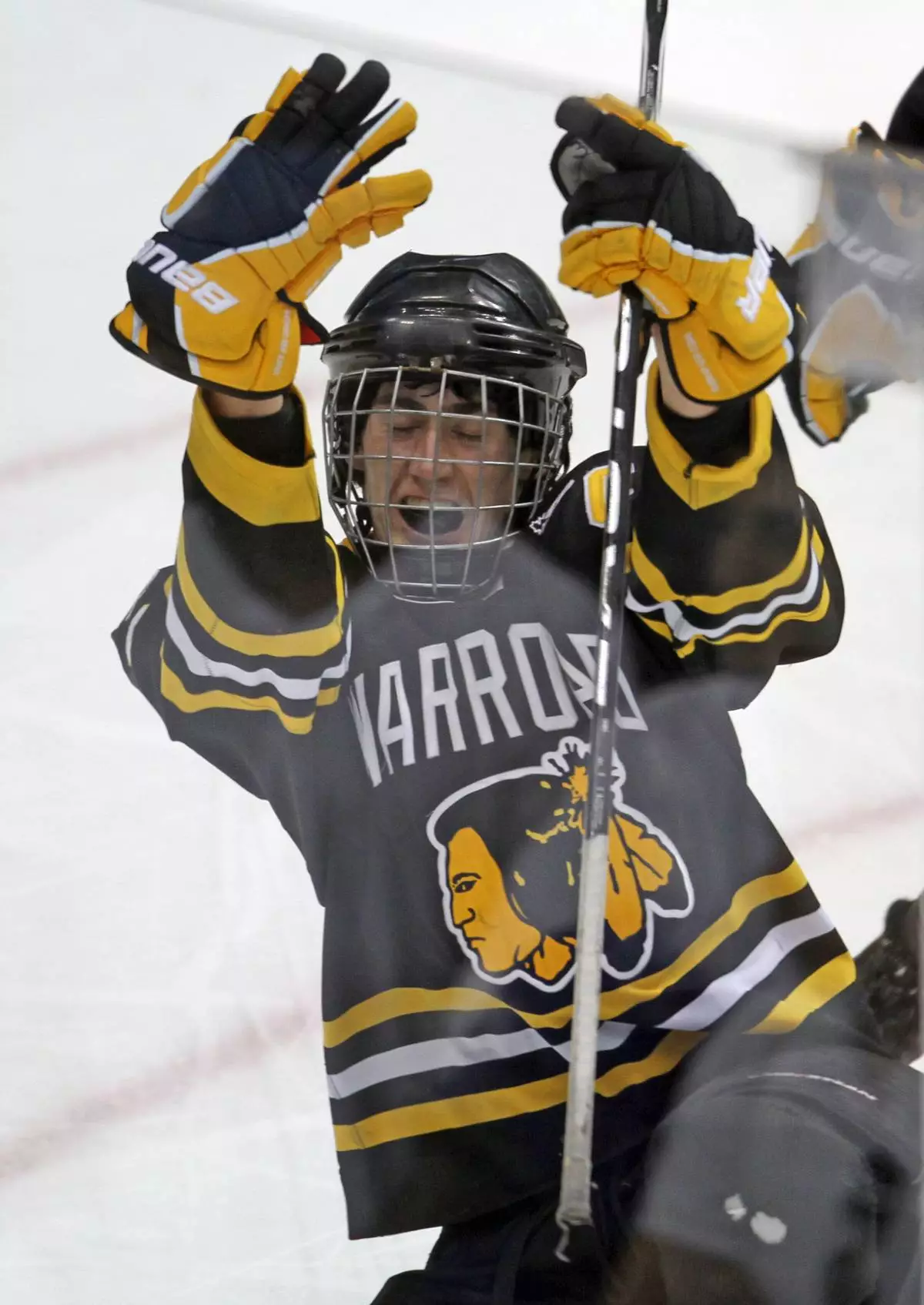
FILE - Warroad's Brock Nelson celebrated his first-period goal against Breck during the semifinals of the Class A State boys hockey tournament on Friday, March 12, 2010, in St. Paul, Minn. (Bruce Bisping/Star Tribune via AP, File)
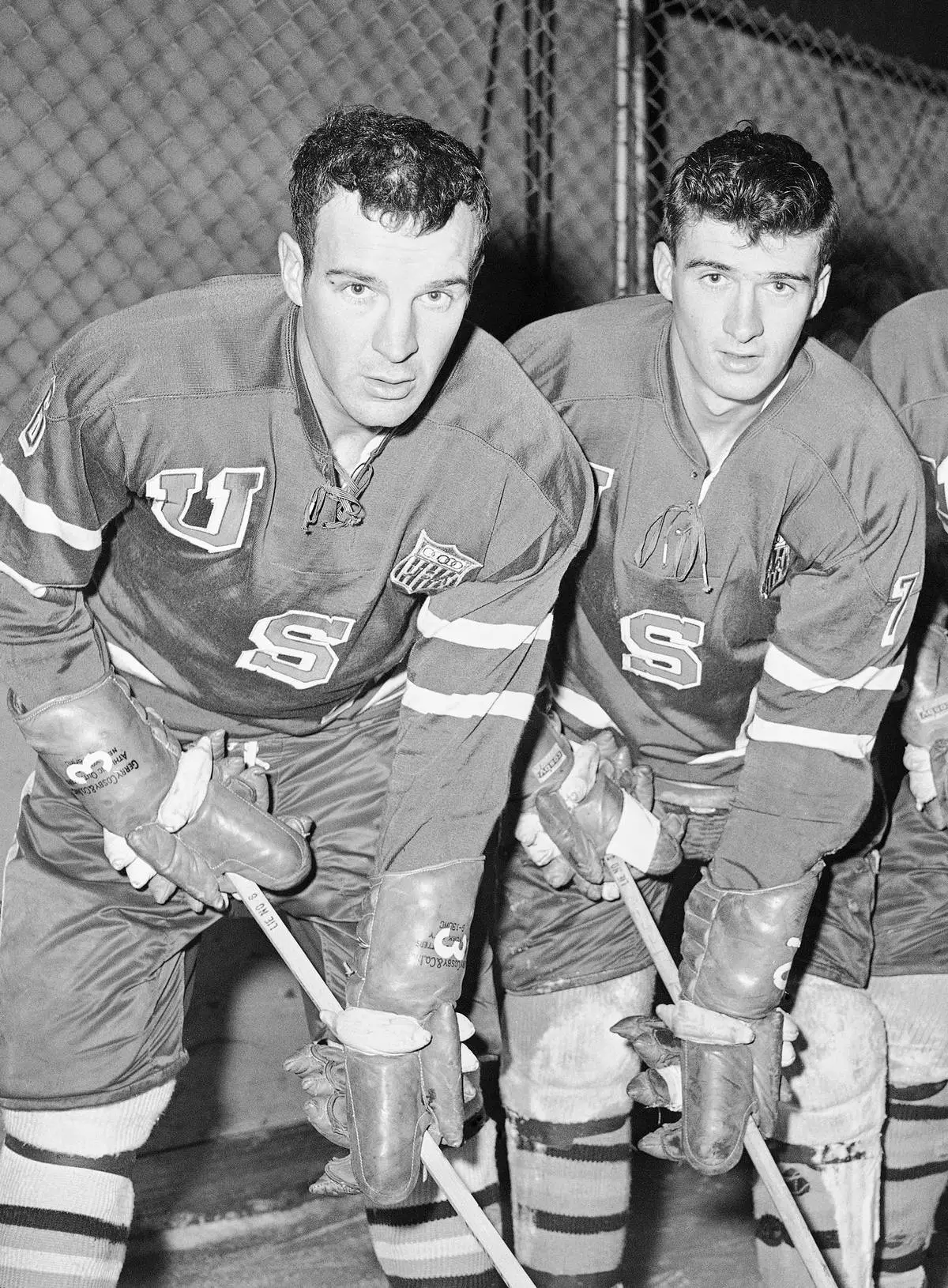
FILE - U .S. Olympic ice hockey forwards Roger Christian, left, and Bill Christian pose Jan. 6, 1960, at the United States Military Academy in West Point, N.Y. (AP Photo/John Rooney, File)
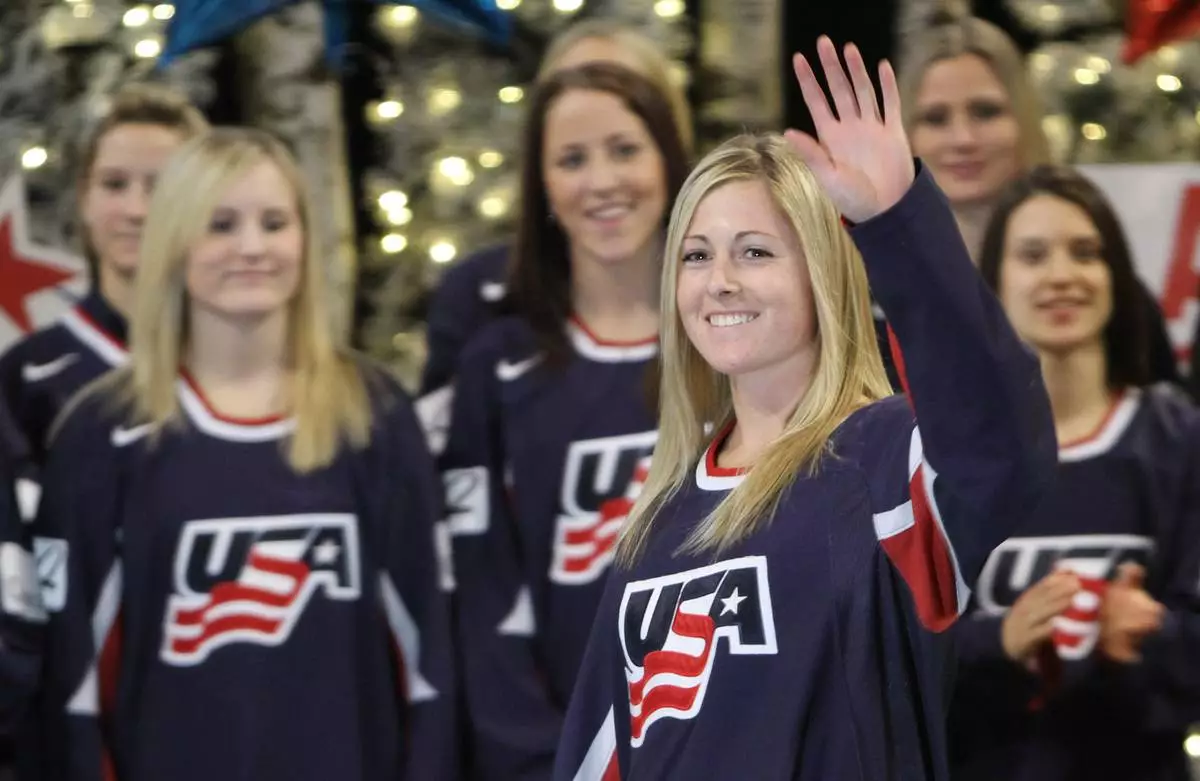
FILE - Gigi Marvin, of Warroad, Minn., waves as she is introduced as a member of the 2010 U.S. Olympic Women's Ice Hockey Team in Bloomington, Minn., Thursday, Dec. 17, 2009. (Bruce Bisping/Star Tribune via AP)