The pursuit of a gold medal that has eluded the U.S. men's hockey team since the “Miracle on Ice” in 1980 appears to be on sound footing.
The return of the NHL players after their absence from the last two Winter Games ought to provide a significant boost, but the inclusion of one of player in particular checks a unique box.
Click to Gallery
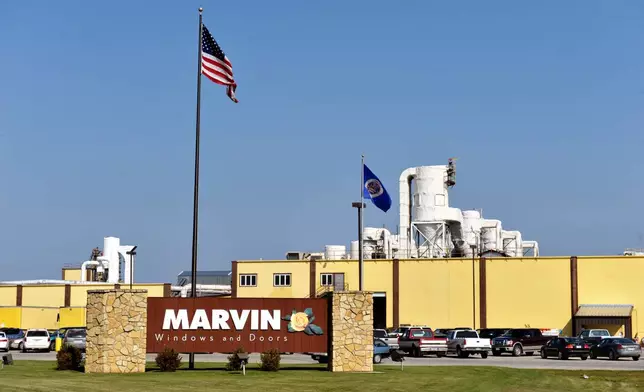
FILE - This Sept. 16, 2009 photo shows the outside of Marvin Windows and Doors manufacturing in Warroad, Minn. (Glen Stubbe/Star Tribune via AP, File)
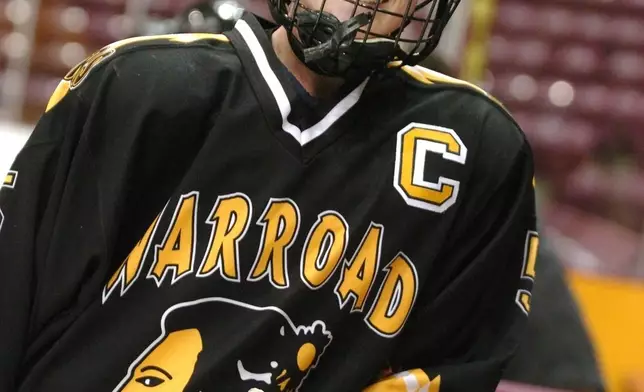
FILE - Gigi Marvin, a senior center at Warroad High School, poses for a photo Dec. 27, 2004, at Mariucci Arena in Minneapolis, where she plans to play hockey next year with the University of Minnesota. (Chris Polydoroff/Pioneer Press via AP, File)
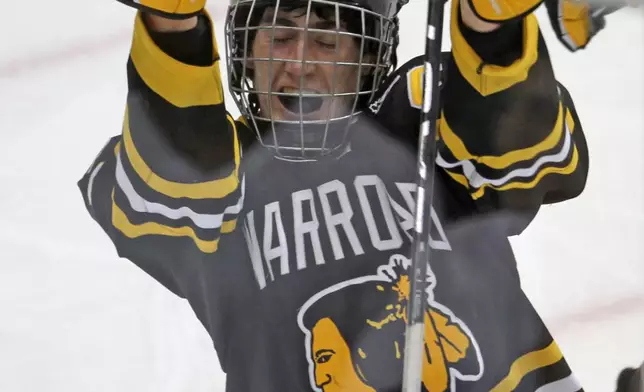
FILE - Warroad's Brock Nelson celebrated his first-period goal against Breck during the semifinals of the Class A State boys hockey tournament on Friday, March 12, 2010, in St. Paul, Minn. (Bruce Bisping/Star Tribune via AP, File)
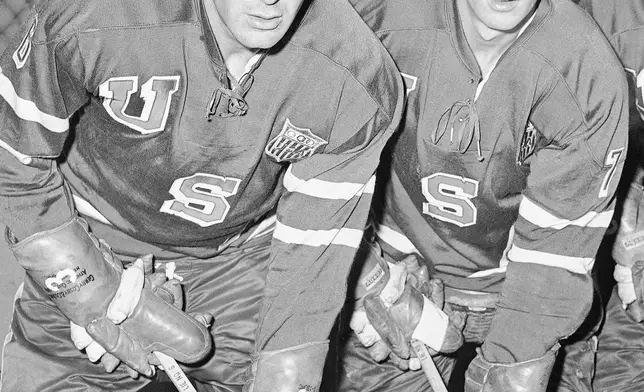
FILE - U .S. Olympic ice hockey forwards Roger Christian, left, and Bill Christian pose Jan. 6, 1960, at the United States Military Academy in West Point, N.Y. (AP Photo/John Rooney, File)
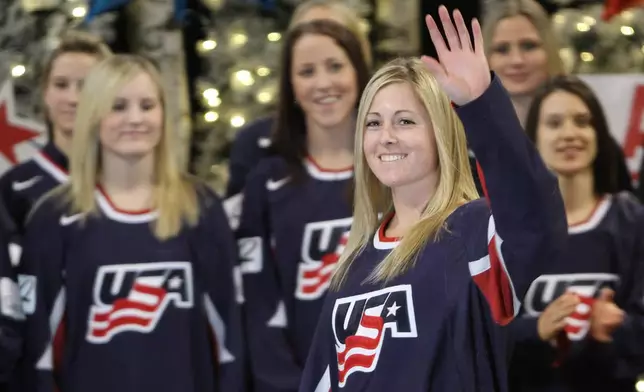
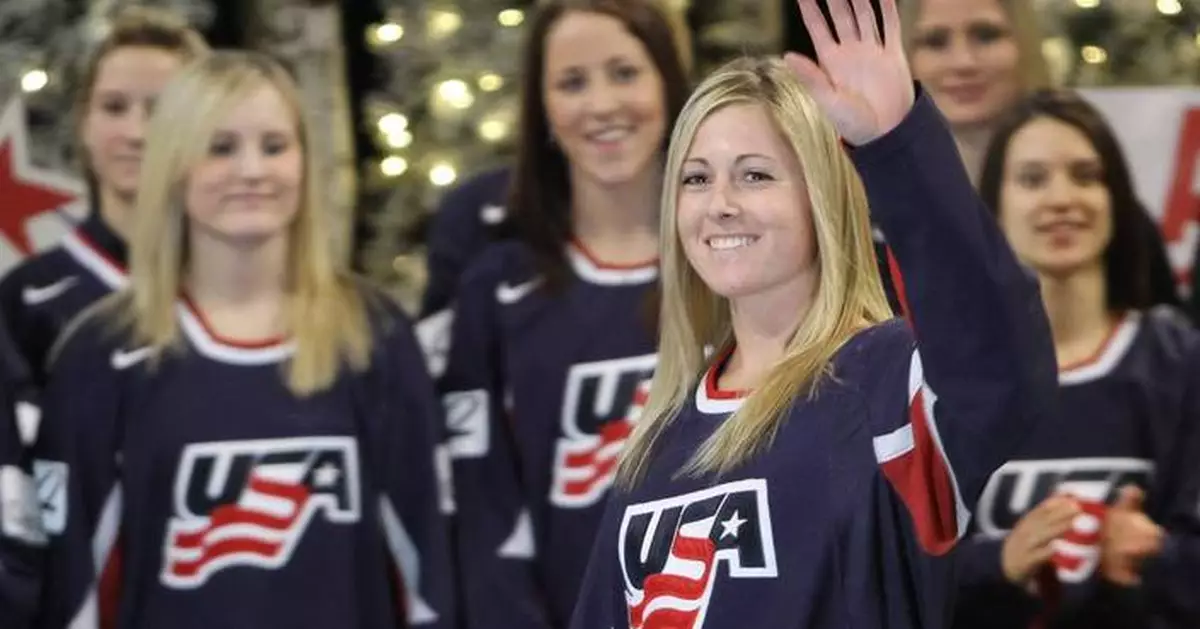
FILE - Gigi Marvin, of Warroad, Minn., waves as she is introduced as a member of the 2010 U.S. Olympic Women's Ice Hockey Team in Bloomington, Minn., Thursday, Dec. 17, 2009. (Bruce Bisping/Star Tribune via AP)
Brock Nelson, the 34-year-old center for the Colorado Avalanche and first-time Olympian, hails from Warroad, Minnesota. He is the eighth Olympic hockey player native to the tiny lakeside town a few miles from the Canadian border that has supplied players for both of the previous men's teams to win gold.
Nelson's grandfather, Bill Christian, and great uncle, Roger Christian, were first-line forwards on the 1960 squad that beat the Soviet Union and Canada to take the title in Squaw Valley, California. Nelson's uncle, Dave Christian, led the famed 1980 team in assists on the way to the improbable semifinal victory over the Soviet Union and gold medal win over Finland in Lake Placid, New York.
“It’s hard to explain Warroad, just the environment there. You just grow up playing hockey. Hockey is a way of life," Nelson recalled before a recent Avalanche game. “Thinking back to my early memories of the game, it’s just growing up with the same guys and playing outside on the river at a buddy’s house or my grandparents' house.”
Living in a harsh winter climate with fewer than 2,000 people will naturally steer a youngster toward the ice. It's all over town, of course.
From the mouth of Lake of the Woods, the Warroad River snakes through the middle of the city limits, a few blocks from the headquarters of Marvin Windows and Doors, the employer as synonymous with the town as the sport of hockey. The river is regularly groomed for skating for miles by a network of volunteers. If the outdoor conditions are unfavorable, chances are someone around will have a key to one of the two indoor rinks.
“It’s pretty cold up there, so not a whole lot going on. I feel like it’s hunt, fish or hockey. You get involved in it early and have that camaraderie with the group, the families,” Nelson said. "It holds a special place in my heart. I feel like hockey’s life up there, and everyone’s kind of involved in some capacity.”
Another one of Nelson's great uncles, Gord Christian, played on the Olympic team in 1956. Bill Christian and Roger Christian also were on the 1964 team. They started the Christian Brothers hockey stick manufacturing business after that, an equipment line that provided jobs for dozens of aspiring players in the area over five decades until it was eventually bought by a Canadian company.
“Growing up, we all worked for Brock's grandpa,” said David Marvin, who also had Bill Christian as his bantam level coach as a middle-schooler and is now the girls hockey coach for Warroad High School. “They were our neighbors and our friends. We didn’t need NHL idols or people to look up to. We had them here, and we continue to have them here, and I think that's what sets Warroad apart.”
Marvin's niece, Gigi Marvin, won a gold medal with the U.S. women's team in 2018 and played in three Olympics. She recently retired from the Professional Women's Hockey League.
Her high school classmate, T.J. Oshie, had a 16-year career in the NHL, but he was probably best known for his four shootout goals in six attempts to beat host Russia in the 2014 Winter Games. The U.S. team took fourth place that year, making him the only Warroad native who didn't leave the Olympics with a medal. Gord Christian (1956) and Henry Boucha (1972) brought silvers back to town.
There's a reason Warroad has branded itself as Hockeytown USA, even though the title originated in Detroit.
Including the current squads, Minnesota has supplied the Olympic men's teams with 130 different players to factor in multiple selections since the first U.S. entry in the Winter Games in 1920, according to an Associated Press review of the all-time Team USA rosters. The women's competition began in 1998, and Minnesota has produced 15 players for that program.
For a place with such a miniscule slice of the population, Warroad has sure provided an outsized boost. The next town over, Roseau, can't be forgotten, either. Including Neal Broten from the 1980 squad, Roseau has supplied the men's teams with seven Olympians. That means 15 players coming from within a 25-mile radius of a region about a six-hour drive from the Minneapolis-St. Paul metro area.
Being so close to Canada, the people of Warroad have plenty of friends across the border. When the Olympics or any international competition is ongoing, the banter and needling will kick in amongst the fans of the two rival squads. Regardless of rooting interest, an area with so many rink rats makes Olympic hockey appointment viewing.
One of David Marvin's assistant coaches is Blayke Nelson, the younger brother of Brock Nelson. He has been closely examining schedules for months, with the Warroad girls aiming for the state tournament on the same weekend as the men's medal games in Milan.
“Wouldn't it be cool if Brock won a gold medal in the morning and we won a state championship in the afternoon? You dream about that scenario,” David Marvin said. “What a wonderful story it is for Brock. This has been a goal of his for a long time, to represent the U.S. in the Olympics. It's going to be really special for their family. I just marvel at genetics sometimes."
AP Sports Writer Pat Graham contributed from Denver.
AP Olympics: https://apnews.com/hub/milan-cortina-2026-winter-olympics
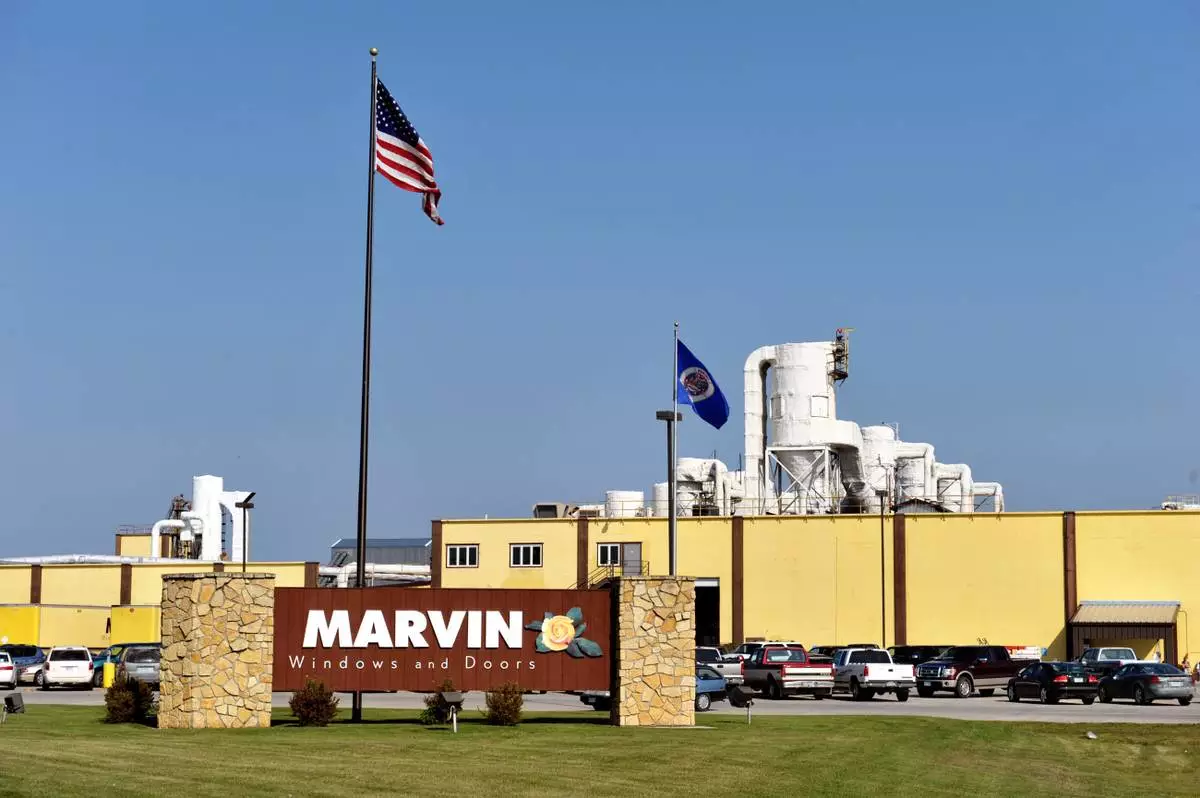
FILE - This Sept. 16, 2009 photo shows the outside of Marvin Windows and Doors manufacturing in Warroad, Minn. (Glen Stubbe/Star Tribune via AP, File)
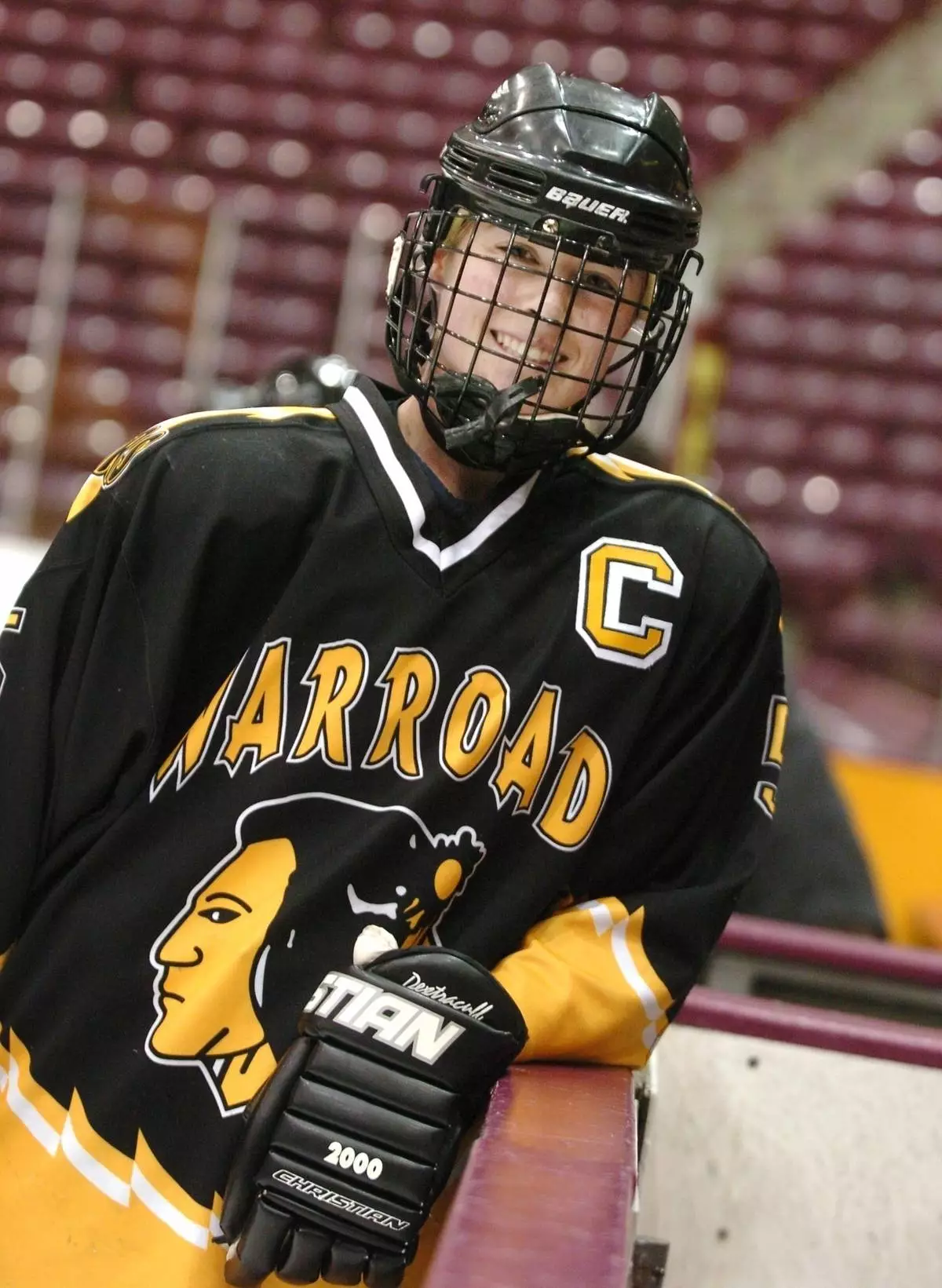
FILE - Gigi Marvin, a senior center at Warroad High School, poses for a photo Dec. 27, 2004, at Mariucci Arena in Minneapolis, where she plans to play hockey next year with the University of Minnesota. (Chris Polydoroff/Pioneer Press via AP, File)
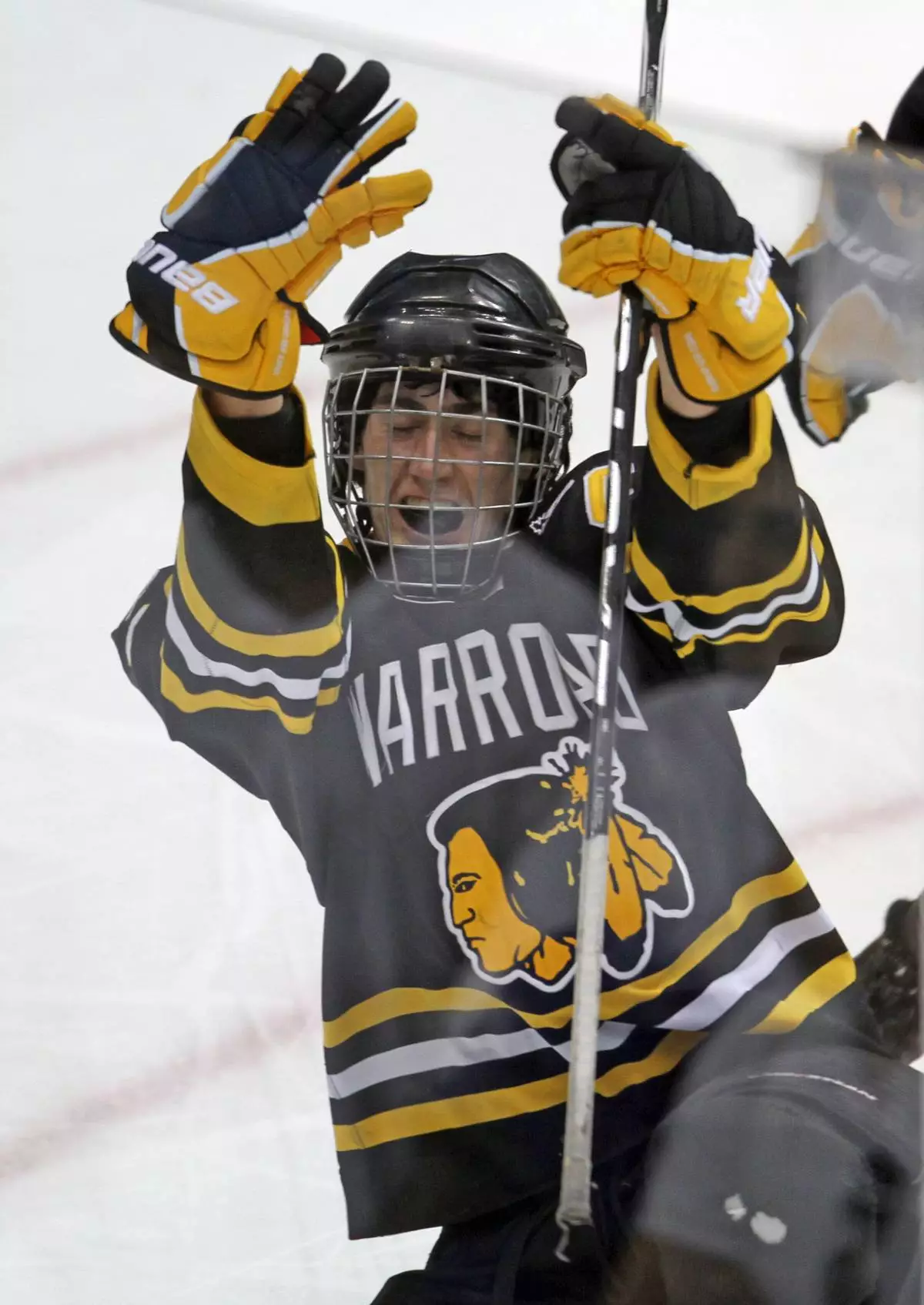
FILE - Warroad's Brock Nelson celebrated his first-period goal against Breck during the semifinals of the Class A State boys hockey tournament on Friday, March 12, 2010, in St. Paul, Minn. (Bruce Bisping/Star Tribune via AP, File)
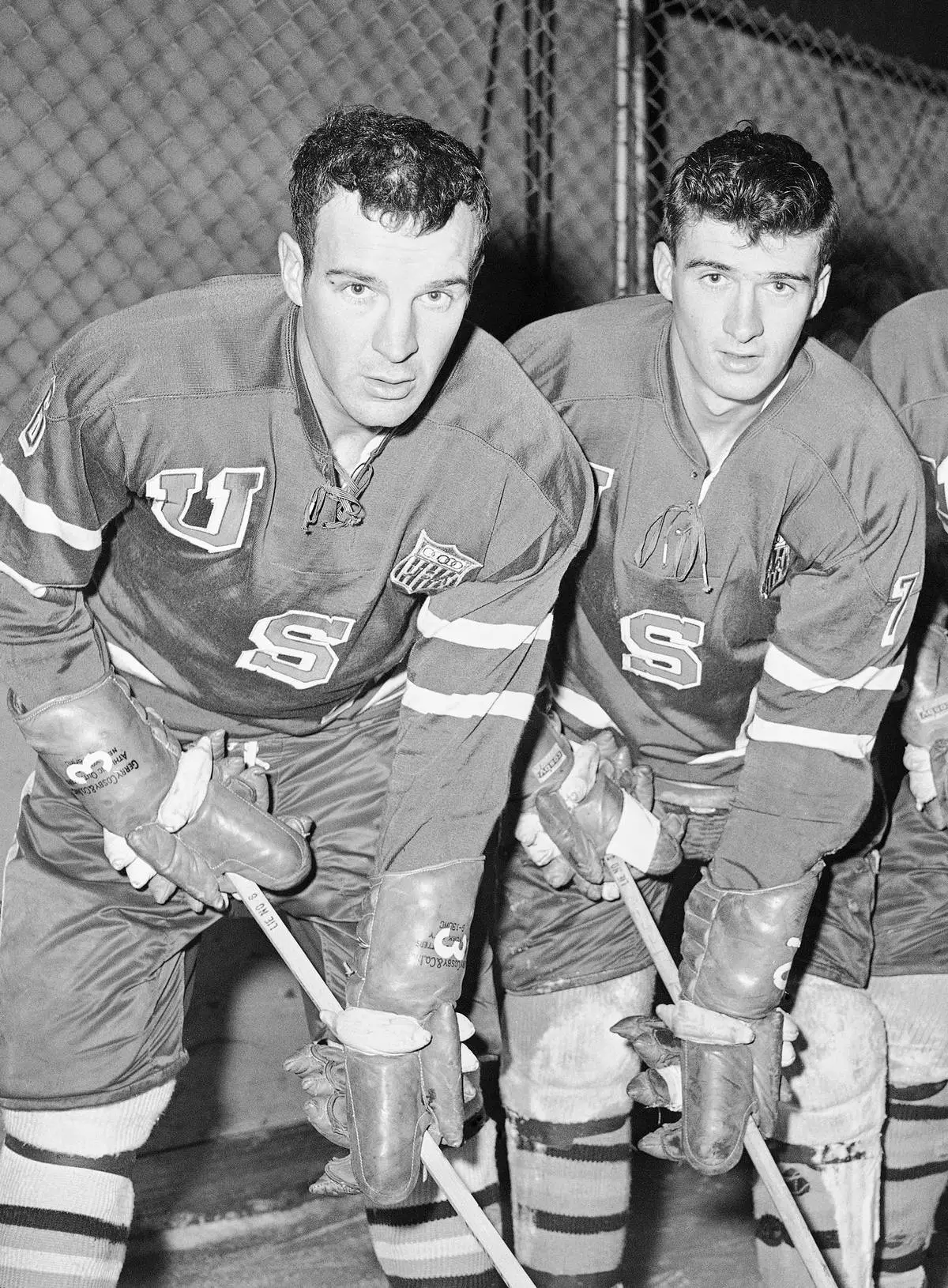
FILE - U .S. Olympic ice hockey forwards Roger Christian, left, and Bill Christian pose Jan. 6, 1960, at the United States Military Academy in West Point, N.Y. (AP Photo/John Rooney, File)
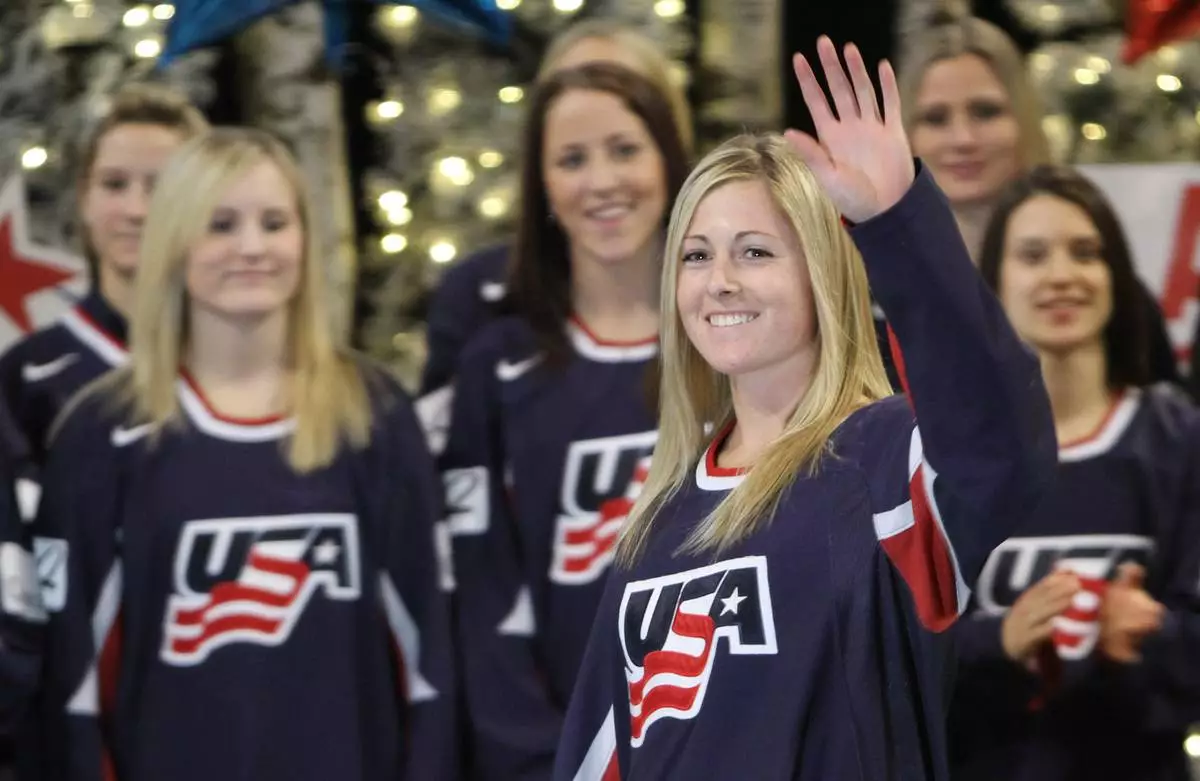
FILE - Gigi Marvin, of Warroad, Minn., waves as she is introduced as a member of the 2010 U.S. Olympic Women's Ice Hockey Team in Bloomington, Minn., Thursday, Dec. 17, 2009. (Bruce Bisping/Star Tribune via AP)
MUSCAT, Oman (AP) — Iran and the United States stood poised Friday to hold negotiations in Oman at least over Tehran's nuclear program after a chaotic week that initially saw plans for regional countries to take part in talks in Turkey.
The two countries have returned to Oman, a sultanate on the eastern edge of the Arabian Peninsula, months after rounds of meetings turned to ash following Israel's launch of a 12-day war against Iran back in June. The U.S. bombed Iranian nuclear sites during that war, likely destroying many of the centrifuges that spun uranium to near weapons-grade purity. Israel's attacks decimated Iran's air defenses and targeted its ballistic missile arsenal as well.
U.S. officials like Secretary of State Marco Rubio believe Iran's theocracy is now at its weakest point since its 1979 Islamic Revolution after nationwide protests last month represented the greatest challenge to 86-year-old Supreme Leader Ayatollah Ali Khamenei's rule. Khamenei's forces responded with a bloody crackdown that killed thousands and reportedly saw tens of thousands arrested — and spurred new military threats by U.S. President Donald Trump to target the country.
With the aircraft carrier USS Abraham Lincoln and other warships in the region along with more fighter jets, the U.S. now likely has the military firepower to launch an attack if it wanted. But whether attacks could be enough to force Iran to change its ways — or potentially topple its government — remains far from a sure thing.
Meanwhile, Gulf Arab nations fear an attack could spark a regional war dragging them in as well. That threat is real — already, U.S. forces shot down an Iranian drone near the Lincoln and Iran attempted to stop a U.S.-flagged ship in the Strait of Hormuz.
“President Trump seeks to corner Iran into reaching a negotiated solution, strong-arming its leaders into making concessions on the nuclear deal,” said Alissa Pavia, a fellow at the Atlantic Council. “The Iranians, on the other hand, are weakened after years of proxy warfare, economic crisis, and internal unrest. Trump is aware of this vulnerability and is hoping to use it to extract concessions and make inroads toward a renewed nuclear agreement.”
The scope, nature and participants in the talks remain unclear, just hours before they were due to begin in Muscat, the Omani capital nestled in the Hajar Mountains. Officials at Oman's borders on Thursday showed particular concern over anyone carrying cameras into the sultanate before the negotiations.
On the Iranian side, Foreign Minister Abbas Araghchi arrived at night along with multiple Iranian diplomats, the state-run IRNA news agency reported.
Flight-tracking data showed the plane that carried him to Muscat initially started its journey from Tabas, Iran, the site of the disastrous Operation Eagle Claw in 1980, when a U.S. Special Forces mission attempted to rescue hostages held after the 1979 U.S. Embassy takeover in Tehran. A sandstorm in Tabas aborted the mission and eight service members died when a helicopter crashed into a C-120 refueling aircraft there. Iran's theocracy long has portrayed the mission as God defeating the Americans.
Araghchi wrote on X that “Iran enters diplomacy with open eyes and a steady memory of the past year.”
“Commitments need to be honored,” he wrote. “Equal standing, mutual respect and mutual interest are not rhetoric — they are a must and the pillars of a durable agreement.”
Ahead of the meeting, a top adviser to Khamenei appeared to offer the theocracy's support to the 63-year-old career diplomat.
Araghchi “is a skilled, strategic and trustworthy negotiator at the highest levels of decision-making and military intelligence,” Ali Shamkhani wrote on X. “Soldiers of the nation in the armed forces & generals of diplomacy, acting under the order of the Leader, will safeguard the nation’s interests.”
On the U.S. side, it appeared that talks would be led by U.S. Mideast special envoy Steve Witkoff, a 68-year-old billionaire New York real estate mogul and longtime friend to Trump. Traveling with Witkoff on his Mideast trip so far is Jared Kushner, Trump’s son-in-law who in recent weeks has shared proposals for the Gaza Strip and took part in trilateral talks with Russia and Ukraine in Abu Dhabi earlier on the trip.
The two men had traveled from Abu Dhabi to Qatar on Thursday night for meetings with officials there, the Qatari-funded satellite news network Al Jazeera reported. Qatar, which shares an offshore natural gas field in the Persian Gulf with Iran, also hosts a major U.S. military installation that Iran attacked back in the June war.
It remains unclear just what terms Iran will be willing to negotiate at the talks. Tehran has maintained that these talks only will be on its nuclear program. However, Al Jazeera reported that diplomats from Egypt, Turkey and Qatar offered Iran a proposal in which Tehran would halt enrichment for three years, send its highly enriched uranium out of the country and pledge “not initiate the use of ballistic missiles.”
Russia had signaled it would take the uranium, but Shamkhani in an interview earlier this week had said ending the program or shipping out the uranium were nonstarters for the country. Meanwhile, the talks would not include any pledge by Iran over its self-described “Axis of Resistance,” a network of militias in the region allied to Tehran as a deterrent to both Israel and the U.S. However, Israeli attacks on the militias during its war on Hamas in the Gaza Strip decimated the network.
Rubio, America's top diplomat, said talks needed to include all those issues.
“I think in order for talks to actually lead to something meaningful, they will have to include certain things, and that includes the range of their ballistic missiles,” Rubio told journalists Wednesday. “That includes their sponsorship of terrorist organizations across the region. That includes the nuclear program, and that includes the treatment of their own people.”
The Associated Press receives support for nuclear security coverage from the Carnegie Corporation of New York and Outrider Foundation. The AP is solely responsible for all content.
In this photo released by the Iranian Foreign Ministry, Iranian Foreign Minister Abbas Araghchi, left, speaks with his Omani counterpart Sayyid Badr Albusaidi during their meeting prior to Iran and the U.S. negotiations, in Muscat, Oman, Friday, Feb. 6, 2026. (Iranian Foreign Ministry via AP)
In this photo released by the Iranian Foreign Ministry, Iranian Foreign Minister Abbas Araghchi, center, heads to venue for talks between Iran and the U.S., in Muscat, Oman, Friday, Feb. 6, 2026. (Iranian Foreign Ministry via AP)
In this photo released by the Iranian Foreign Ministry, Iranian Foreign Minister Abbas Araghchi, left, shakes hands with his Omani counterpart Sayyid Badr Albusaidi during their meeting prior to Iran and the U.S. negotiations, in Muscat, Oman, Friday, Feb. 6, 2026. (Iranian Foreign Ministry via AP)
FILE - White House Special Envoy to the Middle East Steve Witkoff speaks at an event in the Oval Office of the White House, Thursday, Jan. 29, 2026, in Washington. (AP Photo/Allison Robbert,File)
FILE - In this photo released by the Iranian Foreign Ministry, Iranian Foreign Minister Abbas Araghchi, left, is welcomed by an unidentified Omani official, center, upon his arrival at Muscat, Oman, for negotiations with U.S. Mideast envoy Steve Witkoff, as Iranian Ambassador to Oman Mousa Farhang walks at right, May 11, 2025. (Iranian Foreign Ministry via AP, File)
People attend a state-organised rally in Tehran, Iran, Wednesday, Feb. 4, 2026, celebrating the birthday of Imam Mahdi, or "Hidden Imam," a 9th-century saint whom Shiite Muslims believe will return at the end of time as a universal reformer to end tyranny and promote justice. (AP Photo/Vahid Salemi)
FILE - This combo shows Iranian Foreign Minister Abbas Araghchi, left, pictured in Tehran, Iran, on Feb. 25, 2025 and Steve Witkoff, right, White House special envoy, pictured in Washington, on March 19, 2025. (AP Photos Stringer, Mark Schiefelbein)