KENNEBUNK, Maine (AP) — It just wouldn't feel like the Super Bowl for them if they weren't all there. And this might be the last time they all do it.
That's what three old friends were coming to grips with just before this year's Super Bowl. The trio of octogenarians are the only fans left in the exclusive “never missed a Super Bowl” club.
Click to Gallery
Don Crisman wears his shirt from Super Bowl 56 in 2022, when the Los Angeles Rams defeated the Cincinnati Bengals, Friday, Jan. 23, 2026, in Kennebunk, Maine. (AP Photo/Robert F. Bukaty)
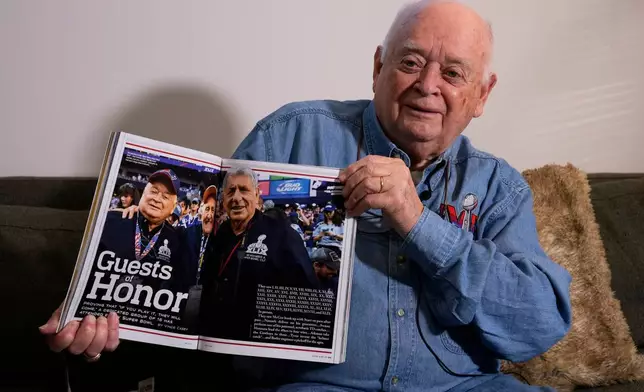
Don Crisman holds a copy of the official program for Super Bowl 50, which featured a story on a small group of fans, including Crisman, who had attended every championship game, Friday, Jan. 23, 2026, in Kennebunk, Maine. (AP Photo/Robert F. Bukaty)
Don Crisman holds a Super Bowl 38 souvenir hat signed by Hall of Fame quarterback Tom Brady, Friday, Jan. 23, 2026, in Kennebunk, Maine. (AP Photo/Robert F. Bukaty)
Don Crisman, one of only three remaining members of the "Never Miss a Super Bowl Club" to attend every championship game since 1967, models a souvenir hat from the first game, Friday, Jan. 23, 2026, in Kennebunk, Maine. (AP Photo/Robert F. Bukaty)
FILE — Members of the Never Miss a Super Bowl Club, from the left, Tom Henschel, Gregory Eaton, and Don Crisman pose for a group photograph during a welcome luncheon, in Atlanta, Feb. 1, 2019. (Hyosub Shin/Atlanta Journal-Constitution via AP, File)
Don Crisman of Maine, Gregory Eaton of Michigan and Tom Henschel of Florida were back for another big game this year. But two of them are grappling with the fact that advancing years and decreasing mobility mean this is probably the last time.
This year's game pits the Seattle Seahawks against the New England Patriots at Levi's Stadium in Santa Clara, California, on Sunday. Crisman, a Patriots fan since the franchise started, was excited to see his team in the game for a record-setting 12th time.
“This will definitely be the final one,” said Crisman, who made the trip with his daughter, Susan Metevier. “We made it to 60.”
Crisman, who first met Henschel at the 1983 Super Bowl, turns 90 this year. Meanwhile, Henschel, 84, has been slowed by a stroke. Both said this is the last time they'll make the increasingly expensive trip to the game, although members of the group have said that before. For his part, Eaton, 86, plans to keep going as long as he’s still physically able.
Eaton, who runs a ground transportation company in Detroit, is the only member of the group not retired. And he’d still like to finally see his beloved Detroit Lions make it to a Super Bowl.
Even so, all three said they’ve scaled back the time they dedicate each year to the trip. Crisman used to spend a week in the host city, soaking in the pomp and pageantry. These days, it's just about the game, not the hype.
“We don't go for a week anymore, we go for three or four days,” Crisman said.
Eaton, too, admits the price and hype of the big game have gotten to be a lot.
“I think all of them are big, they're all fun. It's just gotten so commercial. It's a $10,000 trip now,” he said.
It's worth it to see Don and Tom, Eaton said.
“They're my brothers,” he said during a Friday news conference with the others. “We check on each other.”
Henschel said this year's Super Bowl would be the most challenging for him because of his stroke, but he, too, was excited to see Eaton and Crisman one more time.
Eaton met Crisman and Henschel in the mid-2010s after years of attending the Super Bowl separately. And Henschel and Crisman have a long-running rivalry: Their respective favorite teams — the Pittsburgh Steelers and the New England Patriots — are AFC rivals.
The fans have attended every game since the first AFL-NFL World Championship Game, as the first two Super Bowls were known at the time, in 1967. They have sometimes sat together in the past, but logistics make it impossible some years.
But this year it was just about being able to go to the game at all, Henschel said.
“I don’t talk or walk good,” he said.
Still, he can't wait for kickoff.
“It’s in my blood. I love football over all the sports," Henschel said Friday. "It’s the best dang game.”
The club of people who have never missed a Super Bowl once included other fans, executives, media members and even groundskeepers, but as time has passed, the group has shrunk. Photographer John Biever, who has shot every Super Bowl, also plans to let his streak end at 60.
The three fans spin tales of past games that often focus less on the action on the field than on the different world where old Super Bowls took place. Henschel scored a $12 ticket for the 1969 Super Bowl the day of the game. Crisman endured a 24-hour train ride to Miami for the 1968 Super Bowl. Eaton, who is Black, remembers the many years before Doug Williams became the first Black quarterback to win a Super Bowl in 1988.
Metevier, Crisman's daughter, was born the year of the first Super Bowl and grew up with her dad's streak as a fixture in her life. She's looking forward to going to one last game with him.
“It's kind of bittersweet. It's about the memories,” Metevier said. “It's not just about the football, it's something more.”
Crisman's son, Don Crisman Jr., said he's on board with his dad making the trip for as long as he's still able, too.
“You know, he's a little long in the tooth, but the way I put it, if it was me and I was mobile and I could go, I would damn sure go,” he said.

Don Crisman wears his shirt from Super Bowl 56 in 2022, when the Los Angeles Rams defeated the Cincinnati Bengals, Friday, Jan. 23, 2026, in Kennebunk, Maine. (AP Photo/Robert F. Bukaty)
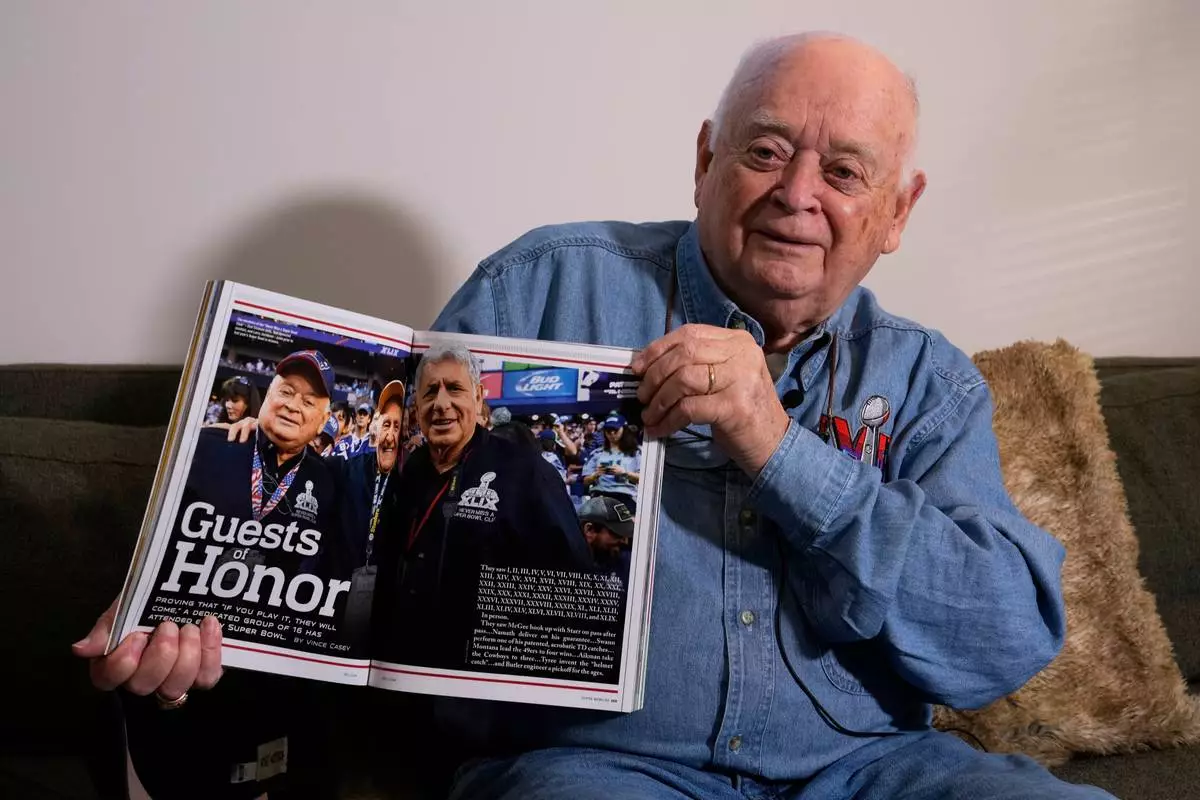
Don Crisman holds a copy of the official program for Super Bowl 50, which featured a story on a small group of fans, including Crisman, who had attended every championship game, Friday, Jan. 23, 2026, in Kennebunk, Maine. (AP Photo/Robert F. Bukaty)

Don Crisman holds a Super Bowl 38 souvenir hat signed by Hall of Fame quarterback Tom Brady, Friday, Jan. 23, 2026, in Kennebunk, Maine. (AP Photo/Robert F. Bukaty)

Don Crisman, one of only three remaining members of the "Never Miss a Super Bowl Club" to attend every championship game since 1967, models a souvenir hat from the first game, Friday, Jan. 23, 2026, in Kennebunk, Maine. (AP Photo/Robert F. Bukaty)

FILE — Members of the Never Miss a Super Bowl Club, from the left, Tom Henschel, Gregory Eaton, and Don Crisman pose for a group photograph during a welcome luncheon, in Atlanta, Feb. 1, 2019. (Hyosub Shin/Atlanta Journal-Constitution via AP, File)
The search is on for one missing U.S. service member while another was rescued after two U.S. warplanes went down in separate incidents including the first shoot-down since the Iran war began nearly five weeks ago.
The incidents occurred just two days after President Donald Trump said in a national address that the U.S. has “beaten and completely decimated Iran.”
One fighter jet was shot down in Iran, officials said. A U.S. crew member from that plane was rescued, but a second was missing, and a U.S. military search-and-rescue operation was underway.
Separately, Iranian state media said a U.S. A-10 attack aircraft crashed in the Persian Gulf after being struck by Iranian defense forces. A U.S. official, speaking on condition of anonymity to discuss a sensitive military situation, said it was not clear if the aircraft crashed or was shot down.
The war now entering its sixth week is destabilizing economies around the world as Iran responds to the U.S. and Israeli attacks by targeting the Gulf region's energy infrastructure and tightening its grip on oil and natural gas shipments through the Strait of Hormuz.
Here is the latest:
Omar al-Waeli, head of Iraq’s Border Ports Authority, said on Saturday that the strike on the Shalamcheh border crossing killed one person and wounded five others.
Authorities did not offer further details on the strike. But trade and passenger traffic is suspended at the crossing, which is crucial for Iranian imports and Iranian pilgrims headed to Iraq’s Shiite shrines.
The Iraqi government said it was directing traders and travelers to alternative crossings.
The International Atomic Energy Agency said on Saturday that it has been informed by Iran about the strike near the premises of the Bushehr nuclear facility that killed a security guard and impacted a building in the complex.
“No increase in radiation levels was reported” following the strike, the IAEA said in a social media post.
Bahrain’s Defense Ministry reported the tally in a social media post on Saturday.
This brings the total number of projectiles fired at the country since the start of the war to 188 missiles and 453 drones.
Bahrain hosts the U.S. Navy’s 5th Fleet.
The Atomic Energy Organization of Iran said in a social media post Saturday that an airstrike near its Bushehr nuclear facility killed a security guard and damaged a support building.
It is the fourth time the facility has been targeted during the war.
The Bushehr nuclear power plant uses low-enriched uranium from Russia, along with Russian technicians, to supply about 1,000 megawatts of power for Iran.
Its pressurized-water reactor can power hundreds of thousands of homes and other businesses and industries. But it contributes only 1% to 2% of Iran’s total power needs.
Iran has been trying to expand the facility to multiple reactors. In 2019, it began a project that ultimately plans to add two additional reactors to the site, each adding another 1,000 megawatts apiece.
Italian Premier Giorgia Meloni has discussed with Saudi Prime Minister Mohammed bin Salman defensive military assistance that Italy is providing against Iranian reprisals to U.S.-Israeli attacks.
A brief statement from Meloni's office Saturday did not specify what type of assistance Italy is providing.
It also said the two discussed diplomatic efforts to end the war, the importance of opening the Strait of Hormuz and “more broadly how to promote a regional framework that can break free from the current cycle of conflict.”
Meloni will continue her visit in Qatar and the United Arab Emirates.
U.S. and Israeli warplanes continued to pound Iran Saturday, hitting several targets including a petrochemical facility, Iranian media reported.
Iran's official English-language newspaper Tehran Times reported that an airstrike hit a facility belonging to Iran’s Agriculture Ministry in the western city of Mehran.
The newspaper said another air raid struck Mahshahr Special Petrochemical Zone in the southwestern Khuzestan province.
The semiofficial Fars news agency reported several explosions heard late Saturday morning in the facility.
Mehr, another semiofficial news agency, reported that the strikes hit four companies within the zone.
Mohammad Bagher Qalibaf made the veiled threat in a social media post late Friday, asking about how busy oil tanker and container ship traffic is through the strait.
The 20-mile (32-kilometer) strait links the Red Sea with the Gulf of Aden and the Indian Ocean and is one of the busiest chokepoints in global trade, with more than a tenth of seaborne global oil and a quarter of container ships passing through it.
Iran has already greatly disrupted the flow of oil through the Strait of Hormuz, sending fuel prices skyrocketing and jolting the world economy.
Disrupting transit through the Bab el-Madeb would force shipping firms to route their vessels around the Cape of Good Hope at the southern tip of Africa, further hitting prices.
Israel’s rescue services said Saturday the man sustained glass shrapnel wounds after an Iranian missile hit the central city of Bnei Brak.
It wasn't clear if the glass shrapnel was caused by a direct strike or falling debris from an intercepted missile.
Israel’s Magen David Adom rescue services said it was taking the man to the hospital.
The Iranian judiciary's Mizan news agency said Saturday that the two men who were hanged belonged to the Iranian exile group Mujahedeen-e-Khalq.
The agency said Abul-Hassan Montazer and Vahid Bani-Amirian were convicted of “being members of a terrorist group.”
This brings to six the total number of MEK members executed since the start of the war.
Activists and rights groups say Iran routinely holds closed-door trials in which defendants are unable to challenge the accusations they face.
The Israeli military said on Saturday that its air force struck ballistic and and anti-aircraft missile storage sites in Tehran.
It said the strikes a day earlier included weapons manufacture sites as well as military research and development facilities in the Iranian capital.
It said the strikes are part of an ongoing phase to increase damage to Iran's “core systems and foundations.”
Authorities in Dubai said the facades of two buildings were damaged by debris from intercepted drones, including one belonging to U.S. tech firm Oracle. No injuries were reported.
Iran’s Revolutionary Guard has threatened to attack Oracle and 17 other U.S. companies after accusing them of being involved in “terrorist espionage” operations in Iran.
Previous Iranian drone strikes caused damage to three Amazon Web Services facilities in the United Arab Emirates and Bahrain.
As of Friday, 247 of the wounded were Army soldiers, 63 were Navy sailors, 19 were Marines and 36 were Air Force airmen, according to Pentagon data available online.
It is unclear if the data includes any of the service members involved in the downing of two combat aircraft reported Friday.
Most of the wounded — 200 — were also mid to senior enlisted troops, 85 were officers and 80 were junior enlisted service members.
The current death toll remains at 13 service members killed in combat.
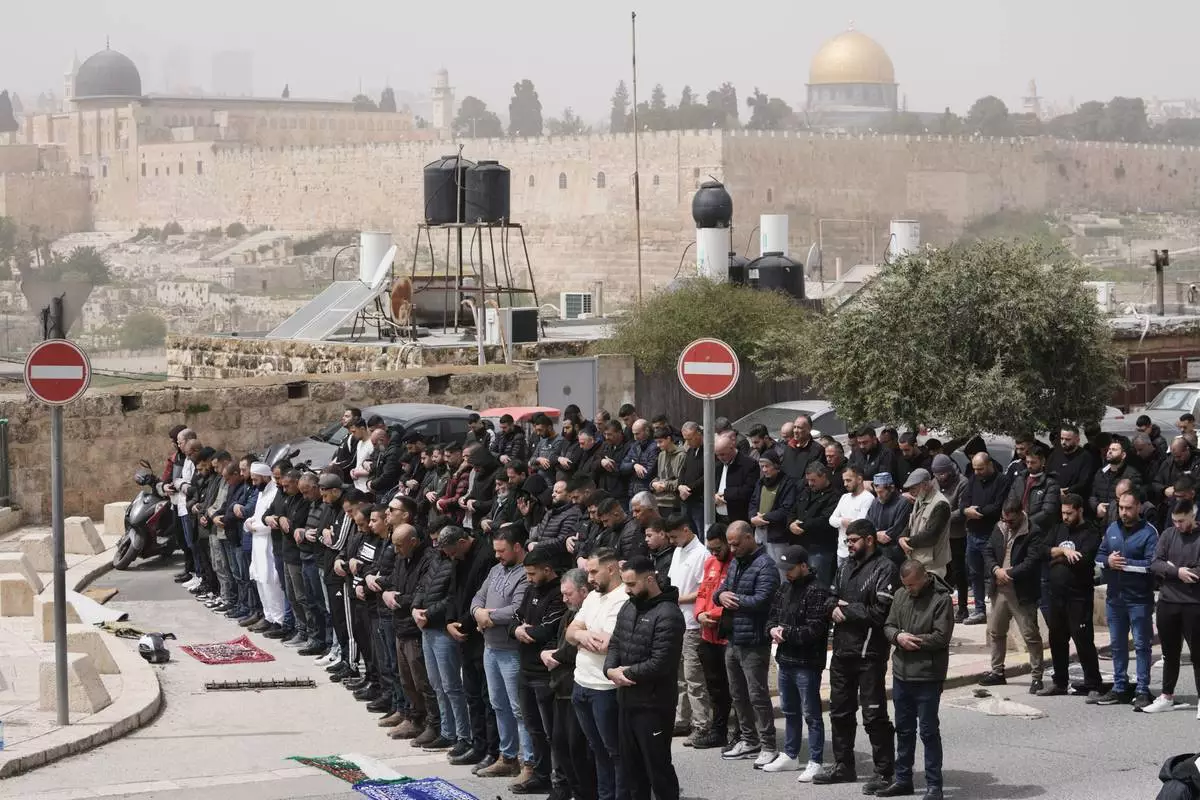
Palestinian Muslims attend Friday prayers outside Jerusalem's Old City due to restrictions linked to the Iran war, April 3, 2026. (AP Photo/Mahmoud Illean)
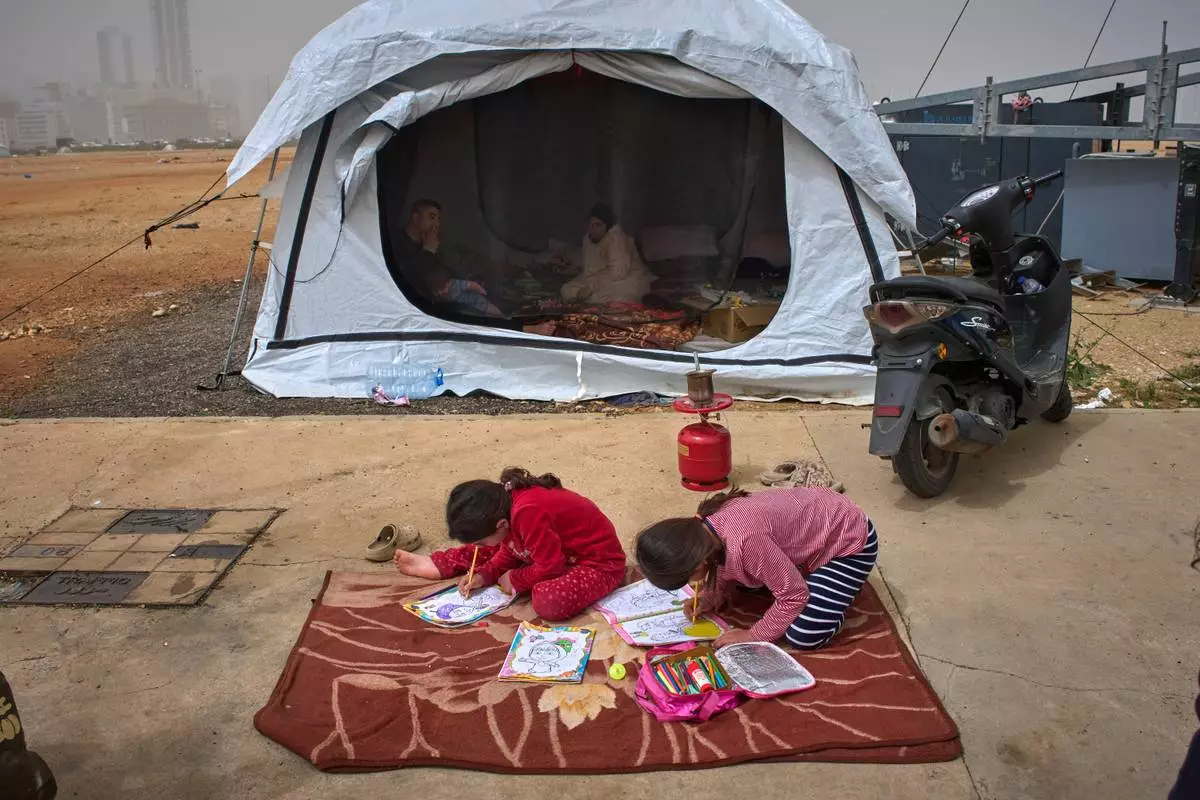
Tamara and her sister Amal color pictures on the floor as their parents, Sara and Ahmed, who fled their village of Khiyam in southern Lebanon due to Israeli bombardment, sit inside a tent used as a shelter in Beirut, Lebanon, Friday, April 3, 2026. (AP Photo/Emilio Morenatti)
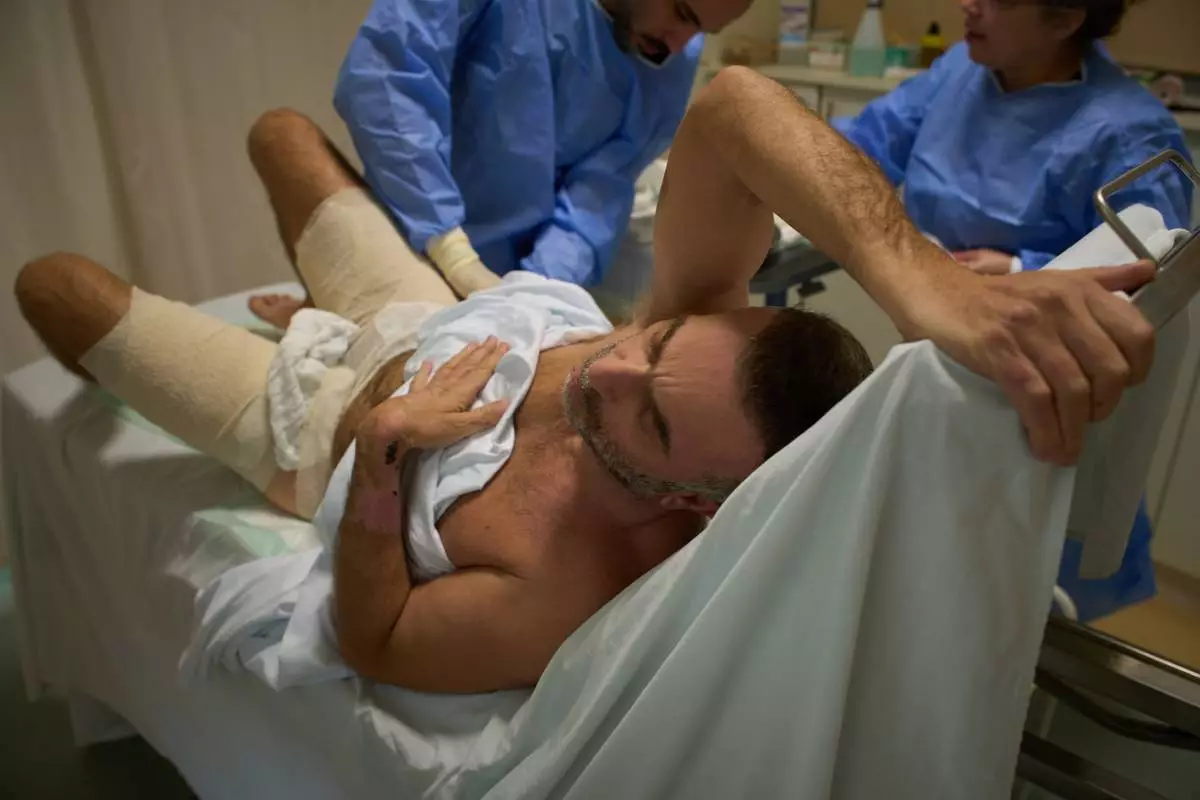
Mohammad Qubaisi, 53, with burn wounds from an Israeli airstrike on southern Lebanon undergoes surgery by Dr. Mohammed Ziara, left, and his team, at the Sidon Government Hospital in Sidon, Lebanon, Thursday, April 2, 2026. (AP Photo/Emilio Morenatti)
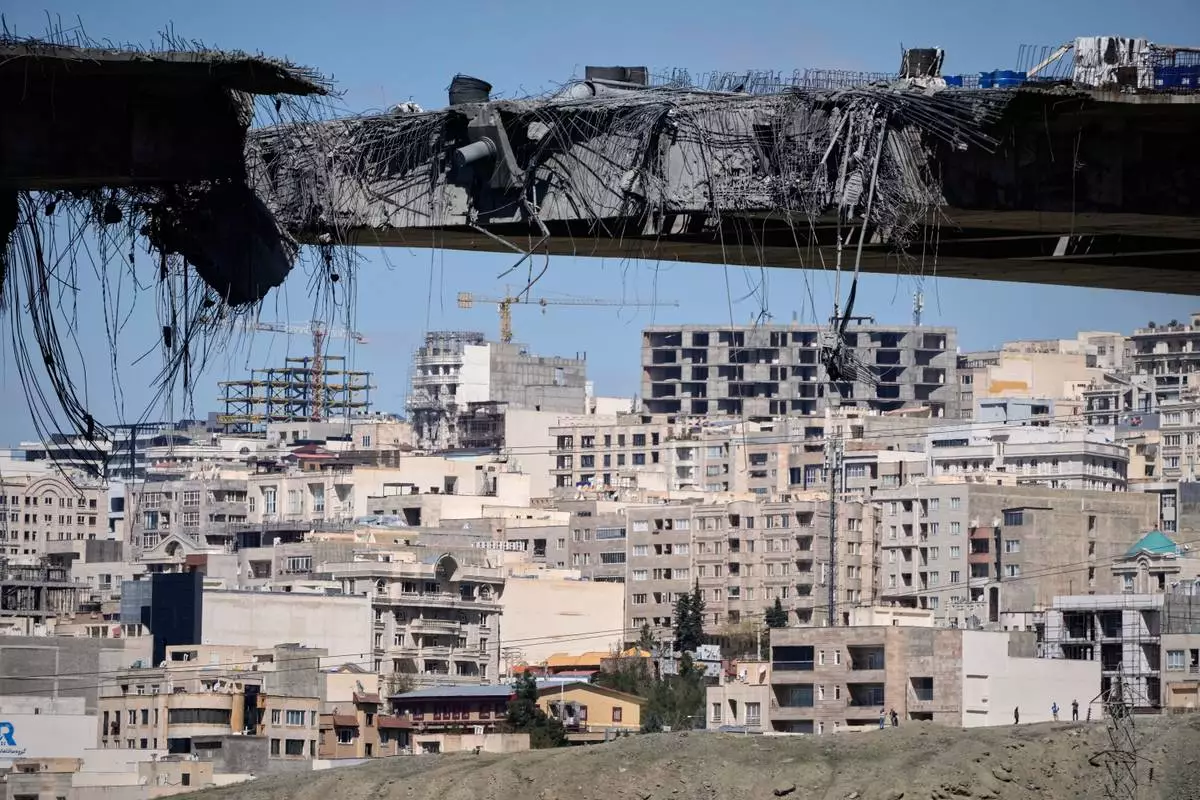
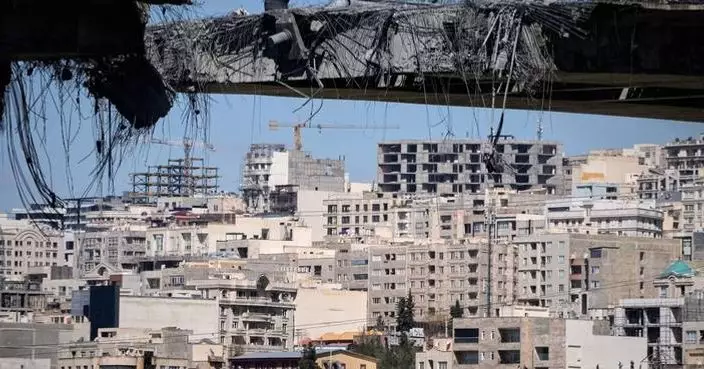
A bridge struck by U.S. airstrikes on Thursday is seen in the town of Karaj, west of Tehran, Iran, Friday, April 3, 2026. (AP Photo/Vahid Salemi)
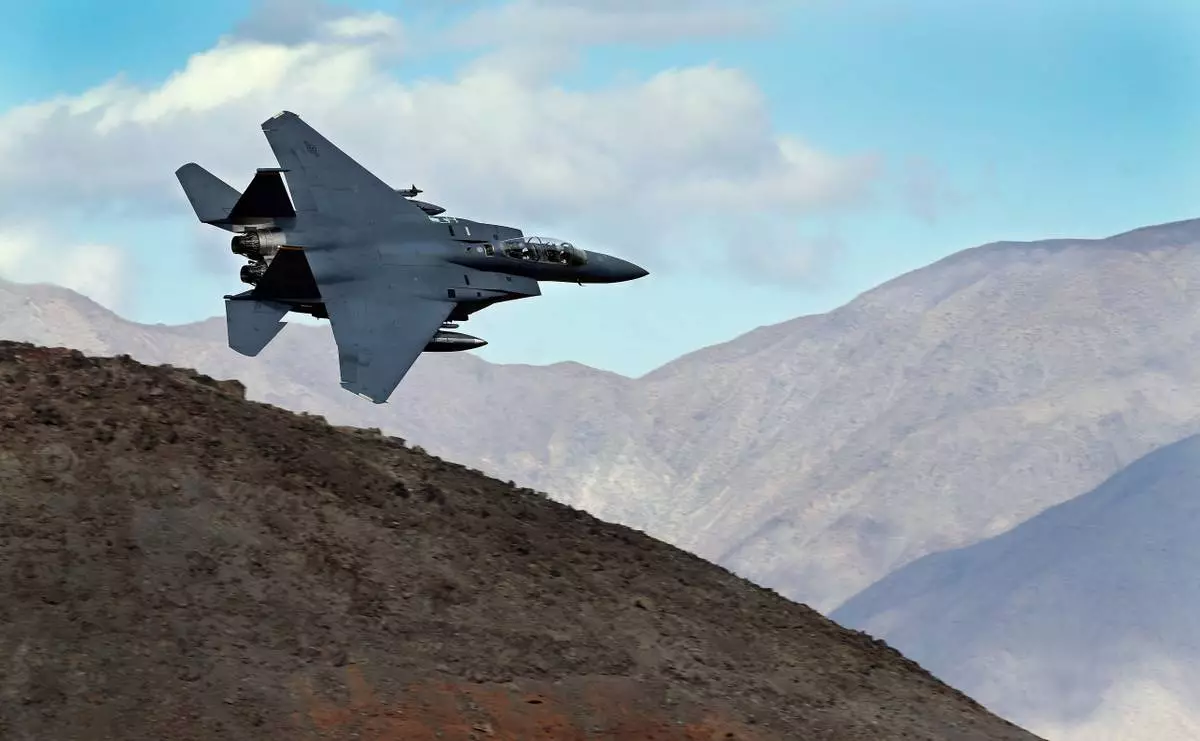
FILE - An F-15E Strike Eagle turns toward the Panamint range over Death Valley National Park, Calif., on Feb. 27, 2017. (AP Photo/Ben Margot, File)