Skip to Content Facebook Feature Image

CFS Issues Recall for Aptamil Infant Formula Due to Potential Bacillus Cereus Contamination

HK

CFS Issues Recall for Aptamil Infant Formula Due to Potential Bacillus Cereus Contamination
HK

HK

CFS Issues Recall for Aptamil Infant Formula Due to Potential Bacillus Cereus Contamination

2026-02-06 22:54 Last Updated At:02-07 11:43

CFS continues to follow up powdered infant formula with possible presence of Cereulide produced by Bacillus cereus

The Centre for Food Safety (CFS) of the Food and Environmental Hygiene Department continues to actively follow up on the precautionary recall of certain batches of powdered infant and young children formula in different areas worldwide, due to possible presence of Cereulide produced by Bacillus cereus in the individual raw material. The CFS noted through its Food Incident Surveillance System that certain batches of Aptamil powdered infant and young children formula are being recalled by certain areas in Europe as the products might contain Cereulide produced by Bacillus cereus. The CFS has been highly concerned and actively following up on the incident. Following the announcement earlier that a local trader had imported into Hong Kong and sold one affected batch of the powdered infant formula concerned, the CFS's latest follow-up investigation today (February 6), in response to the latest announcement from Europe, revealed that the trader had imported and distributed another affected batch of the powdered infant formula. For the sake of prudence, the distributor concerned has stopped sales, removed the affected product from shelves and initiated a precautionary recall according to the CFS's instructions.

Product details are as follows:

Product name: Aptamil Profutura DUO Advance 1 800g

Brand: Aptamil

Pack size: 800 grams

Place of origin: Germany

Use-by date: April 21, 2027

Distributor: HK Wukong Trading Limited

Quantity imported and distributed: 390 cans
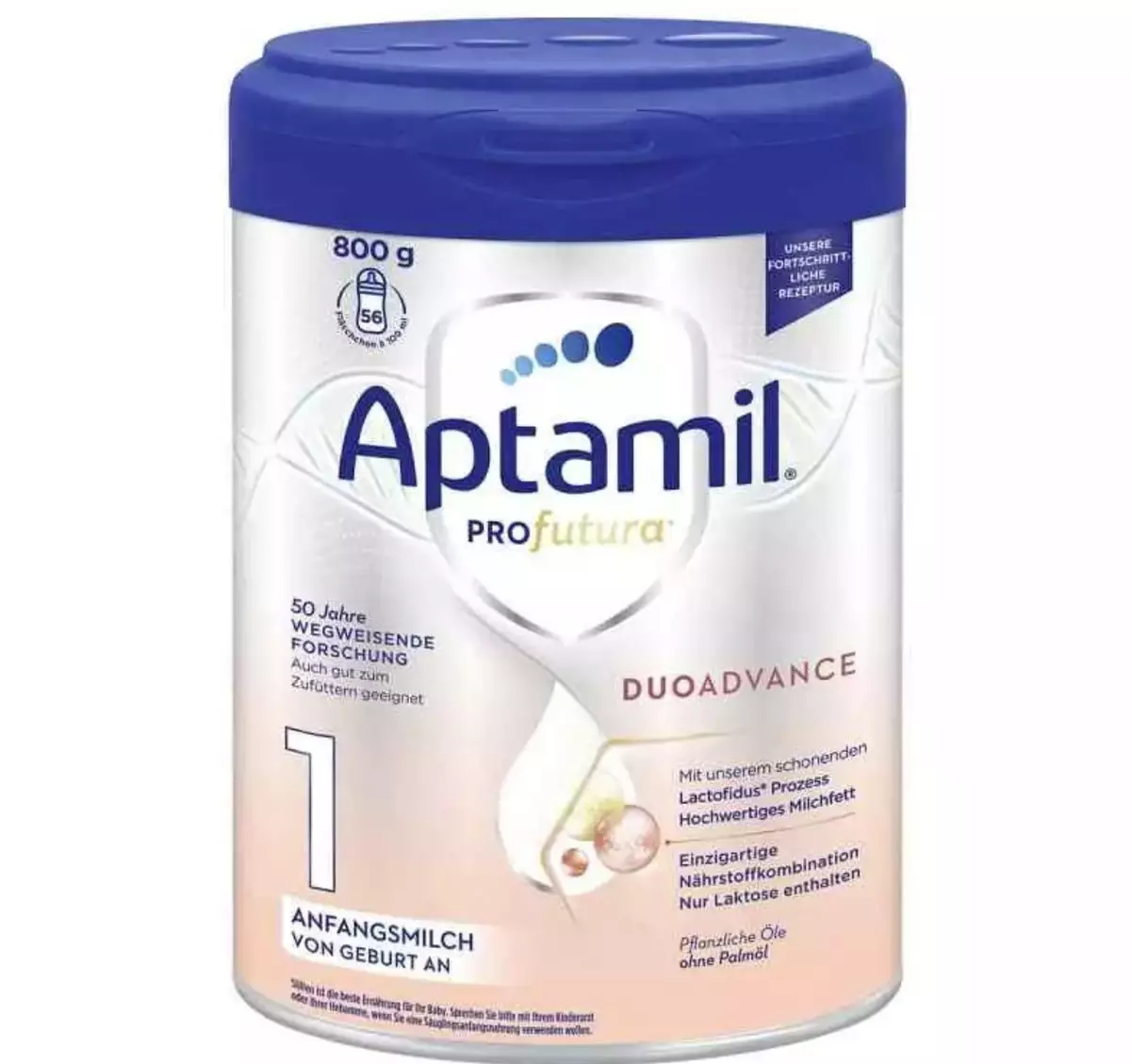
Aptamil Profutura DUO Advance 1 800g

Aptamil Profutura DUO Advance 1 800g

The CFS has found in its follow-up investigation that the abovementioned distributor had imported and distributed 65 boxes of 390 cans of the affected product. The CFS has instructed the importer, distributor and retailers concerned to stop sales and remove the affected batch of the product concerned from shelves and to initiate a recall. Members of the public may call the distributor's hotline at 6426 1511 during office hours for enquiries about the recall.

The CFS will continue to enhance surveillance of powdered infant and young children formula and to closely monitor the recall matters and remain fully committed to ensuring food safety. The CFS has alerted the trade and relevant department over the incident, and will continue to follow up and take appropriate action.

Bacillus cereus is commonly found in the environment. Unhygienic conditions in food processing and storage may give rise to its growth. Cereulide is a heat-stable toxin produced in food by some strains of Bacillus cereus. Consuming food contaminated with excessive Bacillus cereus or its heat-stable toxins may cause gastrointestinal upset such as vomiting and diarrhoea.

The CFS urged members of the public not to let infants and young children consume the affected batch of the product, and to seek medical treatment for infants or young children who felt unwell after taking the product concerned. The trade should also stop using or selling the affected batch of the product immediately.

The CFS has established a designated webpage (www.cfs.gov.hk/english/whatsnew/powdered_formula/index.html) to facilitate public access to more information.
The Centre for Food Safety (CFS), Photo source: reference image

The Centre for Food Safety (CFS), Photo source: reference image

FEHD continues to actively follow up on food poisoning cases related to consumption of raw oysters and steps up inspections of food premises

A spokesman for the Food and Environmental Hygiene Department (FEHD) said today (February 6) that the Centre for Food Safety of the FEHD continues to actively follow up on the food poisoning cases concerned. Following yesterday's announcement regarding raw oysters supplied by Seojun Mulsan Co., Ltd. of Korea, the latest investigation has revealed that some cases involved the consumption of raw oysters supplied by the food factory Jeton International Food and 88 Investment Holdings Limited. For the sake of prudence, the FEHD has immediately instructed the company concerned to suspend the sale and supply of raw oysters. The trade should stop selling raw oysters supplied by the company concerned immediately if they possess them. The investigation is still ongoing.

The Food and Environmental Hygiene Department (FEHD), Photo source: HKSAR Government Press Release

The Food and Environmental Hygiene Department (FEHD), Photo source: HKSAR Government Press Release

At the same time, in view of the recent surge in food poisoning cases related to the consumption of raw oysters, the FEHD has carried out special operations and stepped up inspections of various licensed food premises across the territory to ensure that oysters to be eaten in a raw state (raw oysters) are stored at the proper temperature, thereby safeguarding food safety and protecting public health.

A spokesman for the FEHD said, "The FEHD has launched a series of operations starting today, including stepping up inspections in various districts. The focuses of the inspections included the storage temperature of raw oysters, storage conditions in designated refrigerators, the sources of supply, the personal hygiene of food handlers and the hygiene condition of the premises. Operators and staff of food premises have been provided with health advice and food safety pamphlets regarding the proper way of storing and handling raw oysters."

As stipulated under the permit/licensing conditions of the restricted food permit or written permission issued by the FEHD, all raw oysters ready for immediate consumption shall be kept in a refrigerator or compartment of a refrigerator separated from other food items at a temperature between 0 and 4 degrees Celsius. If a breach of the aforesaid condition is found, FEHD officers will, depending on the actual circumstances, issue verbal warnings or warning letters, and may even consider cancellation of the permits/licences of relevant premises.

The spokesman reminded that as oysters feed by filtering a large volume of seawater and absorbing suspended food particles therein, bacteria (e.g. Vibrio parahaemolyticus and Vibrio vulnificus) and viruses (e.g. norovirus and Hepatitis A virus) may accumulate in them if they are grown in or harvested from contaminated water. Consuming oysters without thorough cooking might risk direct intake of these microorganisms. Susceptible groups, such as pregnant women, young children, the elderly and people with weakened immune systems or liver diseases, should avoid eating them.

The FEHD will continue to step up inspections to ensure that the licensing/permit conditions are observed by the licensees/permit holders or relevant operators, and the hygienic standards stipulated in the laws are met.

The raw oysters, Photo source: FB image

The raw oysters, Photo source: FB image

Recommended Articles