KYIV, Ukraine (AP) — The U.S. has given Ukraine and Russia a June deadline to reach a deal to end the nearly four‑year war, President Volodymyr Zelenskyy told reporters, as Russian strikes on energy infrastructure forced nuclear power plants to cut output on Saturday.
If the June deadline is not met, the Trump administration will likely put pressure on both sides to meet it, he added.
“The Americans are proposing the parties end the war by the beginning of this summer and will probably put pressure on the parties precisely according to this schedule,” Zelenskyy said, speaking to reporters on Friday. Zelenskyy’s comments were embargoed until Saturday morning.
“And they say that they want to do everything by June. And they will do everything to end the war. And they want a clear schedule of all events,” he said.
He said the U.S. proposed holding the next round of trilateral talks next week in their country for the first time, likely in Miami, Zelenskyy said. “We confirmed our participation,” he added.
Zelenskyy said Russia presented the U.S. with a $12 trillion economic proposal — which he dubbed the “Dmitriev package” after Russian envoy Kirill Dmitriev. Bilateral economic deals with the U.S. form part of the broader negotiating process.
Russian strikes on Ukrainian energy infrastructure continued with over 400 drones and about 40 missiles launched overnight Saturday, Zelenskyy said in a post on X. Targets included the energy grid, generation facilities and distribution networks.
Ukrenergo, the state energy transmission operator, said the attack was the second mass strike on energy infrastructure since the start of the year, forcing nuclear power plants to reduce output. Eight facilities in eight regions came under attack, it said in a statement.
“As a result of missile strikes on key high-voltage substations that ensured the output of nuclear power units, all nuclear power plants in the territories under control were forced to reduce their load,” the statement said.
It said the power deficit in the country has increased “significantly” as a result of the attacks forcing an extension of hourly power outages in all regions of Ukraine.
The latest deadline follows U.S.-brokered trilateral talks in Abu Dhabi that produced no breakthrough as the warring parties cling to mutually exclusive demands. Russia is pressing Ukraine to withdraw from the Donbas, where fighting remains intense — a condition Kyiv says it will never accept.
“Difficult issues remained difficult. Ukraine once again confirmed its positions on the Donbas issue. ‘We stand where we stand’ is the fairest and most reliable model for a ceasefire today, in our opinion,” Zelenskyy said. He reiterated that the most challenging topics would be reserved for a trilateral meeting between leaders.
Zelenskyy said no common ground was reached on managing the Russian‑held Zaporizhzhia nuclear plant and expressed skepticism about a U.S. proposal to turn the Donbas region, coveted by Russia, into a free economic zone as a compromise.
“I do not know whether this can be implemented, because when we talked about a free economic zone, we had different views on it,” he said.
He said in the last round of talks the negotiators discussed how a ceasefire would be technically monitored. He added that the U.S. has reaffirmed it would play a role in that process.
Repeated Russian aerial assaults have in recent months focused on Ukraine’s power grid, causing blackouts and disrupting the heating and water supply for families during a bitterly cold winter, putting more pressure on Kyiv.
Zelenskyy said the U.S. again proposed a ceasefire banning strikes on energy infrastructure. Ukraine is ready to observe such a pause if Russia commits; but he added that when Moscow previously agreed to a one-week pause suggested by the U.S., it was violated after just four days.
Follow AP’s coverage of the war in Ukraine at https://apnews.com/hub/russia-ukraine

Ukrainian President Volodymyr Zelenskyy attends a joint news conference with NATO Secretary General Mark Rutte in Kyiv, Ukraine, Tuesday, Feb. 3, 2026. (AP Photo/Sergei Grits)
NEW YORK (AP) — U.S. stocks are sinking Wednesday after another climb for oil prices raised worries about inflation, which may have been primed to worsen even before the war with Iran began.
The S&P 500 fell 0.5% and was on track for its first loss this week. The Dow Jones Industrial Average was down 377 points, or 0.8%, as of 11 a.m. Eastern time, and the Nasdaq composite was 0.5% lower.
Stocks fell under the pressure of a 6.2% climb for the price of a barrel of Brent crude, the international standard, to $109.84. Benchmark U.S. oil rose 2.3% to $97.70 per barrel.
Oil and natural gas prices have been spiking since the war began because of disruptions to the Persian Gulf's energy industry. Iran’s state television said Wednesday that the Islamic Republic would be attacking oil and gas infrastructure in Qatar, Saudi Arabia and the United Arab Emirates after an attack on facilities associated with its offshore South Pars natural gas field.
If the disruptions keep oil and gas prices high for long, they could send a debilitating wave of inflation crashing into the global economy.
A report released Wednesday morning showed that inflation pressures were already worsening before the war began. It said inflation at the U.S. wholesale level unexpectedly accelerated last month to 3.4%, and those cost increases could hit U.S. households if producers pass them all along.
Such numbers strengthened Wall Street’s consensus that the Federal Reserve will announce that it’s keeping interest rates steady this afternoon following its latest meeting, instead of resuming its cuts.
Cuts would give the job market and investment prices a boost, and President Donald Trump has been angrily calling for them. But lower interest rates would also worsen inflation.
More important for Wall Street is whether Fed officials will say they still think one cut to rates may be possible over the course of 2026. That’s what the median member said in December, the last time Fed officials published such expectations.
The Iran war has made it difficult for anyone to make economic forecasts. Gasoline prices are soaring and will push up inflation for at least the next month or two. The average price for a gallon of gasoline spiked again overnight, reaching $3.84. It was well under $3 last month.
Global oil flows remain largely constrained, ING Bank analysts Warren Patterson and Ewa Manthey wrote in a research note on Wednesday, even as hopes were growing that Iran might be allowing more vessels through the Strait of Hormuz, a key waterway for global oil and gas transport.
Roughly a fifth of the world’s crude oil passes through the strait, which has been largely closed as Iran blocks ships linked to the U.S., Israel and their allies.
On Wall Street, mixed profit reports helped keep the market in check.
Macy’s jumped 4.4% after reporting stronger profit and revenue for the latest quarter than analysts expected. The retailer behind Bloomingdale’s and Bluemercury is in the midst of a turnaround plan to drive growth under CEO Tony Spring.
But General Mills slipped 1.5% after the company behind the Pillsbury, Progresso and Wheaties brands reported a weaker profit for the latest quarter than analysts expected. CEO Jeff Harmening is investing in its brands in hopes of driving growth, and it’s sticking with its forecast for profit over the full fiscal year.
In the bond market, Treasury yields ticked higher following the higher-than-expected update on inflation at the wholesale level. The yield on the 10-year Treasury rose to 4.22% from 4.20% late Tuesday and from just 3.97% before the war with Iran started.
In stock markets abroad, indexes fell in Europe following a stronger finish in Asia. They reacted to the rise in the price of crude, which accelerated as trading headed westward around the world.
Tokyo’s Nikkei 225 rallied 2.9% after the government reported exports in February were higher than expected. South Korea’s Kospi leaped 5%.
AP Business Writers Chan Ho-him and Matt Ott contributed.

Traders work on the floor at the New York Stock Exchange in New York, Tuesday, March 10, 2026. (AP Photo/Seth Wenig)

Philip Finale works on the floor at the New York Stock Exchange in New York, Tuesday, March 10, 2026. (AP Photo/Seth Wenig)

Traders work on the floor at the New York Stock Exchange in New York, Tuesday, March 10, 2026. (AP Photo/Seth Wenig)
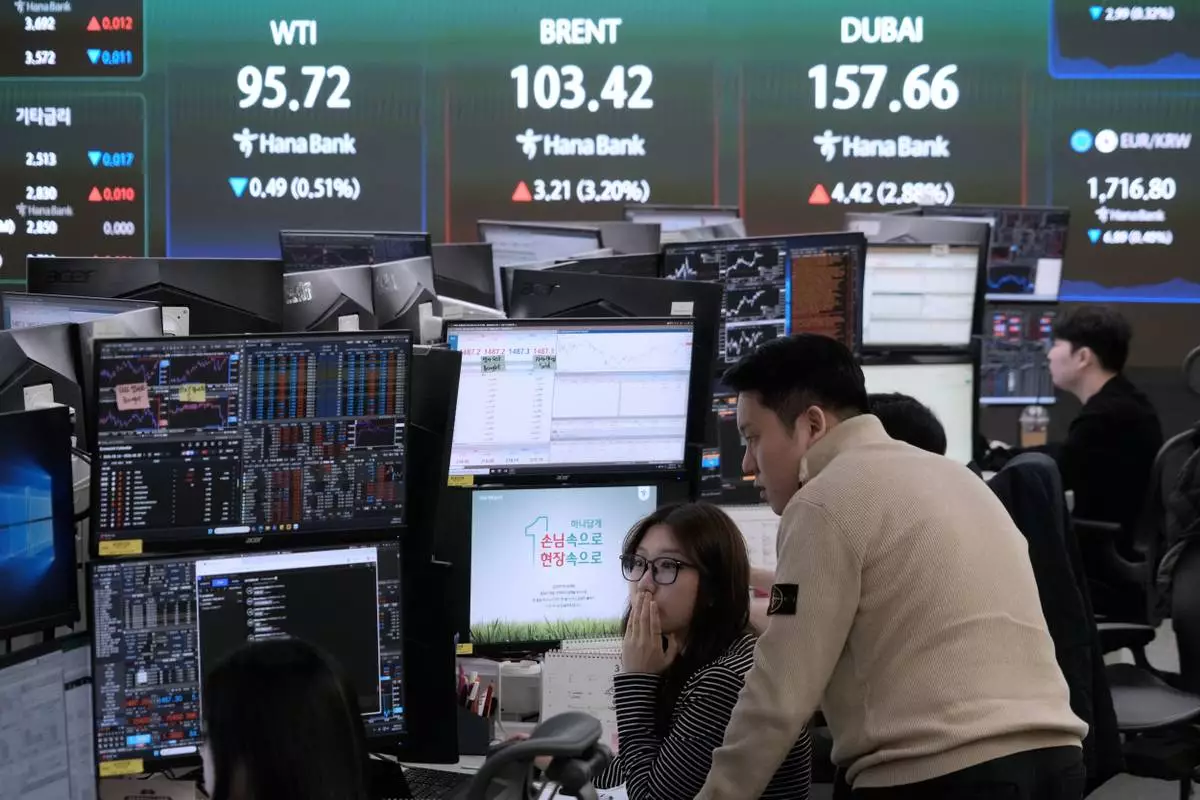
Currency traders watch monitors near a screen showing international oil prices at the foreign exchange dealing room of the Hana Bank headquarters in Seoul, South Korea, Wednesday, March 18, 2026. (AP Photo/Ahn Young-joon)
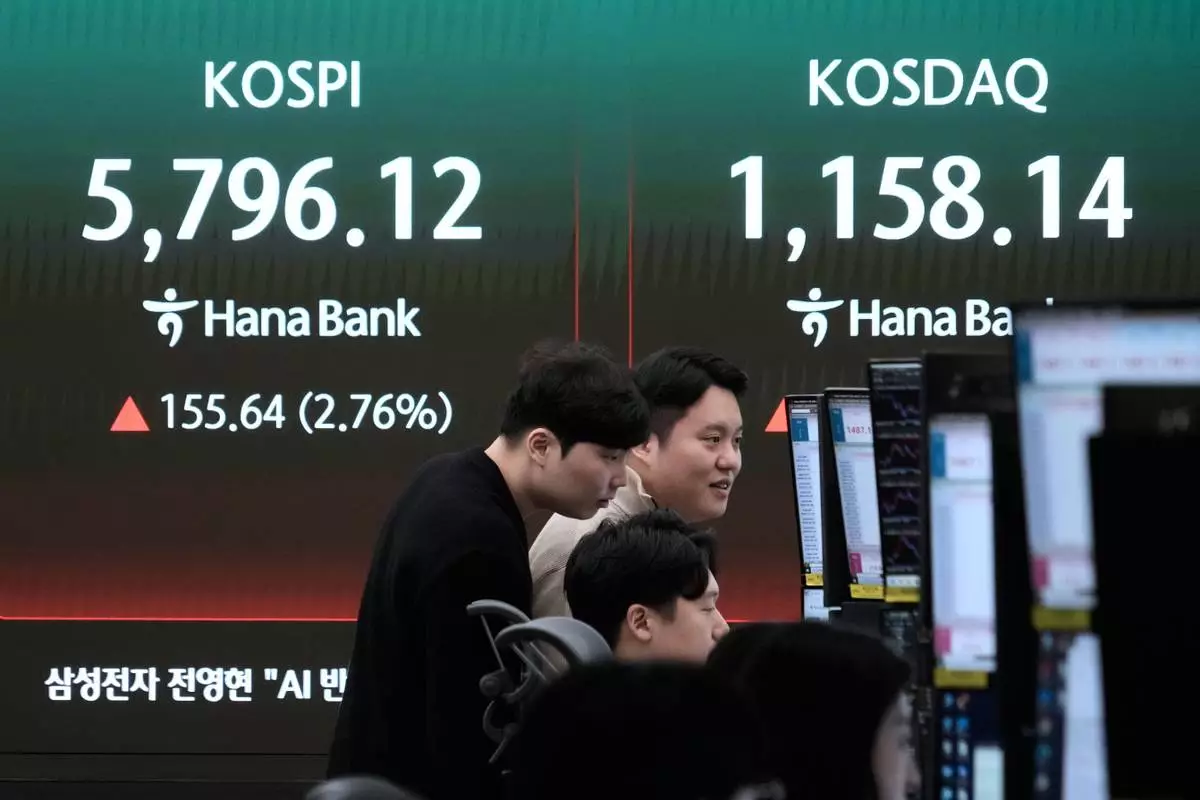
Currency traders watch monitors near a screen showing the Korea Composite Stock Price Index (KOSPI), left, at the foreign exchange dealing room of the Hana Bank headquarters in Seoul, South Korea, Wednesday, March 18, 2026. (AP Photo/Ahn Young-joon)
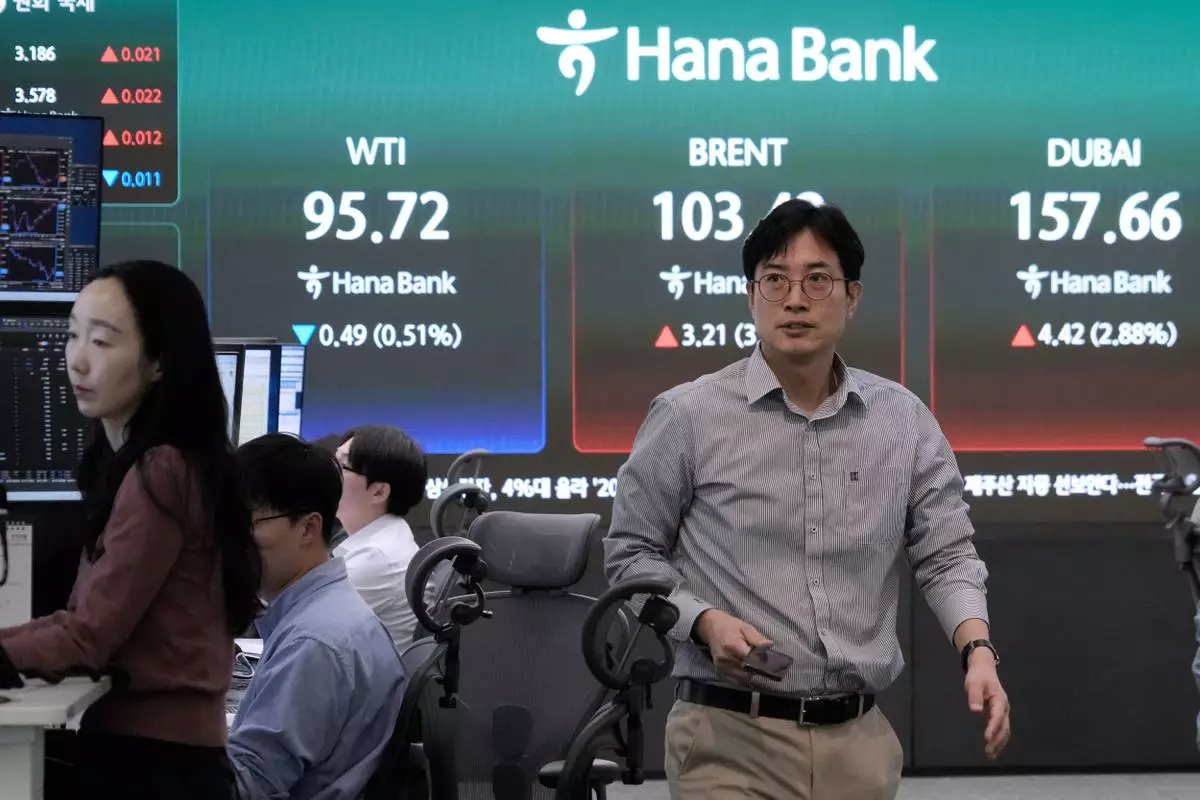
A currency trader passes by a screen showing international oil prices at the foreign exchange dealing room of the Hana Bank headquarters in Seoul, South Korea, Wednesday, March 18, 2026. (AP Photo/Ahn Young-joon)
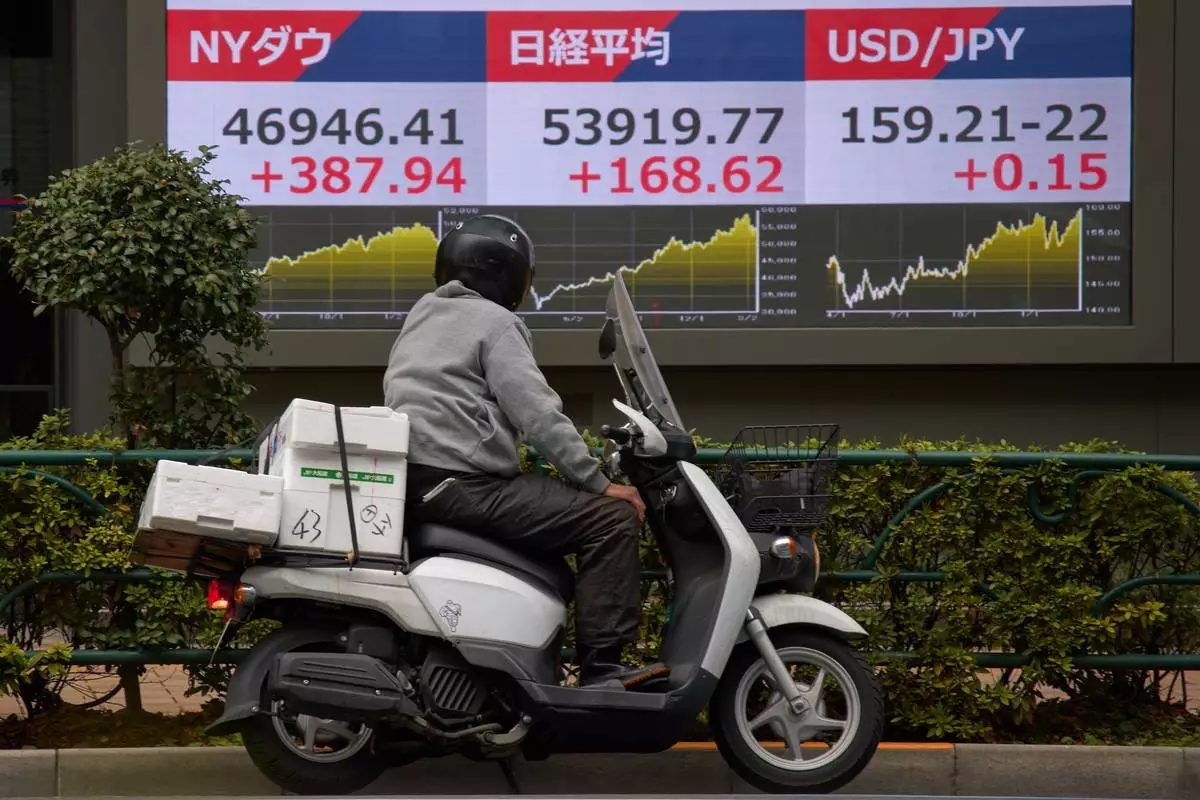
A person looks at a stock price monitor showing New York Dow and Nikkei indexes also US dollar Japanese yen exchange rate at a security company Tuesday, March 17, 2026, in Tokyo. (AP Photo/Eugene Hoshiko)
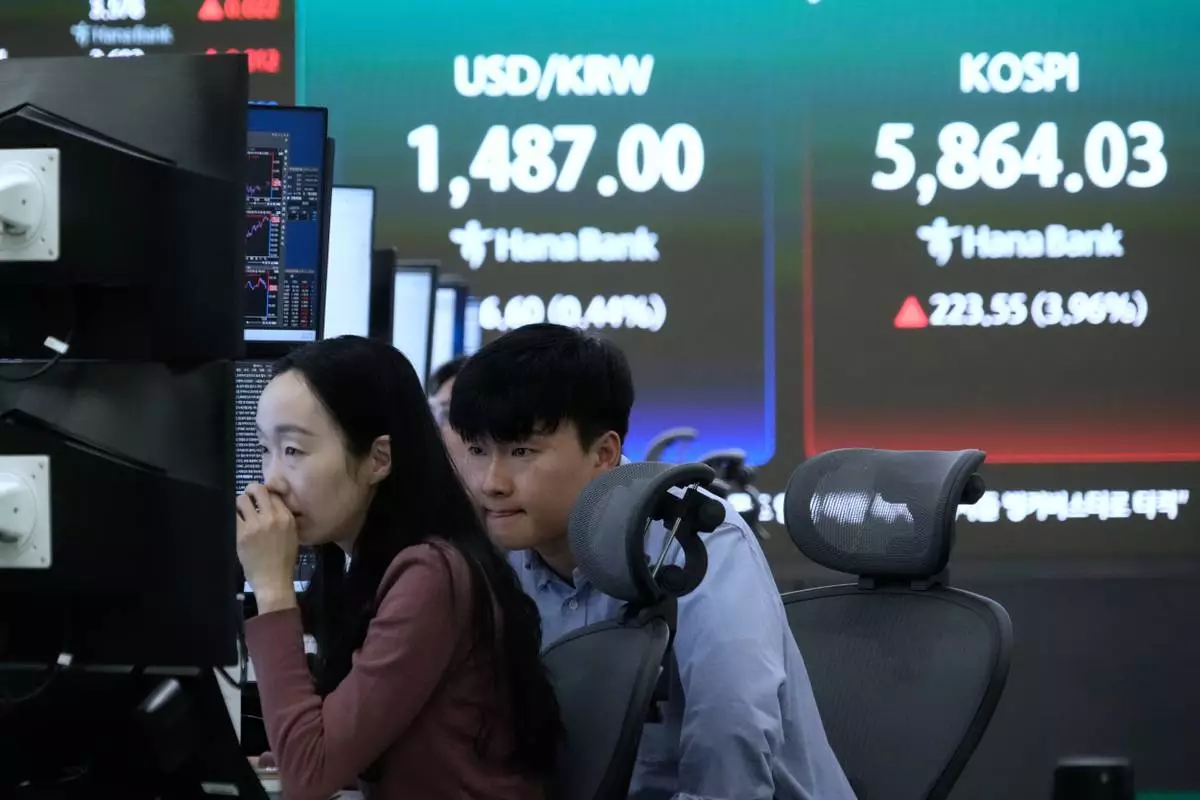
Currency traders watch monitors near a screen showing the Korea Composite Stock Price Index (KOSPI), top right, at the foreign exchange dealing room of the Hana Bank headquarters in Seoul, South Korea, Wednesday, March 18, 2026. (AP Photo/Ahn Young-joon)