THE HAGUE, Netherlands (AP) — Rwanda told a panel of international arbitrators Wednesday that Britain still owes it 100 million pounds ($134 million) under a contentious refugee resettlement deal that Prime Minister Keir Starmer scrapped immediately after taking office in 2024.
The 2022 deal struck by Starmer's predecessor, Rishi Sunak, involved sending migrants who arrive in the U.K. as stowaways or in boats to the East African country. It included arrangements for payments to Rwanda to help cover costs.
Rwanda set up an asylum appeals chamber, created ministerial and administrative structures and "prepared reception facilities for the incoming refugees and incurred significant costs in doing so,” Rwanda’s Justice Minister and Attorney General Emmanuel Ugirashebuja told a hearing at the Permanent Court of Arbitration in The Hague.
But when Starmer took office, “the new prime minister declared the Rwanda scheme to be dead and buried on his first full day in office,” Ugirashebuja said. “The United Kingdom did not do Rwanda the courtesy of informing it in advance. Instead, Rwanda was left to read about these developments in the media.”
The British government is urging the court to dismiss Rwanda's claims, arguing that the countries agreed in November 2024 that Rwanda would forgo the payments.
Rwanda denies that. Ugirashebuja told the panel that the U.K. “sought to walk away from its legal obligations.”
“A lot of the arbitration is going to turn around on the proof of that agreement,” Joelle Grogan, visiting senior research fellow at UCD Sutherland School of Law in Dublin, told The Associated Press.
The arbitration court is likely to take months or more to reach a decision after hearings this week.
Starmer's home secretary at the time the deal was scrapped, Yvette Cooper, called it the “most shocking waste of taxpayer money I have ever seen.”
She estimated that the plan, which ran into legal challenges and was widely criticized by human rights groups, cost 700 million pounds in public funds including making payments to Rwanda, chartering flights that never took off and paying more than a thousand civil servants who worked on the arrangements.
Under the 2022 deal, migrants were to be sent to Rwanda, where their asylum claims would be processed and, if successful, they would stay. Britain’s Supreme Court ruled that the policy was unlawful because Rwanda is not a safe third country for migrants sent there.
Rwanda launched the arbitration proceedings in January, also alleging that the U.K. violated part of the deal in which London had agreed to resettle vulnerable refugees from Rwanda.
Associated Press writer Jill Lawless in London contributed to this report.
This version corrects the dollar conversion in the first paragraph and summary.
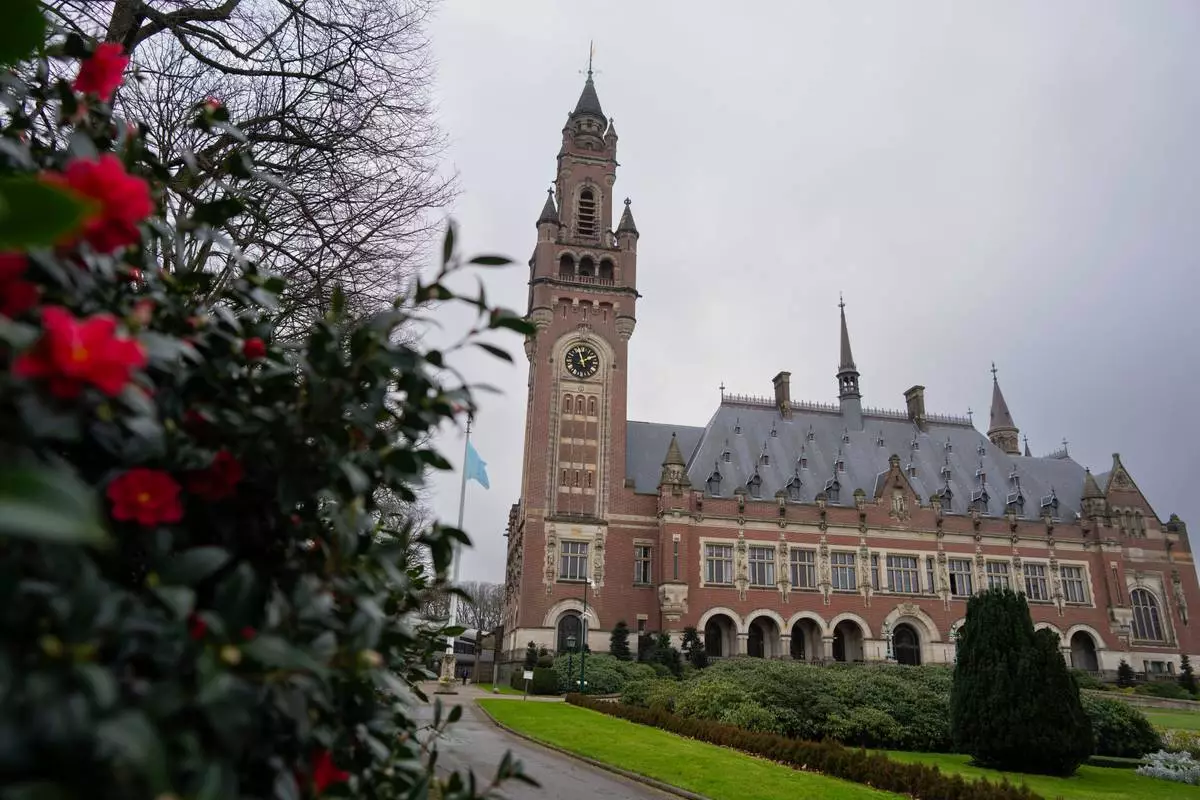
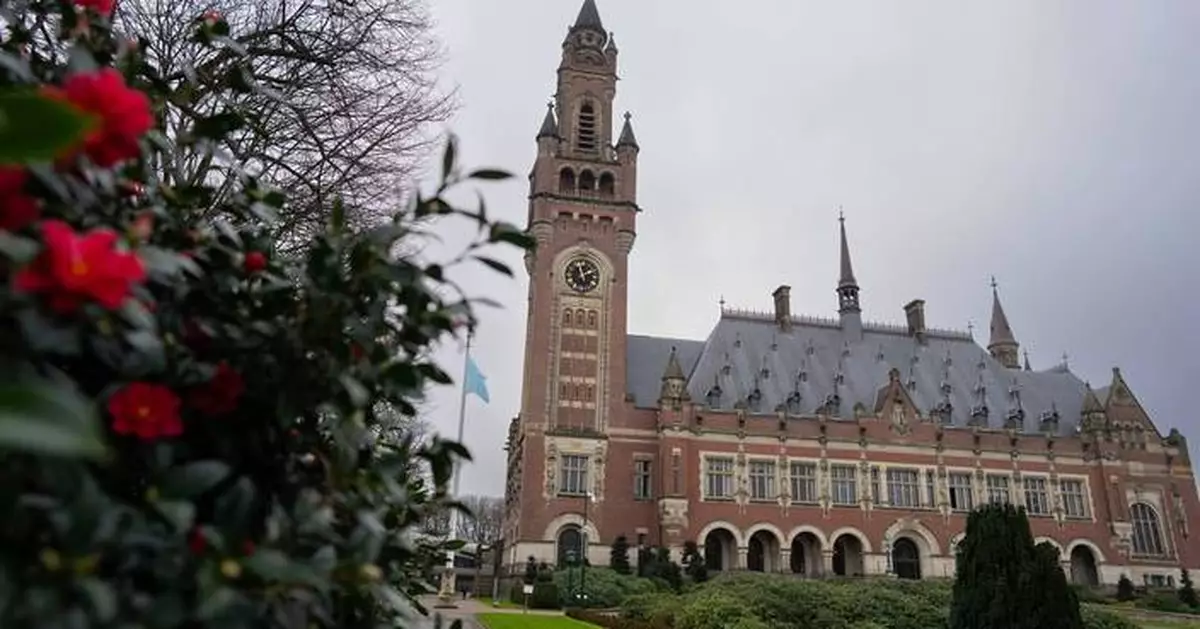
FILE - A view of the peace Palace housing the International Court of Justice, the UN's top court, is seen, Feb. 2, 2024, in The Hague, Netherlands. (AP Photo/Peter Dejong, File)
BISMARCK, N.D. (AP) — Tennessee farmer Todd Littleton expects to pay $100,000 more for fertilizer this season, a 40% spike from his bill last year thanks to the war in Iran — and he is scrambling to cover that extra cost.
“The problem is, is we’re so strained financially coming into this issue,” said Littleton, a third-generation farmer from Gibson County in the state’s northwest corner. “We have had a couple of record losses the last couple years, so everyone’s kind of grabbing at straws anyway, and then to have input prices increase yet again, it just really couldn’t happen at a worse time.”
Littleton, who grows corn, soybeans and wheat, is among thousands of farmers across the country who will pay far more this spring than they expected for fertilizer that is essential to their crops. Nitrogen-based fertilizer is especially vital for corn, usually the largest crop in the U.S. and one that feeds the nation’s livestock and is converted into fuel that helps power most U.S. cars and trucks.
Farmers have complained about costly fertilizer for years, but prices have soared even higher since the U.S. and Israel attacked Iran on Feb. 28, leading to a slowdown in shipping through the Strait of Hormuz, a chokepoint for 20% of the world’s oil and natural gas. Besides increasing the price of fuel, which is key in the production of fertilizer, the shipping disruption also has largely stopped the export of nitrogen fertilizers manufactured in the Persian Gulf and limited access to key fertilizer ingredients.
About 15% of fertilizer imports to the U.S. are from the Middle East, and about half the global supply of the key ingredient urea comes from the region, along with 30% of ammonia, according to the American Farm Bureau Federation.
“When the ports started raising their nitrogen prices due to the conflict due to shipping concerns, that directly affects me here on the farm,” Littleton said.
But it could be worse, as some farmers may not be able to obtain fertilizer at any price, said Zippy Duvall, president of the American Farm Bureau Federation.
“We’re being told that many of our farmers that haven’t preordered their fertilizer and paid for it may not even obtain the fertilizer that they’re going to need during the season or for spring planting,” Duvall said. “That’s why this situation is so serious.”
Harry Ott, a cotton, corn and peanut farmer who also leads the South Carolina Farm Bureau, said there isn’t enough fertilizer stockpiled in warehouses to meet demand in the coming months.
“It is a really dire situation that our farmers facing,” Ott said.
Even before the current spike in prices, other factors in recent years have led to high fertilizer costs, starting with the war between Ukraine and Russia, which blocked access to raw materials and increased natural gas prices. China also cut phosphate exports as it focused more on domestic needs.
The latest factors worsened those existing supply issues, which means that even if the Iran war was resolved, fertilizer prices likely won’t quickly fall, said Jacqui Fatka, a farm supply economist for creditor CoBank.
“There’s going to be a tail to this that's going to take time to get everything turned back on, sent back out,” Fatka said.
And then there is the time it takes for shipments from the Middle East to reach the U.S. — typically 30 to 45 days to reach the Port of New Orleans.
Some fertilizer is already stored in the U.S. and can meet demand amid the shortage of Middle East imports, but at some point those supplies will run low.
“We don’t quite know how it’s going to shake out,” said Nancy Martinez, director of public policy, trade and biotechnology for the National Corn Growers Association.
Nitrogen- and phosphate-based fertilizers are largely produced domestically, which helps a little bit, said Anne Villamil, a professor of economics at the University of Iowa.
“But again, energy prices are an input, and so even if you’re producing it in the U.S., if the cost of your inputs goes up, then it’s going to be an increase in price to the farmers who want to buy it,” Villamil said.
Soaring oil prices could result in higher food prices, given the increased cost of diesel needed to transport products to grocery stores and petroleum products used in plastic packaging, said Chad Hart, an economics professor at Iowa State University.
However, the increased fertilizer prices shouldn't significantly lead to grocery store increases even as they put a crimp in farmers' profits. That's because on-farm costs are only a small part of what consumers pay at the supermarket.
The Trump administration said it has taken steps to ease the cost of fertilizer, including moving to increase fertilizer imports from Venezuela, which U.S. Agriculture Secretary Brooke Rollins called “a huge step that puts farm security and farmers first.”
The Department of Agriculture also notes it previously announced $12 billion in one-time payments to help farmers offset losses primarily due to tariffs imposed by the Trump administration. In a statement, the USDA also said it has provided more than $30 billion in additional aid to farmers since January 2025, and the agency noted its support for a more competitive fertilizer marketplace that would ultimately lower prices.
Fatka, of CoBank, said the $12 billion doesn’t go far for farmers with a payment of $44 per corn acre when the USDA estimates about $900 per acre for cost of production for the average U.S. farmer.
Still, farm bankruptcies remain rare, with only 315 last year — a tiny percentage of the nearly 1.9 million farms nationally. And prices for the nation’s two largest crops — corn and soybeans — have been climbing recently.
Tom Waters, who farms about 5,000 acres (2,023 hectares) of corn, soybeans and wheat east of Kansas City, said the increase of fertilizer prices along with other costs makes it tough to make a profit when crop prices are so low.
“The margins get smaller and smaller so we just have to really work hard to trim our costs and be as frugal as we can be but still provide the soil and crop what it needs to grow and produce,” Waters said.

Tom Waters, a seventh-generation farmer, stands next to his planting machinery Friday, March 13, 2026, in Orrick, Mo. (AP Photo/Nick Ingram)