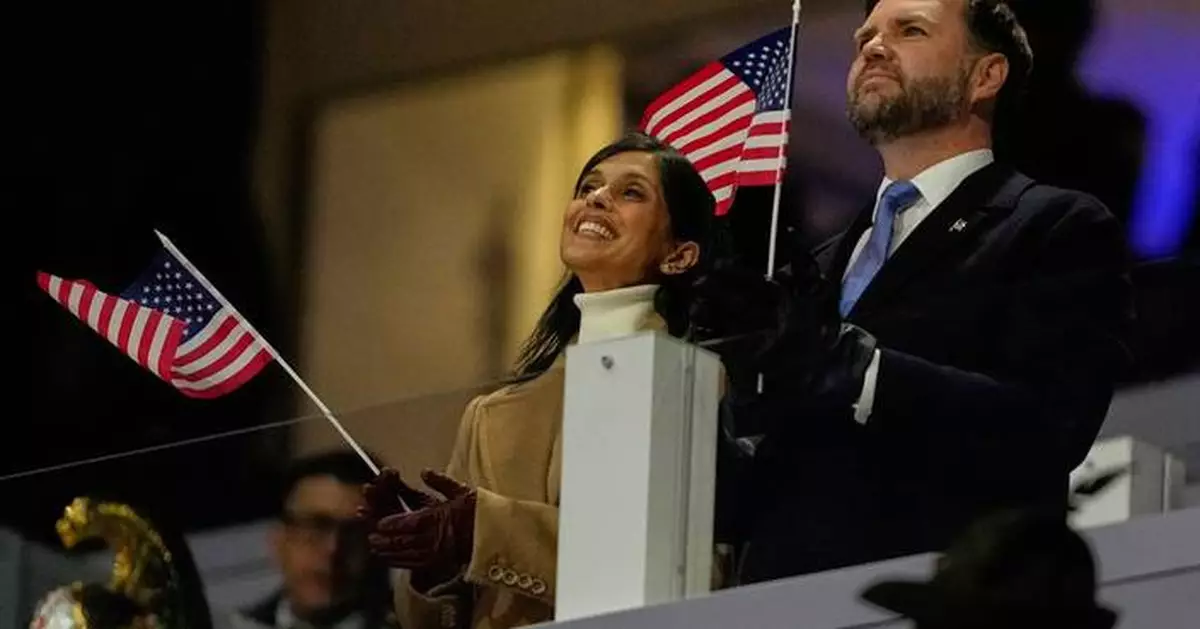
An Ohio man has been charged with threatening to kill Vice President JD Vance while he was visiting his home state last month. But the man's lawyer said his health makes it unlikely he would have been able to carry out the threat.
In addition to the charge for threatening Vance, prosecutors also charged Shannon Mathre with possessing digital files depicting child sexual abuse that were discovered during the investigation. That second charge carries a much stiffer potential penalty of up to 20 years in prison. The charge related to the threats could lead to a maximum five-year sentence.
Lawyer Neil McElroy said that Mathre's health challenges would have been apparent to anyone in the courtroom Friday when he pleaded not guilty to the charges, so he doesn't think the threat charge makes sense. McElroy said he couldn't comment on the charge related to the possession of child sexual abuse files because prosecutors haven't yet provided any details about that at this early stage of the case.
“Anyone that spends any time in a room with Mr. Mathre or has any knowledge of his condition -- physical condition, mental condition -- can see that it’s a farce,” McElroy said. He declined to go into detail about Mathre's health challenges, but the lawyer said that Mathre has “some mental disabilities and a variety of other conditions.”
Still, the Justice Department and Secret Service took the threat very seriously after Mathre said “I am going to find out where he (the vice president) is going to be and use my M14 automatic gun and kill him.”
The indictment filed in court doesn’t offer many details about the threat or the images he allegedly possessed, but the Secret Service said the investigation went beyond the online threat to also examine Mathre's actions and behavior. The 33-year-old Toledo man’s Samsung phone was seized on Jan. 21 as part of the investigation.
“Our attorneys are vigorously prosecuting this disgusting threat against Vice President Vance,” Attorney General Pamela Bondi said in a statement. “You can hide behind a screen, but you cannot hide from this Department of Justice.”
David M. Toepfer, who is the U.S. Attorney for the Northern District of Ohio, said “hostile and violent threats made against the Vice President, or any other public official, will not be tolerated in our district.”
Another Ohio man was charged last month after officials say he broke windows at Vance's Ohio home not long after the Vice President returned to Washington following a weekend visit to Ohio. The Secret Service arrested William D. DeFoor, 26, as he ran from Vance's home on Jan. 5. Vance is currently in Milan, Italy, attending the start of the Winter Olympic Games.
The Secret Service agent in charge of the Toledo office, Matthew Schierloh, said there should be zero tolerance for any kind of political violence in this country.
“The safety and security of those we protect is paramount to everything we do,” Schierloh said. “Thanks to vigilant members of the public and the tenacious work of our special agents, a comprehensive joint investigation was conducted, resulting in the arrest of a defendant for making threats against the Vice President.”
Mathre is doing back in court on Wednesday for a hearing to determine whether he will remain in custody as the case moves forward.
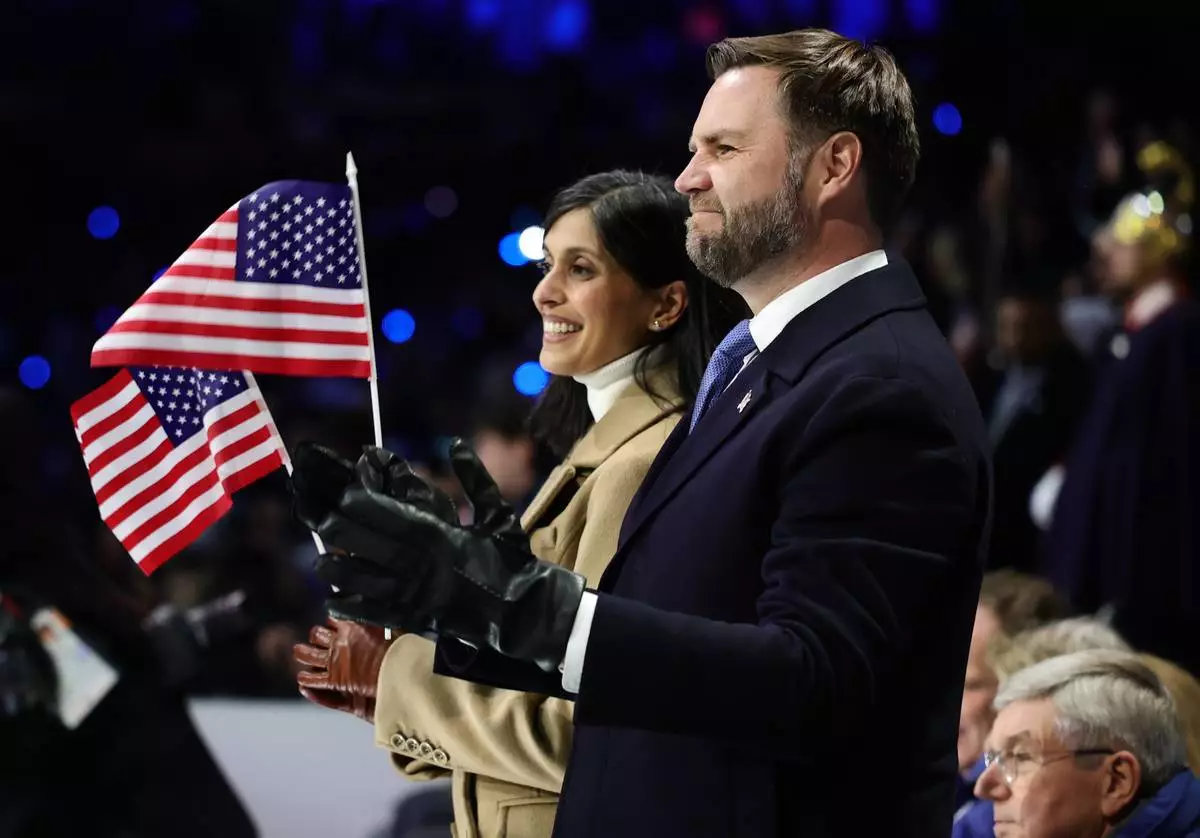
US Vice President JD Vance and second lady Usha Vance attend the Olympic opening ceremony at the 2026 Winter Olympics, in Milan, Italy, Friday, Feb. 6, 2026. (Andreas Rentz/Pool Photo via AP)
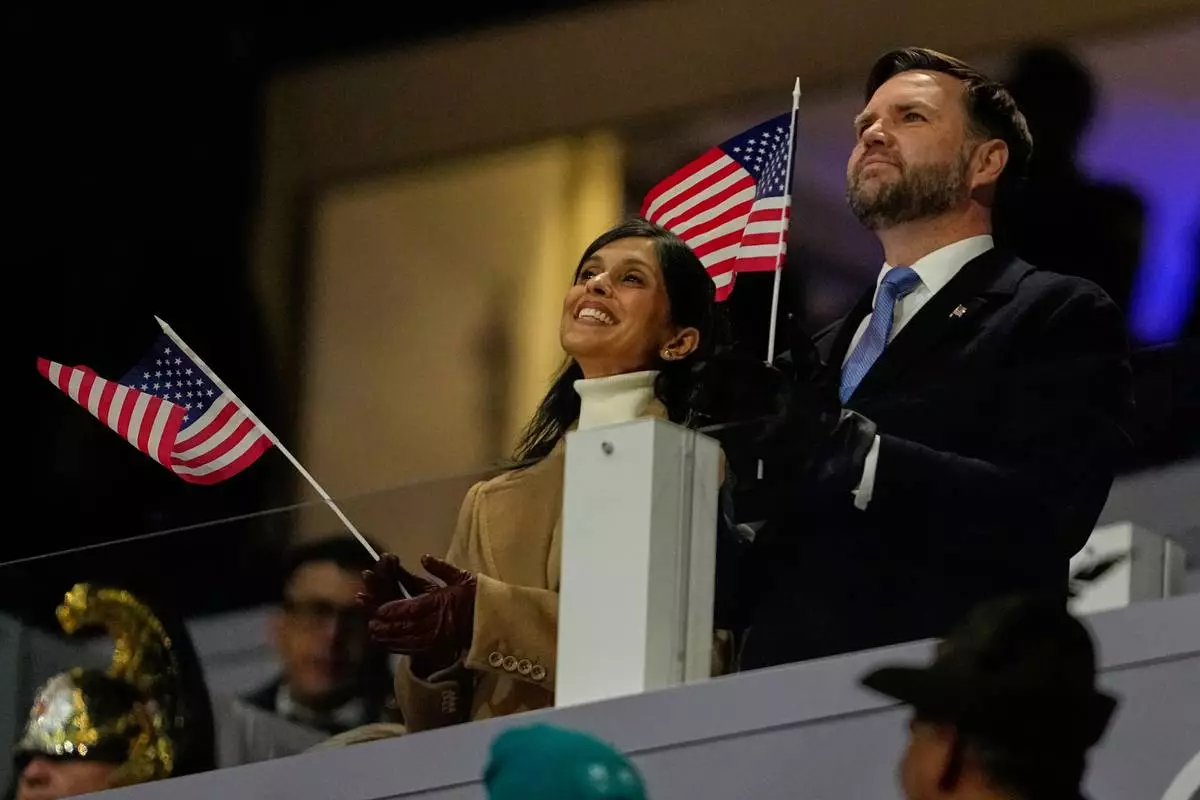
Vice President JD Vance and his wife Usha Vance cheer on team USA during the Olympic opening ceremony at the 2026 Winter Olympics, in Milan, Italy, Friday, Feb. 6, 2026. (AP Photo/Ashley Landis)
NEW DELHI (AP) — India’s Parliament opened debate Thursday on a landmark bill to reserve one-third of legislative seats for women, which could set off a sweeping redrawing of voting boundaries that could sharpen political tensions nationwide.
If passed, the bill would fast-track a 2023 law mandating 33% reservation for women in Parliament and state legislatures. It would be one of the most consequential shifts in political representation since India’s independence and potentially widen female participation in a system where women remain underrepresented.
The quota, however, is linked to a controversial separate bill to change voting boundaries, a process that could increase the number of seats in the lower house from 543 to about 850.
While there appears to be a broad bipartisan support for putting more women into Parliament, opposition parties have raised concerns over changing voting boundaries, warning it could tilt the political balance in favor of Prime Minister Narendra Modi’s Bharatiya Janata Party.
The bills are being taken up during a three-day special session of Parliament and will require a two-thirds majority in both houses to pass. Modi’s ruling National Democratic Alliance holds 293 seats in Parliament, while a two-thirds majority would require 360 seats.
Several Asian countries, including India’s neighbors like Nepal and Bangladesh, have similar quotas for women in national legislatures. India already mandates that one-third of seats be set aside for women in local governance bodies, but women currently hold only about 14% of seats in the lower house of Parliament.
The quota could bring hundreds more women into legislative politics, which supporters say could redirect policy attention toward women’s health, education and gender-based violence. It is unclear how seats would be allocated to women in an expanded Parliament.
Ranjana Kumari, a women’s rights advocate, said the move would make India’s “democracy truly representative” and force political parties to field more female candidates.
“(The) door is little open. Women will enter and fill the room slowly,” Kumari said.
For many young Indian women, the change also carries symbolic weight.
Pranita Gupta, a 23-year-old law graduate, said it will instill “a sense of confidence that we can participate in politics and we can be part of Parliament not only as an exception but as well as a norm.”
The rollout of the quota is tied to a population-based redrawing of voting boundaries using data from the last completed census in 2011. While the timeline for this process remains unclear, the proposal has already triggered political debate.
Opposition parties warn that basing constituencies on population could shift political power toward faster-growing northern states, while diminishing the parliamentary representation, seat share and overall influence of southern regions. They also argue it could benefit Modi’s party, which has strong support in the northern states.
India’s Constitution mandates that parliamentary seats be allocated by population and revised after each census. However, boundaries have not been redrawn since the 1971 census, as successive governments delayed the process over concerns about uneven population growth.
Leaders in southern states, where birthrates have declined more sharply, say a population-based delimitation exercise could increase seats in the north and disadvantage southern regions that have slowed population growth and built stronger economies.
Modi’s party has pushed back on the criticism of the bill and said it would implement a uniform 50% increase in seats across all states, maintaining proportional representation nationwide. However, the draft legislation does not explicitly spell this out.
Speaking in Parliament, Modi said the legislation is “not discriminatory” and “will not do injustice to anyone.”
But early opposition surfaced Thursday, as Tamil Nadu chief minister M.K. Stalin burned a copy of the bill and raised a black flag in protest. He urged people across the state to do the same.
Some leaders from southern states also turned up in Parliament dressed in black as a mark of protest.
India’s opposition leader Rahul Gandhi alleged the exercise could be used to “gerrymander” parliamentary constituencies in favor of Modi’s party ahead of the 2029 national elections.
“Delimitation should be based on a transparent policy framework, developed after wide consultations with a consensus,” he wrote Wednesday on X.
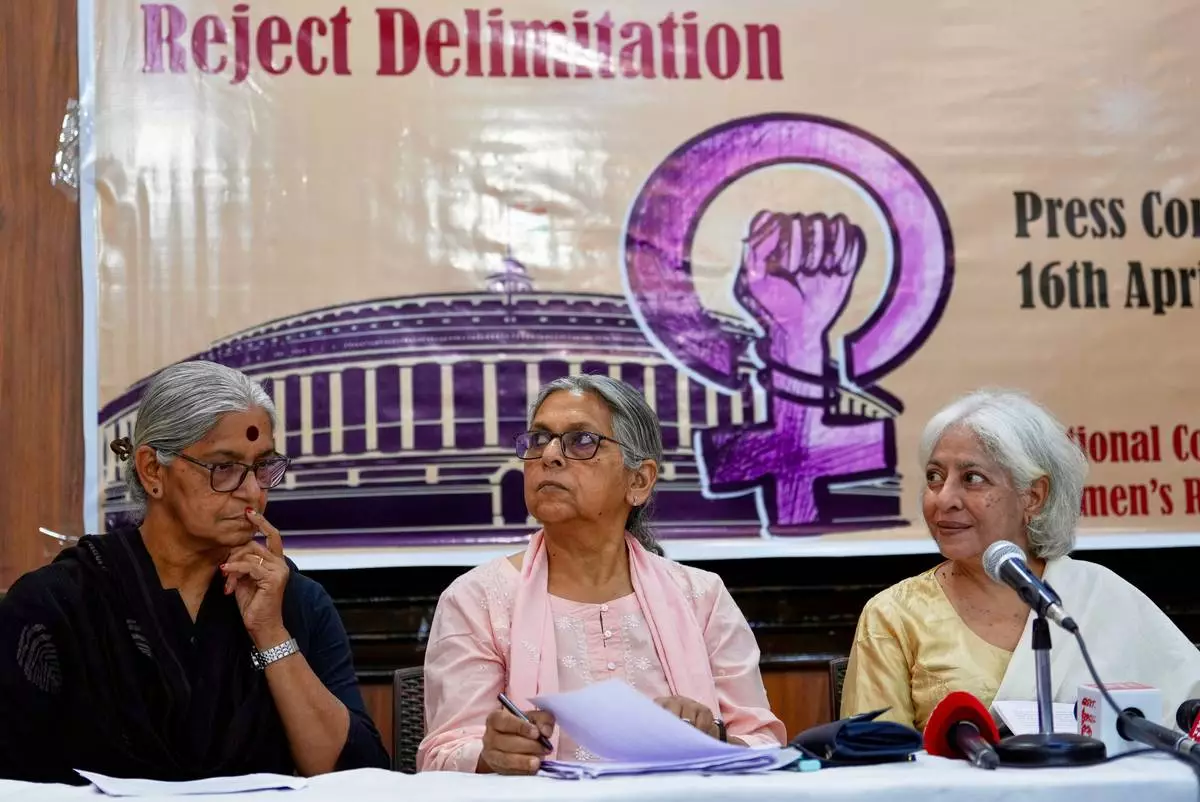
Communist Party of India member Annie Raja, left, activist Padma Singh, center, and writer Radha Kumar address a press conference after sending a petition on women's reservation to the parliamentarians in New Delhi, India, Thursday, April 16, 2026. (AP Photo/Manish Swarup)
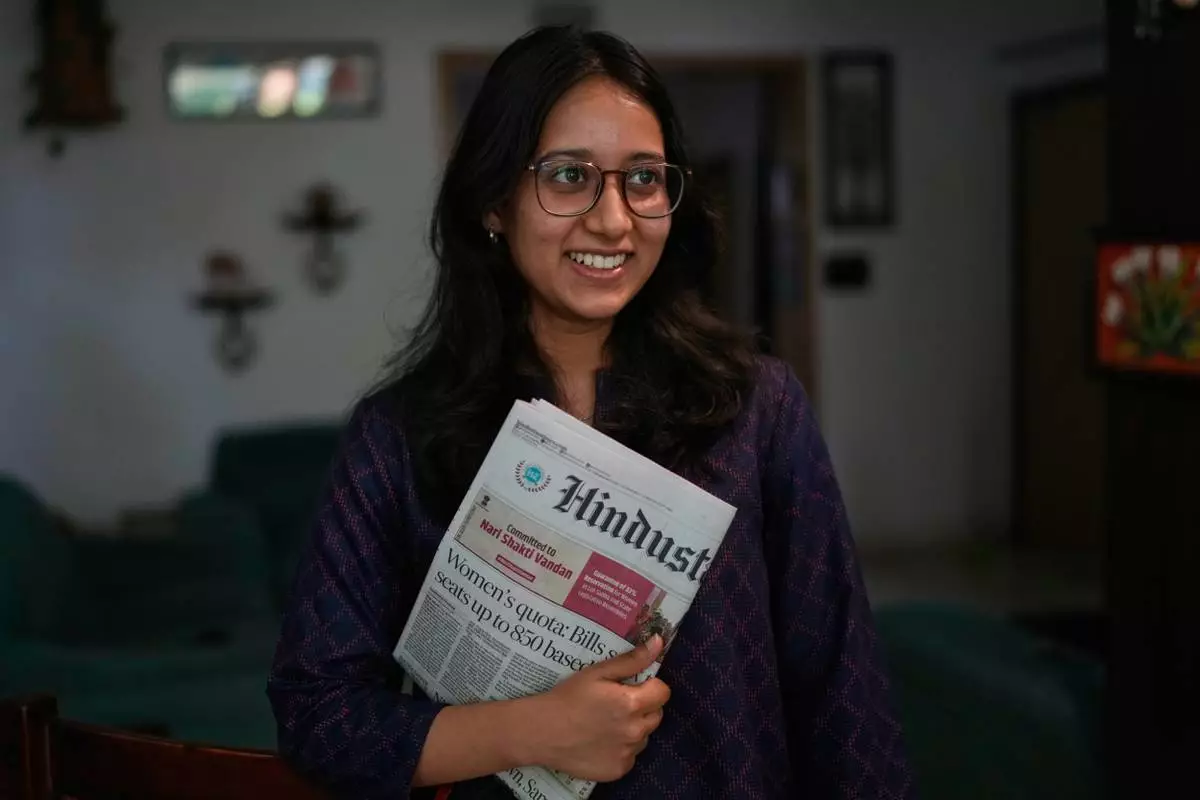
Pranita Gupta, a law graduate, poses for a photograph in New Delhi, India, Wednesday, April 15, 2026. (AP Photo/Manish Swarup)
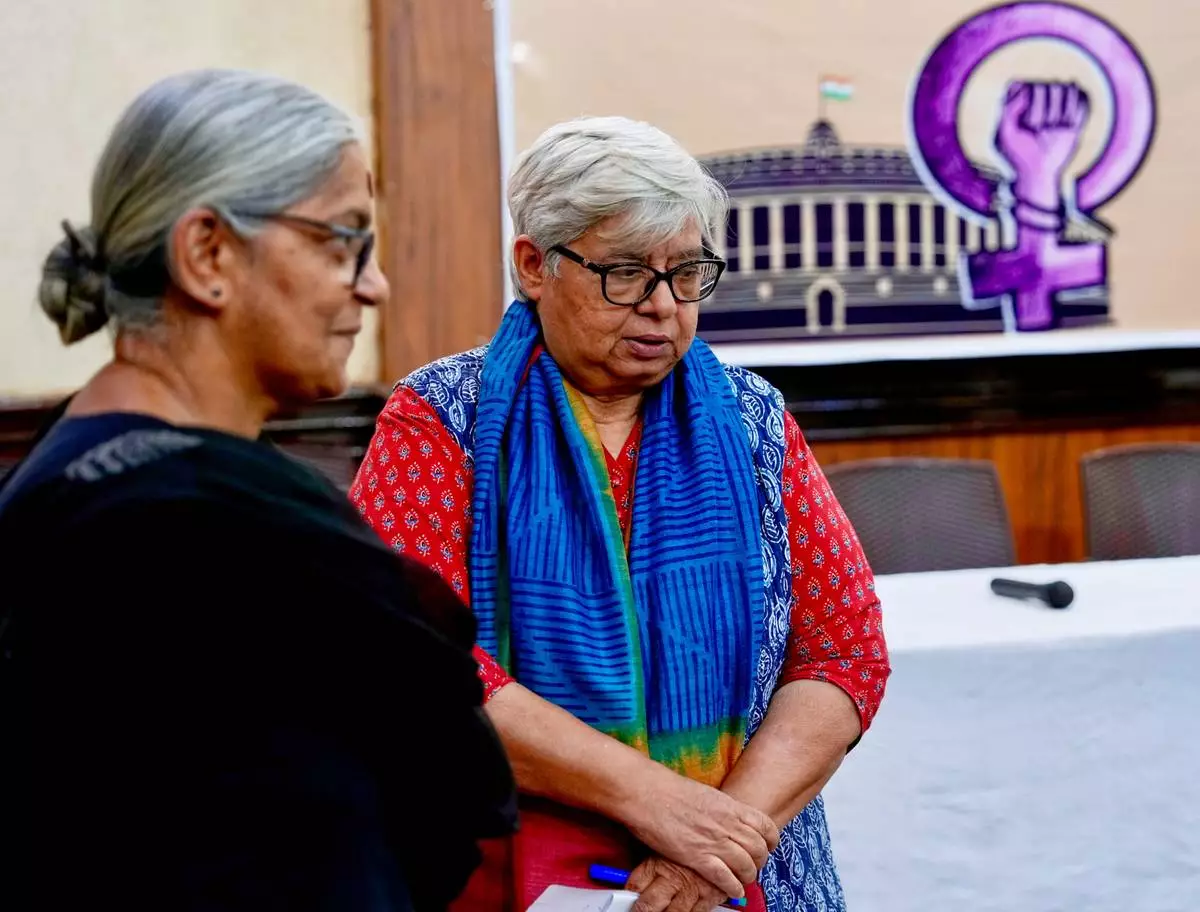
Communist Party of India member Annie Raja, left, and activist Shabnam Hashmi have a chat before a press conference on sending a petition on women's reservation to the parliamentarians in New Delhi, India, Thursday, April 16, 2026. (AP Photo/Manish Swarup)
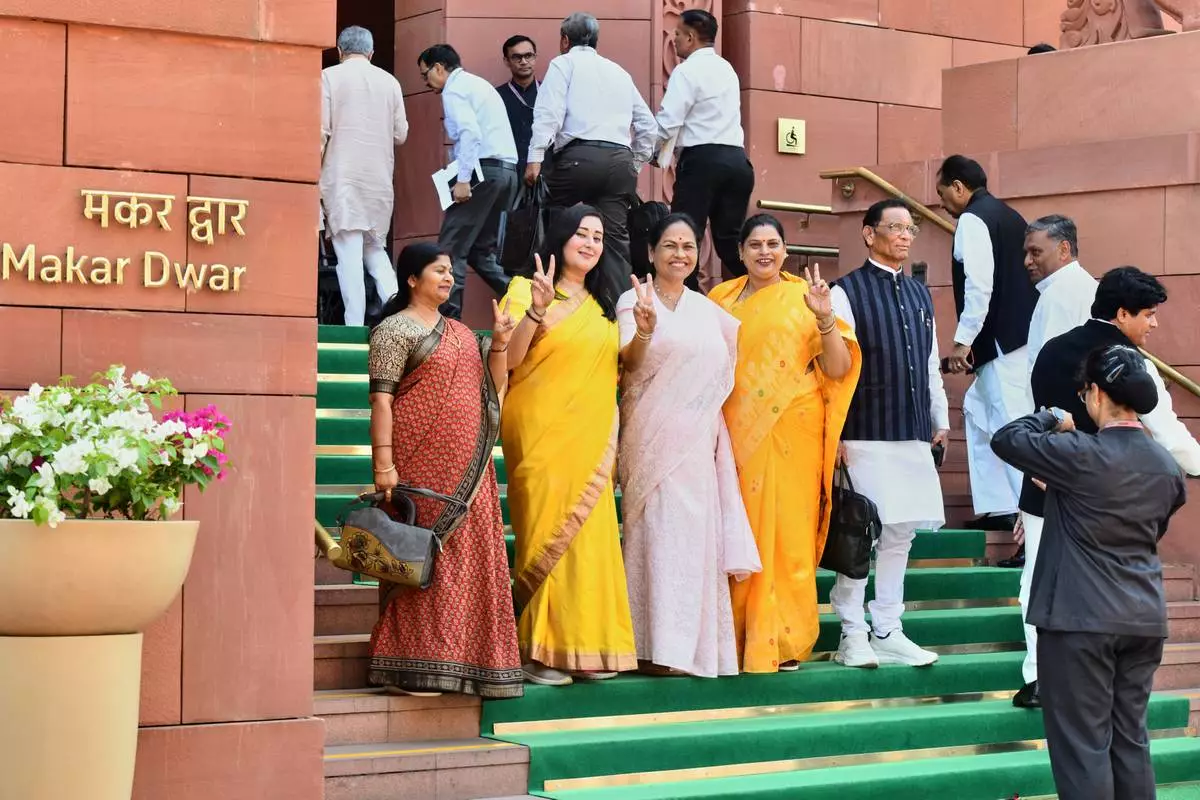
A security officer takes photograph of Indian women lawmakers as they pose outside Parliament House before the start of the debate on a landmark bill to reserve one-third of seats for women, in New Delhi, India, Thursday, April 16, 2026. (AP Photo)
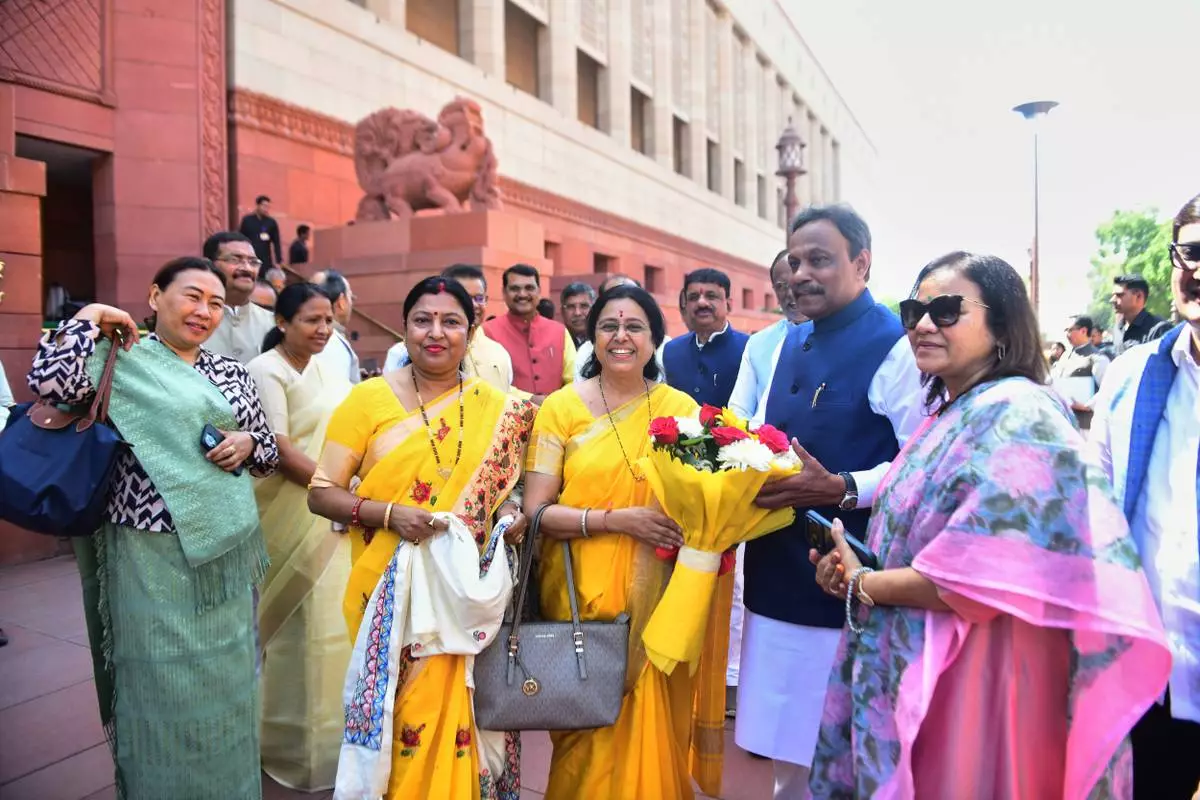
Indian women lawmakers pose outside Parliament House before the start of the debate on a landmark bill to reserve one-third of seats for women, in New Delhi, India, Thursday, April 16, 2026. (AP Photo)