As the Year of the Horse approaches, a new wave of cultural and creative products blending traditional charm with modern aesthetics has hit the market, sparking a fresh consumer frenzy.
The Grand Canal Museum in Beijing has drawn on its collection to launch nearly 100 horse-themed cultural products. Rich in auspicious symbolism, the items are quickly attracting large numbers of buyers.
An image of a "Yellow-Glazed Pottery Equestrian Figurine" is now decorating pillows, silk scarves, and even diatomite anti-slip mats, preserving the artefact's likeness while adding practical value.
"First, the design should emphasize the image of the horse to highlight the zodiac theme of the Year of the Horse. Second, it should convey the sense of national integration and the consciousness of a community of the Chinese nation. Finally, it should be something people feel comfortable wearing or carrying in public," said Zhang Jie, deputy head of the museum.
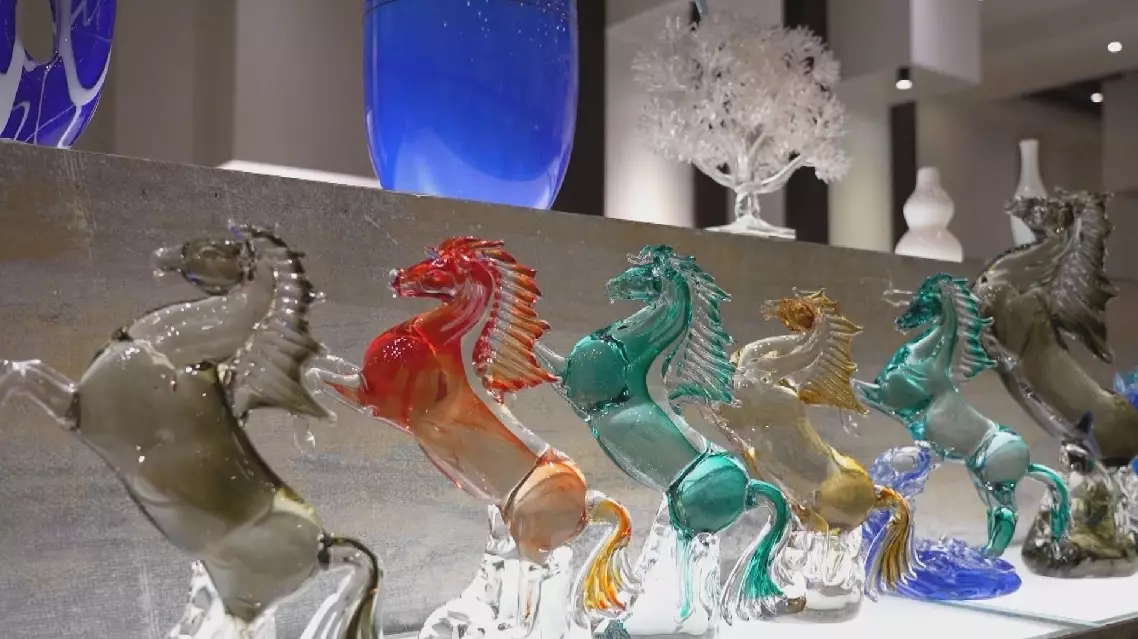
In a glass workshop in Zibo City, east China's Shandong Province, artisans are busy crafting glass sculptures for the upcoming Year of the Horse, which begins on Feb 17 this year. The glass is shaped under intense heat, gradually taking on the spirited form of a galloping steed.
One favorite is a glass rocking horse. Its body is outlined in a semicircular shape resembling a rainbow's arc, wishing consumers a joyful new year.
At a national intangible cultural heritage experience center in Zhengzhou, central China's Henan Province, craftsmen created a series of distinctive products centered on the Year of the Horse theme, incorporating traditional techniques such as the tri-colored glazed pottery, clay figurines, and folk cloth art.
To enrich the festival performance market, locals in Xiaoxiang Village of Gongyi City in Henan Province are currently rehearsing the Xiaoxiang Lion Dance, a national intangible cultural heritage show in recent days. Accompanied by the stirring rhythm of drums, two young men stepped along two thick hemp ropes, steadily ascending to a platform more than 10 meters high while performing a series of difficult lion dance movements.
The person in charge said that three teams are expected to perform more than 110 shows during this year's Spring Festival, with the expected revenue increasing by 30 percent compared to last year.
"After completing rehearsals, we're ready to depart for Baoji on the 22nd day of the 12th lunar month this year and perform there until the 16th day of the first lunar month next year," said Li Naixia, one of the performers.
Cultural products, performances hit markets across China ahead of Spring Festival