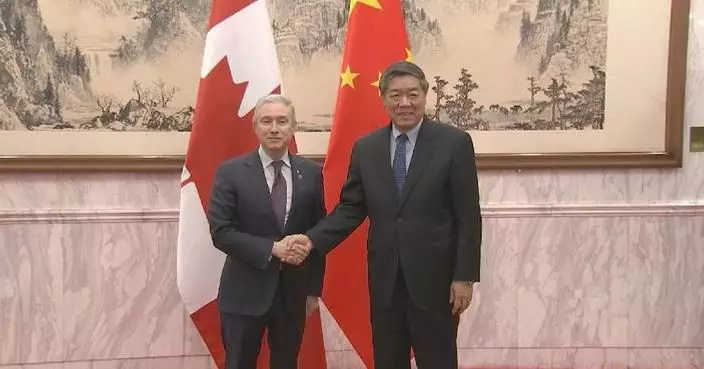
Thailand's caretaker Prime Minister and Bhumjaithai Party leader Anutin Charnvirakul announced on Sunday that the Bhumjaithai Party had won Thailand's House of Representatives election.
With more than 87 percent of ballots counted by the country's Election Commission, the Bhumjaithai Party was leading the vote, followed by the People's Party and the Pheu Thai Party in third.
Speaking earlier, People's Party leader Natthaphong Ruengpanyawut said his party accepted the results so far and was prepared to serve as the opposition if Bhumjaithai succeeds in forming a government.
About 50 million eligible voters cast ballots on Sunday to elect all 500 members of the lower house. A simple majority of 251 seats is required to elect a prime minister and form a new government.

Thai caretaker PM says Bhumjaithai Party wins House of Representatives election
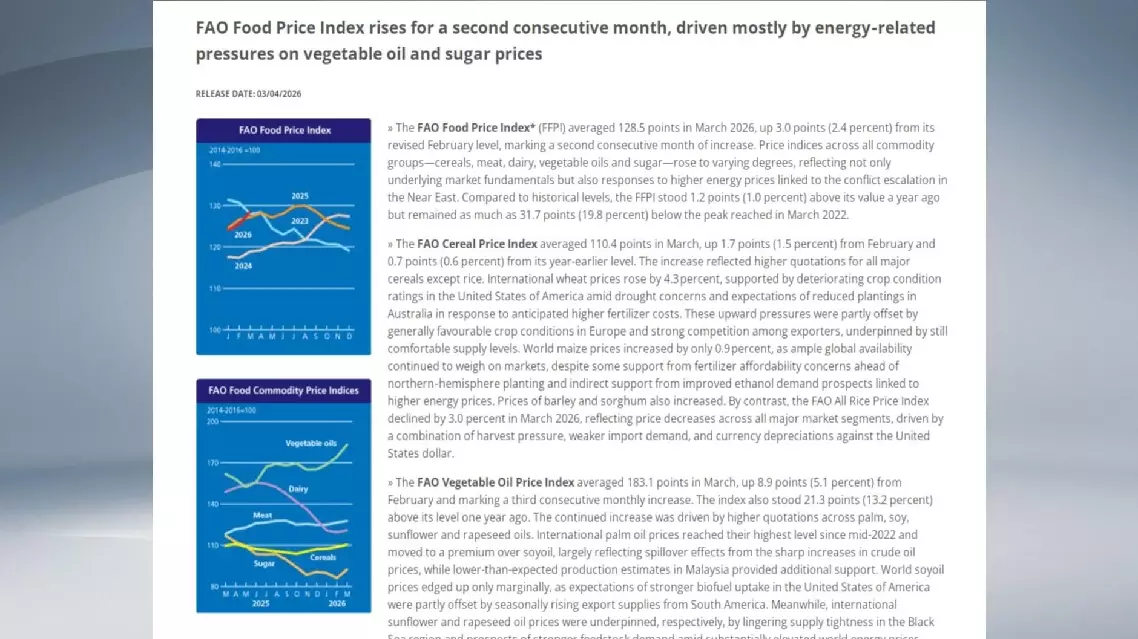
Global food commodity prices climbed for a second consecutive month in March, driven mainly by higher energy costs linked to escalating conflict in the Middle East, the Food and Agriculture Organization of the United Nations (FAO) said in report released on Friday.
The FAO Food Price Index, which tracks monthly changes in the international prices of a basket of globally traded food commodities, averaged 128.5 points in March, up 2.4 percent from February and 1.0 percent above its level a year ago.
According to the report, the FAO Vegetable Oil Index and Sugar Price Index showed the largest increases, up 5.1 percent and 7.2 percent, respectively.
The FAO Cereal Price Index increased by 1.5 percent from the previous month, driven primarily by higher world wheat prices, which rose 4.3 percent.
The FAO Meat Price Index rose by 1.0 percent from the previous month, and the FAO All-Rice Price Index declined by 3.0 percent in March, according to the report.
FAO stated that rising energy and fertilizer prices have been driving up agricultural input costs.
If the conflict stretches beyond 40 days, farmers will have to choose to farm the same with fewer inputs, plant less, or switch to less intensive fertilizer crops, according to FAO Chief Economist Maximo Torero.
These choices will hit future yields and shape food supply and commodity prices for the rest of this year and beyond, Torero said.
Global food prices rise for 2nd consecutive month in March amid Middle East conflict: FAO