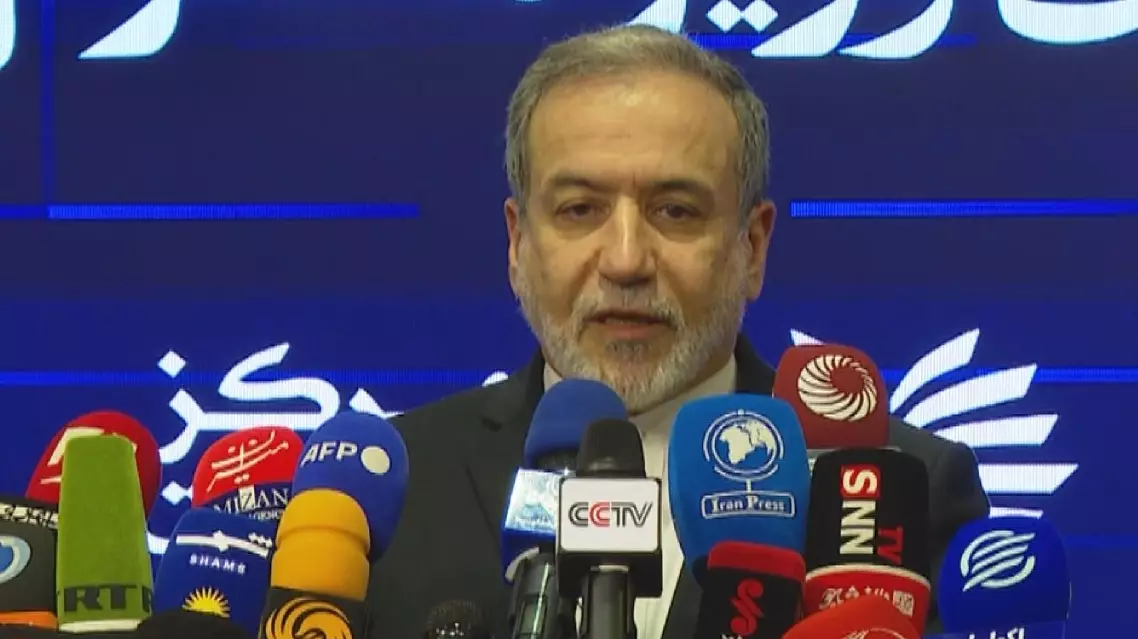
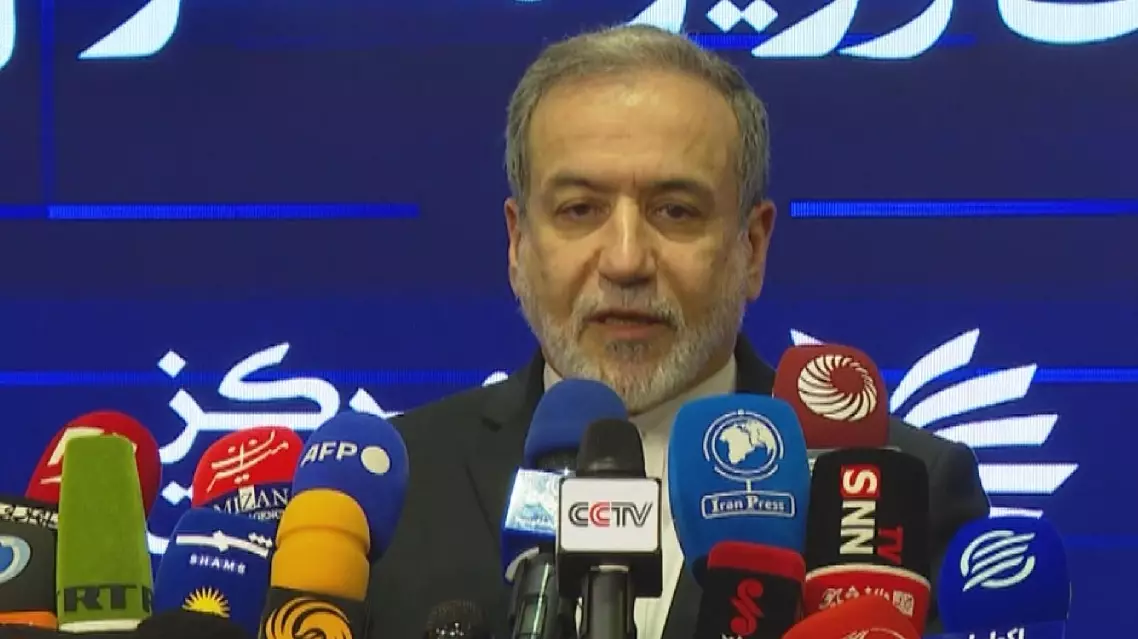
Iranian Foreign Minister Seyed Abbas Araghchi said Sunday that indirect talks will continue if Iran comes to the conclusion that the United States has the "necessary seriousness" to reach a negotiated solution to Iran's nuclear issue.
He made the remarks at a press conference in Tehran while elaborating on the indirect nuclear talks held on Friday between the Iranian and U.S. delegations in the Omani capital Muscat.
He said that Iran's missile program has never been and will not be on the agenda of the talks with the United States, and the sole focus is, and will be, the country's nuclear program.
He emphasized that Iran will never give up on its right to develop and exploit peaceful nuclear energy, including uranium enrichment, noting that the negotiations' success will depend on the other side taking that issue seriously.
"I think the first round of talks was more like a test of the trust and whether there is the seriousness of reaching an agreement through negotiation. There are indications suggesting that the U.S. has a certain degree of seriousness, but there are also some signs that this seriousness is weakening, such as the continuation of certain sanctions and some military activities, all of which raise doubts about whether the other side is serious about and ready for genuine negotiations. We are closely monitoring and evaluating all these signs to decide whether to continue the negotiations," said Araghchi.
Araghchi said that issues pertaining to the talks' content, such as the U.S.'s excessive and unrealistic demands and unreasonable claims, are the real obstacles, noting that if the U.S. approach is respectful and fair and based on safeguarding mutual interests, it will be possible to reach an agreement.
Meanwhile, speaking at a national conference in Tehran, Araghchi said that Iran has no intention of pursuing nuclear weapons, while firmly rejecting any form of bullying.
Also on Sunday, Iranian President Masoud Pezeshkian described the recent nuclear talks between his country and the United States as "a step forward."
In a post on social media platform X, Pezeshkian said that the discussions took place as a result of the follow-up efforts by "friendly" governments in the West Asia region, emphasizing that dialogue has consistently been Iran's chosen strategy for resolving issues peacefully.
The Friday talks were held amid heightened regional tensions between the U.S. and Iran, including a recent U.S. military buildup in the Middle East and Iran's stepped-up preparations.
Iran's FM says nuclear talks to continue if U.S. shows 'necessary seriousness'
Iran's FM says nuclear talks to continue if U.S. shows 'necessary seriousness'