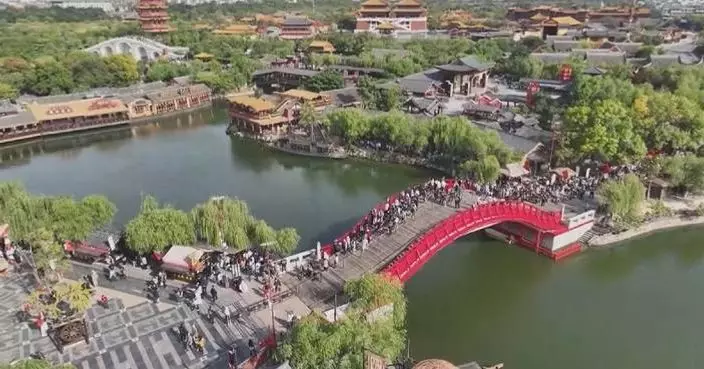
As the Spring Festival draws closer, cities and towns across China are embracing a growing holiday spirit, with streets decked out in decorations and a wide range of cultural activities and shopping events getting underway.
In Beijing, Spring Festival decorations along the Chang'an Avenue and its surrounding areas have been fully installed, with rows of red lanterns and Chinese knots creating a warm and celebratory atmosphere along the street. Colorful lighting displays in places such as Tongqing Street in Haidian District and the Shunyi Flower Port are in their final testing stage. Across the city, more than 280,000 lanterns and decorative lights have been hung along major streets, over 300 themed installations have been set up, and 10 landmark buildings are hosting light shows, bringing strong festive atmosphere of the Spring Festival to neighborhoods.
In Chengdu, southwest China's Sichuan Province, lantern displays featuring elements inspired by traditional Shu brocade, combined with dynamic lighting effects, have drawn large numbers of residents and tourists eager to take photos.
In Ordos, north China's Inner Mongolia Autonomous Region, streets and alleys are illuminated with vibrant, colorful lanterns, welcoming the upcoming Spring Festival.
"The festive atmosphere is especially strong. Walking along streets and seeing all these dazzling lights really makes me feel that the New Year is just around the corner," said He Wangfeng, a tourist.
New Year markets are also bustling with activity. In Fuyuan, northeast China's Heilongjiang Province, local agricultural products fill the stalls at New Year fairs, while freshly prepared specialty foods generate clouds of steam. In Antu County, Jilin Province, folk performances and distinctive New Year goods come together, offering visitors an authentic rural holiday experience.
In Zhenjiang, east China's Jiangsu Province, an old-town market featuring intangible cultural heritage displays and creative New Year products has become a popular destination for residents and tourists.
In Zhuhai, south China's Guangdong Province, a former sugar factory has been transformed into a Spring Festival fair. Spring Festival couplets and specialty farm products have attracted visitors from Guangdong, Hong Kong and Macao, who come to enjoy folk traditions, shop for New Year goods and soak up the holiday atmosphere.
"Since the implementation of the 'Northbound Travel for Hong Kong Vehicles' policy, it's much more convenient for us to visit the mainland. This market is very lively and full of New Year atmosphere. It's great to see the cultural charm of different cities in the Greater Bay Area. I'm really happy," said Hong Kong youth Zhen Siming.
In Yantai, east China's Shandong Province, traditionally decorated steamed buns are seeing a peak in both production and sales. This year, newly designed steamed buns such as festive gift bags and vivid horses have proven especially popular among young consumers.
In Xiamen, southeast China's Fujian Province, residents have set up rows of small tea tables along a street, enjoying hot tea with local snacks, immersing themselves in traditional New Year customs.
In Wuzhong, northwest China's Ningxia Hui Autonomous Region, people dressed in Shehuo folk costumes, beat drums, dance and write Spring Festival couplets, filling the air with joy and excitement.
In Mengcheng County, east China's Anhui Province, folk parade teams perform lion dances and dragon dances along the streets. In Tongza Town of Wuzhishan City, south China's Hainan Province, lively "village gala" events bring villagers and tourists together to sing, perform bamboo pole dances and write Chinese characters "fu", welcoming the Spring Festival in high spirits.
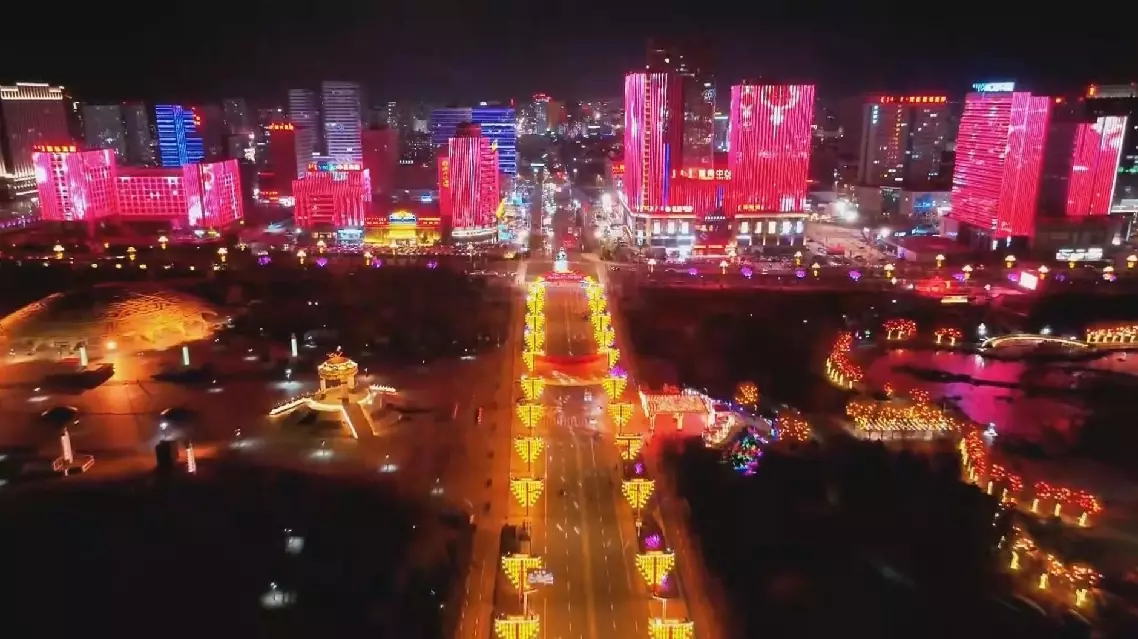
Festive decor, market fairs, cultural events across China signal arrival of Spring Festival