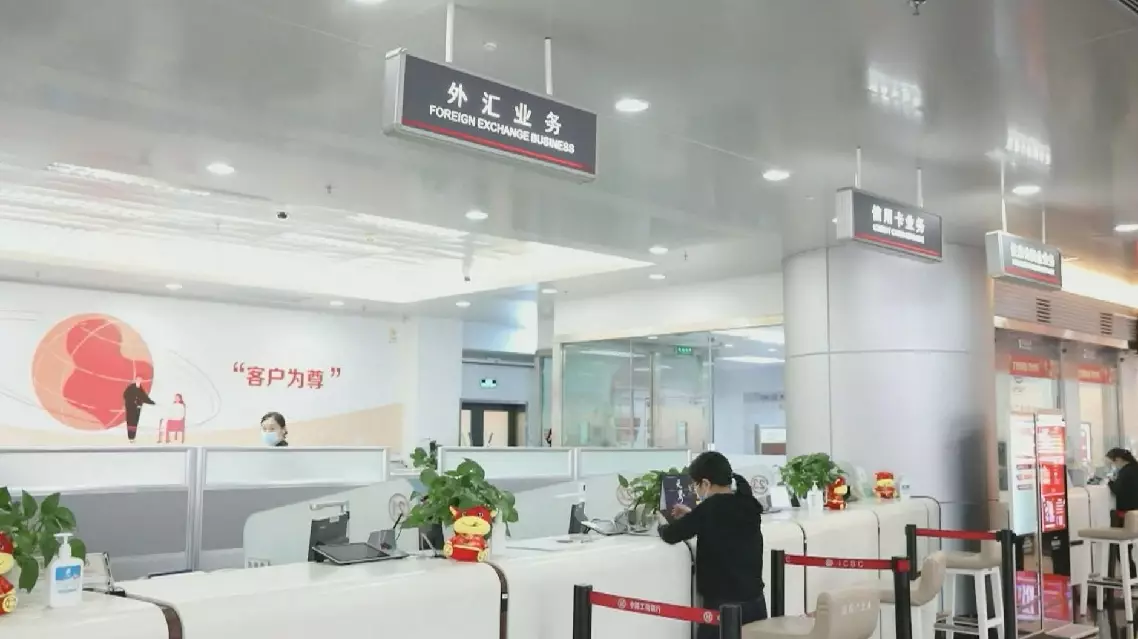
The decline in U.S. dollar deposit rates has reduced their appeal to Chinese investors, prompting many to diversify their investments for better risk management.
According to statistics, the one-year U.S. dollar fixed deposit rates at many banks currently hover around 3 percent, marking a notable decline from the approximately 4 percent seen at the beginning of last year.
"Recently, fewer customers have been coming to our branch to ask about U.S. dollar fixed deposits. Our personal foreign currency deposit rates vary depending on the term and deposit amount, and are adjusted in line with market fluctuations and interbank pricing. Following the recent rate adjustments, many customers are seeking to diversify their investments to better manage risk," said Meng Xiangshuang, deputy manager of the retail department at the Hujialou branch of the Bank of Nanjing.
Some investors indicated that they will adjust their dollar holdings based on actual needs.
"I used to hold U.S. dollar fixed deposits when yields were relatively high, but rates have fallen. Combined with exchange rate volatility, the returns now feel uncertain. Going forward, I plan to diversify the investments based on my actual needs," said Liu, a Beijing resident.
Industry analysts point out that investing in U.S. dollar fixed deposits currently involves dual uncertainties -- interest rate and exchange rate. Investors are advised to manage their funds according to liquidity needs and risk tolerance, adopting tailored strategies accordingly.
"Beyond interest rates, exchange rates are also constantly changing. If the RMB appreciates during the deposit period, the foreign exchange losses at maturity could offset the interest earnings of deposits. Additionally, both buying and converting foreign currency involve costs. So, investors are recommended to align their decisions with actual U.S. dollar needs," said Li Ankang, customer manager at the Beijing Guanghua Branch of the China Construction Bank.
Declining deposit rates weaken US dollar's appeal to Chinese investors