Skip to Content Facebook Feature Image

Cubans struggle with energy shortages after US oil embargo

HotTV

HotTV

HotTV

Cubans struggle with energy shortages after US oil embargo

2026-02-10 15:53 Last Updated At:02-11 14:49

Cuba faces an energy crisis after U.S. President Donald Trump signed an executive order threatening to impose tariffs on countries that sell or provide oil to the Caribbean nation, with Cuba's critical social services including healthcare and special education feeling the impact.

Authorities have warned airlines of a fuel shortage amid strict oil rationing, while residents are also struggling with paralyzed public transport and limited access to services.

Long queues were seen at gas stations due to fuel shortages, with fewer buses running and longer power cuts affecting homes, hospitals and other state institutions.

At Havana's Oncological Hospital, the blackouts affect patient care and potentially threatens lives.

"Our professionals only want to offer health quality, medical protocols, technical procedures, research, and drug production. But these things need energy, which comes from oil. So, this is a measure aimed to affect the Cuban people by limiting the performance of our health workers," said Carlos Martinex, head of the Cancer Control Division of Cuba's Ministry of Public Health.

Local special education authorities said the U.S. oil embargo is making student transportation and school logistics much harder, and it's limiting their ability to use electrical equipment for training and therapy.

"These measures adopted by the Donald Trump administration and the executive order, in particular, worsens the current situation of the Cuban people in an inhumane manner, I would say, and with a significant impact on our special education system," said Beatriz Roque, director of special education at the Cuban Ministry of Education.

In an effort to cushion the U.S. action, Cuban authorities have initiated a rationing program for fuels and electricity, the expansion of renewable energy systems.

Cubans struggle with energy shortages after US oil embargo

Cubans struggle with energy shortages after US oil embargo

Cubans struggle with energy shortages after US oil embargo

Cubans struggle with energy shortages after US oil embargo

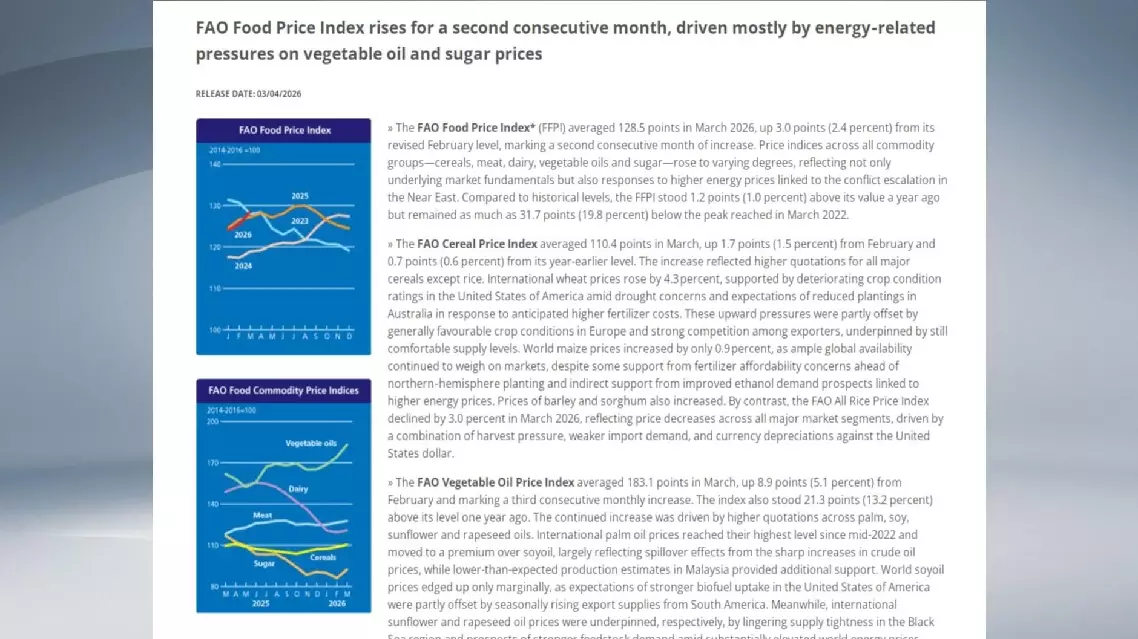
Global food commodity prices climbed for a second consecutive month in March, driven mainly by higher energy costs linked to escalating conflict in the Middle East, the Food and Agriculture Organization of the United Nations (FAO) said in report released on Friday.

The FAO Food Price Index, which tracks monthly changes in the international prices of a basket of globally traded food commodities, averaged 128.5 points in March, up 2.4 percent from February and 1.0 percent above its level a year ago.

According to the report, the FAO Vegetable Oil Index and Sugar Price Index showed the largest increases, up 5.1 percent and 7.2 percent, respectively.

The FAO Cereal Price Index increased by 1.5 percent from the previous month, driven primarily by higher world wheat prices, which rose 4.3 percent.

The FAO Meat Price Index rose by 1.0 percent from the previous month, and the FAO All-Rice Price Index declined by 3.0 percent in March, according to the report.

FAO stated that rising energy and fertilizer prices have been driving up agricultural input costs.

If the conflict stretches beyond 40 days, farmers will have to choose to farm the same with fewer inputs, plant less, or switch to less intensive fertilizer crops, according to FAO Chief Economist Maximo Torero.

These choices will hit future yields and shape food supply and commodity prices for the rest of this year and beyond, Torero said.

Global food prices rise for 2nd consecutive month in March amid Middle East conflict: FAO

Global food prices rise for 2nd consecutive month in March amid Middle East conflict: FAO

Recommended Articles