Spain's main unions representing rail workers have called off a three-day nationwide strike, which began on Monday, after holding talks with the country's transport authorities.
The strike cancellation was announced after the rail workers' unions and the Ministry of Transport held their fourth meeting on Monday. The strike, scheduled to take place from Monday to Wednesday, was called to demand better safety measures in the wake of recent rail accidents in Spain.
On Monday, the rail workers holding their union flags gathered on the streets of the capital city Madrid. They demanded that the government and the infrastructure management agency be held accountable for the recent accidents.
Luis Angel, maintenance supervisor at Renfe, Spain's primary state-owned train operator, told the China Media Group (CMG) that the transport authorities must take action, including stepping up the maintenance of rail lines and train vehicles, to ensure the safety of both passengers and rail workers.
"Our assessment of the current situation is that we need more investment. The funds should mainly be used for the maintenance of the infrastructure and trains in service. This is one of the requests we have made to the Spanish transport authorities," he said.
The disruption to Spain’s rail services was widely felt on Monday, with around 350 long-distance trains canaled and 683 medium-distance services suspended. Minimum service levels, which are set at 65 percent of normal operations for commuter trains during the morning and evening rush hours, fell to 50 percent for the rest of the day as a result.
"I bought my train ticket two weeks ago, but now we have to go and check if we can get a refund or need to take another train instead. We still don't know at all. This is a really troublesome situation, and there needs to be a proper solution," Miguel, whose travel plan was affected, told the CMG.
In January, several train derailments and crashes left dozens dead in Spain, including a deadly train collision that killed more than 40 people, sparking public scrutiny of the state of the country's rail infrastructure.
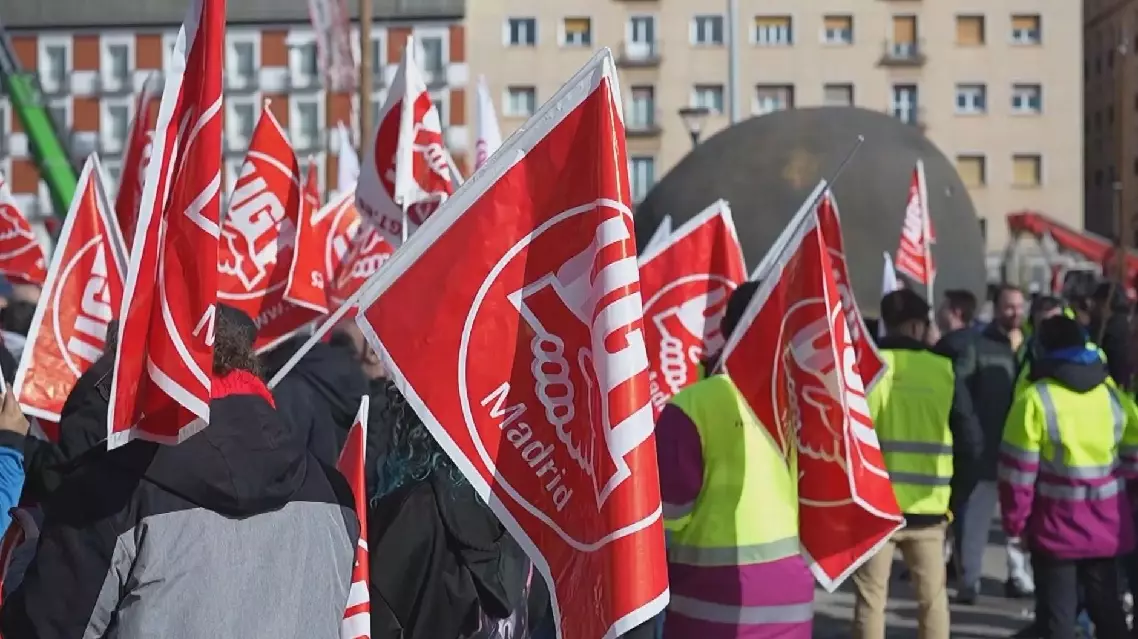
Spanish rail workers' unions cancel strike after talks with gov't over safety concerns