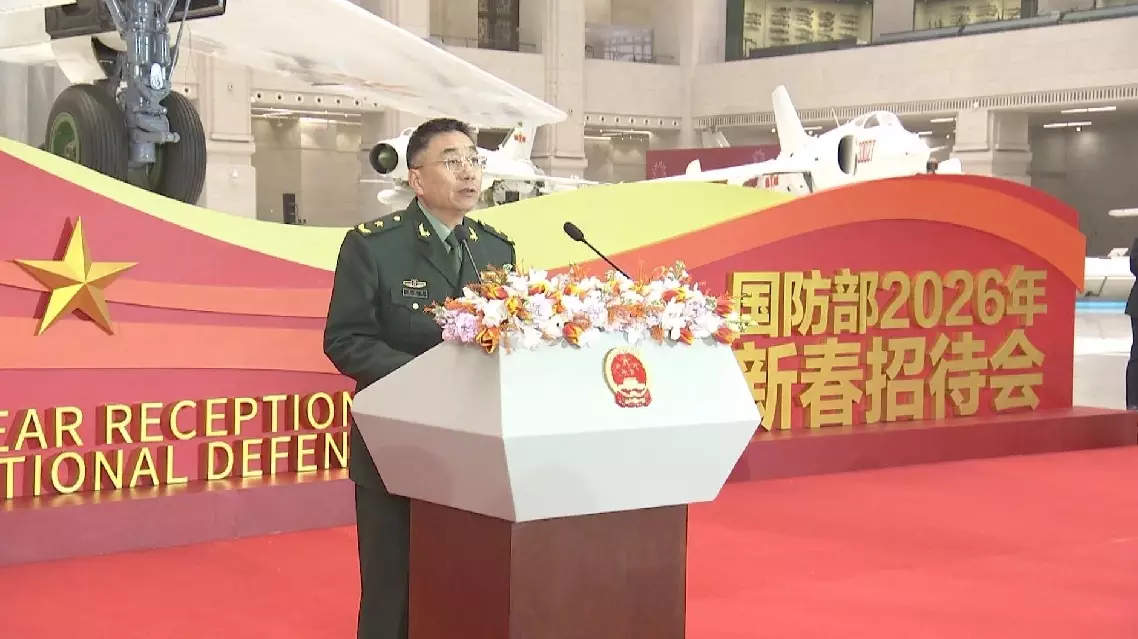
China's Ministry of National Defense held a New Year reception in Beijing on Monday.
About 240 people attended the reception at the Military Museum of the Chinese People's Revolution, including foreign military attaches, representatives of international organizations based in China, and their spouses.
Chinese Defense Minister Dong Jun met with the attendees and exchanged New Year greetings.
An official from the Office for International Military Cooperation of the Central Military Commission delivered a speech at the event.
The address highlighted efforts to advance the modernization of China's national defense and military, vowed to deepen international exchanges and cooperation, and emphasized promoting a community with a shared future for humanity.
China's Defense Ministry holds 2026 New Year reception
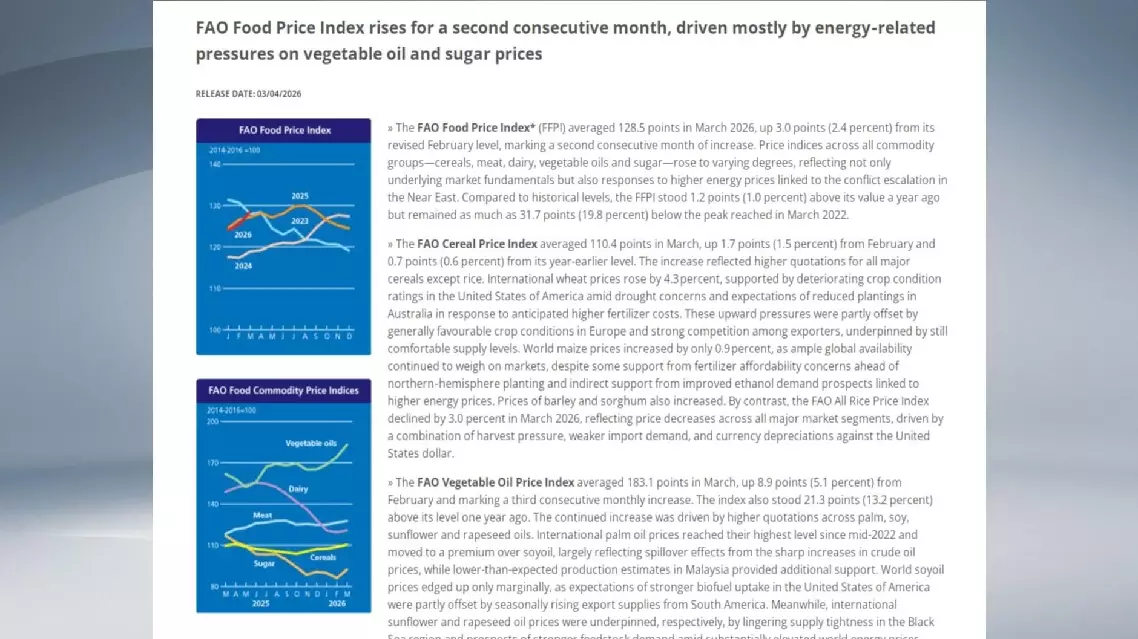
Global food commodity prices climbed for a second consecutive month in March, driven mainly by higher energy costs linked to escalating conflict in the Middle East, the Food and Agriculture Organization of the United Nations (FAO) said in report released on Friday.
The FAO Food Price Index, which tracks monthly changes in the international prices of a basket of globally traded food commodities, averaged 128.5 points in March, up 2.4 percent from February and 1.0 percent above its level a year ago.
According to the report, the FAO Vegetable Oil Index and Sugar Price Index showed the largest increases, up 5.1 percent and 7.2 percent, respectively.
The FAO Cereal Price Index increased by 1.5 percent from the previous month, driven primarily by higher world wheat prices, which rose 4.3 percent.
The FAO Meat Price Index rose by 1.0 percent from the previous month, and the FAO All-Rice Price Index declined by 3.0 percent in March, according to the report.
FAO stated that rising energy and fertilizer prices have been driving up agricultural input costs.
If the conflict stretches beyond 40 days, farmers will have to choose to farm the same with fewer inputs, plant less, or switch to less intensive fertilizer crops, according to FAO Chief Economist Maximo Torero.
These choices will hit future yields and shape food supply and commodity prices for the rest of this year and beyond, Torero said.
Global food prices rise for 2nd consecutive month in March amid Middle East conflict: FAO