WASHINGTON (AP) — The U.S. Food and Drug Administration is refusing to consider Moderna’s application for a new flu vaccine made with Nobel Prize-winning mRNA technology, the company announced Tuesday.
The news is the latest sign of the FDA’s heightened scrutiny of vaccines under Health Secretary Robert F. Kennedy Jr., particularly those using mRNA technology, which he has criticized before and after becoming the nation’s top health official.
Moderna received what’s called a “refusal-to-file” letter from the FDA that objected to how it conducted a 40,000-person clinical trial comparing its new vaccine to one of the standard flu shots used today. That trial concluded the new vaccine was somewhat more effective in adults 50 and older than that standard shot.
The letter from FDA vaccine director Dr. Vinay Prasad said the agency doesn’t consider the application to contain an “adequate and well-controlled trial” because it didn’t compare the new shot to “the best-available standard of care in the United States at the time of the study.” Prasad’s letter pointed to some advice FDA officials gave Moderna in 2024, under the Biden administration, which Moderna didn’t follow.
According to Moderna, that feedback said it was acceptable to use the standard-dose flu shot the company had chosen — but that another brand specifically recommended for seniors would be preferred for anyone 65 and older in the study. Still, Moderna said, the FDA did agree to let the study proceed as originally planned.
The company said it also had shared with FDA additional data from a separate trial comparing the new vaccine against a licensed high-dose shot used for seniors.
The FDA “did not identify any safety or efficacy concerns with our product” and “does not further our shared goal of enhancing America’s leadership in developing innovative medicines,” Moderna CEO Stephane Bancel said in a statement.
It’s rare that FDA refuses to file an application, particularly for a new vaccine, which requires companies and FDA staff to engage in months or years of discussions.
Moderna has requested an urgent meeting with FDA, and noted that it has applied for the vaccine’s approval in Europe, Canada and Australia.
In the last year, FDA officials working under Kennedy have rolled back recommendations around COVID-19 shots, added extra warnings to the two leading COVID vaccines — which are made with mRNA technology — and removed critics of the administration’s approach from an FDA advisory panel.
Kennedy announced last year that his department would cancel more than $500 million in contracts and funding for the development of vaccines using mRNA.
FDA for decades has allowed vaccine makers to quickly update their annual flu shots to target the latest strains by showing that they trigger an immune response in patients. That’s a far more efficient approach than running long-term studies tracking whether patients get the flu and how they fare. In an internal memo last year, Prasad wrote that the streamlined method would no longer be permitted – leading more than a dozen former FDA commissioners to pen an editorial condemning the statements.
—-
The Associated Press Health and Science Department receives support from the Howard Hughes Medical Institute’s Department of Science Education and the Robert Wood Johnson Foundation. The AP is solely responsible for all content.
FILE - The Food and Drug Administration seal is seen at the Hubert Humphrey Building Auditorium in Washington, April 22, 2025. (AP Photo/Jose Luis Magana, File)
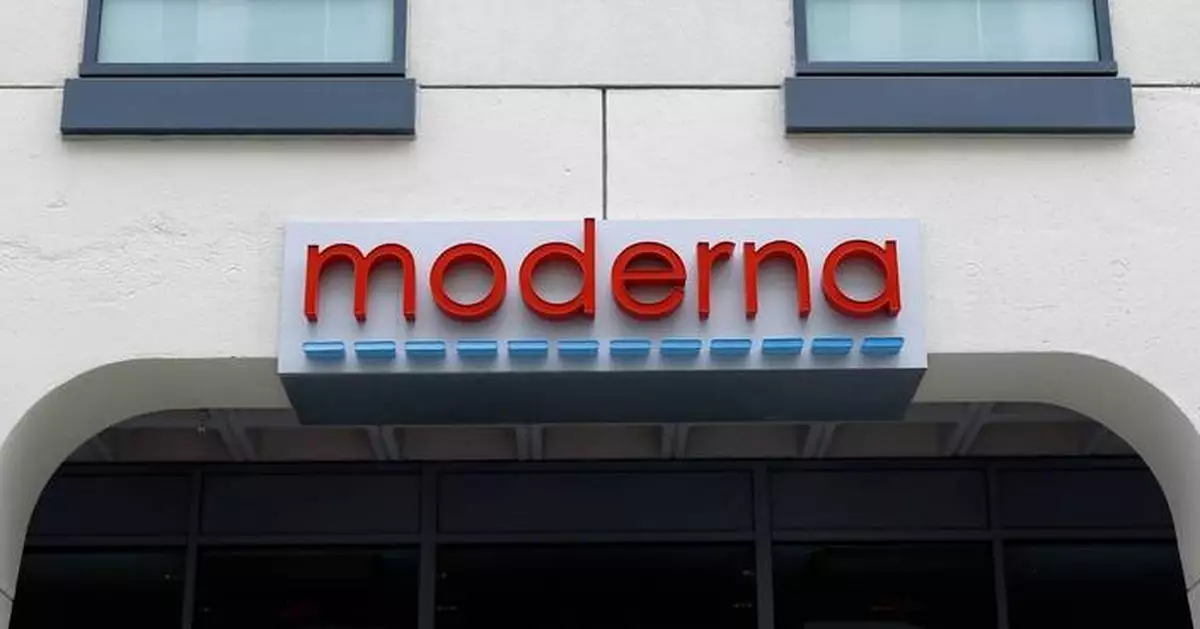
FILE - A sign marks an entrance to a Moderna building in Cambridge, Mass., May 18, 2020. (AP Photo/Bill Sikes, File)
BAGHDAD (AP) — An American journalist who was kidnapped in Baghdad had tried to cross from Syria into Iraq three weeks earlier and was initially turned back, an Iraqi official said Wednesday.
U.S. and Iraqi officials said Shelly Renee Kittleson had also been warned of threats against her in the days before her abduction. A freelance journalist who has worked for years in Iraq and Syria, Kittleson was kidnapped from a street in the Iraqi capital Tuesday and remains missing.
Hussein Alawi, an adviser to Prime Minister Mohammed Shia al-Sudani, said Kittleson had sought to enter via the al-Qaim crossing from Syria on March 9 but was turned back because she did not have a press work permit and because security concerns due to “the escalation of the war and aerial projectiles over Iraqi airspace as a result of the war on Iran.”
She later entered the country after obtaining a single-entry visa to Iraq valid for 60 days issued to allow foreign citizens stranded in neighboring countries to “transit through Iraq to reach their home countries via available transport routes,” he said.
Kittleson entered Baghdad a few days before she was kidnapped and was staying in a hotel in the capital, he said.
“The incident is being followed closely by Iraqi security and intelligence agencies under the supervision of” al-Sudani, Alawi said. He noted that one suspect believed to be involved in the kidnapping plot has been arrested and is being interrogated.
Iraqi security forces gave chase to her captors and arrested one suspect after the car he was driving crashed, but other kidnappers were able to escape with the journalist in a second car.
An Iraqi intelligence official who spoke on condition of anonymity because he was not authorized to comment, said Iraqi authorities believe she is being held in Baghdad and are trying to locate her and secure her release. He said authorities “have information about the abducting party” but declined to give more details.
U.S. officials have alleged that Kittleson was taken by Kataib Hezbollah, an Iran-linked Iraqi militia that has been implicated in previous kidnappings of foreigners. The group has not claimed the kidnapping and the Iraqi government has not publicly said anything about the kidnappers' affiliation.
The Iraqi intelligence official said that prior to Kittleson's abduction, Iraqis had contacted U.S. officials to notify them that there was a specific kidnapping threat against her by Iran-affiliated militias.
Dylan Johnson, U.S. assistant secretary of state for public affairs, said on X Tuesday that the “State Department previously fulfilled our duty to warn this individual of threats against them.”
A U.S. official, who also spoke on condition of anonymity because he was not authorized to comment publicly, said, “She was contacted multiple times with warnings of the threats against her," including as late as the night before the kidnapping.
Surveillance footage that was obtained by The Associated Press shows what seems to be the moment the journalist was kidnapped in Baghdad. It shows two men approaching a person standing on a street corner and ushering the person into the back of a car. There appears to be a brief struggle to shut the car door before the men get into the vehicle and it drives away.
Iran-backed militias in Iraq have launched regular attacks on U.S. facilities in the country since the beginning of the U.S.-Israeli war on Iran.
Associated Press writer Matthew Lee in Washington contributed to this report.
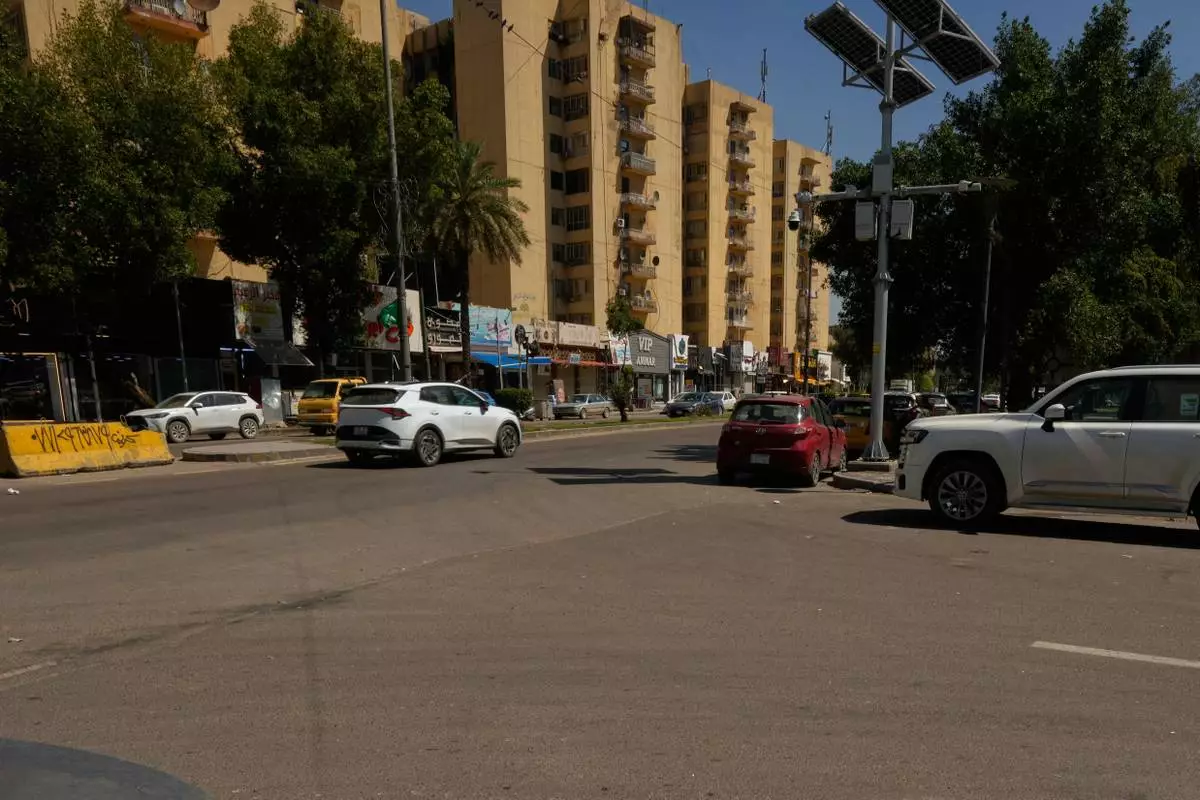
A street view shows the street corner in central Baghdad's Saadoun Street where U.S. journalist Shelly Kittleson was kidnapped in central Baghdad, Iraq, Wednesday, April 1 2026. (AP Photo/ Hadi Mizban)
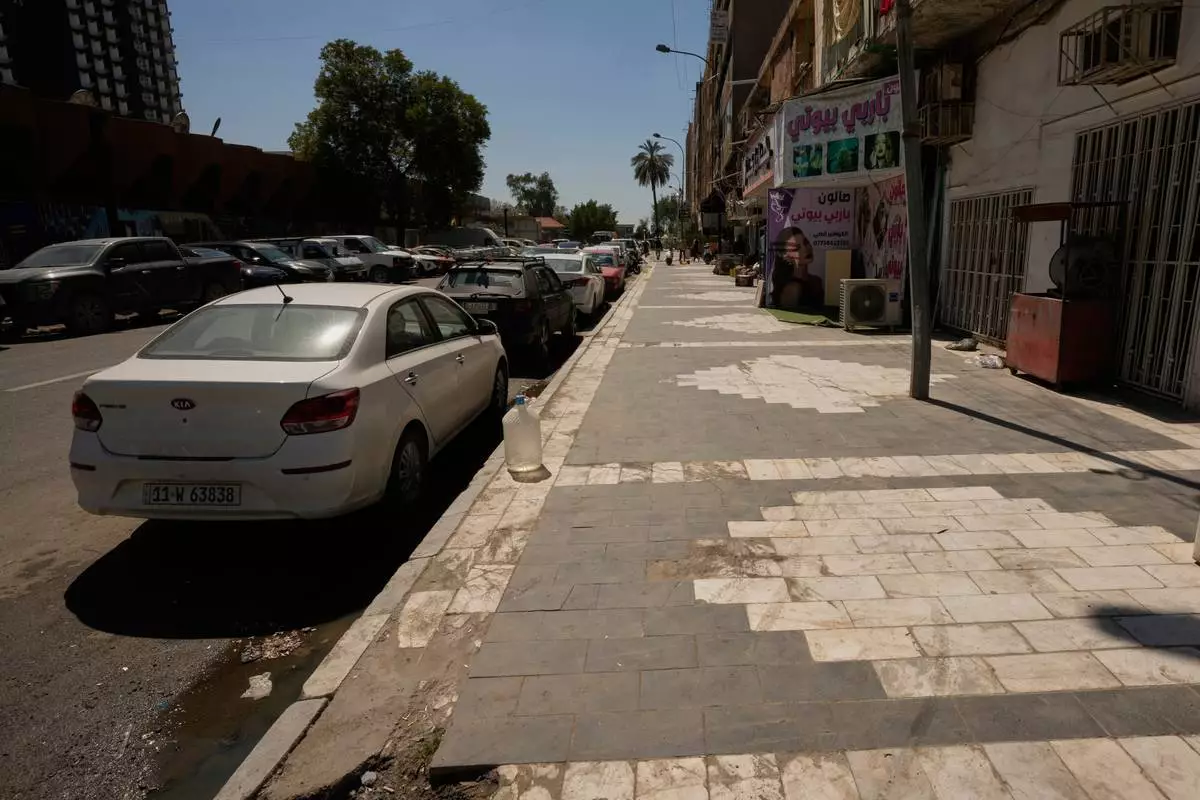
A street view shows the street corner in central Baghdad's Saadoun Street where U.S. journalist Shelly Kittleson was kidnapped in central Baghdad, Iraq, Wednesday, April 1 2026. (AP Photo/ Hadi Mizban)