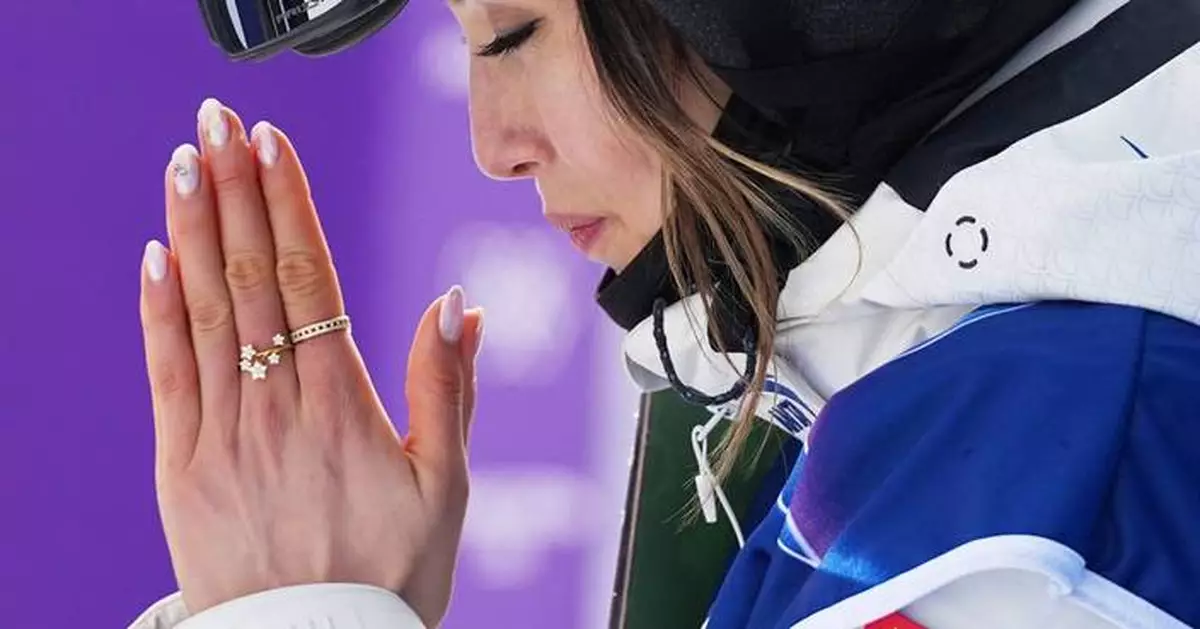
CORTINA D'AMPEZZO, Italy (AP) — Eileen Gu isn't trying to sound zen about all this. It just sort of comes out that way.
There is something inherently dangerous about flinging yourself down the side of a mountain or soaring over snow and ice, yet don't describe what Gu and hundreds of other Winter Olympians who are exposing themselves to the unpredictable whims of the elements across northern Italy as a battle.
Click to Gallery
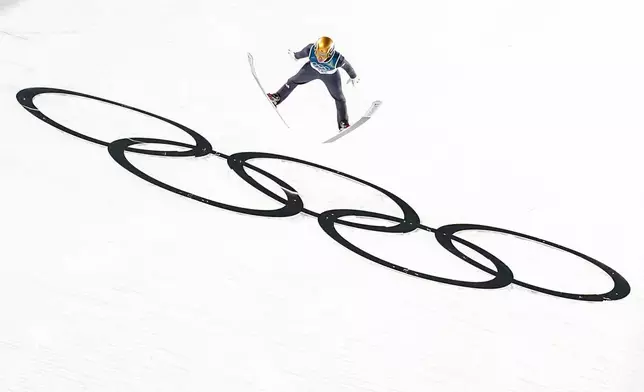
Philipp Raimund, of Germany, soars through the air during his final round jump in the ski jumping men's normal hill individual at the 2026 Winter Olympics, in Predazzo, Italy, Monday, Feb. 9, 2026. (AP Photo/Matthias Schrader)
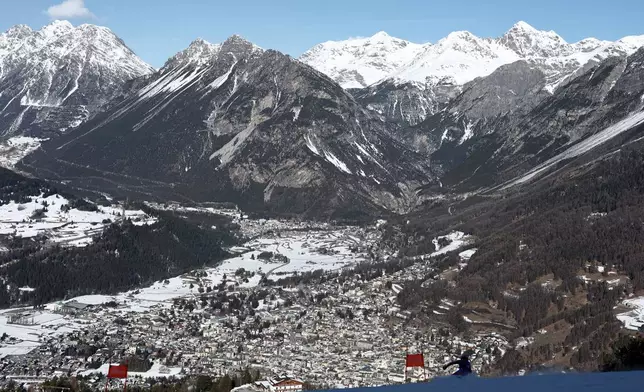
France's Maxence Muzaton speeds down the course of an alpine ski men's downhill portion of a team combined race, at the 2026 Winter Olympics, in Bormio, Italy, Monday, Feb. 9, 2026. (AP Photo/Gabriele Facciotti)
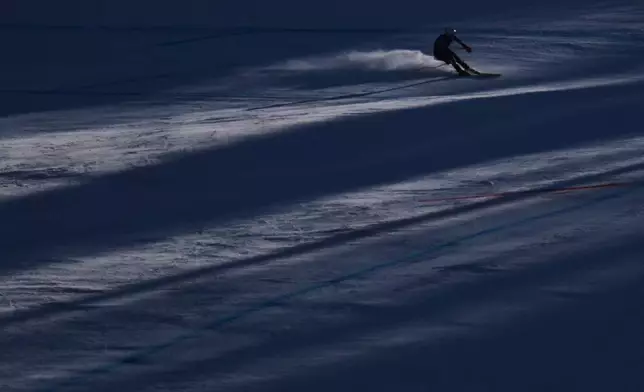
Finland's Elian Lehto is silhouetted as he speeds down the course of an alpine ski men's downhill portion of a team combined race, at the 2026 Winter Olympics, in Bormio, Italy, Monday, Feb. 9, 2026. (AP Photo/Rebecca Blackwell)
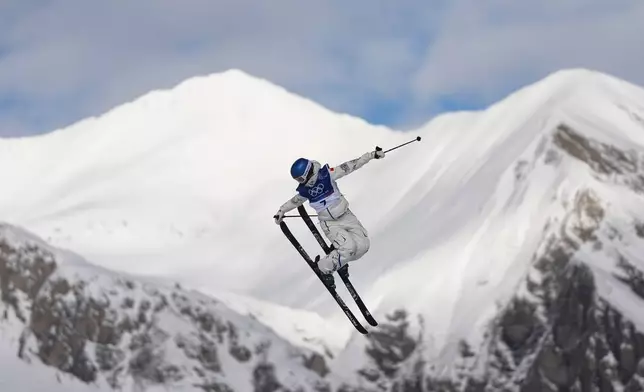
China's Eileen Gu practices before the women's freestyle skiing slopestyle qualifications at the 2026 Winter Olympics, in Livigno, Italy, Saturday, Feb. 7, 2026. (AP Photo/Lindsey Wasson)
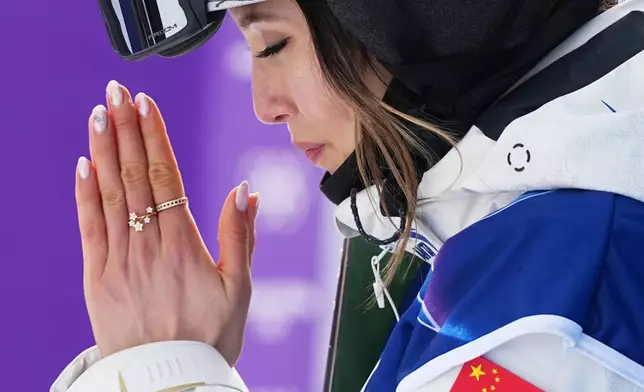
China's Eileen Gu celebrates after her score during the women's freestyle skiing slopestyle finals at the 2026 Winter Olympics, in Livigno, Italy, Monday, Feb. 9, 2026. (AP Photo/Gregory Bull)
It's more like a dance.
“There’s a big part of it where you feel like you’re integrating with nature and also surpassing the capacity of mankind at the same time,” Gu said. “It’s a very enlightened experience in a way.”
One that separates the Winter Games from its summer counterpart, too. Sure, the weather plays a factor in what happens inside the Olympic stadium during track and field or how open-water swimming and surfing play out. And there's nowhere to hide for marathoners running 26.2 miles through the streets of whatever metropolis they might find themselves every four years.
Yet running, throwing and jumping in an organized way have been around since the Greeks were doing it a few millennia ago. They're easily accessible. Just go outside — the backyard, the local park, the nearby trail — and boom, you're there.
Winter itself is more forbidding, with its snow and its ice and its subzero wind chill. Going outside in that is a choice. Competing in the sports of the season, be they classic (like downhill skiing) or otherwise (looking at you, slopestyle snowboarders), demands a bit of wanderlust, a willingness to meet nature where it is on a given day while exploring just how far your courage, skills and imagination might take you.
In some ways, the events at the Winter Olympics feel like a series of dares. Go 80 mph (130 kph) or more down an icy slope. Spin around three times on a snowboard and add a flip or two if you feel like it. Contort your body around a series of gates placed impossibly close together.
Before Gu and American skiing great Mikaela Shiffrin and all the rest ever got here, however, they were just kids drawn in their own way to being outside in the cold.
For Emily Harrop, it began while camping with her father in the French Alps, a love affair that brought Harrop to her first Olympics, where her discipline of choice — ski mountaineering — will make its debut under the rings in a few days.
“(It's) where I feel that my heart just beats stronger,” Harrop said. “My soul feels just fulfilled when I’m doing anything where I feel kind of animal-like. You feel like you reconnect to an instinctive way of movement."
Instincts that are often aided by technology, particularly in a competitive environment on a course where the conditions can change minute to minute. Listen to Shiffrin talk about her process she she sounds as much like an engineer as she does the most decorated racer of all time.
While she allows “there is some magic in the mystery,” there is also a science to it when the clock is running and a medal is on the line.
“There's so many variables,” Shiffrin said. “You’ve got weather. You’ve got snow conditions. The course conditions are deteriorating even throughout the course of a race, from bib one to bib seven to bib 18 to bib 50 ... and you have to be flexible in that.”
Knowledgeable too.
Gu recently spent two hours fixated on how she planned to gear her skis to cope with the moisture of the snow that's specific to the halfpipe, big air and slopestyle courses in Livigno. Different moisture creates different suction, just one item on the laundry list of things that ran through her head during her brainstorming session.
What about the sunlight? What if it's cloudy? What about the wind, which Gu says “can break hearts." For Gu, it also doubles as a metronome vital to the way the 22-year-old goes about her business when she drops in.
“The tempo of the wind in my ears helps me to visualize and understand the pace of the trick,” said Gu, who opened her Olympics with a silver medal in slopestyle. “That’s also a way to connect with the outdoors.”
It is connection that is constantly being refined as technology develops, which Shiffrin believes helps her feel a bit of control over something she knows is so often uncontrollable. She and her team will pore over video following training runs, huddling for a quick debrief that can include consulting a GPS device to analyze everything from force to load to body capacity.
Then she will hop on the chairlift back to the top with a plan designed to find the fractions of a second that often serve as the separator between dreams and disappointment. Shiffrin likened it to a puzzle, albeit one where the borders are ever-changing.
Try to shove one piece into place when it doesn't quite fit, and you're in trouble. Show too much deference and you'll find yourself near the bottom of the standings looking up.
“You have to basically just go communicate with the mountain and feel like you’re using gravity to your advantage,” Shiffrin said. "You can’t try too hard. You just have to try hard enough. It’s just a beautiful balance that I find really, I don’t know. It just keeps me coming back.”
It also goes beyond that. There is something basic about feeling the sun on your face. The crisp air. A quiet that can make the rest of the world seem blissfully far away.
That quiet manifests itself in different ways for different athletes. During a recent trip back home to Sainte-Foy-Tarentaise, Harrop retreated into the range she described as her “back garden.”
There, with her parents at her side, Harrop soaked in the colors and felt “whole.”
However it goes in Harrop's Olympic debut — however it goes throughout her career, really — the sense of peace that drew her to doing this in the first place will remain.
“The mountains will always be there,” she said. "And I’ll always be able to go and have these little adventures.”
The adventures are a little bigger, a little bolder at the 2026 Games. Adventures that can also turn the cliched battle of “man vs. nature” on its head and turning it into something deeper and more meaningful.
“There are two parts of this," Gu said. "One is pushing the human limit, right? Human boundary. Doing things that are quite literally at the edge of what is physically possible. When you're the world's first to do something, that's really special. And the other part of it ... is this oneness with nature.”
AP National Writer Eddie Pells and AP Sports Writer Pat Graham contributed to this report.
AP Olympics: https://apnews.com/hub/milan-cortina-2026-winter-
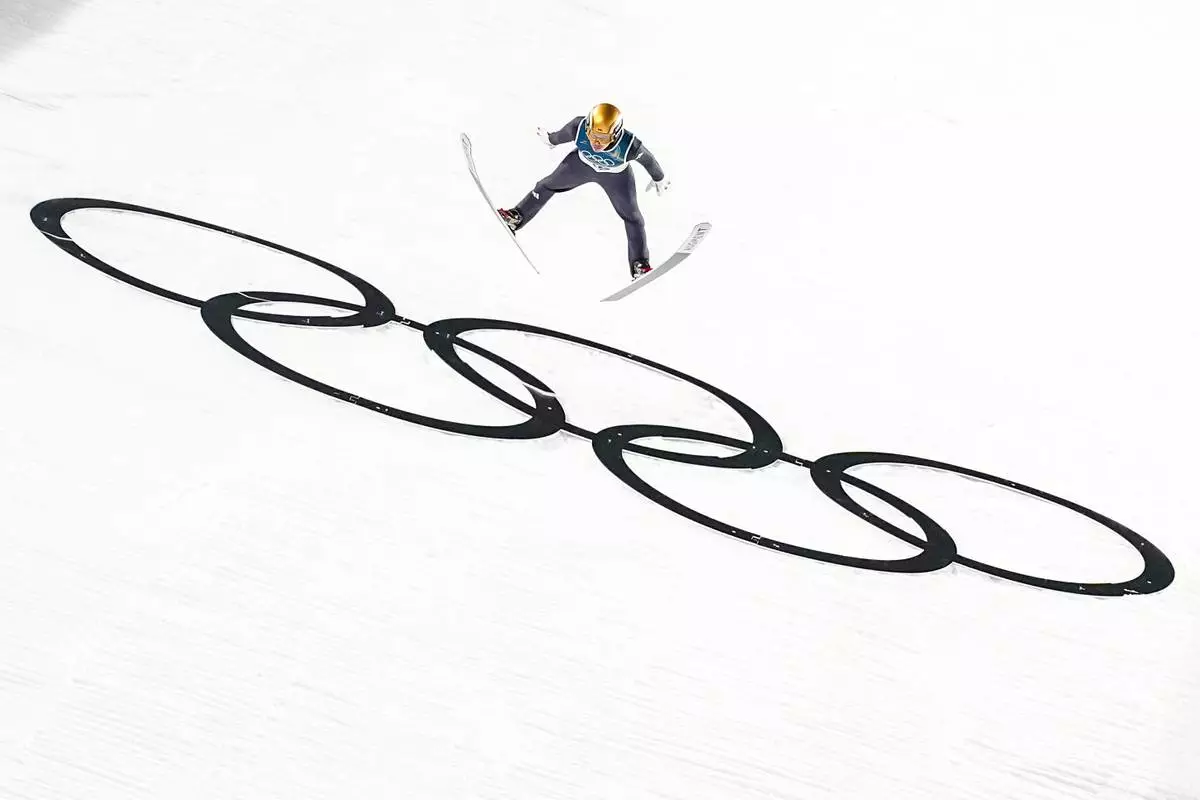
Philipp Raimund, of Germany, soars through the air during his final round jump in the ski jumping men's normal hill individual at the 2026 Winter Olympics, in Predazzo, Italy, Monday, Feb. 9, 2026. (AP Photo/Matthias Schrader)
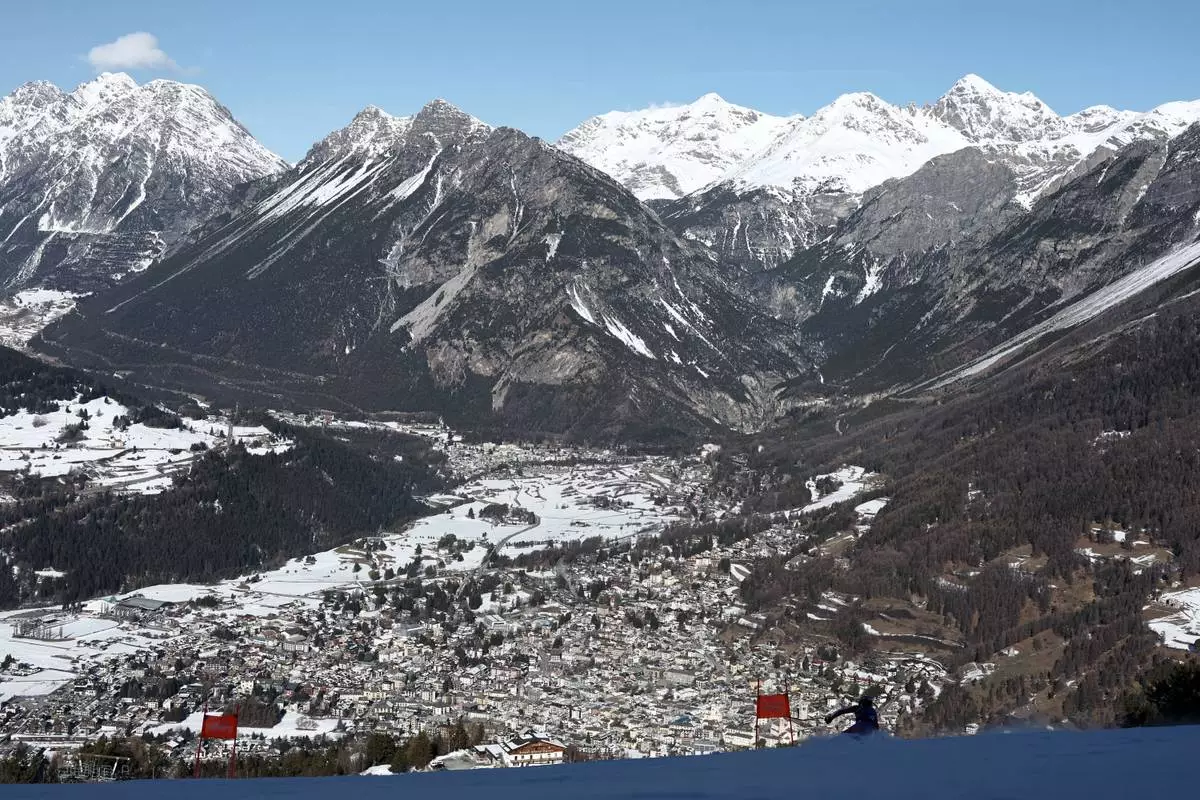
France's Maxence Muzaton speeds down the course of an alpine ski men's downhill portion of a team combined race, at the 2026 Winter Olympics, in Bormio, Italy, Monday, Feb. 9, 2026. (AP Photo/Gabriele Facciotti)
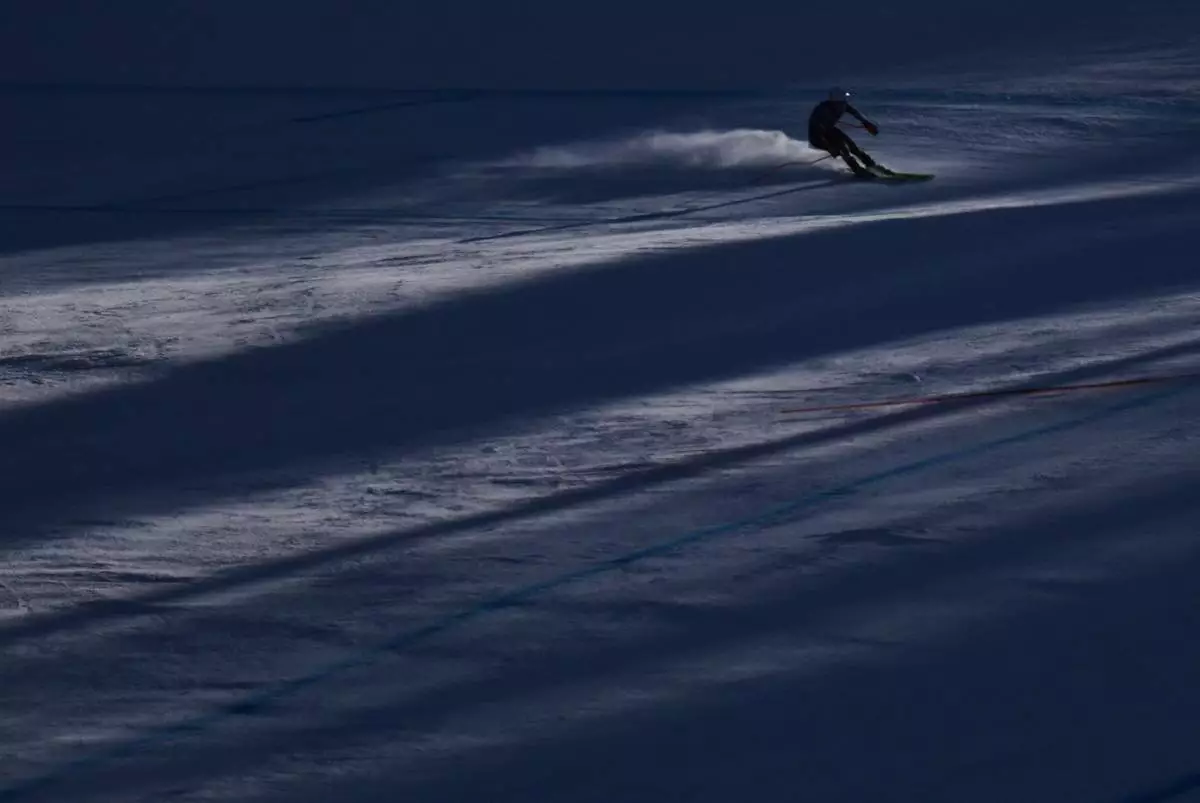
Finland's Elian Lehto is silhouetted as he speeds down the course of an alpine ski men's downhill portion of a team combined race, at the 2026 Winter Olympics, in Bormio, Italy, Monday, Feb. 9, 2026. (AP Photo/Rebecca Blackwell)
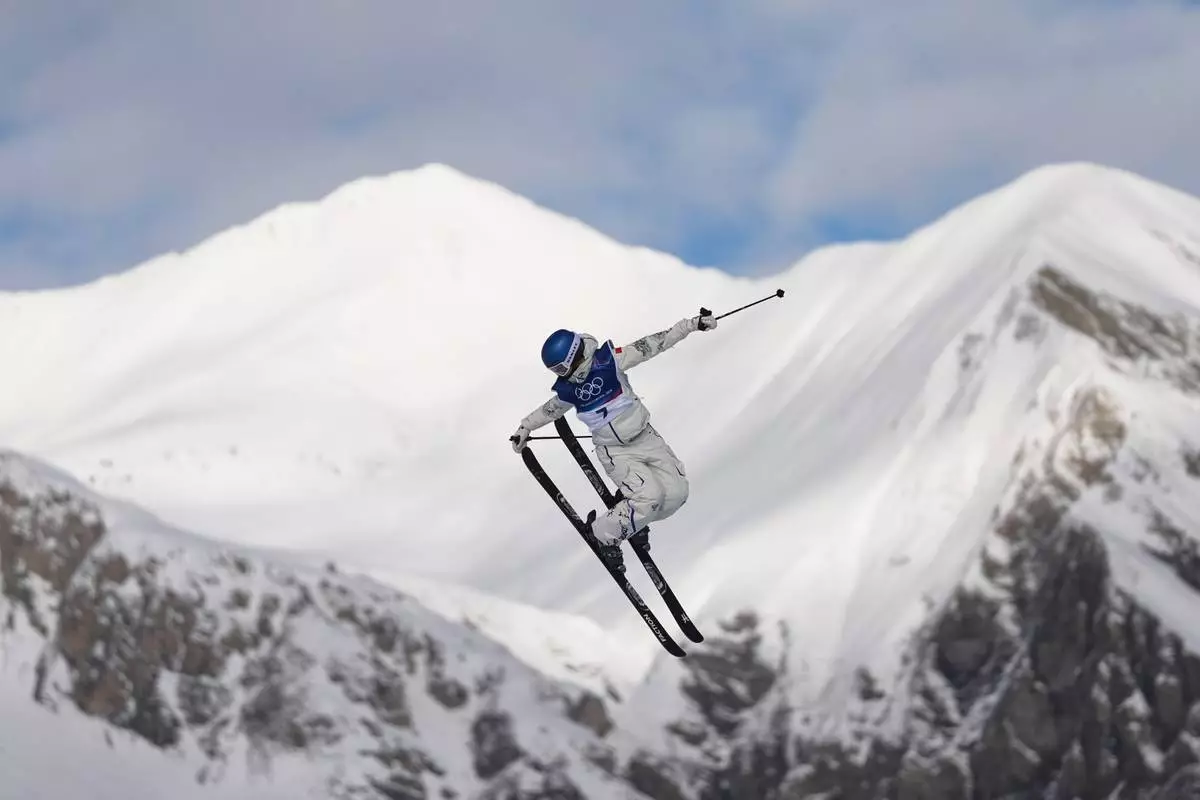
China's Eileen Gu practices before the women's freestyle skiing slopestyle qualifications at the 2026 Winter Olympics, in Livigno, Italy, Saturday, Feb. 7, 2026. (AP Photo/Lindsey Wasson)
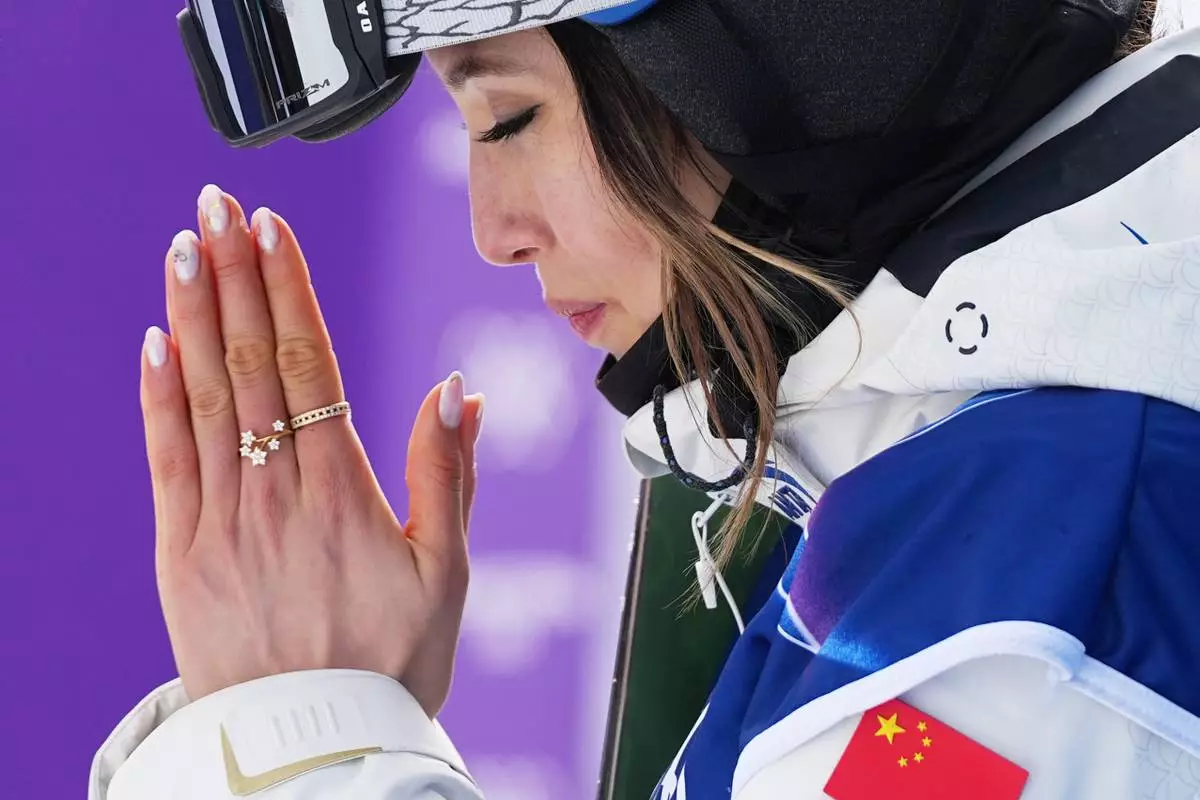
China's Eileen Gu celebrates after her score during the women's freestyle skiing slopestyle finals at the 2026 Winter Olympics, in Livigno, Italy, Monday, Feb. 9, 2026. (AP Photo/Gregory Bull)