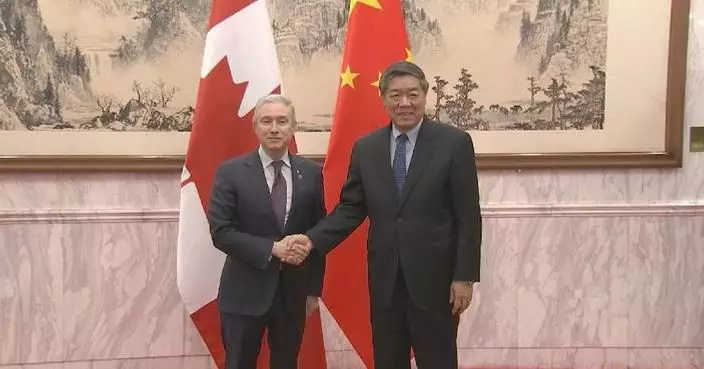
A new strategic partnership between China and Canada is not directed at any third party, and beneficial to world peace and prosperity, Chinese Foreign Ministry spokesman Lin Jian said at a routine news briefing on Wednesday. Lin's remarks came after U.S. President Donald Trump expressed his frustration about a possible Canada-China trade deal on Monday.
"China and Canada have built a new strategic partnership, which reflects the spirit of equality, openness, inclusiveness, peaceful cooperation and shared benefits. It is not targeted at any third party and is in line with the common interests of the two peoples, and also benefits world peace, stability, development and prosperity," he said.
During Canadian Prime Minister Mark Carney's official visit to China in January 2026, the two sides committed to advancing the China-Canada new strategic partnership in the spirit of mutual respect, equality, and mutual benefit to bring more positive outcomes to both peoples and made some specific arrangements for properly addressing economic and trade issues between the two countries.
China-Canada new strategic partnership not directed at any third party: spokesman
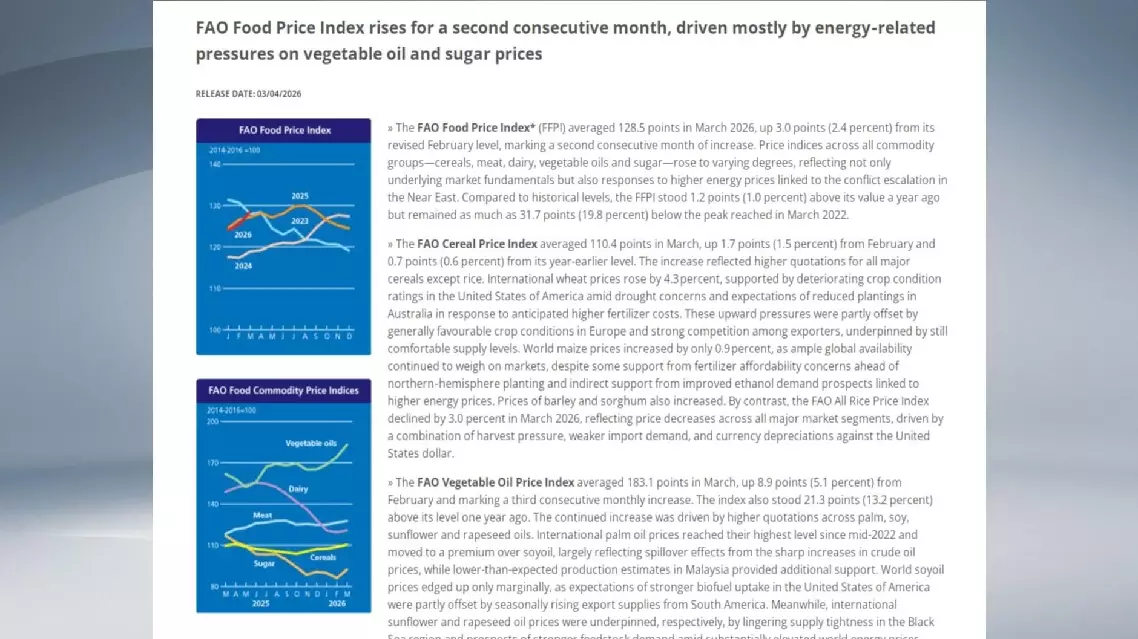
Global food commodity prices climbed for a second consecutive month in March, driven mainly by higher energy costs linked to escalating conflict in the Middle East, the Food and Agriculture Organization of the United Nations (FAO) said in report released on Friday.
The FAO Food Price Index, which tracks monthly changes in the international prices of a basket of globally traded food commodities, averaged 128.5 points in March, up 2.4 percent from February and 1.0 percent above its level a year ago.
According to the report, the FAO Vegetable Oil Index and Sugar Price Index showed the largest increases, up 5.1 percent and 7.2 percent, respectively.
The FAO Cereal Price Index increased by 1.5 percent from the previous month, driven primarily by higher world wheat prices, which rose 4.3 percent.
The FAO Meat Price Index rose by 1.0 percent from the previous month, and the FAO All-Rice Price Index declined by 3.0 percent in March, according to the report.
FAO stated that rising energy and fertilizer prices have been driving up agricultural input costs.
If the conflict stretches beyond 40 days, farmers will have to choose to farm the same with fewer inputs, plant less, or switch to less intensive fertilizer crops, according to FAO Chief Economist Maximo Torero.
These choices will hit future yields and shape food supply and commodity prices for the rest of this year and beyond, Torero said.
Global food prices rise for 2nd consecutive month in March amid Middle East conflict: FAO