Driven by continuous product innovation and accelerating internationalization, the scale of China's exchange-traded fund (ETF) market soared to a record 6.02 trillion yuan (about 871 billion U.S. dollars) by the end of 2025, marking a 61.4-percent increase year on year, according to official data.
ETFs are open-end funds listed and traded on stock exchanges that track specified indices or other underlying assets in accordance with their fund contracts.
Official data also show that by the end of 2025, a total of 1,381 ETFs were listed on the Shanghai and Shenzhen stock exchanges, surging by 35.7 percent from the previous year.
The market also absorbed substantial new capital, with net inflows exceeding 1.16 trillion yuan (about 168 billion U.S. dollars) throughout 2025.
Product innovation has accelerated across both Shanghai and Shenzhen stock exchanges. The Shanghai Stock Exchange has built a comprehensive ETF matrix, spanning broad-based indices to niche segments targeting semiconductors, biotech, and advanced manufacturing.
Meanwhile, the Shenzhen Stock Exchange refined its ChiNext Index (tracking China's Nasdaq-style board of growth enterprises) methodology and launched thematic ETFs focused on artificial intelligence, robotics, and other sectors.
"Driven by sectors such as artificial intelligence and robotics - key pillars of China's new quality productive forces, the combined scale of industry-themed ETFs surged 82 percent, emerging as a major magnet for investor capital. Meanwhile, within strategy-driven ETFs, dividend and free cash flow ETFs led the growth, reflecting the market's intensifying preference for defensive asset allocation and investment strategies centered on predictable, stable cash flows," said Li Qiusuo, chief China strategy analyst at the China International Capital Corporation.
Strategy-driven ETFs are a specialized category of index funds that select constituent stocks based on specific investment methodologies, such as dividend yield or free cash flow, rather than passively tracking broad-market indices.
2025 also marked a pivotal year for ETF globalization. ChiNext ETFs were introduced to exchanges in Singapore and Brazil via the Stock Connect mechanism, establishing a cross-timezone trading ecosystem for China's growth-oriented equities.
More significantly, the Shenzhen-Thailand ETF Depositary Receipt (DR) project pioneered a new pathway for domestic ETFs to access overseas markets without full relisting, a model expected to be replicated in other markets.
On the inbound side, the Stock Connect program continued expanding, with the number of Shanghai-listed ETFs eligible for Northbound trading rising to 171. This enhancement has streamlined foreign investors' access to core A-share exposures through standardized instruments.
Northbound trading refers to the mechanism allowing Hong Kong and international investors to buy and sell eligible A-shares listed on the Shanghai and Shenzhen stock exchanges through the HKEX Stock Connect program.
A structural shift in ownership patterns further signals market maturation. Institutional investors (excluding feeder funds) held 65 percent of Shanghai-listed ETF assets by the end of 2025, up 6 percentage points from the previous year, while their share on the Shenzhen Stock Exchange climbed 12 percentage points to 58 percent.
"ETFs are increasingly favored by long-term institutional capital such as pension funds and insurance assets, driving concurrent improvements in market pricing efficiency and stability. The ETF market has now entered a high-quality development phase. Looking ahead, with the full implementation of China's private pension system, continued inflows of medium-to-long-term capital, and the further enrichment of derivative tools such as ETF options, ETFs are poised to play an even more important role in supporting the transformation and upgrading of the real economy and advancing two-way opening-up in the capital markets," said Guo Haihua, director of investment advisory at the Beijing branch of Ping An Securities.
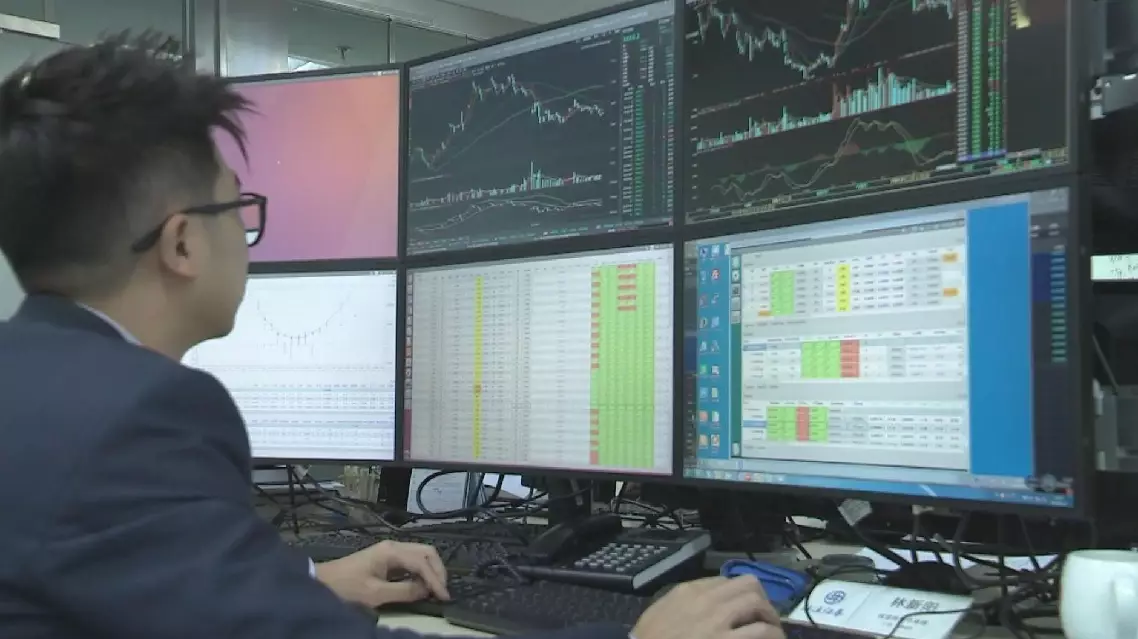
China's ETF market tops 6 trln yuan milestone amid product innovation, global expansion