As the Spring Festival approaches, a market in a village in southwest China's Yunnan Province bordering Vietnam, has come alive with festive energy, with residents from both sides bustling to prepare.
The Year of the Horse is celebrated on the same day in both China and Vietnam, fueling shared holiday enthusiasm.
As the festive excitement grows, the market in Malipo County, Yunnan's Wenshan Zhuang and Miao Autonomous Prefecture, is already crowded with people early in the morning.
Chinese ethnic clothing, daily necessities, and farming tools draw strong interest from Vietnamese buyers, while Vietnamese fruits, coffee, and agricultural products are flying off the shelves among Chinese customers.
"There are plentiful products in China and they are affordable. I like preserved meat, tea and sweet sausage. I love China. I come here every year," said a Vietnamese border resident.
During the Spring Festival period, the China-Vietnam border is expected to see a surge both in passenger trips and cargo volume.
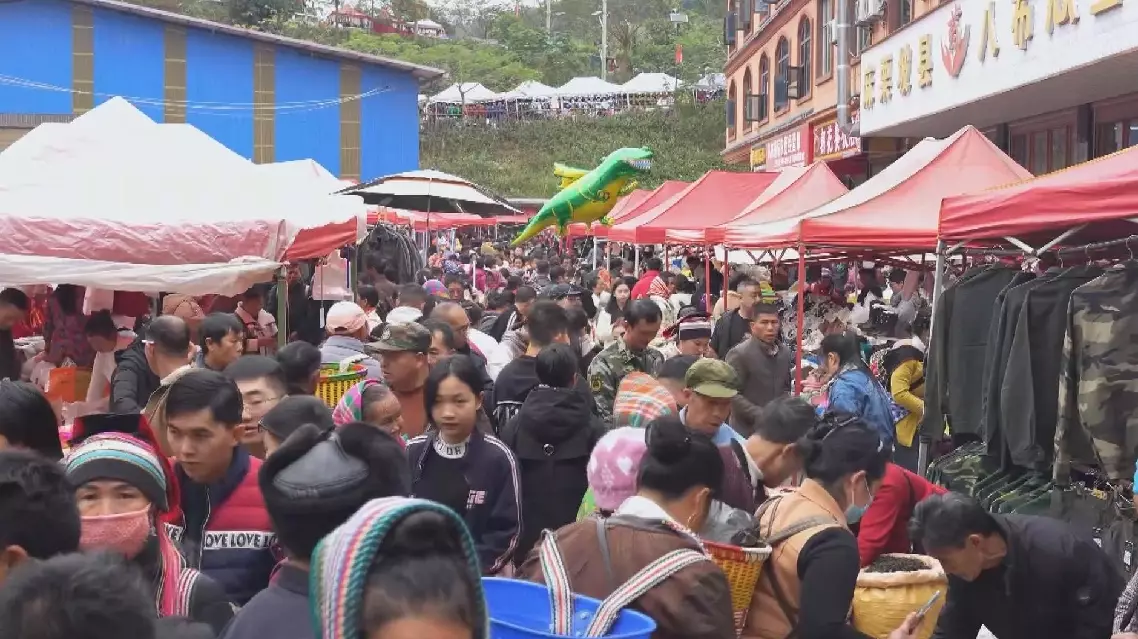
China-Vietnam border market throngs with shoppers ahead of Spring Festival
Global food commodity prices climbed for a second consecutive month in March, driven mainly by higher energy costs linked to escalating conflict in the Middle East, the Food and Agriculture Organization of the United Nations (FAO) said in report released on Friday.
The FAO Food Price Index, which tracks monthly changes in the international prices of a basket of globally traded food commodities, averaged 128.5 points in March, up 2.4 percent from February and 1.0 percent above its level a year ago.
According to the report, the FAO Vegetable Oil Index and Sugar Price Index showed the largest increases, up 5.1 percent and 7.2 percent, respectively.
The FAO Cereal Price Index increased by 1.5 percent from the previous month, driven primarily by higher world wheat prices, which rose 4.3 percent.
The FAO Meat Price Index rose by 1.0 percent from the previous month, and the FAO All-Rice Price Index declined by 3.0 percent in March, according to the report.
FAO stated that rising energy and fertilizer prices have been driving up agricultural input costs.
If the conflict stretches beyond 40 days, farmers will have to choose to farm the same with fewer inputs, plant less, or switch to less intensive fertilizer crops, according to FAO Chief Economist Maximo Torero.
These choices will hit future yields and shape food supply and commodity prices for the rest of this year and beyond, Torero said.
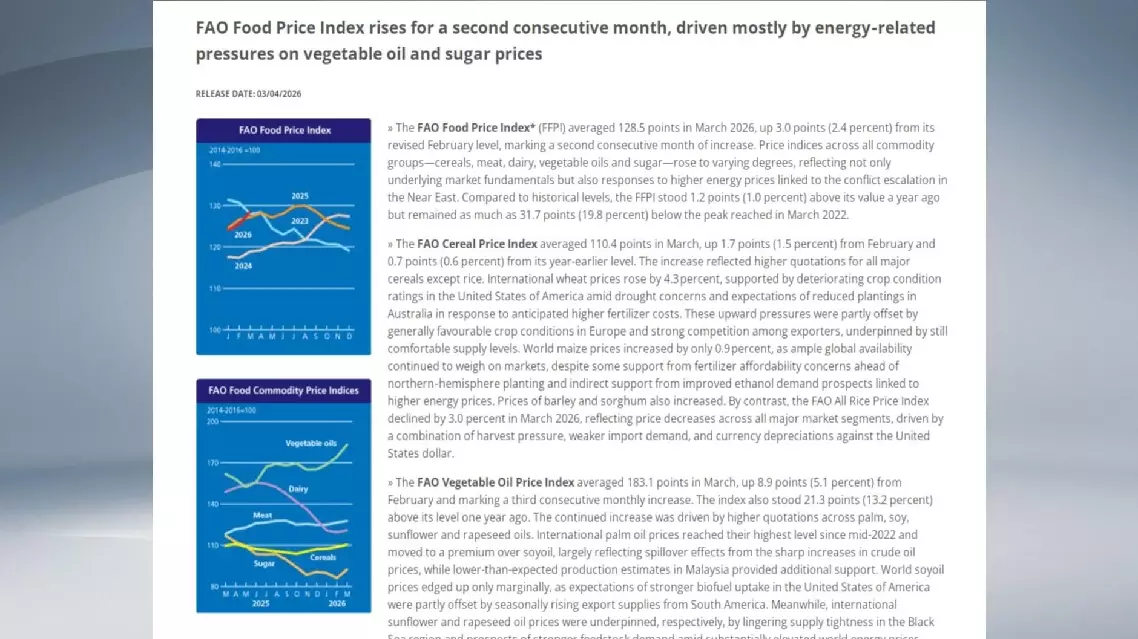
Global food prices rise for 2nd consecutive month in March amid Middle East conflict: FAO