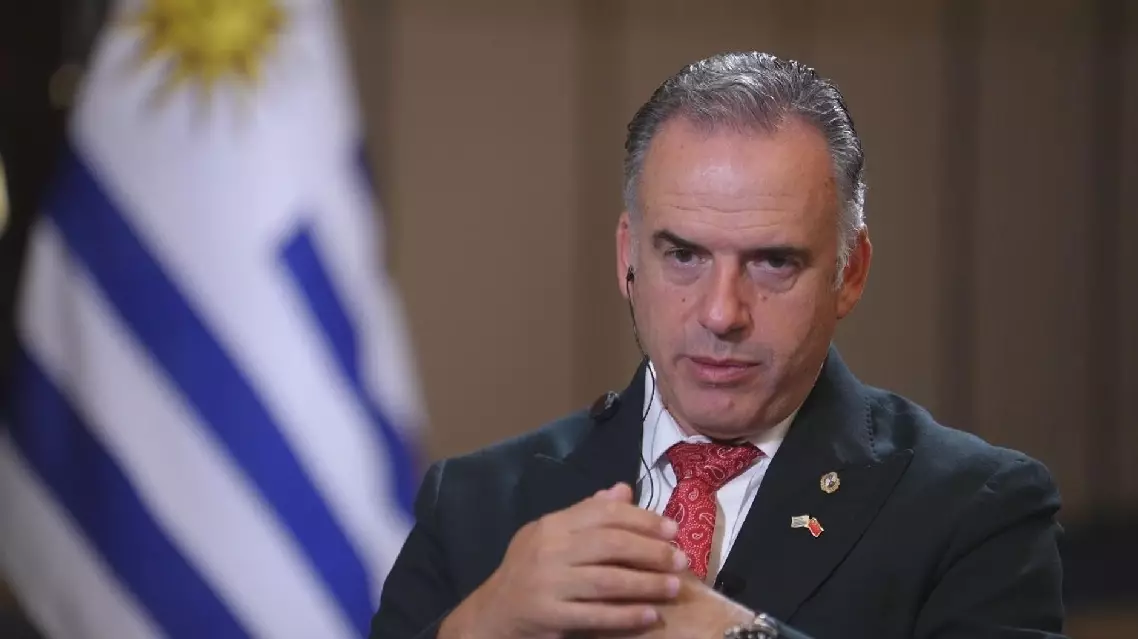
Firmly upholding the one-China principle is Uruguay's indisputable national tradition, said President of the Oriental Republic of Uruguay Yamandu Orsi in an interview with China Media Group (CMG) released on Friday.
Orsi made his first state visit to China from Feb 1 to 7, coinciding with the 38th anniversary of the establishment of diplomatic relations between the two countries.
During the interview in Shanghai, Orsi stated that Uruguay has consistently upheld the one-China principle.
"What I have inherited is an indisputable national tradition. The decision made by then President Julio Maria Sanguinetti was to establish (diplomatic) relations with China and to sever the so-called diplomatic ties with the other side (Taiwan). Uruguay has consistently stated and upheld this position on all occasions. The previous president who visited China also repeatedly emphasized that there is only one China. Based on our long-standing commitment to principles of multilateralism, peace, dialog and respect for sovereignty, we have always maintained the same position: there is only one China in the world," Orsi said.
Uruguayan president reiterates firm adherence to one-China principle
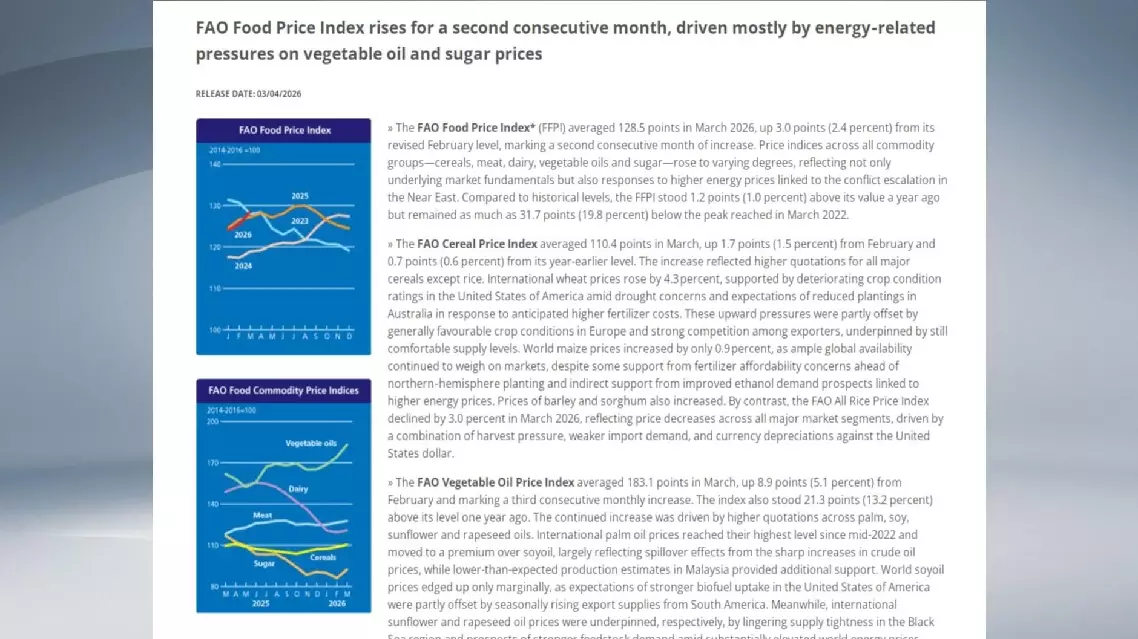
Global food commodity prices climbed for a second consecutive month in March, driven mainly by higher energy costs linked to escalating conflict in the Middle East, the Food and Agriculture Organization of the United Nations (FAO) said in report released on Friday.
The FAO Food Price Index, which tracks monthly changes in the international prices of a basket of globally traded food commodities, averaged 128.5 points in March, up 2.4 percent from February and 1.0 percent above its level a year ago.
According to the report, the FAO Vegetable Oil Index and Sugar Price Index showed the largest increases, up 5.1 percent and 7.2 percent, respectively.
The FAO Cereal Price Index increased by 1.5 percent from the previous month, driven primarily by higher world wheat prices, which rose 4.3 percent.
The FAO Meat Price Index rose by 1.0 percent from the previous month, and the FAO All-Rice Price Index declined by 3.0 percent in March, according to the report.
FAO stated that rising energy and fertilizer prices have been driving up agricultural input costs.
If the conflict stretches beyond 40 days, farmers will have to choose to farm the same with fewer inputs, plant less, or switch to less intensive fertilizer crops, according to FAO Chief Economist Maximo Torero.
These choices will hit future yields and shape food supply and commodity prices for the rest of this year and beyond, Torero said.
Global food prices rise for 2nd consecutive month in March amid Middle East conflict: FAO