Skip to Content Facebook Feature Image

Hungarian opposition leader Magyar vows to pull Hungary back toward the West in campaign launch

News

Hungarian opposition leader Magyar vows to pull Hungary back toward the West in campaign launch
News

News

Hungarian opposition leader Magyar vows to pull Hungary back toward the West in campaign launch

2026-02-16 01:22 Last Updated At:01:41

BUDAPEST, Hungary (AP) — Hungarian opposition leader Péter Magyar launched his party's election campaign in Budapest on Sunday, vowing to restore Hungary's Western orientation just eight weeks before he faces Prime Minister Viktor Orbán in a pivotal vote.

Magyar, a former insider in Orbán's nationalist Fidesz party, burst onto Hungary's political scene in 2024 after breaking with his political community and quickly forming the center-right Tisza party.

More Images
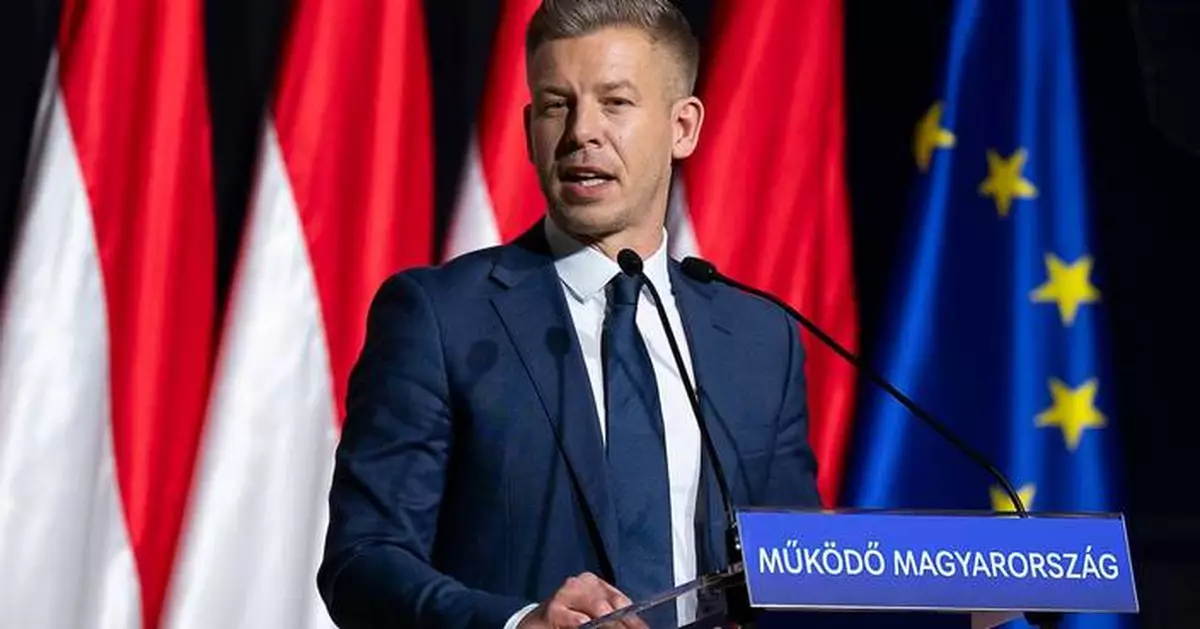
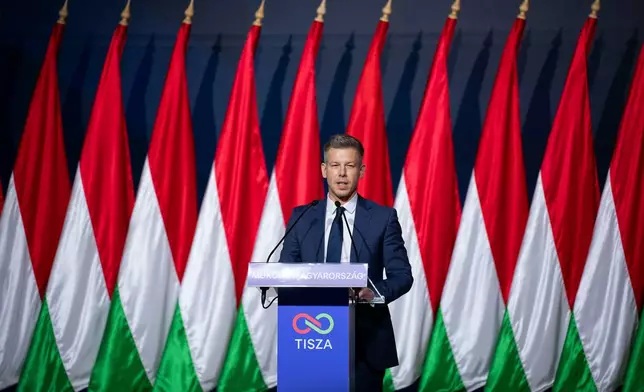
Péter Magyar, leader of the opposition Tisza party who will challenge Prime Minister Viktor Orbán in national elections on April 12, speaks during the party's campaign opener event in Budapest, Hungary on Sunday, Feb. 15, 2026. (AP Photo/Denes Erdos)

Péter Magyar, leader of the opposition Tisza party who will challenge Prime Minister Viktor Orbán in national elections on April 12, speaks during the party's campaign opener event in Budapest, Hungary on Sunday, Feb. 15, 2026. (AP Photo/Denes Erdos)

Péter Magyar, leader of the opposition Tisza party who will challenge Prime Minister Viktor Orbán in national elections on April 12, speaks during the party's campaign opener event in Budapest, Hungary on Sunday, Feb. 15, 2026. (AP Photo/Denes Erdos)

Péter Magyar, leader of the opposition Tisza party who will challenge Prime Minister Viktor Orbán in national elections on April 12, speaks during the party's campaign opener event in Budapest, Hungary on Sunday, Feb. 15, 2026. (AP Photo/Denes Erdos)

Péter Magyar, center, leader of the opposition Tisza party who will challenge Prime Minister Viktor Orbán in national elections on April 12. poses for a group photo with all the candidates of the party, after their campaign opener event in Budapest, Hungary on Sunday, Feb. 15, 2026. (AP Photo/Denes Erdos)
Péter Magyar, center, leader of the opposition Tisza party who will challenge Prime Minister Viktor Orbán in national elections on April 12. poses for a group photo with all the candidates of the party, after their campaign opener event in Budapest, Hungary on Sunday, Feb. 15, 2026. (AP Photo/Denes Erdos)

Péter Magyar, leader of the opposition Tisza party who will challenge Prime Minister Viktor Orbán in national elections on April 12, speaks during the party's campaign opener event in Budapest, Hungary on Sunday, Feb. 15, 2026. (AP Photo/Denes Erdos)
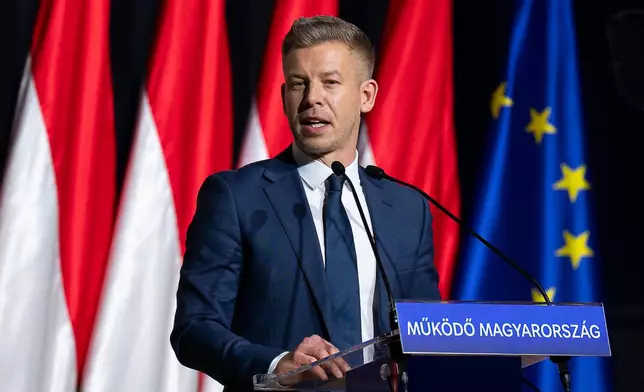
Péter Magyar, leader of the opposition Tisza party who will challenge Prime Minister Viktor Orbán in national elections on April 12, speaks during the party's campaign opener event in Budapest, Hungary on Sunday, Feb. 15, 2026. (AP Photo/Denes Erdos)

Péter Magyar, leader of the opposition Tisza party who will challenge Prime Minister Viktor Orbán in national elections on April 12, speaks during the party's campaign opener event in Budapest, Hungary on Sunday, Feb. 15, 2026. (AP Photo/Denes Erdos)

Péter Magyar, leader of the opposition Tisza party who will challenge Prime Minister Viktor Orbán in national elections on April 12, speaks during the party's campaign opener event in Budapest, Hungary on Sunday, Feb. 15, 2026. (AP Photo/Denes Erdos)

After taking around 30% of the vote in European Parliament elections in June 2024, he has grown Tisza into the most formidable political force Orbán has faced during his 16 years at Hungary's helm. Most independent polls show Tisza with a significant lead before the April 12 vote, an advantage which has held steady for more than a year.

“We’re standing on the threshold of victory with 56 days left to go,” he told supporters during his speech at an exposition center in Budapest on Sunday. “Tisza stands ready to govern.”

Magyar has vigorously campaigned across Hungary's rural, conservative heartland — traditionally an Orbán stronghold — holding rallies and town hall events in scores of villages and towns. He has focused on bread and butter issues such as low wages and rapidly rising living costs that have made Hungary one of the poorest countries in the European Union.

Magyar accuses Orbán and his government of mismanaging Hungary's economy and social services, and overseeing unchecked corruption he says has led to the accumulation of extreme wealth within a small circle of well-connected insiders while leaving ordinary Hungarians behind.

He has also criticized Orbán for conducting a combative foreign policy with the EU while maintaining close ties to Russia despite its war in neighboring Ukraine.

On Sunday, Magyar pointed to meetings he held with numerous European leaders at the Munich Security Conference in Germany over the weekend, and said he would put an end to Hungary “drifting out of the European Union” under Orbán.

“Hungary’s place is in Europe, not only because Hungary needs Europe, but also because Europe needs Hungary,” he said.

Magyar's comments contrasted starkly with statements Orbán made a day earlier at his own campaign launch, where he said the real threat facing Hungary was not military aggression from Russia, but the European Union.

In a 239-page program released last week, Tisza outlined its plans for how it would govern Hungary if it wins April’s elections. Fidesz has not released a program, arguing that after governing for 16 years, its voters know what kinds of policies to expect.

On Sunday, Magyar reiterated that his party plans to retain a fence Orbán's government built along the country's southern border in 2015, and said he would maintain Fidesz's policies of opposing illegal immigration and any accelerated procedure for Ukraine to join the EU.

However, Magyar has vowed to bring home billions in funding the EU has suspended to Hungary over its concerns that Orbán has eroded democratic institutions, reduced judicial independence and failed to tackle corruption.

The program also pledges to fulfill conditions for adopting the euro currency by 2030, and to invest in Hungary's faltering state health care and public transportation sectors. Tisza also plans to crack down on corruption and recover public funds it argues have been funneled into the hands of government-connected oligarchs.

"It is time to call corruption what it is: theft," Magyar said Sunday.

For its candidates in each of Hungary's 106 individual voting constituencies, Tisza has largely drawn on political neophytes locally active as entrepreneurs, doctors, economists, educators and other professionals.

Leading the ticket alongside Magyar are international energy expert Anita Orbán (no relation to the prime minister), whom the party tapped as its prospective foreign policy chief, and former Shell executive István Kapitány, who would fill a senior economy position in a future Tisza government.

Such candidates, Magyar has argued, will provide sectoral expertise he says is lacking under Orbán's government, and will help rebuild relations with Western partners and end Hungary's international isolation.

"I am proud that our experts are once again showing what it means to take the country’s fundamental issues seriously and to plan our shared future,” he said Sunday. “We don’t plan to dominate this country, but to serve it."
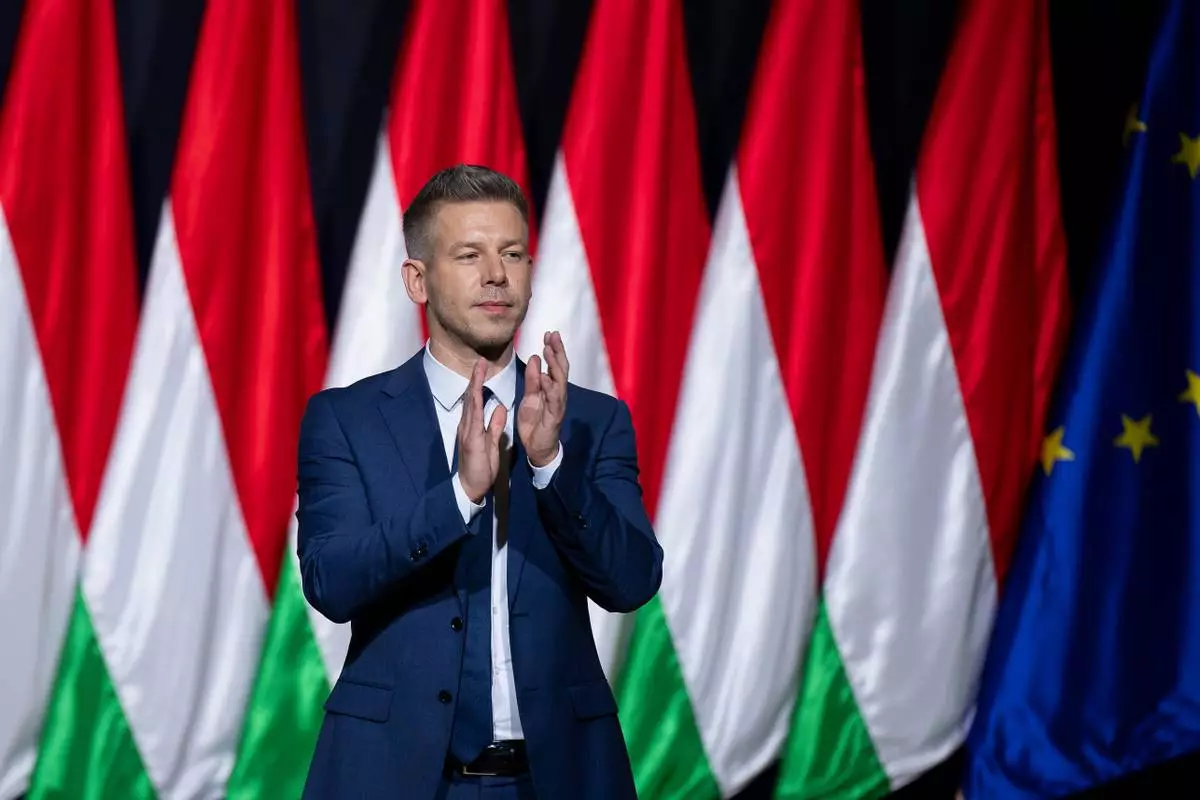
Péter Magyar, leader of the opposition Tisza party who will challenge Prime Minister Viktor Orbán in national elections on April 12, speaks during the party's campaign opener event in Budapest, Hungary on Sunday, Feb. 15, 2026. (AP Photo/Denes Erdos)
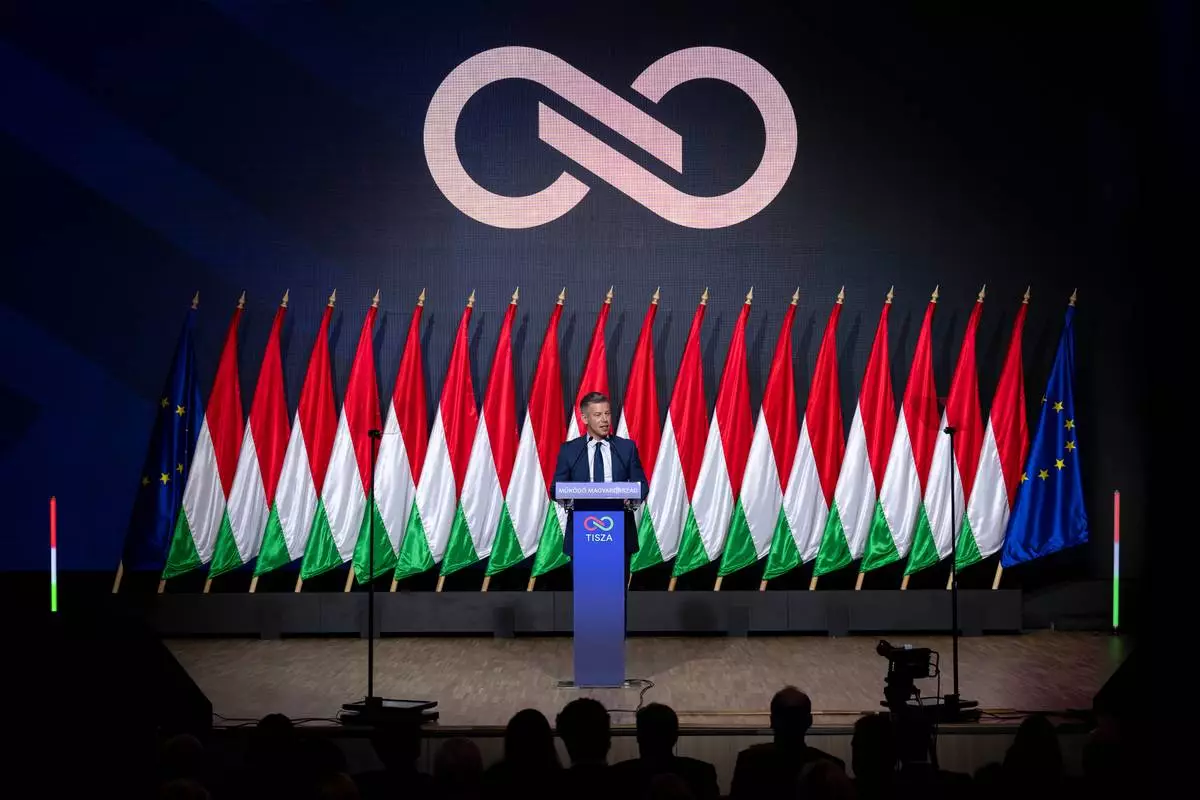
Péter Magyar, leader of the opposition Tisza party who will challenge Prime Minister Viktor Orbán in national elections on April 12, speaks during the party's campaign opener event in Budapest, Hungary on Sunday, Feb. 15, 2026. (AP Photo/Denes Erdos)

Péter Magyar, leader of the opposition Tisza party who will challenge Prime Minister Viktor Orbán in national elections on April 12, speaks during the party's campaign opener event in Budapest, Hungary on Sunday, Feb. 15, 2026. (AP Photo/Denes Erdos)

Péter Magyar, leader of the opposition Tisza party who will challenge Prime Minister Viktor Orbán in national elections on April 12, speaks during the party's campaign opener event in Budapest, Hungary on Sunday, Feb. 15, 2026. (AP Photo/Denes Erdos)

Péter Magyar, center, leader of the opposition Tisza party who will challenge Prime Minister Viktor Orbán in national elections on April 12. poses for a group photo with all the candidates of the party, after their campaign opener event in Budapest, Hungary on Sunday, Feb. 15, 2026. (AP Photo/Denes Erdos)
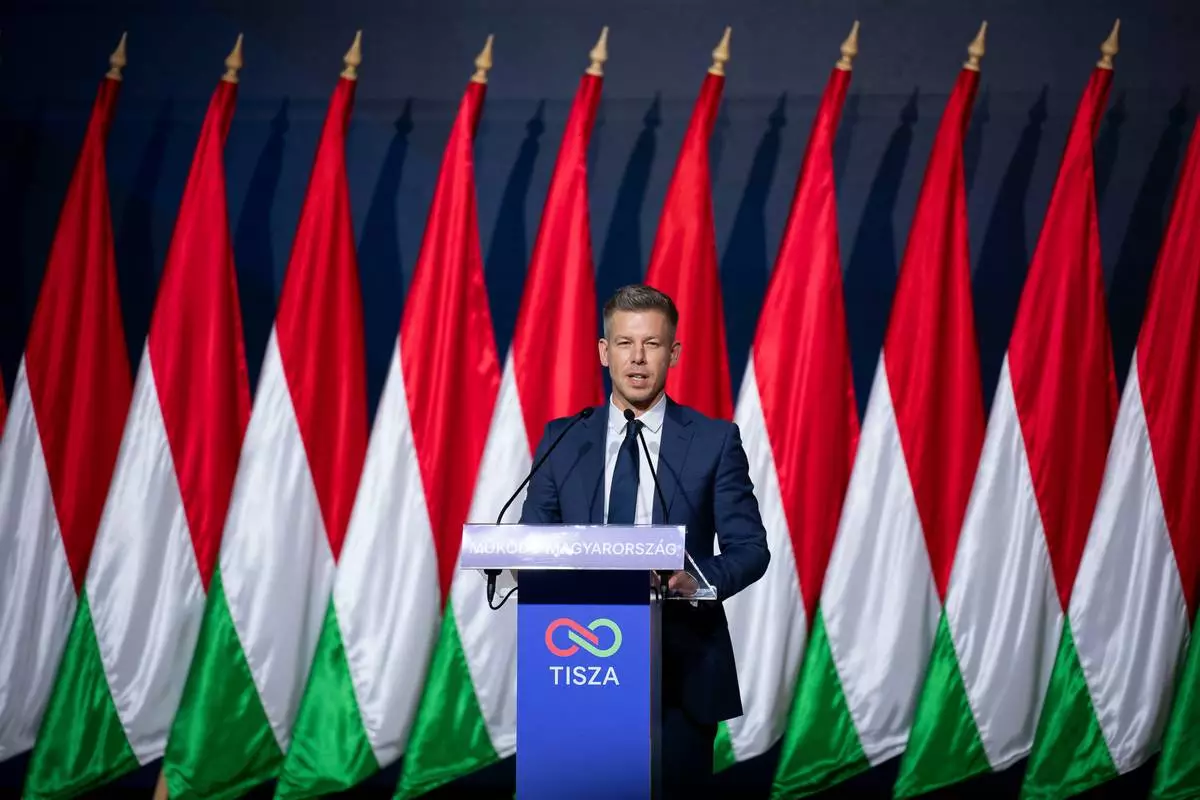
Péter Magyar, center, leader of the opposition Tisza party who will challenge Prime Minister Viktor Orbán in national elections on April 12. poses for a group photo with all the candidates of the party, after their campaign opener event in Budapest, Hungary on Sunday, Feb. 15, 2026. (AP Photo/Denes Erdos)

Péter Magyar, leader of the opposition Tisza party who will challenge Prime Minister Viktor Orbán in national elections on April 12, speaks during the party's campaign opener event in Budapest, Hungary on Sunday, Feb. 15, 2026. (AP Photo/Denes Erdos)
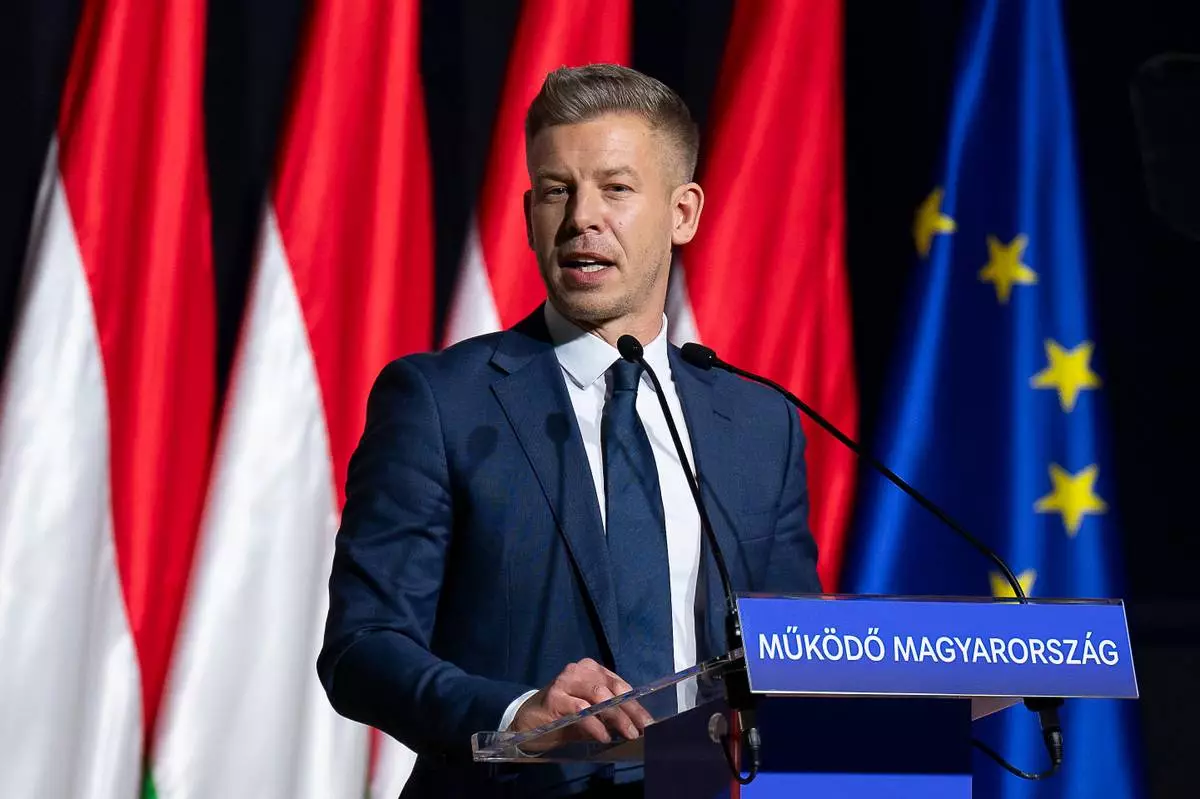
Péter Magyar, leader of the opposition Tisza party who will challenge Prime Minister Viktor Orbán in national elections on April 12, speaks during the party's campaign opener event in Budapest, Hungary on Sunday, Feb. 15, 2026. (AP Photo/Denes Erdos)
Péter Magyar, leader of the opposition Tisza party who will challenge Prime Minister Viktor Orbán in national elections on April 12, speaks during the party's campaign opener event in Budapest, Hungary on Sunday, Feb. 15, 2026. (AP Photo/Denes Erdos)
Péter Magyar, leader of the opposition Tisza party who will challenge Prime Minister Viktor Orbán in national elections on April 12, speaks during the party's campaign opener event in Budapest, Hungary on Sunday, Feb. 15, 2026. (AP Photo/Denes Erdos)
CORTINA D'AMPEZZO, Italy (AP) — Mikaela Shiffrin stood at the start gate atop the giant slalom course at sun-splashed Tofane and made a promise to herself.

“I’m going to do this whole thing here,” she said.

Considering the path the American star has taken to reach the Milan Cortina Olympics, and to this event in particular, that was enough.

So while the leaderboard near the finish line during Sunday's GS needed to flip to the second page before Shiffrin's name appeared in 11th, the most decorated skier in the history of the sport didn't view her finish as a disappointment.

Disappointment is washing out, which she did four years ago in Beijing. Disappointment is wondering if the speed that once came so easily would ever return while recovering from a harrowing crash during a World Cup start in Killington, Vermont, in late 2024 that left her abdomen punctured and her confidence shaken.

What happened during what Shiffrin called “the greatest show of GS skiing we've had in a really long time” was not disappointment. If anything, it was the opposite.

Yes, Shiffrin finished outside the top 10. The way the snow felt underneath her skis and the razor-thin margin that separated the silver medalists from the chasing pack — there was no catching Italy's Federica Brignone on this day — offered evidence she's trending in the right direction heading into slalom, her best event, on Wednesday.

“To be here now like within touch of the fastest women, that’s huge for me,” Shiffrin said. “So I’m proud of that.”

The gap between Shiffrin and co-runners-up Sara Hector of Sweden and Thea Louise Stjernesund was an impossibly tight 0.3 seconds in a discipline that requires skiers to make two runs.

When Shiffrin won gold in the GS in Pyeongchang eight years ago, the gap between silver and 11th was around 1.4 seconds. Four years ago in Beijing, it was nearly 2 seconds. Three weeks ago at a World Cup event in Czechia, where Shiffrin earned her first podium in the GS in two years, it was over 3 1/2 seconds.

On Sunday, Shiffrin was right there. A turn here. A turn there. On a course that was a little flatter and a little less technically demanding than what Shiffrin and the rest of the best skiers in the world usually see — one almost explicitly designed to create a safe and ultracompetitive race — the difference between a medal and the middle was nearly imperceptible.

Shiffrin promised to “learn” after slogging down through the slalom in the women's combined last week, when her skis couldn't seem to “go.” Perhaps too aware of the perception of an Olympic slump — the Games are the only place she hasn't won in the last eight years — she did her best to refocus and block out the noise.

In her mind, she did just that. She could feel herself taking power from the course. As “Killing in the Name” by Rage Against the Machine blasted over the speakers during her second run, Shiffrin felt like she was in the moment and not in her head.

“It felt good to push, which was amazing,” she said, later adding: “It felt really good to ski high intensity.”

Shiffrin's intensity feels as if it is slowly but steadily ramping up. She wore bib No. 3, a nod to the fact she's back in the top 7 in the world in the GS, something she considered a “challenging task” when the season began. It's become doable, but Shiffrin has learned progress isn't linear.

While she continues to dominate slalom — in which she's already clinched her ninth World Cup series title with two races to go — GS is another matter. Sure, Shiffrin's 22 career GS victories are a record. But she hasn't won a GS race since late 2023.

Her climb back up the GS rankings has been fueled by consistency. The “lights-out speed” she knows is required to finish atop the podium doesn't come quite as easily as it did when she was at the peak of her powers. That's fine.

“The task ahead of me for the coming months (and) in the coming years is to try to bring that kind of intensity and fire and to continue to work with the team to find those hundredths (of a second) that it takes to actually win races,” she said.

That didn't happen under the snowcapped peaks of the Dolomites on Sunday. Maybe on another course, one with a more difficult setup that would allow her to lean in to her experience, things may have played out differently.

It's not a conversation Shiffrin seems particularly interested in having. The layout allowed for competitive racing. And she pointed to the medal stand — where the 35-year-old Brignone won her second gold in four days and Hector added silver to go with the gold she captured in Beijing in 2022 — as proof the results were not fluky.

“It wasn’t like somebody won who wasn’t supposed to win,” Shiffrin said.

Brignone emerged as a deserving champion. Behind her, however, was chaos. Shiffrin doesn't think that's a bad thing.

“(We were all) close and that’s how that’s how high the competition level, is I think,” she said. “That’s a beautiful show of our sport on an Olympic stage.”

AP Winter Olympics: https://apnews.com/hub/milan-cortina-2026-winter-olympics

United States' Mikaela Shiffrin speeds down the course, during an alpine ski, women's giant slalom race, at the 2026 Winter Olympics, in Cortina d'Ampezzo, Italy, Sunday, Feb. 15, 2026. (AP Photo/Robert F. Bukaty)

United States' Mikaela Shiffrin speeds down the course, during an alpine ski, women's giant slalom race, at the 2026 Winter Olympics, in Cortina d'Ampezzo, Italy, Sunday, Feb. 15, 2026. (AP Photo/Robert F. Bukaty)

United States' Mikaela Shiffrin at the finish area of an alpine ski, women's giant slalom race, at the 2026 Winter Olympics, in Cortina d'Ampezzo, Italy, Sunday, Feb. 15, 2026. (AP Photo/Jacquelyn Martin)

United States' Mikaela Shiffrin at the finish area of an alpine ski, women's giant slalom race, at the 2026 Winter Olympics, in Cortina d'Ampezzo, Italy, Sunday, Feb. 15, 2026. (AP Photo/Jacquelyn Martin)

United States' Mikaela Shiffrin visualizes the course ahead of the second run of an alpine ski, women's giant slalom race, at the 2026 Winter Olympics, in Cortina d'Ampezzo, Italy, Sunday, Feb. 15, 2026. (AP Photo/Marco Trovati)

United States' Mikaela Shiffrin visualizes the course ahead of the second run of an alpine ski, women's giant slalom race, at the 2026 Winter Olympics, in Cortina d'Ampezzo, Italy, Sunday, Feb. 15, 2026. (AP Photo/Marco Trovati)

United States' Mikaela Shiffrin at the finish area during an alpine ski, women's giant slalom race, at the 2026 Winter Olympics, in Cortina d'Ampezzo, Italy, Sunday, Feb. 15, 2026. (AP Photo/Robert F. Bukaty)

United States' Mikaela Shiffrin at the finish area during an alpine ski, women's giant slalom race, at the 2026 Winter Olympics, in Cortina d'Ampezzo, Italy, Sunday, Feb. 15, 2026. (AP Photo/Robert F. Bukaty)

United States' Mikaela Shiffrin speeds down the course, during an alpine ski, women's giant slalom race, at the 2026 Winter Olympics, in Cortina d'Ampezzo, Italy, Sunday, Feb. 15, 2026. (AP Photo/Robert F. Bukaty)

United States' Mikaela Shiffrin speeds down the course, during an alpine ski, women's giant slalom race, at the 2026 Winter Olympics, in Cortina d'Ampezzo, Italy, Sunday, Feb. 15, 2026. (AP Photo/Robert F. Bukaty)

Recommended Articles