BERLIN--(BUSINESS WIRE)--Feb 15, 2026--
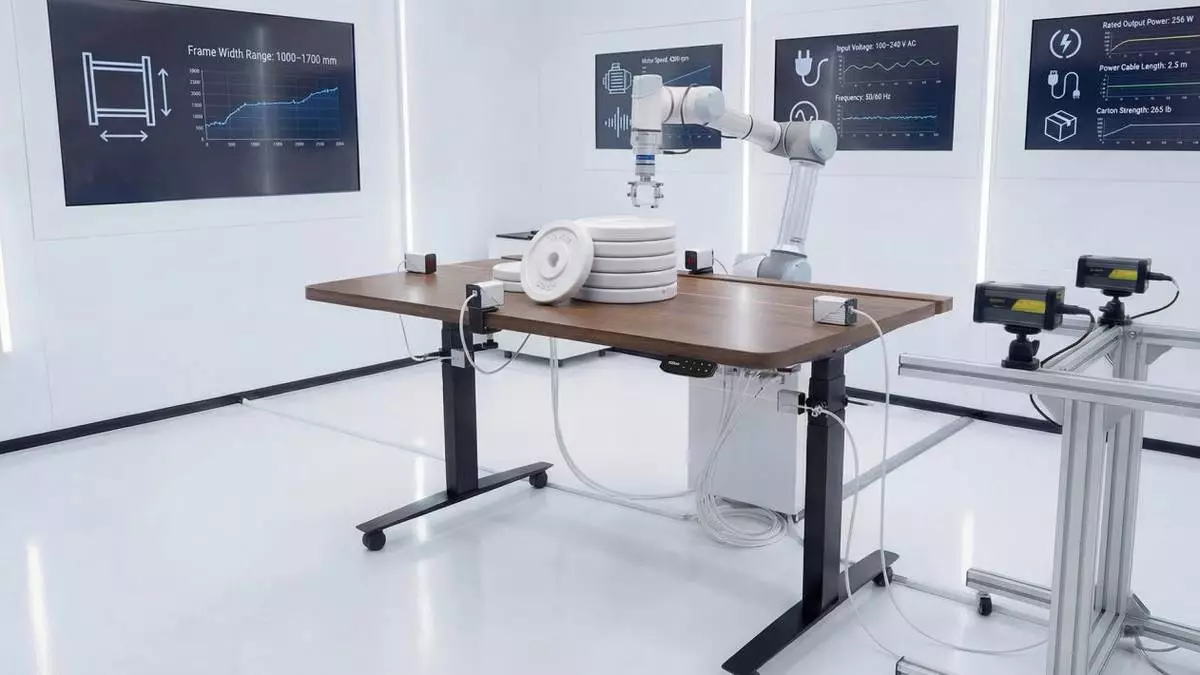
Esslinger today announced its public-media debut in Germany and the official online launch of its Vexel Series on Esslingerlife.de, starting February 15. Built for programmers and heavy computer users, Esslinger positions the height-adjustable sit-stand desk not as a piece of furniture, but as a modular ergonomic workstation system—where the desk is the platform and the accessory ecosystem is the core solution.
This press release features multimedia. View the full release here: https://www.businesswire.com/news/home/20260213611548/en/
Long-session strain rarely comes from one item. It accumulates across the workstation: monitor height, input posture, lighting glare, standing comfort, and cable clutter interact as a system. Esslinger’s approach is to make ergonomics practical in real setups through a coordinated set of ergonomic desk accessories that can be upgraded step by step.
Core Ergonomic Accessory Set (Ecosystem-first):
Additional everyday items include a mouse pad and power strip.
To keep multi-device workstations clean and maintainable, every Vexel desk includes integrated cable management as standard. The high-capacity enclosure is designed to fit at least 5 power outlets—truly enabling multi-device connectivity, uses ventilation openings to prevent heat build-up under multi-device loads, and features a dual pull-pin drop-down mechanism for full access and quick maintenance. Internal cable control helps secure excess cable length, and the system remains stable across the full sit–stand height range—avoiding unintended opening or cable drag during adjustment.
“ Esslinger rethinks the height-adjustable desk—not as furniture, but as an ergonomic workstation system designed for programmers,” said Werner Claassen, Founder. “Our goal is to reduce daily friction in long-session work by combining a stable platform with an ecosystem of accessories that work together.”
Availability & Pricing
Available exclusively via Esslingerlife.de for Germany and Austria from February 15, 2026. Platform desk pricing starts at €670 (cable management included). Desk + core accessory bundle starts at €750.
Esslinger Debuts in Germany: Vexel Sit-Stand Desk Series as a Platform for a Modular Ergonomic Workstation Ecosystem
NEW YORK (AP) — A jury found Wednesday that entertainment giant Live Nation, which hosts tens of thousands of concerts a year, and its Ticketmaster subsidiary had a harmful monopoly over big venues.
The ruling, in a lawsuit brought by dozens of states, won’t immediately bring relief for concertgoers who have long complained about high ticket prices. But it could cost Live Nation hundreds of millions of dollars and perhaps force the company to sell some of its concert venues when the judge hands out penalties later.
Among other things, the jury found Ticketmaster's anticompetitive practices led to people in 22 states paying an extra $1.72 per ticket, which the judge could order the companies to pay back.
A jury in New York deliberated for four days before reaching its decision. State attorneys general who sued Live Nation said the verdict could potentially lead to lower ticket prices for music fans.
Live Nation said in a statement that the verdict “is not the last word on this matter.”
The company predicted that once a remedy phase of the litigation is completed before the judge and all appeals are resolved, the outcome likely won't be much different from what the federal government achieved with a settlement it reached with the company just after the trial began.
That deal included a cap on service fees at some amphitheaters, plus some new ticket-selling options for promoters and venues — potentially allowing, but not requiring, them to open doors to Ticketmaster competitors such as SeatGeek or AXS.
The trial gave fans the equivalent of a backstage pass to a business that dominates live entertainment in the U.S. and beyond.
Live Nation CEO Michael Rapino testified, answering questions about matters including the company’s Taylor Swift ticket debacle in 2022. Rapino blamed a cyberattack.
Jurors also got to see a Live Nation employee’s internal messages to another employee declaring some prices “outrageous,” calling customers “so stupid” and boasting that the company was “robbing them blind, baby.” The employee, Benjamin Baker, who has since been promoted to a position as a ticketing executive, apologetically testified that the messages were “very immature and unacceptable.”
Live Nation Entertainment owns, operates, controls booking for or has an equity interest in hundreds of venues. Its subsidiary Ticketmaster is widely considered to be the world’s largest ticket-seller for live events.
The verdict could cost Live Nation and Ticketmaster hundreds of millions of dollars, based on the jury's estimate that customers paid an extra $1.72 per ticket. The companies could also be assessed penalties. In addition, sanctions could result in court orders that they divest themselves of some entities, including venues such as amphitheaters that they own.
In its statement, Live Nation said the jury's award of $1.72 per ticket applied to “a limited number of tickets” sold at 257 venues and representing about 20% of total tickets sold. The company estimated the aggregate single damages figure would be below $150 million, though it would be trebled.
The civil case, initially led by the U.S. government, accused Live Nation of using its reach to smother competition — by blocking venues from using multiple ticket sellers, for example.
Live Nation insisted it is not a monopoly, saying that artists, sports teams and venues decide prices and ticketing practices. A company lawyer said its size was simply a function of excellence and effort.
“Success is not against the antitrust laws in the United States,” attorney David Marriott said in his summation.
Ticketmaster was established in 1976 and merged with Live Nation in 2010. The company now controls of 86% of the market for concerts and 73% of the overall market when sports events are included, according to an attorney for the states, Jeffrey Kessler.
Ticketmaster has long drawn ire from fans and some artists. Grunge rock titans Pearl Jam battled the business in the 1990s, even filing an anti-monopoly complaint with the U.S. Department of Justice, which declined to bring a case then.
Decades later, the Justice Department, joined by dozens of states, brought the current lawsuit during Democratic former President Joe Biden's administration.
Days into the trial, Republican President Donald Trump's administration announced it was settling its claims against Live Nation.
A handful of the states joined the settlement. But more than 30 pressed ahead with the trial, saying the federal government hadn't gotten enough concessions.
New Jersey Attorney General Jennifer Davenport said in a release after the verdict that Live Nation's “illegal, anti-competitive practices” had driven up ticket prices and made it harder for fans to see their favorite acts.
New York Attorney General Letitia James called the verdict “a landmark victory.”
After the victory, Kessler would not say specifically what the states will seek in the next phase of the litigation, which was expected to involve another lengthy legal proceeding before penalties are decided.
But he celebrated the moment.
“It’s a great day for consumers," he said.
FILE - The Ticketmaster logo is seen along the sideline of the field before an NFL football game, Sept. 15, 2024, in Jacksonville, Fla. (AP Photo/Phelan M. Ebenhack, File)