This year's Munich Security Conference (MSC) has laid bare the deepest crisis in transatlantic relations in decades, as waning U.S. interest in Europe fuels calls for strategic autonomy, said a German scholar in an interview.
The 62nd session of MSC, which concluded on Sunday, was dominated by debate over the alliance's future, with European leaders using the platform to press for greater strategic autonomy amid the Trump administration's "America First" policies.
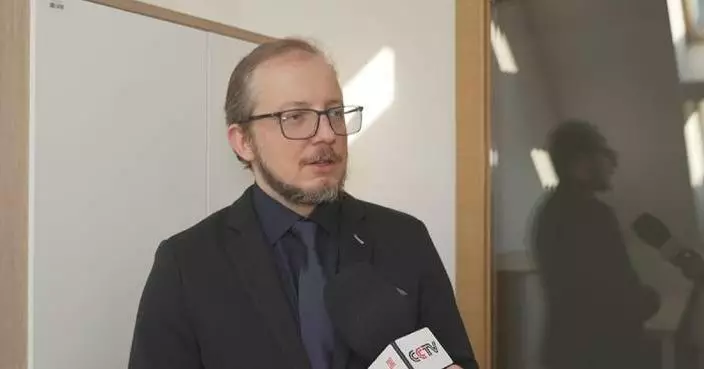
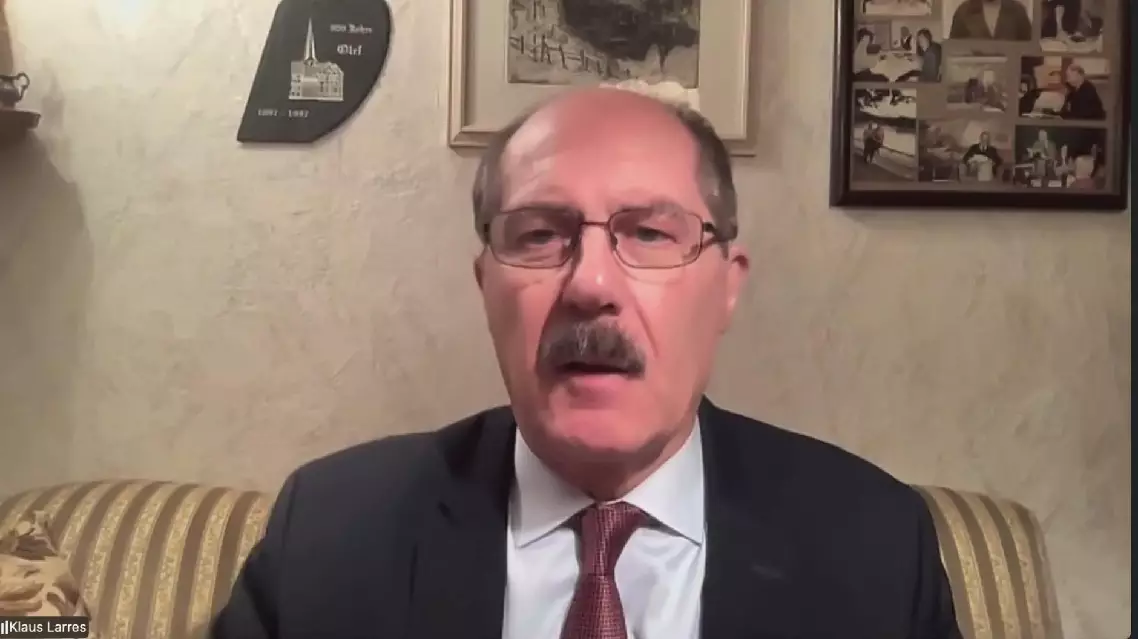
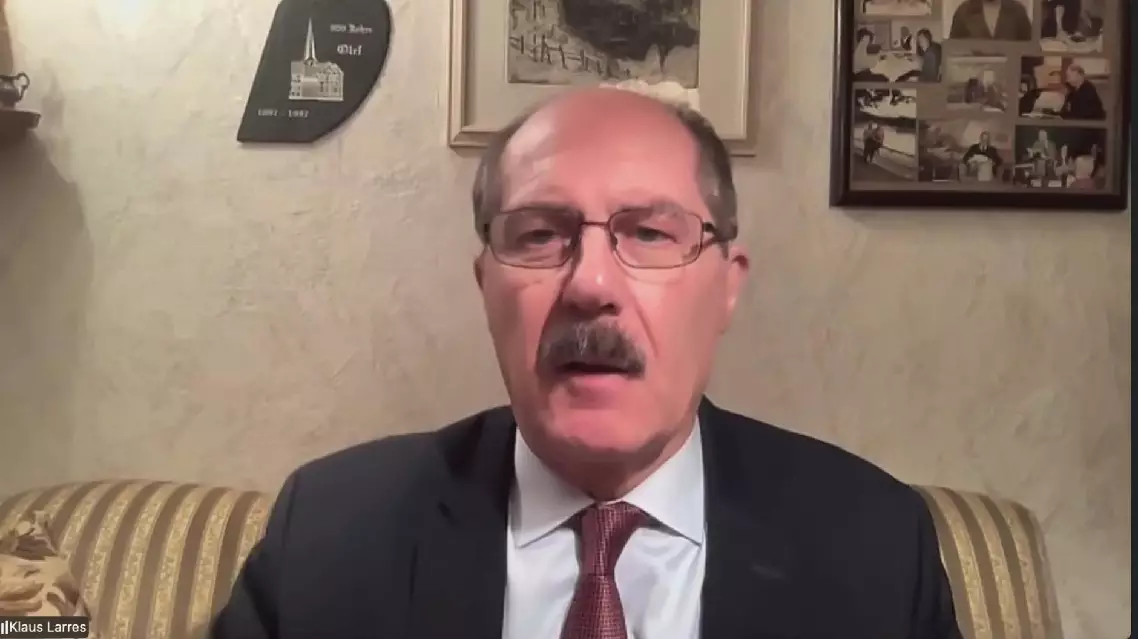
Klaus Larres, a professor at the University of North Carolina specializing in transatlantic relations, told China Media Group (CMG) that Europe is increasingly waking up to a fundamental shift. He stressed that German Chancellor Friedrich Merz, like many in the West, is shocked by what appears to be the unraveling of the liberal world order, as reflected in Merz's conference address.
"The Trump administration, as we all know, has become an 'America First' administration, which is less interested than its predecessors in the European allies. And so the transatlantic alliance is in crisis, and Canadian Prime Minister Carney already formulated that at the Davos conference a short while ago. He talked about a rupture in world politics, and a rupture in transatlantic relations. And I think Merz reiterated that in different words. He has not given up on the transatlantic relationship with the United States, but he has realized that the U.S., that Trump is less interested than his predecessors into the European allies. And Merz is very much concerned about that and believes something new is developing," said Larres.
Larres emphasized that Trump's recent suggestion of "taking over" Greenland, a territory belonging to NATO member Denmark, deepened mistrust and suspicion among European allies.
"Recently President Trump indicated that he would like to take over Greenland, which is part of the Kingdom of Denmark and, of course, it is a European country. It is a NATO country. This has caused a deep, deep crisis in the transatlantic relationship. And of course, for Europeans, it is unthinkable that the United States would actually invade a NATO country, NATO territory. It caused a lot of mistrust, distrust, and suspicion among the European allies," said Larres.
On the economic front, tensions remain unresolved. Since launching tariff campaigns against European trading partners in April of last year, the United States has kept European nations in a state of uncertainty.
Although a draft agreement reportedly outlines 15 percent tariffs on most European goods entering the U.S., a move that has temporarily calmed the waters, lingering doubts persist over whether the White House will honor the arrangement or abruptly shift course.
"The uncertainty is will Trump stick to that, or will he change his mind next week or next month and again impose higher tariffs on the Europeans? So there's still a lingering suspicion among the European allies that perhaps that trade agreement of 15 percent tariffs on European countries is not the final word, that something will still develop or come out of the White House which will affect European countries negatively. And therefore, trust has not been rebuilt as much as it should have been rebuilt," he said.
Following last year's Munich conference, where US Vice President JD Vance shocked attendees by publicly accusing Europeans of betraying "shared values," this year's downgraded American delegation appeared as damage control. Secretary of State Marco Rubio spoke of "updating and repairing" relations, yet Larres offered a sobering forecast.
"Of course, there is great hope in Europe that once Trump has left office, there will be a more reasonable and more pro-Europe focused president again in the Oval Office and that the transatlantic relationship can be repaired and can be improved again significantly. Whether that is a justified hope, a realistic hope, or whether that is just daydreaming and being hopeful and being nostalgic about the past, that, of course, remains to be seen. But for the next three years, I would say the transatlantic relations will continue to be in crisis and times will be difficult. That may not be permanent forever, but three years is still quite a long time," he said.
Transatlantic ties to be tested in coming three years: scholar
Transatlantic ties to be tested in coming three years: scholar