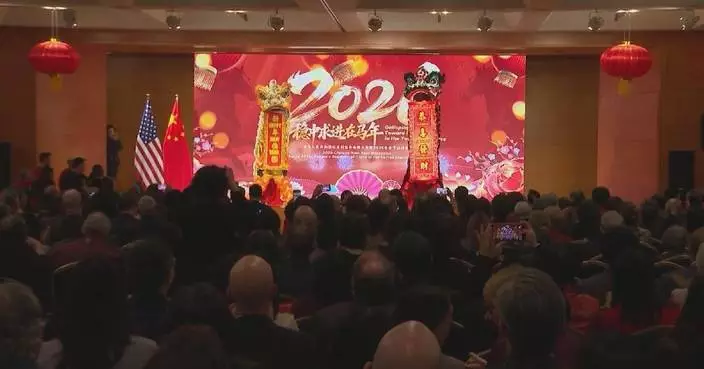
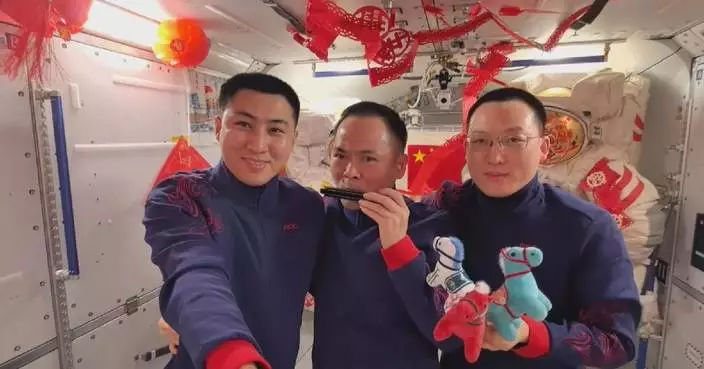
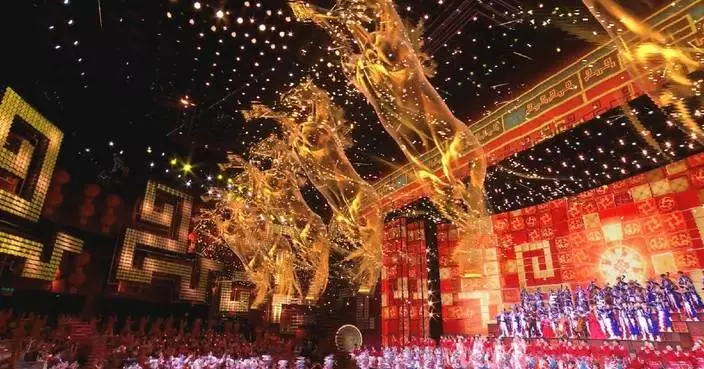
Cities and regions across China are hosting a variety of vibrant events to celebrate the Spring Festival, blending traditional folk customs with modern technology to offer a unique holiday experience.
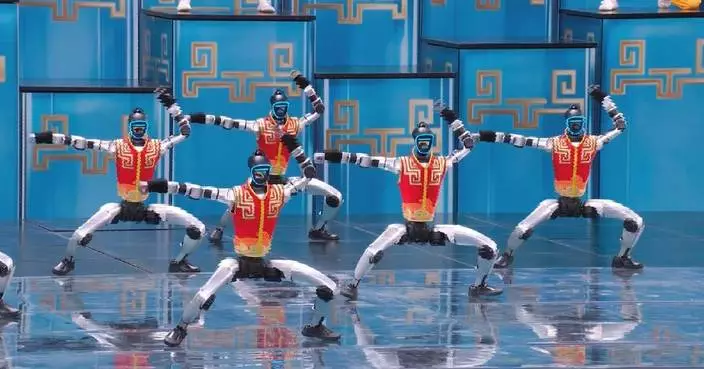
In Beijing, a spectacular light show has recently been staged at the Central Radio and Television Tower, where the tower body has been illuminated using 3D mapping technology. The total projected area on the tower body reaches 4,230 square meters from 20 to 200 meters in height, featuring dynamic light projections presented in six themed chapters. On the square in front of the tower are traditional dragon and lion dances as well as robot dance performances, offering visitors a festive experience that blends tradition with modern technology.
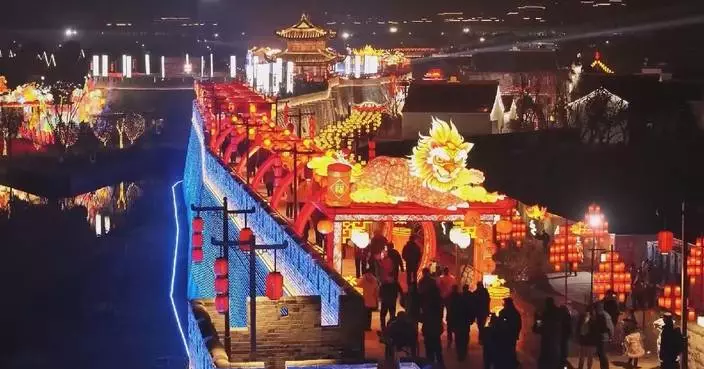
In Huangyuan County of northwest China's Qinghai Province, lively Shehuo folk performances kick off the Chinese New Year celebrations at local community squares. Dancers in colorful traditional costumes perform Yangko to the rhythm of drums, while golden and red dragon and lion teams weave through the crowds. Meanwhile, inside the historic Danggar Ancient Town, more than a hundred traditional lanterns are hung on the city walls, turning the streets into a warm corridor of light and drawing large crowds of visitors.
Shehuo (Community Fire), originally a ceremony to honor gods and spirits from heaven and earth in ancient China, has gradually developed to a festive performance to celebrate and pray for harvest in China's long history. The Yangko dance is a traditional folk dance of the ethnic Han people in China, commonly performed in the northern parts of the country. There are two kinds of ways of performing: one is on the ground and the other is on the stilts.
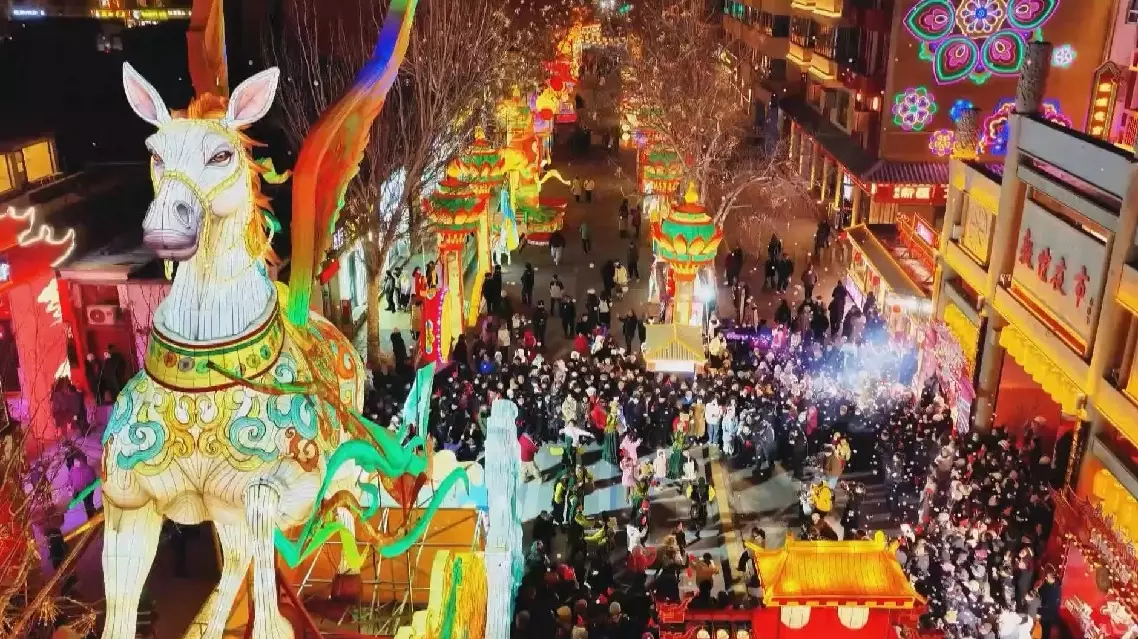
In Jiuquan City of northwest China's Gansu Province, a grand lantern fair has lit up the streets with over 20 themed light installations and more than 1,000 decorative lanterns, integrating traditional culture with modern technology. Visitors stroll through the illuminated displays, capturing the festive scenes with camera. The fair also features immersive experiences combining lantern viewing, cultural exhibitions, live performances and interactive activities, alongside traditional folk customs and Silk Road-themed events.
In Nanyue District of Hengyang City, central China's Hunan Province, dazzling molten iron flower performances, a form of intangible cultural heritage, are staged during the Spring Festival, attracting large crowds of spectators. A series of cultural and tourism activities have also been launched at Mount Hengshan in Nanyue, including writing and gifting spring couplets, lantern riddle games, shadow puppetry, Nanyue paper-cutting and street parades. These events allow residents and tourists alike to enjoy a festive Spring Festival filled with cultural experiences, entertainment and local cuisine tasting.
In molten iron flower performance, the molten iron splashes in the air and cools rapidly, reacting with oxygen in the air to form countless sparks.
The official 2026 Spring Festival holiday season, from February 15 to 23, is the longest in recent years, and Chinese tourists are making the most of it. The National Immigration Administration estimates that daily inbound and outbound passenger traffic nationwide will average 2.05 million during the holiday, a 14.1 percent increase from last year.
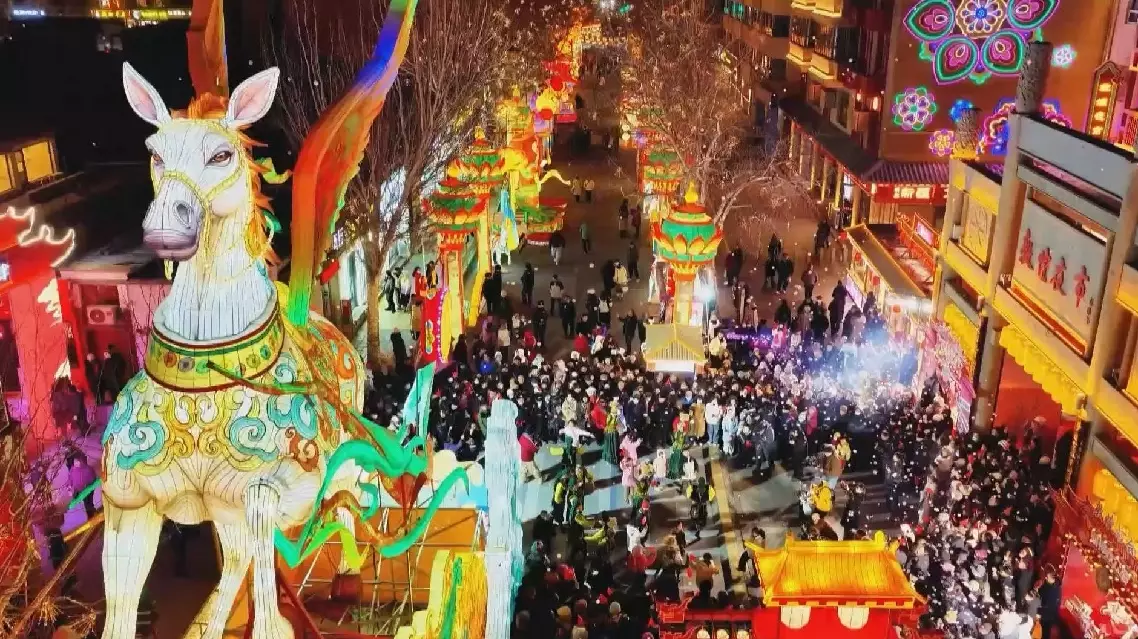
Festive celebrations across China highlight vibrant charm in urban areas
Festive celebrations across China highlight vibrant charm in urban areas