China's new energy vehicle (NEV) drivers now have been able to charge their cars more conveniently and drive farther during the ongoing Spring Festival travel rush, thanks to a nationwide update and expansion of the country's charging device network, which also leads to a green travel trend bringing benefits to tourism and hospitality sectors.
Travelers returning home for Chinese New Year reunions or making holiday trips form what is believed to be the biggest annual human migration on the planet - and increasingly that migration is going green.
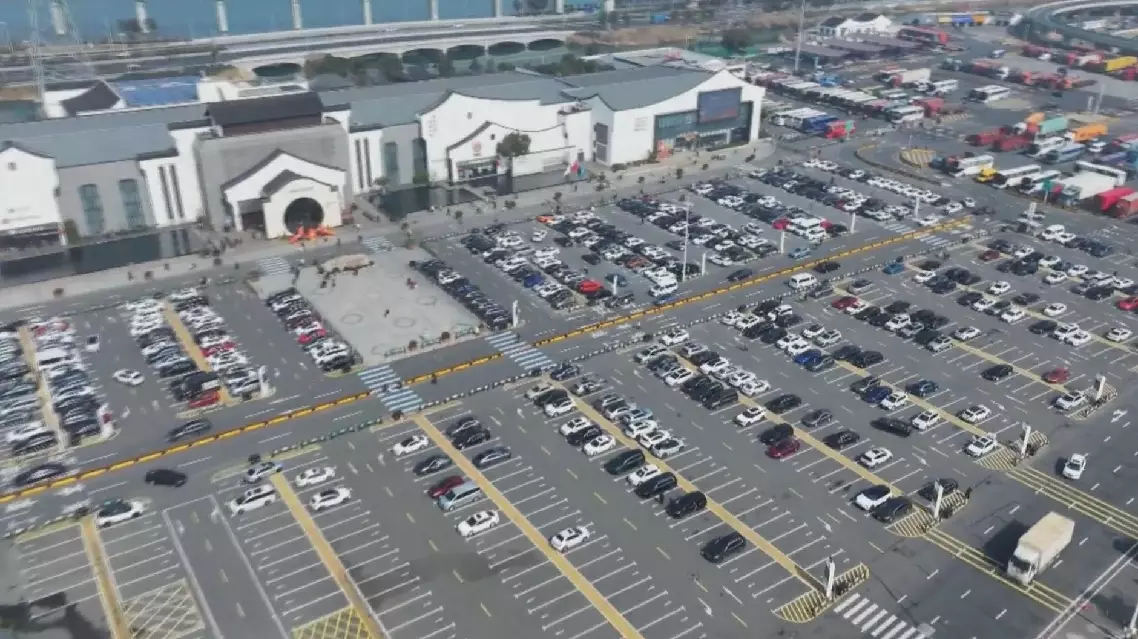
The Yangchenghu service area in Suzhou City, east China's Jiangsu Province, located at the intersection of the Shanghai–Nanjing and Shanghai–Chengdu expressways, handles over 100,000 vehicles every day during the holiday.
The charging station at the Yangchenghu service area is no longer just for charging; it has been upgraded to include new facilities, including parks and shops, with over 50 brands offering a complete range of dining, retail and cultural experiences. The average time for travelers spend at the service area has increased from 15 to 45 minutes.
"It's quaint and classical, and there are gardens too. Before, I used to just wait in the car while charging. Now, while waiting for it to charge, I can look around and do some shopping. It feels really good," said Zhou, a NEV owner.
According to data from the National Energy Administration, there were around 1.4 million NEV charging sessions during the first three days of the holiday consuming 11.8008 million kilowatt-hours of power a day, a year-on-year increase of 63.05 percent compared to the same period last year.
More than 80 percent of China's towns now have EV charging facilities.
Shiyi Village, located in Beichuan Qiang Autonomous County, Mianyang City, southwest China's Sichuan Province, sits deep in the Qiang mountains at an altitude of 1,200 meters.
During the holiday, it buzzed with vibrant folk activities and a steady stream of self-driving tourists in NEVs.
In the village, 26 charging piles have been built, bringing development dividends to all 23 of its homestays.
"Right next to our home is the village charging station, so it's very convenient for tourists to charge their cars. Our business is getting more and more prosperous because of it," said Chen Yan, owner of a homestay in Shiyi Village.
Ultra-fast charging piles and better coverage of charging stations have made long-distance travel a comfortable reality for NEV drivers, with some chargers able to power some EV models with 200 kilometers of range in just three minutes.
Intelligent services are also continuously being upgraded.
Smart charging platforms have also been developed to deliver power to NEVs, including to those not parked at a charging station.
Upgraded charging network helps Chinese NEV drivers charge faster, travel farther