China's humanoid robot rollout is speeding up, with new players fueling competition and innovation as the industry shifts from research labs to real-world use, according to insiders.
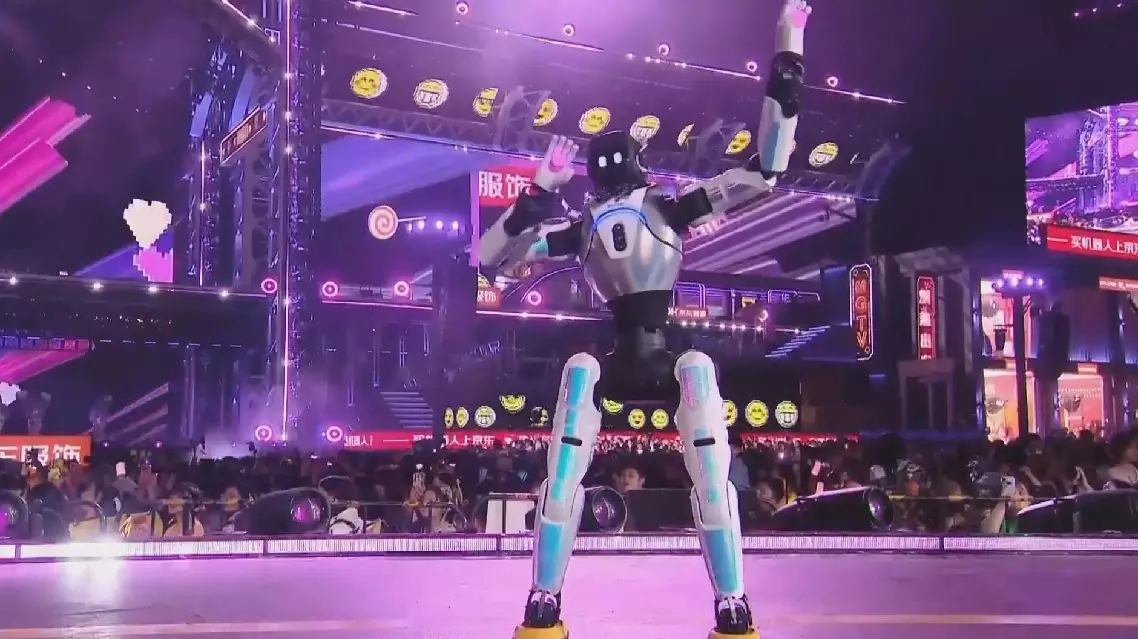
Shanghai-based AgiBot , also known as Zhiyuan Robotics, emerged as the world's largest supplier of humanoid robots in 2025, with its robots now working in entertainment venues, research labs, classrooms, and early industrial settings.
"We are now at a stage where Chinese industries and high-tech sectors are rapidly rising. It's important the world recognizes that this country can produce high-value, high-tech products that are not only innovative, but also affordable, reliable, and safe. You could take one of AgiBot's robots directly off the production line and have it walk from Jinji Lake in Suzhou to the Bund in Shanghai (a 106-kilometer journey) without stumbling once. Currently, the main application scenarios are, first, in robotics data collection and training; second, in exhibition hall tours and customer reception; and third, in leasing and performances, as well as in scientific research and education. In industrial settings, the pace is relatively slower, but robots are already being deployed. For instance, each time a robot picks up a container and places it on the assembly line, it must analyze the shape of the container and decide which one to move next—just like a human, exercising autonomous decision-making," said Wang Chuang, Agibot's general product line president.
Global shipments of humanoid robots surged to around 18,000 units in 2025, up 508 percent year on year, with Chinese firms dominating the market share, according to a report recently released by the International Data Corporation (IDC).
Global revenue from humanoid robots reached about 440 million U.S. dollars last year. Full-size humanoid robots, with broader application scenarios and higher sale prices, accounted for the largest share of market revenue in 2025, making up 41.6 percent of the total, the report said.
Industry analysts anticipate a surge of new entrants as demand accelerates.
"We do expect a lot more vendors to come along and particularly those that are in the upstream and downstream as well. So you see a lot more application vendors, cloud service providers and component vendors to pull their weight," said Su Lian Jye, Chief AI Analyst of Omdia.
He noted that robots will increasingly ease labor shortages in manufacturing and warehousing, and over time, evolve to perform more delicate, complex tasks in human-oriented environments.
"We will start to see a lot more robots being adopted in manufacturing and in warehousing that will help to resolve the human labor crunch within those sectors. And I think in the longer term, we are looking at sort of our robots becoming a lot more mature, they are then now being able to be deployed in sort of [an] environment where [it's] only designed for humans and where tasks [are] a lot more delicate, a lot more sophisticated as compared to what they are doing right now," said Su.
Commercial humanoid robot deployment surges in China amid wave of new players