Skip to Content Facebook Feature Image

China's Fujian carrier represents technological leap with new electromagnetic launch system

China

China

China

China's Fujian carrier represents technological leap with new electromagnetic launch system

2026-02-21 17:28 Last Updated At:02-23 11:32

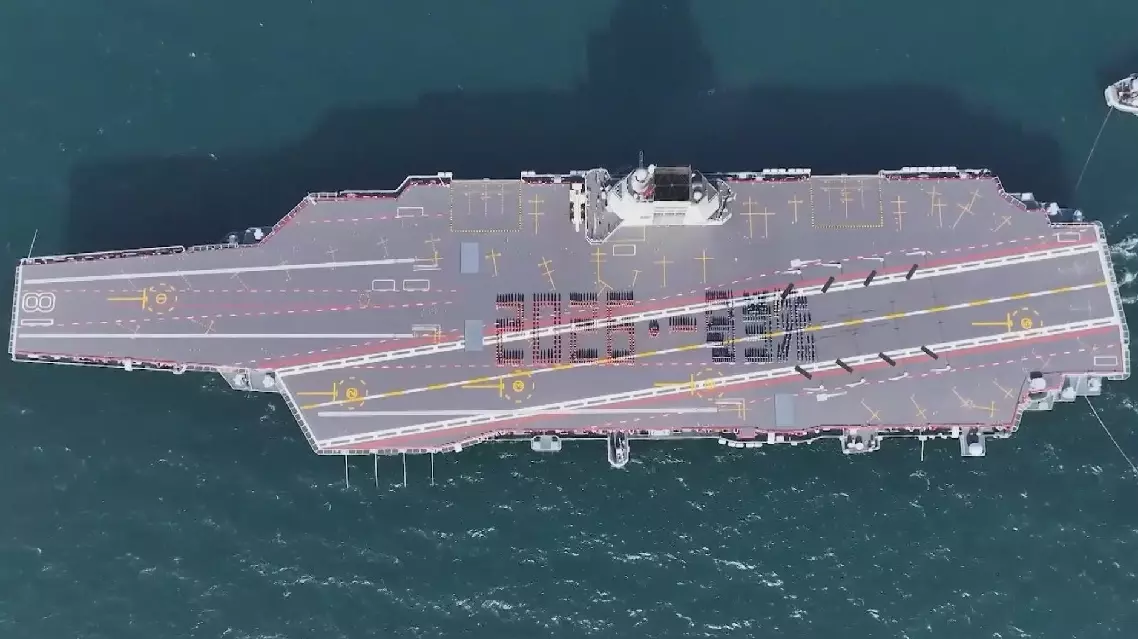
China's Fujian aircraft carrier marks a significant technological leap in the country's aircraft carrier program, becoming the world's first conventionally powered vessel equipped with electromagnetic catapults, according to experts.

Independently designed and built by China, the Fujian was commissioned into active service in November last year. Bearing the hull number 18, the Fujian now joins China's other two carriers in active operation, the Liaoning and the Shandong.

In recent years, the Chinese Navy's carrier-based aviation has accelerated its development, leaping forward from single aircraft to integrated systems, from shore-based to shipborne operations, from ski-jump to catapult launches, and from being able to fly to capable of combat.

Military affairs expert Zhang Junshe explained the technological breakthrough that sets the Fujian apart.

"Leaping from steam catapults, the Fujian aircraft carrier directly adopts electromagnetic catapults. The core of this leapfrog development lies in the innovative application of medium-voltage direct current integrated power system and energy storage technology. First, the medium-voltage direct current system used on the Fujian has a generational advantage. The medium-voltage direct current integrated power system that the Fujian is equipped with has a very high energy conversion efficiency. This system directly drives the launch track, eliminating the step of mechanical energy conversion, simplifying the structure, and significantly reducing the failure rate," Zhang said.

"Second, the supercapacitors solve the challenge of pulse power supply. Conventionally powered carriers were previously doubted for their ability to meet the instantaneous high-energy demands of electromagnetic catapults. The Fujian aircraft carrier innovatively employs supercapacitor energy storage technology, featuring short charging times. It can independently handle the pulse load, avoiding any impact on the main power system," he added.
China's Fujian carrier represents technological leap with new electromagnetic launch system
China's Fujian carrier represents technological leap with new electromagnetic launch system

China's Fujian carrier represents technological leap with new electromagnetic launch system

China's Fujian carrier represents technological leap with new electromagnetic launch system

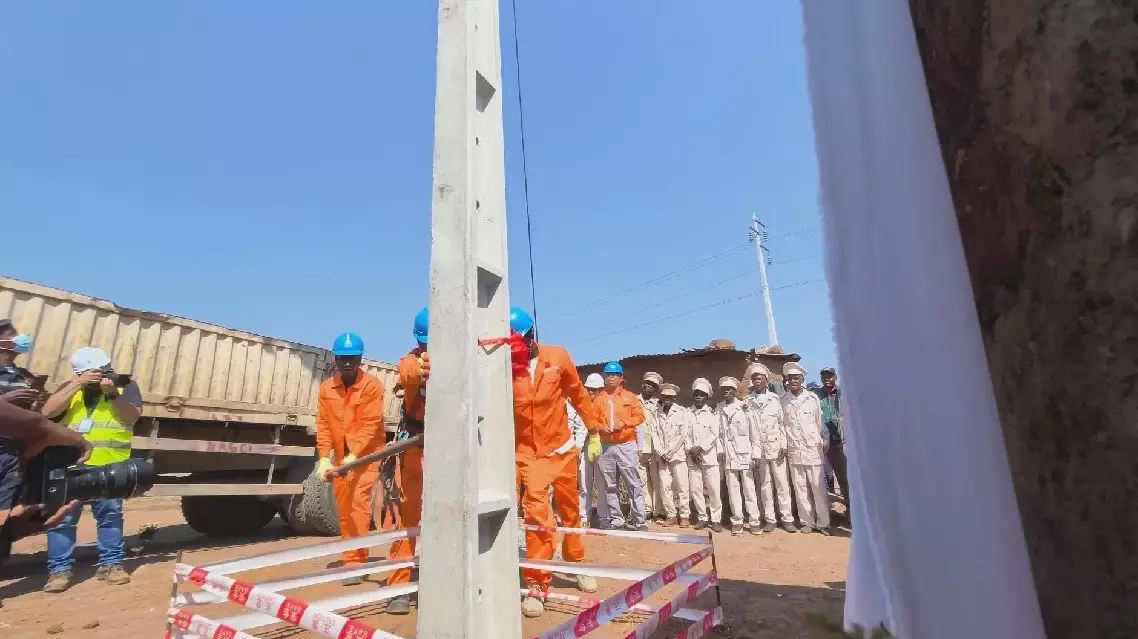
The Chinese-built Caculo-Cabaca Hydropower Station has begun supplying electricity to rural communities in Angola's north-central province of Cuanza Norte.

A launch ceremony for the project's rural power supply was recently held in a local residential community of Cambambe Municipality in Cuanza Norte.

The ceremony was attended by Governor of Cuanza Norte Province Joao Diogo Gaspar, Mayor of Cambambe Municipality Maria Mafuta Difuma Bafutidy, and Chinese representatives of the Caculo-Cabaca plant project.

According to the China Gezhouba Group Company Limited (CGGC), the contractor for the project, the hydroelectric plant is located in the middle section of the Cuanza River, the longest river in Angola. Designed to have an installed capacity of 2,172 megawatts, it is projected to generate an average of over 8,500 gigawatt-hours of electricity a year, reducing greenhouse gas emissions by approximately 7.2 million tons annually. Additionally, the dam serves other functions such as water flow regulation and flood prevention.

The station, on which construction began in August 2017, is a major energy infrastructure project undertaken by Chinese-funded enterprises in Africa and an important achievement of energy cooperation between China and Angola under the framework of the Belt and Road Initiative.

It is scheduled to begin commercial operations and connect its first generator to Angola's power grid in October. Once fully completed, it will be the largest hydroelectric infrastructure in Angola and the third largest in Africa.

Addressing the launch ceremony, Gaspar called the Caculo-Cabaca a world-class project which will bring not only clean electricity to the Angolan people, but also drive development across various sectors of the country and provide a strong guarantee for its public energy security.

Chinese-built hydropower station begins power supply to Angolan villages

Chinese-built hydropower station begins power supply to Angolan villages

Recommended Articles