China's Shenzhou-23 spacecraft crew have carried out an extensive suite of scientific experiments three weeks into their deployment aboard the orbiting Tiangong space station.
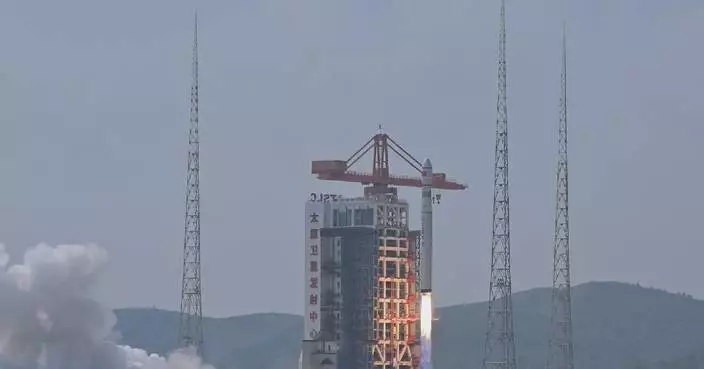
The three astronauts -- mission commander Zhu Yangzhu, Zhang Zhiyuan, and Lai Ka-ying -- arrived at the space station on May 25, just hours after launching from the Jiuquan Satellite Launch Center.
Over the past three weeks, the crew have conducted experiments in areas including life sciences, materials science, microgravity fluid physics, aerospace medicine and new space technologies.
Last week, they carried out cytological research, completing the observation, recovery, and preservation of cellular samples.
They utilized the station's specialized scientific glovebox to collect samples for a study on how space biological phase separation impacts lipid metabolism.
Scientists hope the experiment will clarify the molecular mechanisms driving liver cell metabolism under microgravity conditions, potentially offering a therapeutic target to prevent fatty liver disease during long-duration space flights.
The crew have also completed the fourth extravehicular installation of the space radiation biology exposure experiment device.
They placed three sample types -- artificial enzymes, bacteria, and plant seeds -- in open space for five-month exposure tests. These tests aim to study the origin of life catalysts, microbial adaptive evolution, and genetic variation in higher plants to determine impacts of cosmic radiation.
In addition to scientific research, the crew have completed their first full-system emergency pressure drill since docking.
The exercise simulated internal pressure loss in the space station and the emergency response process to enhance the astronauts' ability to handle unexpected situations.
The crew have also conducted routine station maintenance, including sorting delivered cargo, inspecting emergency equipment, and conducting cabin environment cleanups. Environmental monitoring was also performed, with the astronauts using specialized meters and personal dosimeters to measure acoustic and noise levels within the space station.
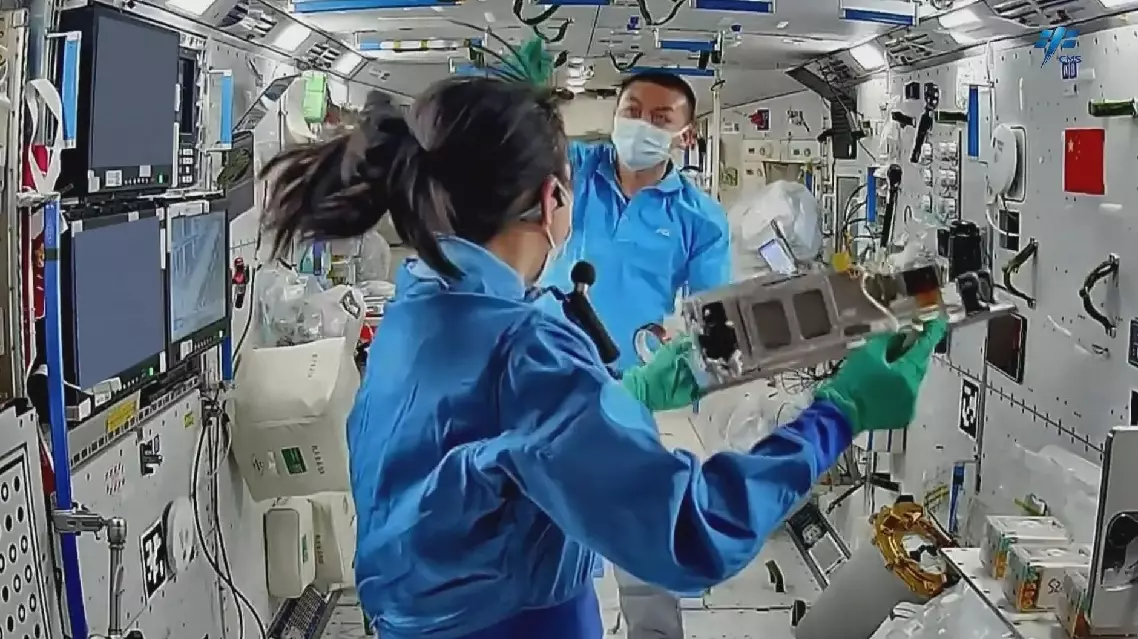
Shenzhou-23 crew carry out experiments in life sciences, microgravity physics, space tech
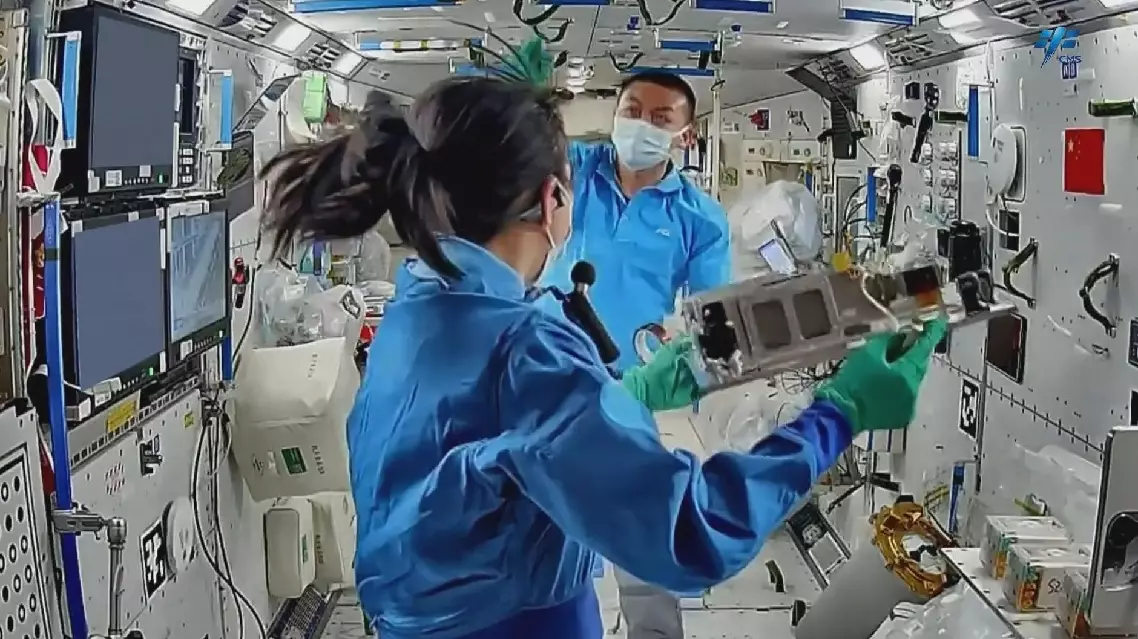
Shenzhou-23 crew carry out experiments in life sciences, microgravity physics, space tech
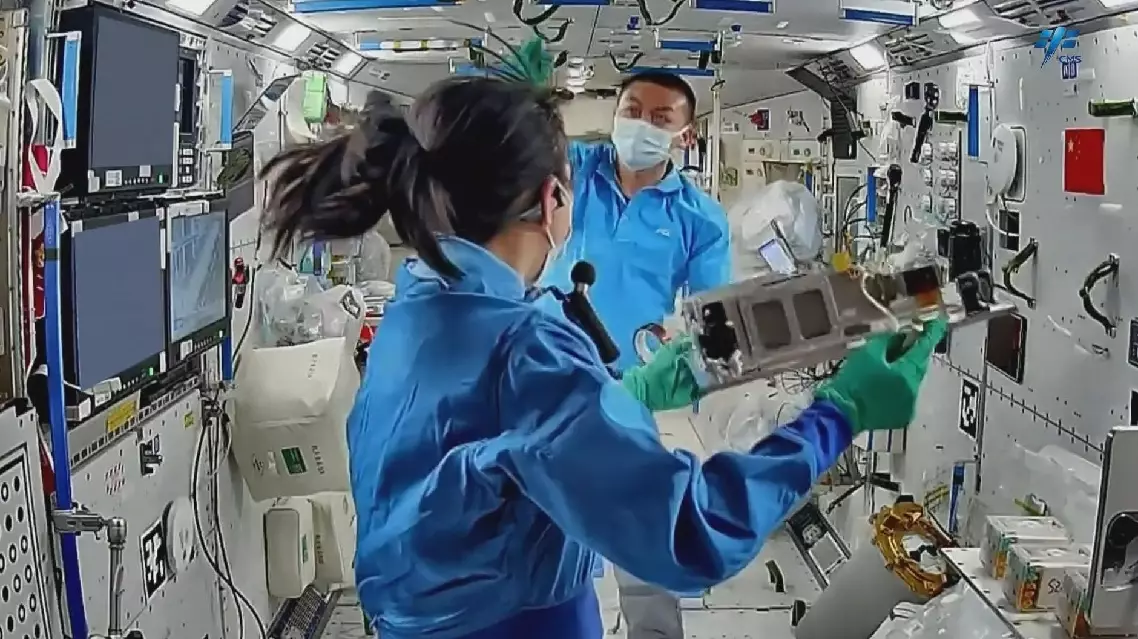
Shenzhou-23 crew carry out experiments in life sciences, microgravity physics, space tech