People in south China's Guangdong Province would hold on their must-do traditions before the annual Spring Festival in the start of the Chinese New Year, including visit to local "flower streets" to buy colorful fresh flowers and other holiday goods, and watch folk performances.
Across the province, traditional flower markets on "flower streets" usually start from three days before the New Year's Eve and last until the early hours of the New Year, prompting local residents to "walk the flower streets" in the final days before the Spring Festival, a tradition that was inscribed on China's National List of Representative Projects of Intangible Cultural Heritage (ICH) in 2021.
The fixed year-end event, blending flower trade with Chinese New Year blessings, embodies the locals' wishes for good fortune and beautiful prospects of the coming year.
In Guangzhou, capital city of the province, the Xihu Flower Market located in the Yuexiu District is the city's iconic century-old flower market.
Each flower carries a special blessing. Visitors can pick their favorite blooms based on the luck they wish for, making it a joyful and meaningful way to welcome the Chinese New Year. "I came to the Yuexiu flower market to buy peach blossoms, and I have bought some. Then I will take a look at the daffodils," said a visitor.
The flower markets this year boast many key highlights: ICH experiencing, Cantonese landscape appreciation, launch of events to support farmers and enterprises, and tech-folk fusion programs.
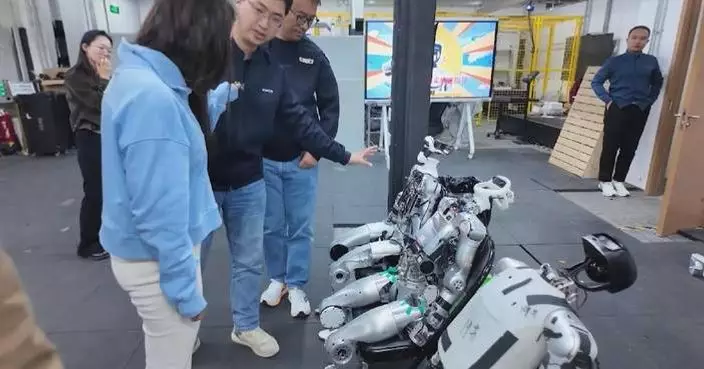
"We can see robot dance and lion dance here. So there will be many traditional cultural activities and some innovative elements in a flower market. It is not only a reflection of Lingnan culture, but also a concentrated manifestation of excellent traditional Chinese culture," said Wang Daxin, head of the Yuexiu District Cultural Development Promotion Association.
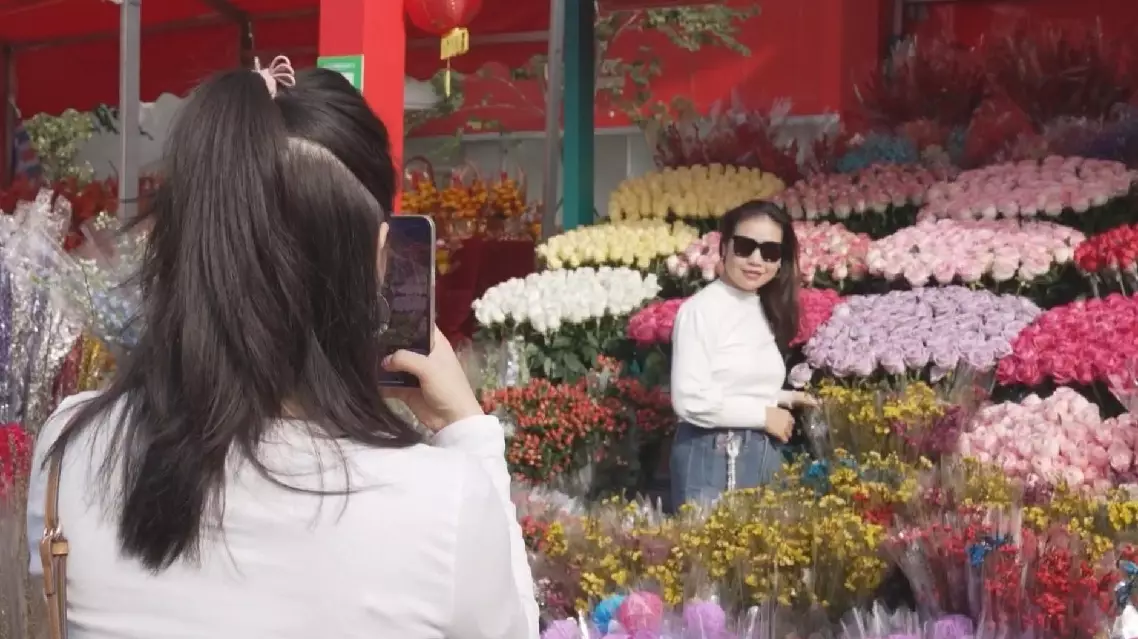
Flourishing flower markets in Guangdong highlight local culture in Spring Festival holiday