China's "film-plus" strategy, which merges cinema with sectors such as retail, dining, and tourism, has been a key driver of consumption during this year's nine-day Spring Festival holiday, which runs through next Monday.
Popular tourist cities, from central China's Changde and Yichang to Qingdao on the country's eastern coast, have been taking full advantage of one of the most lucrative box office windows in the country's film market to boost related, diversified consumer spending.
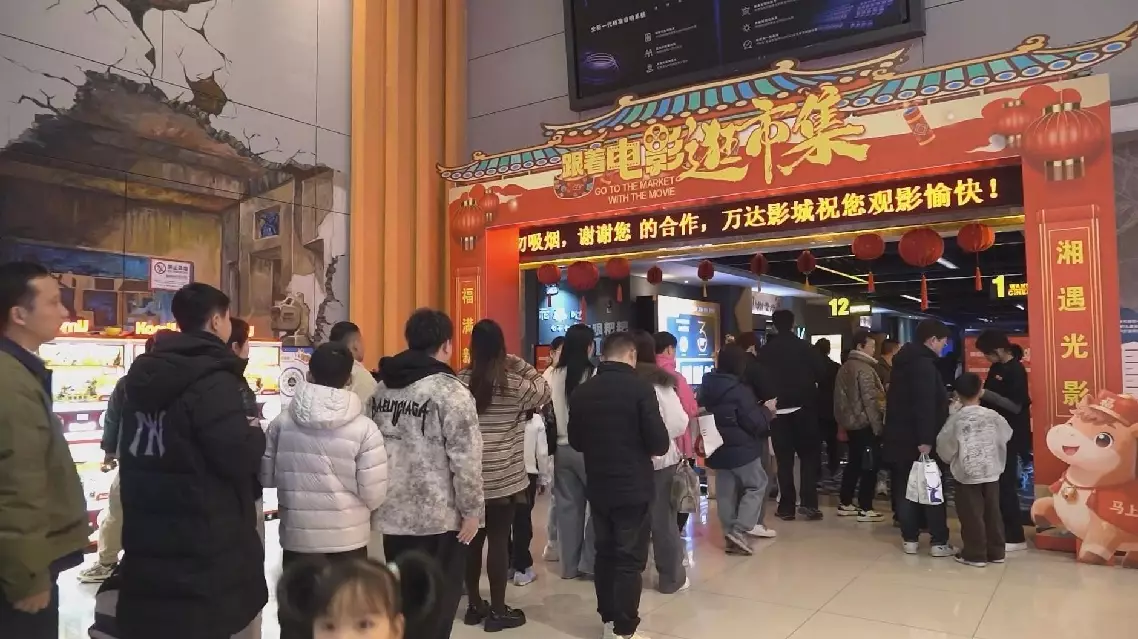
Across these cities, local shopping malls have been hosting film-themed Spring Festival fairs; film shooting locations for iconic movies have been hosting folk cultural performances and other activities for holidaymakers.
Moviegoers can use their ticket stubs for discounts at the local stores and restaurants, as well as access to scenic areas and other locations featured in popular Chinese films. Shopping mall customers can also get special deals for movie tickets using their shopping receipts.
"At this film-themed fair, our products have been very popular with the visitors. Our sales have been great these two days," Zhong Ling, an inheritor of the traditional incense-making craft, a provincial-level intangible cultural heritage, told China Central Television (CCTV) at her stall at the film-themed fair held in a Wanda Plaza shopping mall in Changde, central China's Hunan Province.
"During the Spring Festival holiday, we've been receiving close to 7,000 cinema visits on average per day, which have driven our shopping mall's average daily sales to nearly 4 million yuan (about 580,000 U.S. dollars), a 5-percent increase from the same period last year," said Li Jun, marketing manager at the Wanda Plaza.
In Qingdao of east China's Shandong Province, which is one of the first 16 Chinese cities to implement the "film-plus" consumption initiative, more than 700 businesses including hotels, restaurants and museums, are now members of a so-called "ticket stub economy" alliance that integrates cinema with tourism, retail, dining, and accommodation, helping transform movie-going into a booming multi-dimensional, experiential industry.
Yichang, a premier tourist hub in central China's Hubei Province, is another city selected to pilot the "film-plus" model due to its stunning landscapes, historic sites, and rich ethnic culture. Many locations in the city, such as the Qingjiang Painting Gallery Scenic Area, have been featured in Chinese films over the years.
Since the beginning of the year, the Scenic Area, known for its scenic karst landscapes, emerald waters and distinctive culture of the Tujia ethnic minority group, has been rolling out special boat tours and other activities to attract moviegoers.
"The number of tourists has increased 15 percent over the past two months compared with the same period last year. Movies have indeed made our area even more popular and boosted consumption as well," said Xiu Yunfu, executive general manager of the Hubei Qingjiang Painting Gallery Tourism Development Co., Ltd.
Innovative film-going experiences in Chinese cities boost Spring Festival consumption