Geopolitical tensions between India and Pakistan might be spilling over into English cricket.
Four of the eight franchises in England's newest cricket competition — The Hundred — are at least part-owned by Indian investors who also control teams in the Indian Premier League (IPL).
No Pakistan player has featured in the IPL since the Mumbai terror attacks in 2008, and the BBC reported last week that the IPL-owned franchises in The Hundred — Manchester Super Giants, MI London, Southern Brave and Sunrisers Leeds — would not be considering any Pakistan cricketers when the player auction takes place across March 11-12. None of those four teams have officially commented on the BBC report.
Last year, Richard Gould, chief executive of the England and Wales Cricket Board, said the governing body was “aware” of playing restrictions on Pakistani players in the IPL and other cricket leagues where there are Indian investors, but insisted that “won’t be happening” in The Hundred.
The ECB sent an email on Sunday to the eight franchises in The Hundred, reminding them of their responsibilities and warning them that action would be taken if there is any evidence of discrimination, including ignoring players based on nationality.
Britain's Press Association also reported that if any proof was forthcoming, the matter would likely be referred to the Cricket Regulator — an independent body responsible for monitoring compliance with the game’s regulations — while the ECB may take separate action, too.
The ECB has retained full ownership of the 100-ball competition and its regulations, but has sold stakes in it to big-business investors from India and the United States to generate hundreds of millions of pounds to safeguard the financially stricken domestic game in England.
Of the 964 players up for auction in The Hundred, a total of 67 players — 63 men and four women — are from Pakistan.
There were no Pakistan players selected at last year’s auction — made before the new investors got involved in The Hundred franchises — although pacer Mohammad Amir and allrounder Imad Wasim featured as replacements.
Most of Pakistan's highest-profile players were unavailable for some of the 2025 tournament because of Pakistan's international schedule. This year, Pakistan has two tests in the West Indies during The Hundred tournament and begins a three-test series against England soon after the final.
Previously, Shaheen Shah Afridi and Haris Rauf (Welsh Fire), Shadab Khan (Birmingham Phoenix), Wasim (Trent Rockets) and Amir (Oval Invincibles) have been among the leading Pakistani players to have featured in The Hundred.
Harry Brook, who captains England's limited-overs teams, will play for Sunrisers Leeds after being signed as the highest-paid player in The Hundred and said it would be “a shame” if Pakistan players were excluded from franchises.
“Pakistan have been a great cricket nation for many years and have some awesome players, some of the best players in the world,” said Brook, speaking while representing England at the T20 World Cup being held in India and Sri Lanka.
The 2026 edition of The Hundred is scheduled to run from July 21-Aug. 16. The competition, created to attract younger fans to the sport in England, has been running since 2021.
Political tension between Pakistan and India has meant there has been no bilateral cricket between the two nations since Pakistan toured India for a white-ball series in 2012.
AP Sports Writer Rizwan Ali contributed to this story.
AP cricket: https://apnews.com/hub/cricket
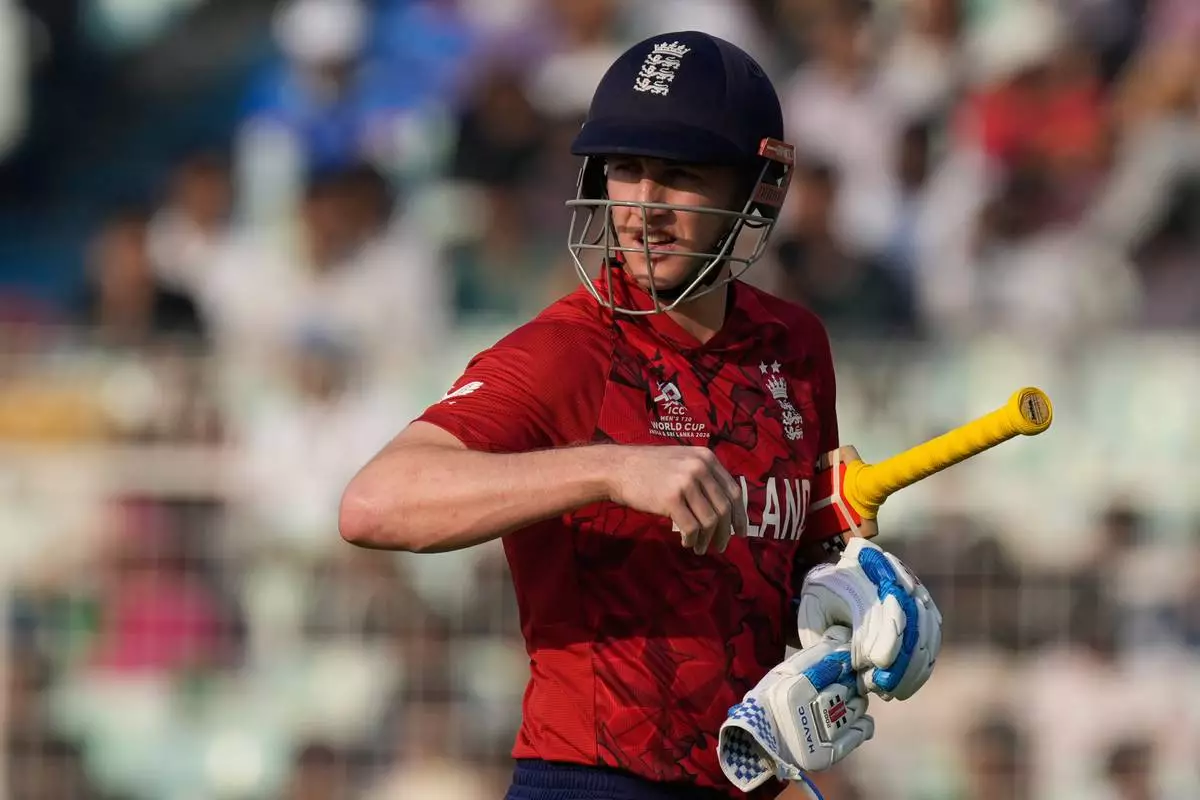
England's captain Harry Brook leaves the ground after losing his wicket during the T20 World Cup cricket match between England and Italy in Kolkata, India, Monday, Feb. 16, 2026. (AP Photo/Bikas Das)
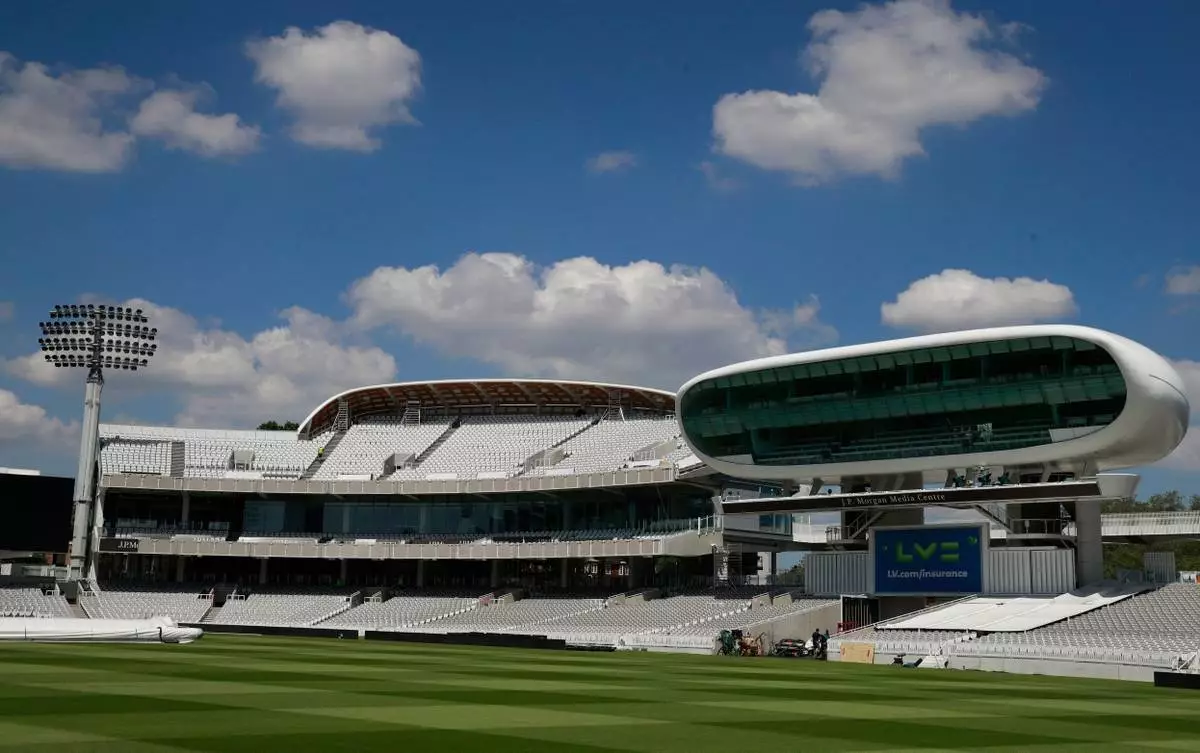
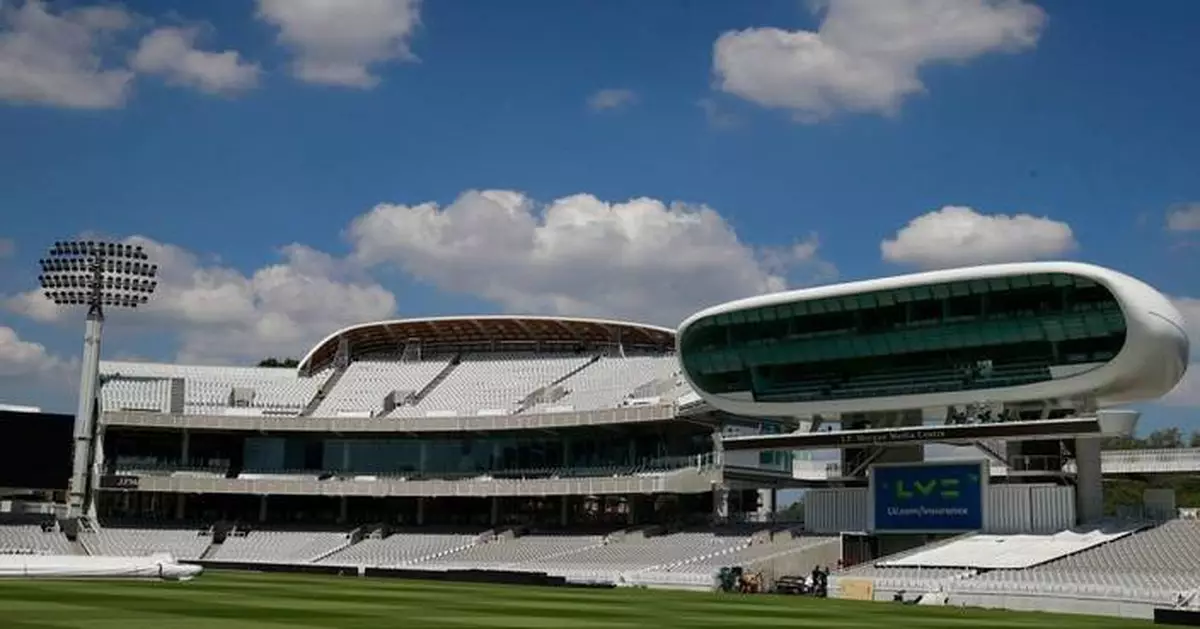
FILE - General view of Lord's Cricket Ground in London, Monday, May 31, 2021. (AP Photo/Ian Walton, file)
MEXICO CITY (AP) — The Mexican army killed the country’s most powerful cartel leader and one of the United States’ most wanted fugitives, notching a major victory while cartel members responded with a wave of violence across the country.
The killing Sunday of Jalisco New Generation Cartel leader Nemesio Oseguera Cervantes during an attempt to capture him in Jalisco state was the highest-profile blow against cartels since the recapture of former Sinaloa cartel boss Joaquín “El Chapo” Guzmán a decade ago.
Following Oseguera Cervantes' death, security forces were placed on alert throughout the country as gunmen unleashed violence. Cars burned out by cartel members blocked roads in 20 Mexican states. People locked themselves in their homes in Guadalajara, Mexico's second-largest city and Jalisco's capital, and school was canceled Monday in several states.
The killing could give the government a leg up in its dealings with the U.S. Trump administration, which has been threatening tariffs or unilateral military action if Mexico does not show results in the fight against the cartels. But the long-term effect on Mexico's security landscape remains unclear.
Here's what to know:
Oseguera Cervantes, better known as “El Mencho,” was 59 years old and originally from the western state of Michoacan. His ties to organized crime went back at least three decades.
In 1994, he was tried for trafficking heroin in the U.S. and sent to prison for three years. Upon returning to Mexico, he quickly rose through Mexico's drug trafficking underworld.
Around 2009, he founded the Jalisco New Generation Cartel, which became Mexico's fastest-growing criminal organization, moving cocaine, methamphetamines, fentanyl and migrants to the United States, and using violence with the use of drones and improvised explosive devices.
The cartel earned a reputation for brazen attacks on Mexican security forces, including downing a military helicopter in Jalisco in 2015 and attempting a spectacular, but unsuccessful, assassination of Mexico City Police Chief Omar García Harfuch, who is now Mexico's federal security secretary.
It recruited aggressively, experimenting with new ways to reach potential members online, and generated revenue through fuel theft, extortion and timeshare fraud, among other activities.
Oseguera Cervantes was killed during an attempt to capture him, as his followers attempted to fight off Mexican troops.
Mexico's Defense Department said in a statement that the army launched an operation in the southern part of Jalisco state to capture Oseguera Cervantes, involving the Mexican Air Force and special forces.
The cartel counterattacked, and in the ensuing confrontation, federal forces killed four members of the criminal group, and wounded three others, including its leader, who died later during transfer by air to Mexico City, according to the statement.
Three soldiers were injured and two people were detained in the action. Rocket launchers capable of shooting down aircraft and destroying armored vehicles were seized at the scene.
Oseguera Cervantes' death will help Mexico's government show results to the U.S., which is pressuring its neighbor to pursue drug cartels more aggressively. Both countries said intelligence cooperation helped lead to Sunday's operation.
Oseguera Cervantes was facing multiple indictments in the United States and the U.S. State Department had offered a $15 million reward for information leading to his arrest. The Trump administration designated his cartel and others foreign terrorist organizations a year ago.
U.S. Deputy Secretary of State Christopher Landau, who was U.S. ambassador to Mexico during the first Trump administration, applauded the operation via X, writing: “The good guys are stronger than the bad guys. Congratulations to the forces of law and order in the great Mexican nation.”
Mike Vigil, former chief of international operations for the DEA, said Mexico had sent “a strong message to Donald Trump's administration that they are fighting aggressively and effectively” against the most powerful cartels. He added that “the majority of the information came from the Mexican armed forces and all credit goes to Mexico.”
It's not clear who will succeed Oseguera Cervantes, or if any one person can.
The Jalisco cartel has a presence in at least 21 of Mexico's 32 states and is active in almost all of the United States, according to the U.S. Drug Enforcement Administration. But it is also a global organization and the loss of its leader could be felt well beyond Mexico.
“El Mencho controlled everything, he was like a country's dictator,” Vigil said.
His absence could slow the cartel's rapid growth and expansion and leave it initially weakened against the Sinaloa cartel on several fronts where they or their proxies are fighting. The Sinaloa is locked in its own internal power struggle, however, between the sons of “El Chapo” and the faction loyal to Ismael “El Mayo” Zambada, who is in U.S. custody.
Vigil said Mexico should seize the moment to launch “an effective frontal assault based on intelligence.”
“This is a big opportunity for Mexico and the United States if they work together,” he said.
Security analyst David Saucedo said that if relatives of Oseguera Cervantes take control of the cartel, the violence seen Sunday could continue. If others take power, they could be more willing to turn the page and continue operations.
The greatest fear would be that the cartel turns to indiscriminate violence. They could decide to “launch narcoterrorism attacks ... and generate a scenario similar to what Colombia lived in the 1990s,” a full-on attack against the government “car bombs, assassinations and attacks on aircraft.”
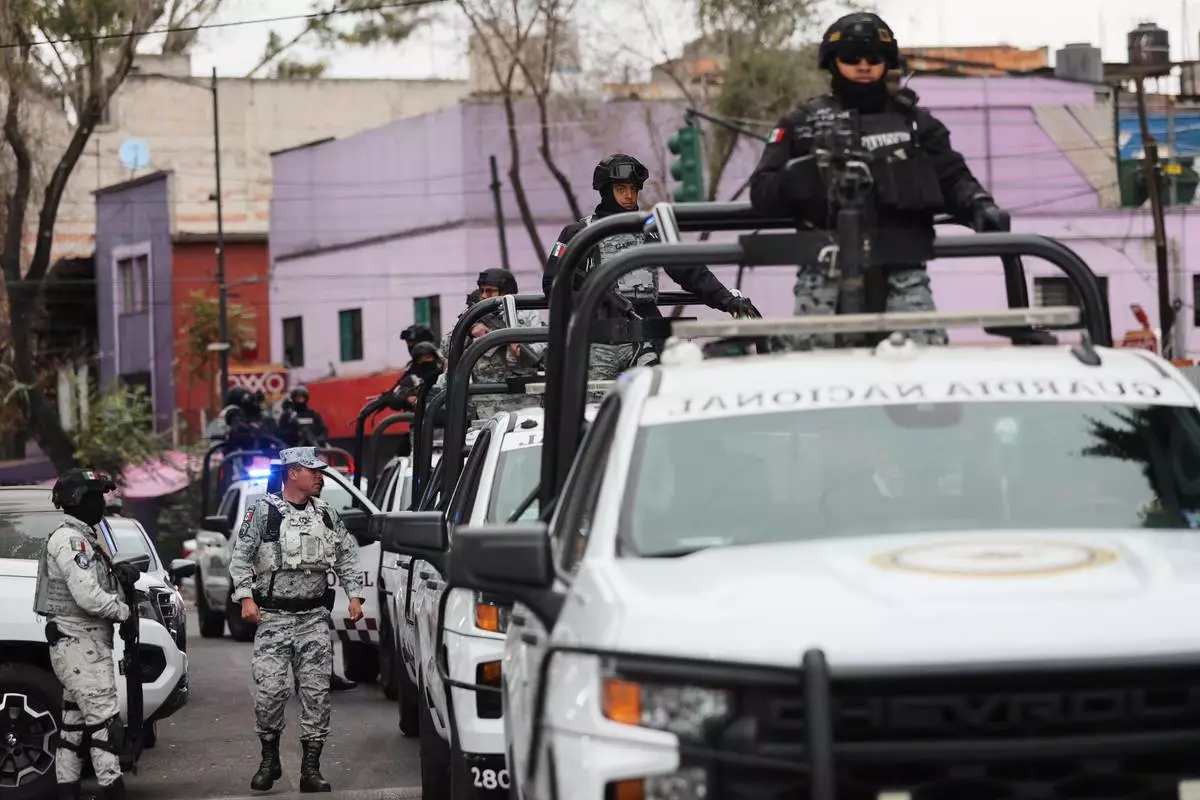
National Guards patrol the area outside of the General Prosecutor's headquarters in Mexico City, Sunday, Feb. 22, 2026, after authorities reported that the Mexican Army killed Jalisco New Generation Cartel leader Nemesio Oseguera, known as "El Mencho." (AP Photo/Ginette Riquelme)
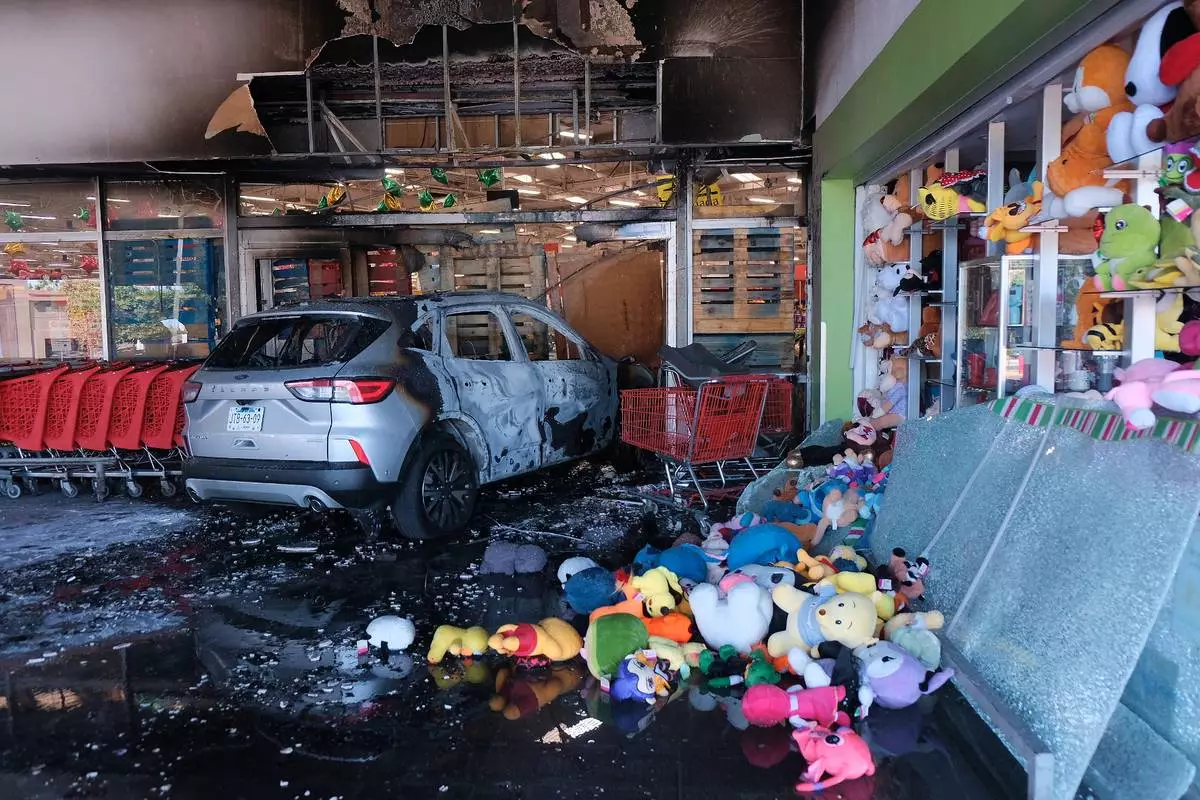
A charred vehicle sits at a damaged supermarket in Guadalajara, Jalisco state, Mexico, Sunday, Feb. 22, 2026, after the death of the leader of the Jalisco New Generation Cartel, Nemesio Rubén Oseguera Cervantes, known as "El Mencho." (AP Photo/Alejandra Leyva)
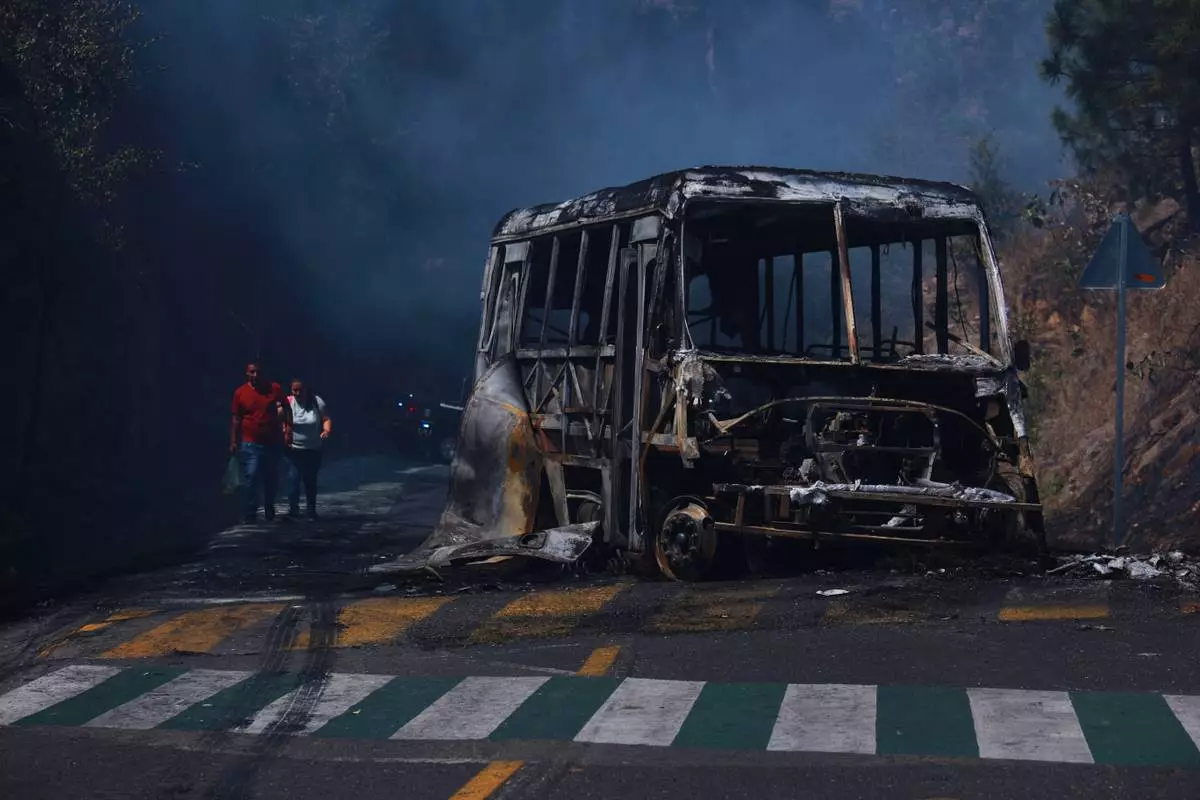
Pedestrians walk past a charred vehicle after it was set on fire, on a road in Cointzio, Michoacán state, Mexico, Sunday, Feb. 22, 2026, after the death of the leader of the Jalisco New Generation Cartel, Nemesio Rubén Oseguera Cervantes, known as "El Mencho." (AP Photo/Armando Solis)
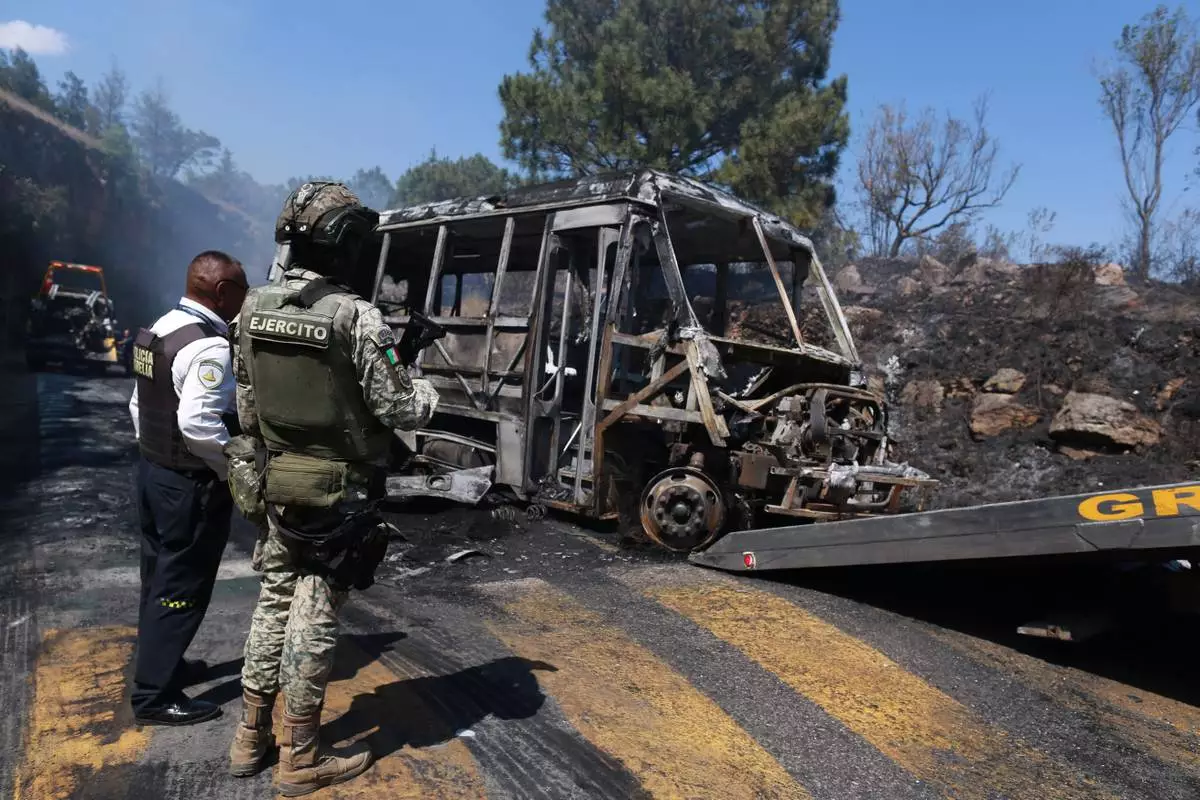
A soldier stands guard by a charred vehicle that was set on fire in Cointzio, Mexico, Sunday, Feb. 22, 2026, amid reports the Mexican Army killed Jalisco New Generation Cartel leader Nemesio Oseguera, known as "El Mencho." (AP Photo/Armando Solis)
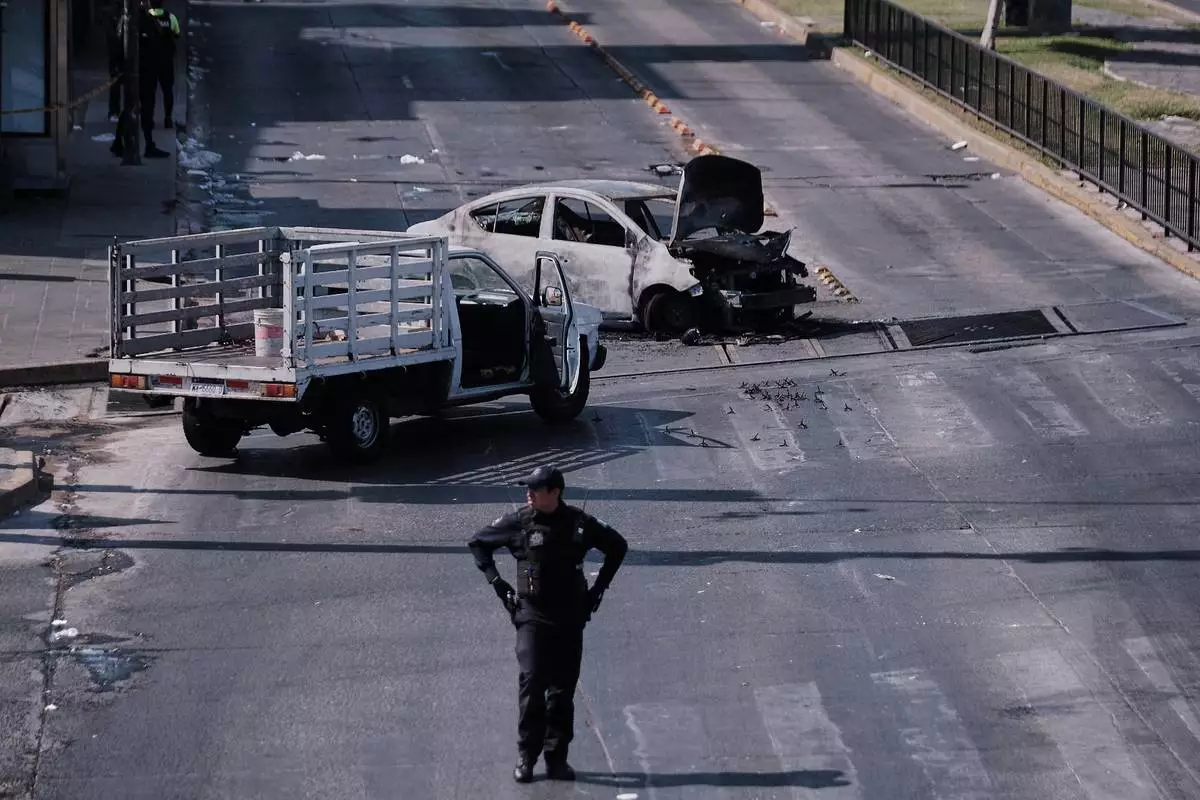
A police officer stands guard by a charred vehicle after it was set on fire, on a road in Guadalajara, Jalisco state, Mexico, Sunday, Feb. 22, 2026, after the death of the leader of the Jalisco New Generation Cartel, Nemesio Rubén Oseguera Cervantes, known as "El Mencho." (AP Photo/Alejandra Leyva)