China's domestically-produced medical heavy-ion accelerator for cancer treatment will benefit more patients in the future, according to Yang Jiancheng, deputy director of the Institute of Modern Physics under the Chinese Academy of Sciences.
As a leading researcher in advanced heavy-ion radiotherapy in China, Yang was among the developers of China's first heavy ion-medical accelerator system installed in Wuwei City in northwest China's Gansu Province.
He said China's upgrade in heavy-ion accelerators is part of the innovation-driven growth of the country's medical device industry.
"Large-scale scientific facilities are not only critical national assets for exploring the frontiers of science. In fact, the series of innovative technologies generated and derived during the research and development process also serve as a powerful new engine for fostering new quality productive forces," Yang said.
Heavy-ion radiotherapy is currently recognized internationally as an advanced radiotherapy method.
Chinese researchers started to work on the employment of heavy ion in cancer treatment in 1993.
After nearly 30 years of progress, China put its first self-developed heavy-ion medical accelerator system in Wuwei into clinical application in March 2020, becoming the fourth country in the world capable of independently developing and using heavy-ion therapy systems.
More than a dozen heavy-ion medical accelerators have been set up across China to date, covering the cities of Huizhou, Lanzhou, Hangzhou and Putian, where they provide precise treatment services to 3,600 cancer patients.
Making the equipment more compact and lowering the price of treatment are the next stages in the roll-out of this advanced medical technology.
"My proposal this year will focus on how we can further promote, at various policy levels, the research and development of the large-scale scientific facilities and push them into a fast-track development phase. Taking medical treatment devices as an example, the issue we currently face is that while their therapeutic efficacy is excellent, compared to the huge gap in our country's demand for precision radiotherapy, we still need to accelerate the research and development, deploy more such facilities, improve their cost-effectiveness and make them accessible to the general public," Yang said.
Yang, who is also a political advisor who will be attending the upcoming plenary session of the National Committee of the Chinese People's Political Consultative Conference (CPPCC), said he is making every effort to accelerate the advance of heavy-ion medical accelerators and make the treatment more affordable for patients.
He said new technologies, including artificial intelligence, 5G and robotics, will speed up the development of the heavy-ion accelerator, and favorable policies from the government will make treatment more widely available in China.
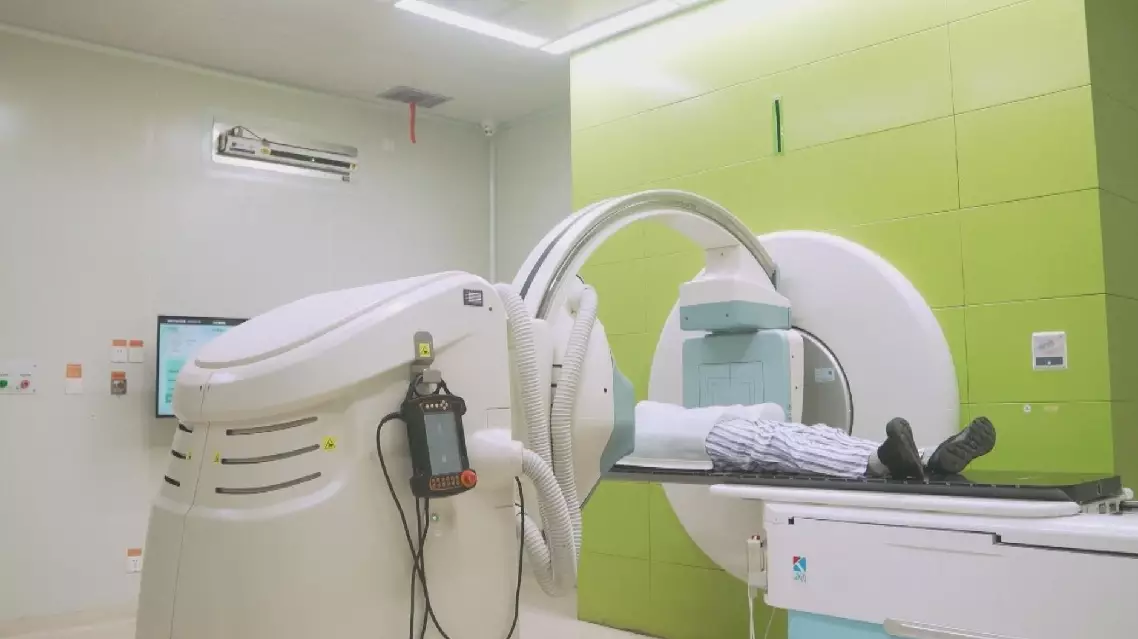
Domestically-produced medical heavy-ion accelerators to benefit more Chinese patients: researcher
China stands ready to work with all countries to improve global human rights governance and promote the sound development of the international human rights cause, Chinese Foreign Minister Wang Yi said on Monday.
Wang, who is also a member of the Political Bureau of the Communist Party of China Central Committee, made the remarks in a speech delivered via video link during the high-level segment of the 61st session of the United Nations Human Rights Council.
Wang noted that the international situation is complex and intertwined, and that global human rights governance and the post-World War II international order are facing new tests of the times. The Global Governance Initiative proposed by China has received support and responses from more than 150 countries and international organizations, he added.
Wang called for upholding sovereign equality and safeguarding the original aspirations of global human rights governance. The only path that can lead to ever-broader prospects is one of human rights development, rooted in a country's specific national conditions and responsive to the needs of its people, he said.
All parties should abide by the international rule of law and consolidate the foundations of global human rights governance, Wang noted. Together, all countries should uphold the "golden rule" of non-interference in one another's internal affairs, and firmly reject words and deeds that create double standards in the name of human rights, he said.
He called for practicing multilateralism and addressing the challenges to global human rights governance. All countries should reject all forms of colonialism or racial discrimination, and respond properly to rising issues such as artificial intelligence, as well as climate change and human rights.
Wang emphasized that all parties should advocate a people-oriented approach to global human rights governance and enrich the connotations of such governance. The international community should also position the right to development in a more prominent position on the multilateral human rights agenda, he said.
Calling for action-oriented approaches to and the enhanced efficacy of global human rights governance, Wang said that China is willing to coordinate its actions with the international community to collectively chart a new blueprint for this global cause.
Noting that 2026 marks the start of China's 15th Five-Year Plan period, he said the country will continue advancing its whole-process people's democracy, ensuring the achievements of Chinese modernization benefit all people in a more equitable manner.
China stands ready to work with all countries to promote common development and prosperity, safeguard international fairness and justice, uphold the common values of humanity, and build a community with a shared future for all, with the aim of ensuring that the progress of human rights civilization benefits the whole world, he stressed.
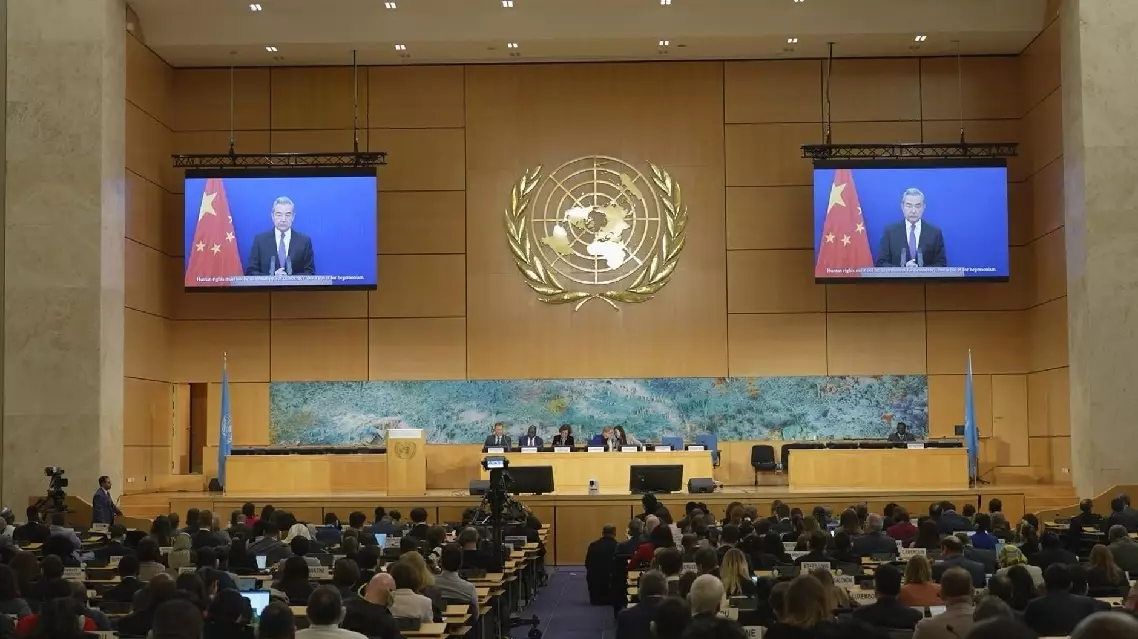
China ready to work with all countries to improve global human rights governance: Chinese FM