Skip to Content Facebook Feature Image

Herdsmen in Xinjiang begin annual spring livestock transfer

China

China

China

Herdsmen in Xinjiang begin annual spring livestock transfer

2026-02-24 17:31 Last Updated At:02-25 14:55

More than 113,000 head of livestock in Tekes County of Ili Kazak Autonomous Prefecture, northwest China's Xinjiang Uygur Autonomous Region, have begun their annual spring livestock transfer, as herders move their flocks from winter grazing grounds to lower spring pastures and settlements in preparation for the lambing season.

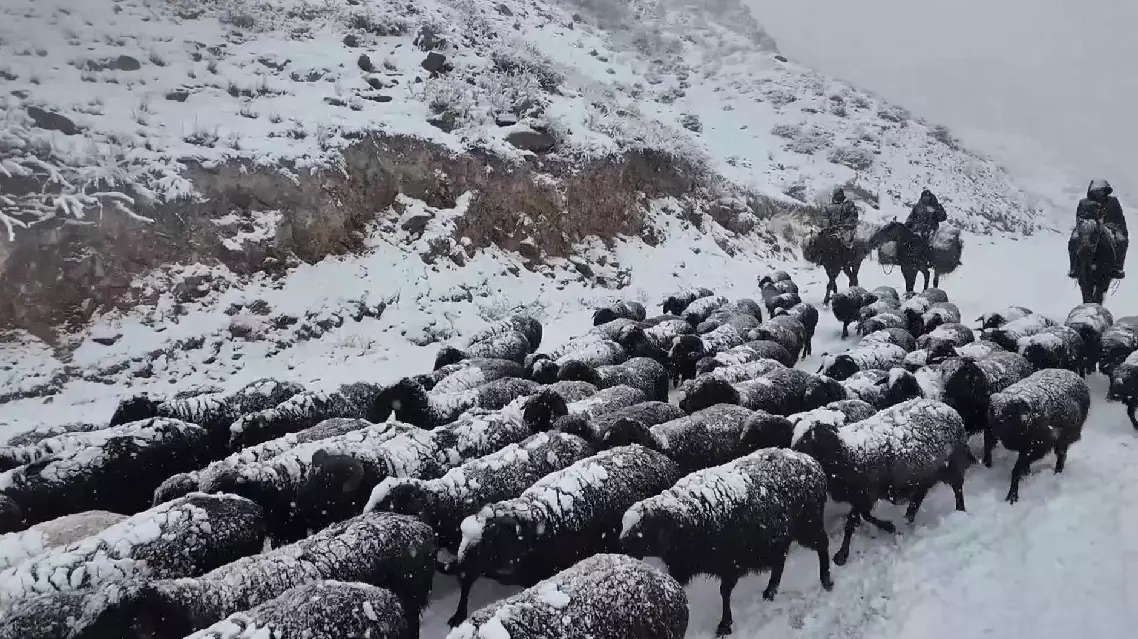
In late February each year, herdsmen in Xinjiang set out on journeys that often exceed 100 kilometers. In Tekes, several families joined forces to drive more than 1,200 sheep over rugged mountain roads to their settlement, nearly 130 kilometers away.

To ease the journey, weaker and older sheep were transported by truck, while the rest of the flock moved on foot across steep slopes.

"This sheep is too old for such a long journey, so we are putting it on the truck," said a herder.

With many ewes nearing lambing, the migration requires extra care. Unexpected heavy snowfall made the trip even more challenging, forcing the group to press on through harsh weather.

Local authorities deployed animal husbandry workers to accompany the herders and established 28 service stations along the route, providing food, lodging, and fodder supplies to ensure a safe transfer.

After nearly three days on the road, the herders and their flocks arrived safely. Lambing will continue through the coming months before the sheep are moved again to summer pastures at the end of May.

The county's spring migration of nearly 114,000 head of livestock is expected to be completed before March 10.
Herdsmen in Xinjiang begin annual spring livestock transfer

Herdsmen in Xinjiang begin annual spring livestock transfer

A remote town in southwest China's Xizang Autonomous Region has transformed its picturesque landscape and distinctive agricultural products into engines for economic growth through integrated development of agriculture and tourism.

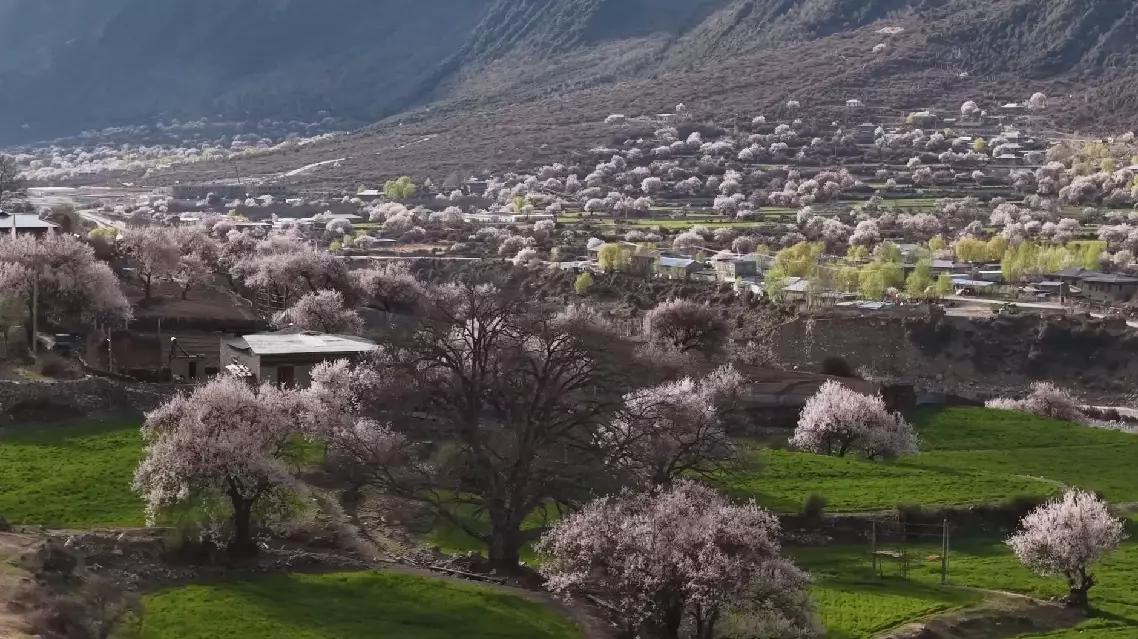
Nestled at an altitude of 3,000 meters, Niwu Town in Nagqu City is renowned for its breathtaking spring scenery, with 12,000 wild peach trees blossoming along a tributary of the Yarlung Zangbo River at the foot of towering snow-capped mountains.

Building on its natural resources, Niwu began hosting a peach blossom festival in 2015. This year's 11th edition runs from April 1 to 3, and features a specialty product market, traditional sports competitions and artistic performances.

The town's unique delicacies include high-nutrition yak meat, which has been granted a national Geographical Indication product, and handmade yogurt surprisingly served with chili sauce.

Abundant precipitation and sufficient oxygen have fostered lush wild bamboo forests in Niwu, enabling local residents to preserve the traditional bamboo weaving culture and the craft of making farming tools.

Centering on the core ecological competitiveness of peach grove on snow-covered plateau, Niwu has been steadily promoting the integration of agriculture and tourism, using the peach blossom festival to drive the growth of related industries in flower-viewing tourism.

In 2026, the town has received 11,700 tourists and generated over 1.8 million yuan (about 261,527 U.S. dollars) in tourism revenue.

Peach blossoms in Xizang town boost agriculture, tourism

Peach blossoms in Xizang town boost agriculture, tourism

Recommended Articles