Four years of the Russian-Ukrainian military conflict have left a significant impact on Ukraine's economy and livelihoods, impacting the daily lives of millions of people.
The conflict has noticeably altered public sentiment in Ukraine. Amid the protracted crisis, people's concerns about the future of their country are increasingly linked not only to the fighting but also to everyday life -- work, security, and survival.
Yet, according to a survey by the Kiev International Institute of Sociology, 65 percent of Ukrainians are willing to endure the military conflict for as long as necessary.
"The word 'endure' itself is a harsh one. Perhaps Ukrainians are ready to endure until the very end. There's nothing we can do about it. This is how the situation is. This is life," said a Ukrainian resident.
The energy sector remains the most difficult challenge for Ukrainians. According to official data, air strikes have occurred almost daily this winter, affecting the entire power grid. More than half of the generating capacity has been lost, and emergency power outages have affected approximately 80 percent of the territory. Temperatures have reached minus 20 degrees Celsius and below.
In addition to people's home lives, small businesses have also been affected by the outages.
"Of course, the power outages have had a huge impact on us. People are stopping coming. And we don't even have the money to pay rent. Customers have dropped by about 80 percent. We even had to lower prices to attract customers. So, it's tough for small businesses," said a local entrepreneur.
Experts warn that the impact of the attacks on the energy sector could take a long-term toll on the country's economy.
Ukrainian President Volodymyr Zelensky recently stated that the full-scale conflict could end within a few months if negotiations are successful. A number of experts in Kiev believe there's at least a chance of ending the active military phase this year.
"I think there's a real chance of reaching a compromise on ending the military phase. Maybe not a treaty yet, which is unlikely, but an end to the military phase. The transition of diplomacy to the preparation of some basic documents for the post-war phase requires a transition period," said Andriy Yermolayev, a Ukrainian political scientist.
Four years into the military conflict, residents are increasingly asking whether this year could be a turning point for finding peaceful solutions.
"We hope the negotiations will be successful, but we are not 100 percent certain. I'd like to believe that this should end and some logical conclusion can be reached," said another resident.
Overall, responses on the streets show that people are weary of conflict, but remain divided on expectations going forward. Some hope for a swift political solution, while others believe a compromise is only possible under certain conditions.
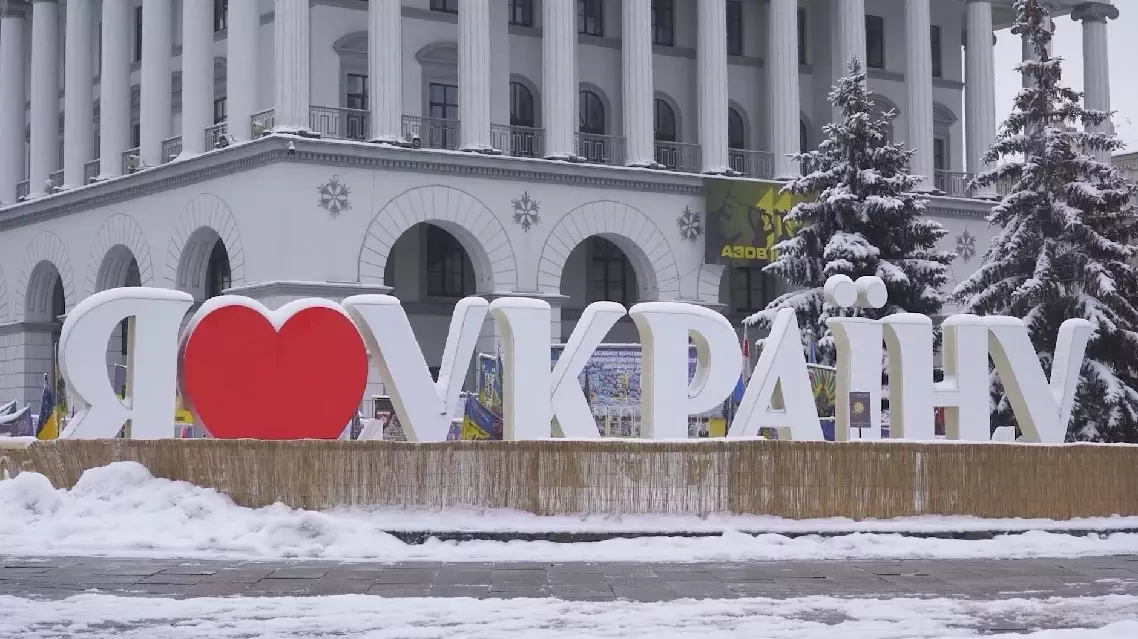
Ukrainian people face fifth year of conflict amid uncertainty in negotiations