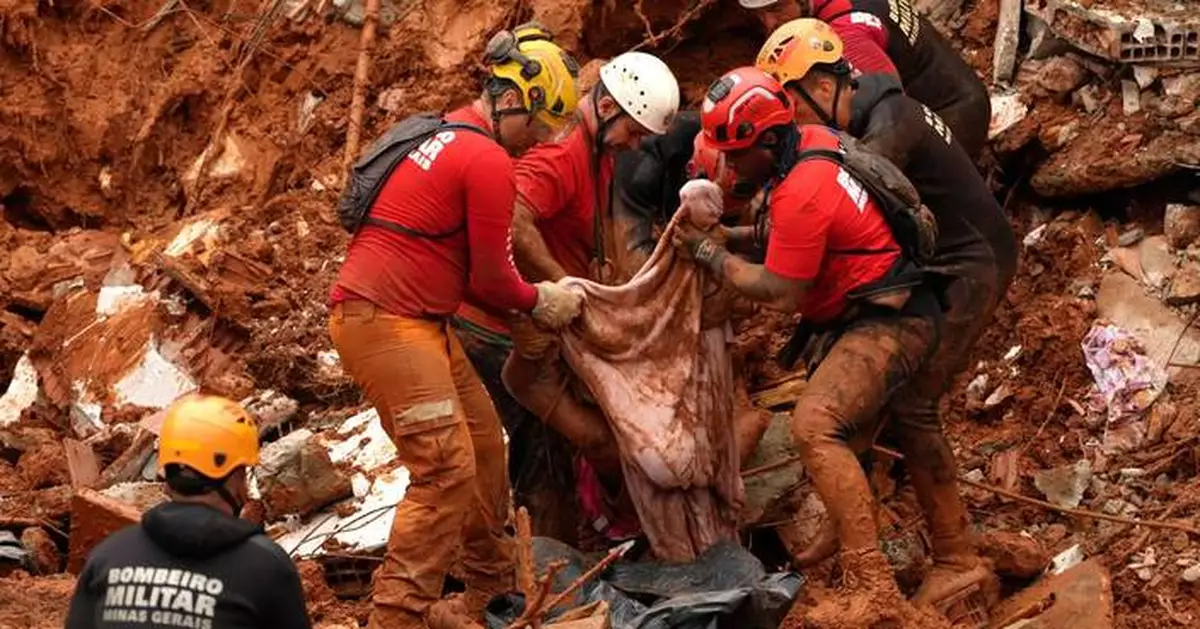
JUIZ DE FORA, Brazil (AP) — Families of those killed in the devastating floods in southeastern Brazil began burying the dead on Wednesday, as the death toll climbed to at least 46 in the state of Minas Gerais.
All the victims found so far are in the cities of Juiz de Fora and Uba, about 310 kilometers (192 miles) north of Rio de Janeiro. Some 21 people are still missing and more than 3,000 residents have been forced to leave their homes as of Wednesday afternoon, according to Minas Gerais’s fire department.
Click to Gallery
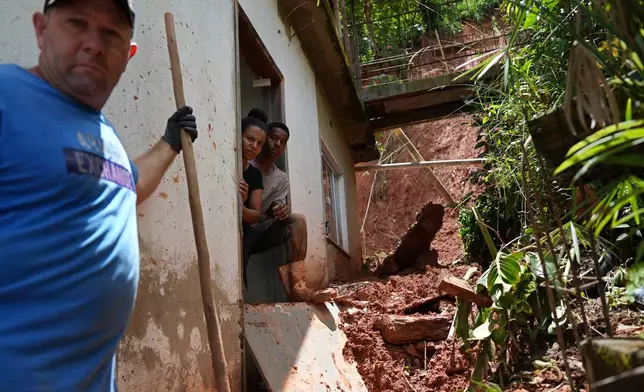
Vilma Goncalves da Silva, center left, and her son Samuel Goncalves, look out from their front door the damage caused by flooding near the affected areas where homes collapsed in the Parque Burnier neighborhood of Juiz de Fora, in Minas Gerais state, Brazil, Wednesday, Feb. 25, 2026. (AP Photo/Silvia Izquierdo)
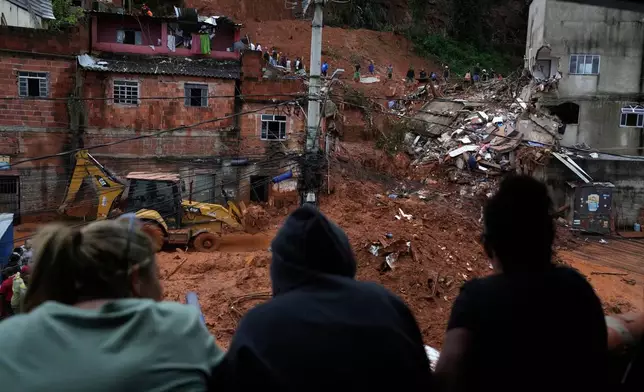
Residents watch firefighters and civil defense workers at the site where homes collapsed due to heavy rains and severe flooding in the Parque Burnier neighborhood of Juiz de Fora in Minas Gerais state, Brazil, Tuesday, Feb. 24, 2026. (AP Photo/Silvia Izquierdo)

Ricardo Dutra, center, the father of 11-year-old Bernardo Lopes, a victim of heavy rains and flooding, is comforted by his son's friends during the burial of his child in Juiz de Fora, Minas Gerais state, Brazil Wednesday, Feb. 25, 2026. (AP Photo/Silvia Izquierdo)
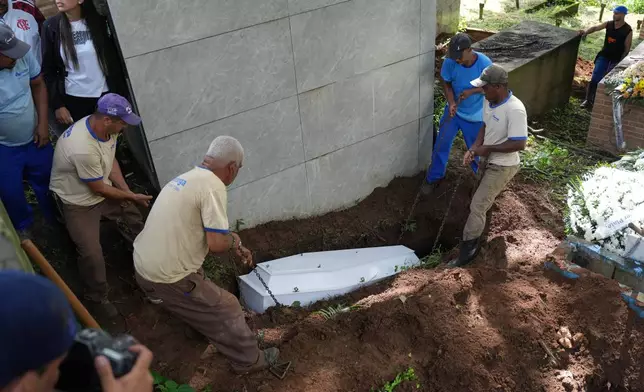
Cemetery workers lower the coffin of the remains of 11-year-old Bernardo Lopes, a victim of heavy rains and flooding in Juiz de Fora, Minas Gerais state, Brazil Wednesday, Feb. 25, 2026. (AP Photo/Silvia Izquierdo)
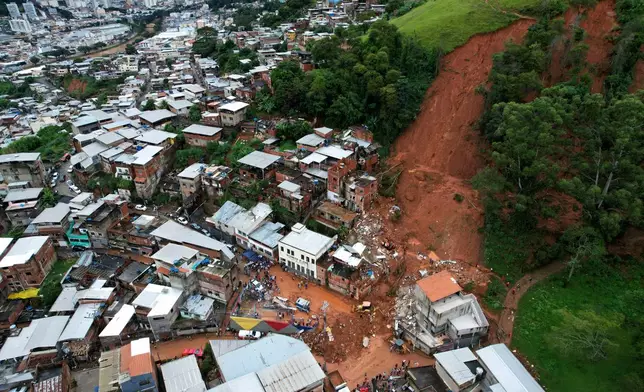
Collapsed homes sit after heavy rains and severe flooding in the Parque Burnier neighborhood of Juiz de Fora in Minas Gerais state, Brazil, Tuesday, Feb. 24, 2026. (AP Photo/Silvia Izquierdo)
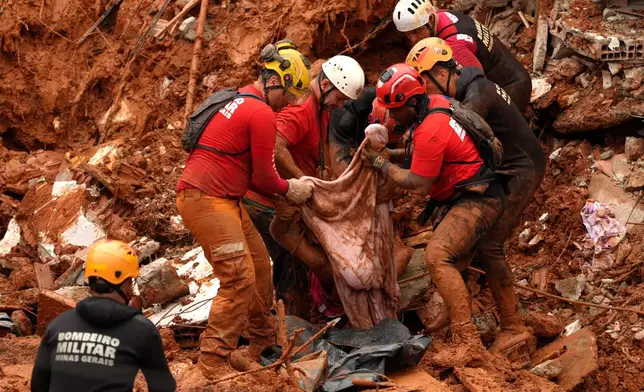
Firefighters recover a body from the site where homes collapsed during heavy rains and severe flooding in the Parque Burnier neighborhood of Juiz de Fora, Minas Gerais state, Brazil, Tuesday, Feb. 24, 2026. (AP Photo/Silvia Izquierdo)
Among the dead was 11-year-old Bernardo Lopes Dutra killed after the rain caused his house to collapse.
“It’s a tragedy that no one was expecting,” his father, Ricardo Dutra, said at the funeral in Juiz de Fora. He described Bernardo as “a boy with a big heart who, in his own way, touched everyone around him.” Dutra's wife and daughter were still in a hospital.
The Rev. Ananias Simões, the pastor at the church that Dutra and his family regularly attended in Juiz de Fora, said the building has been turned into a temporary shelter.
“We're doing what we can, collecting food, water. We're in a war situation,” Simões said.
Dário Tibério, a 41-year-old truck driver, decided to leave his house along with his family for fear of collapse. He found refuge at the church, while he waits on authorities to say his home is risk-free.
“There's a danger that the mud and earth can come and bury us along with the debris. We have this feeling of insecurity,” he said.
The streets of Juiz de Fora, a city of 560,000, were covered in mud as authorities feared more landslides. Life in neighboring Uba, with its 107,000 residents, came to a stop. Classes were suspended in both cities, their mayors said.
Juiz de Fora's City Hall said in a statement that around 600 families living in endangered areas were about to be relocated to local schools improvised as shelters and that the city experienced double the rain expected for February. Mayor Margarida Salomão said at least 20 landslides had been reported since the torrential rain began Monday evening.
Brazilian President Luiz Inácio Lula da Silva said on his social media channels Tuesday that security forces have been deployed on rescue missions and are providing immediate assistance to the population affected by the rain.
Scientists say extreme weather is happening more frequently due to human-caused climate change.
Flooding in Brazil's southern Rio Grande do Sul state in May 2024 led to the deaths of at least 185 people and ravaged nearly everything needed for economic activity, from local shops to factories, farms and ranches. Financial losses were above 10 billion reais ($1.9 billion).
Back in Minas Gerais, Flávio Clemente Rodrigues, a 46-year-old in Juiz de Fora whose house partially caved in due to the heavy rains, lamented the lack of assistance from public authorities to prevent the consequences of the heavy rains, such as the construction of barriers.
“We never had support from the public authorities to help us with anything,” said Rodrigues, who lives in the heavily-affected Parque Burnier neighborhood of Juiz de Fora.
His stepson Samuel Goncalves, 17, was preparing to take a shower when he heard a loud sound resulting from falling rocks. He managed to escape, but his bedroom is now full of debris.
“When I came to see, everything had fallen: the slope back there, the tree was cracking, the slope collapsing, the mud sliding down,” Goncalves said. “It’s really sad and worrying.”
Hughes reported from Rio de Janeiro.
Follow AP’s coverage of Latin America and the Caribbean at https://apnews.com/hub/latin-america
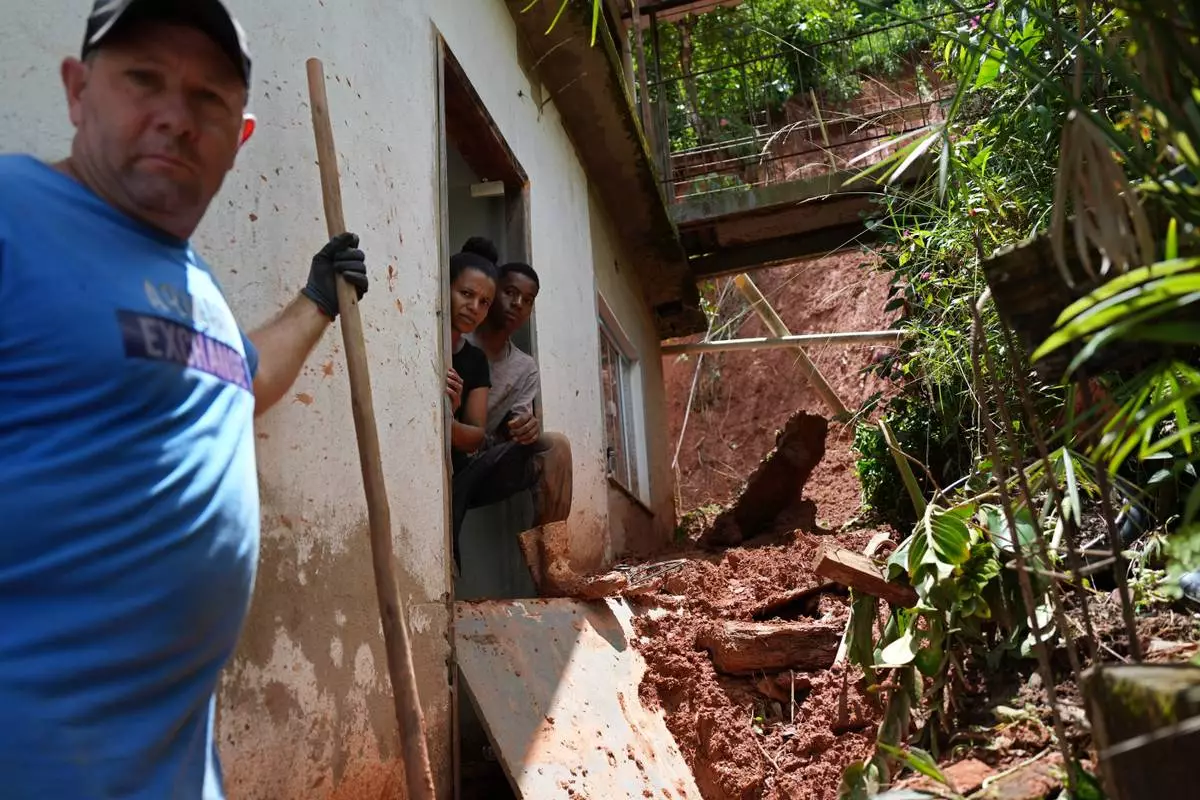
Vilma Goncalves da Silva, center left, and her son Samuel Goncalves, look out from their front door the damage caused by flooding near the affected areas where homes collapsed in the Parque Burnier neighborhood of Juiz de Fora, in Minas Gerais state, Brazil, Wednesday, Feb. 25, 2026. (AP Photo/Silvia Izquierdo)
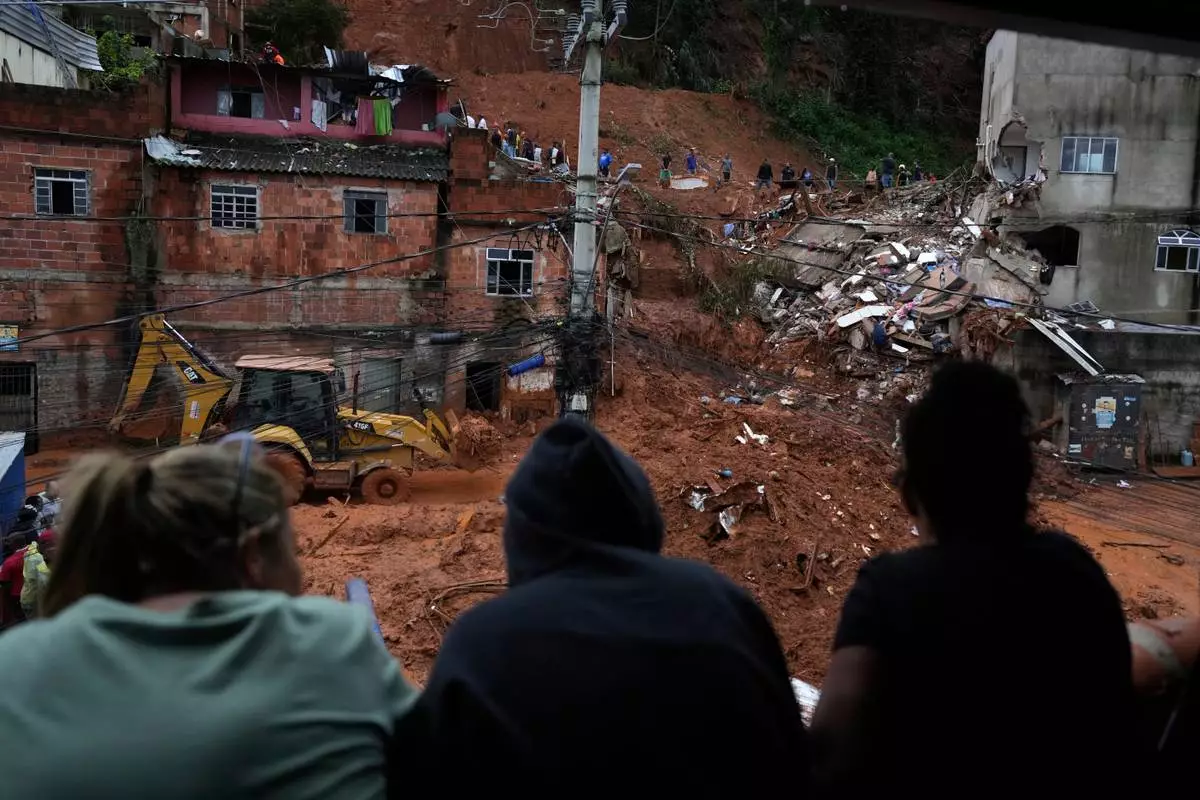
Residents watch firefighters and civil defense workers at the site where homes collapsed due to heavy rains and severe flooding in the Parque Burnier neighborhood of Juiz de Fora in Minas Gerais state, Brazil, Tuesday, Feb. 24, 2026. (AP Photo/Silvia Izquierdo)

Ricardo Dutra, center, the father of 11-year-old Bernardo Lopes, a victim of heavy rains and flooding, is comforted by his son's friends during the burial of his child in Juiz de Fora, Minas Gerais state, Brazil Wednesday, Feb. 25, 2026. (AP Photo/Silvia Izquierdo)
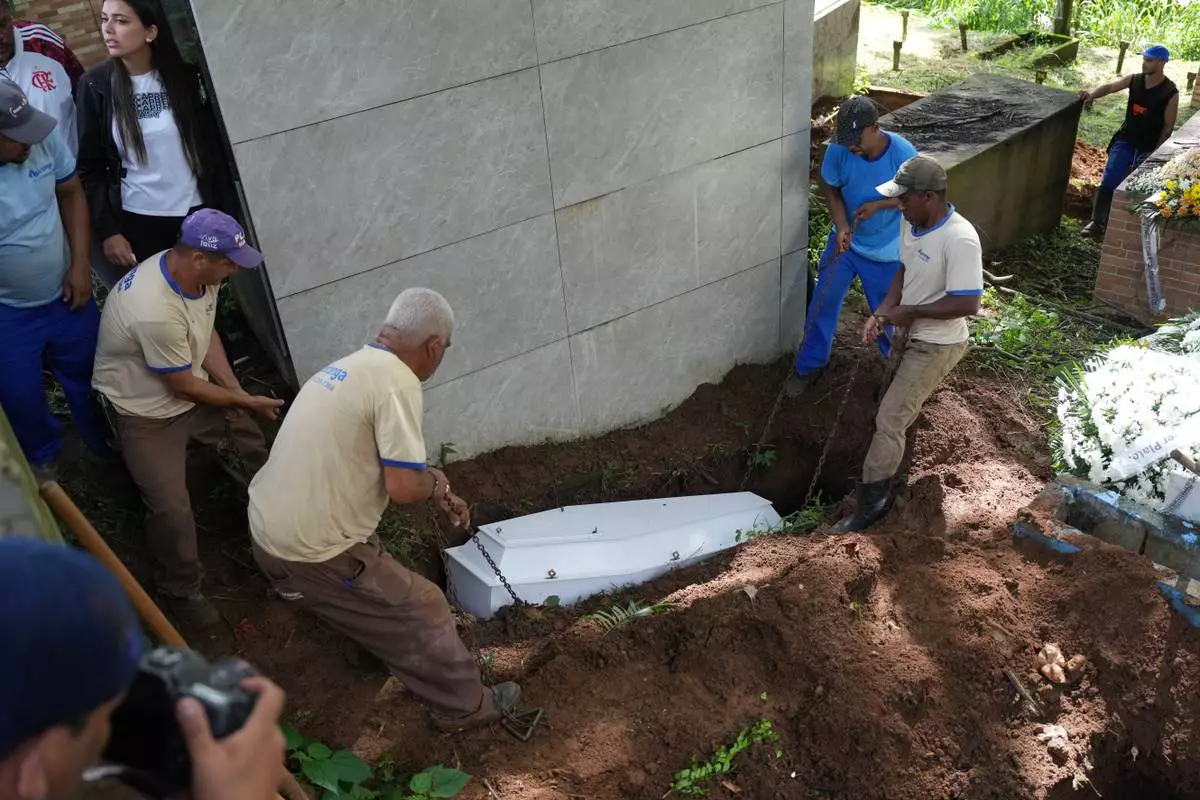
Cemetery workers lower the coffin of the remains of 11-year-old Bernardo Lopes, a victim of heavy rains and flooding in Juiz de Fora, Minas Gerais state, Brazil Wednesday, Feb. 25, 2026. (AP Photo/Silvia Izquierdo)
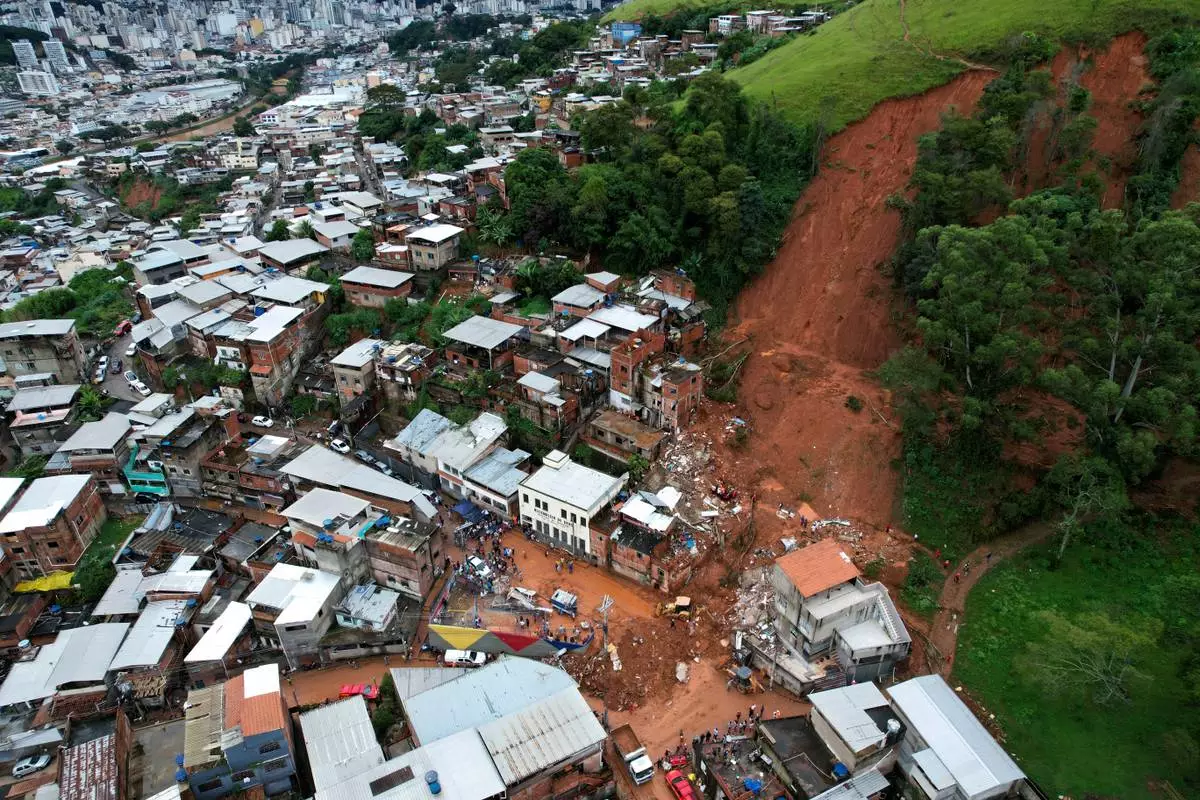
Collapsed homes sit after heavy rains and severe flooding in the Parque Burnier neighborhood of Juiz de Fora in Minas Gerais state, Brazil, Tuesday, Feb. 24, 2026. (AP Photo/Silvia Izquierdo)
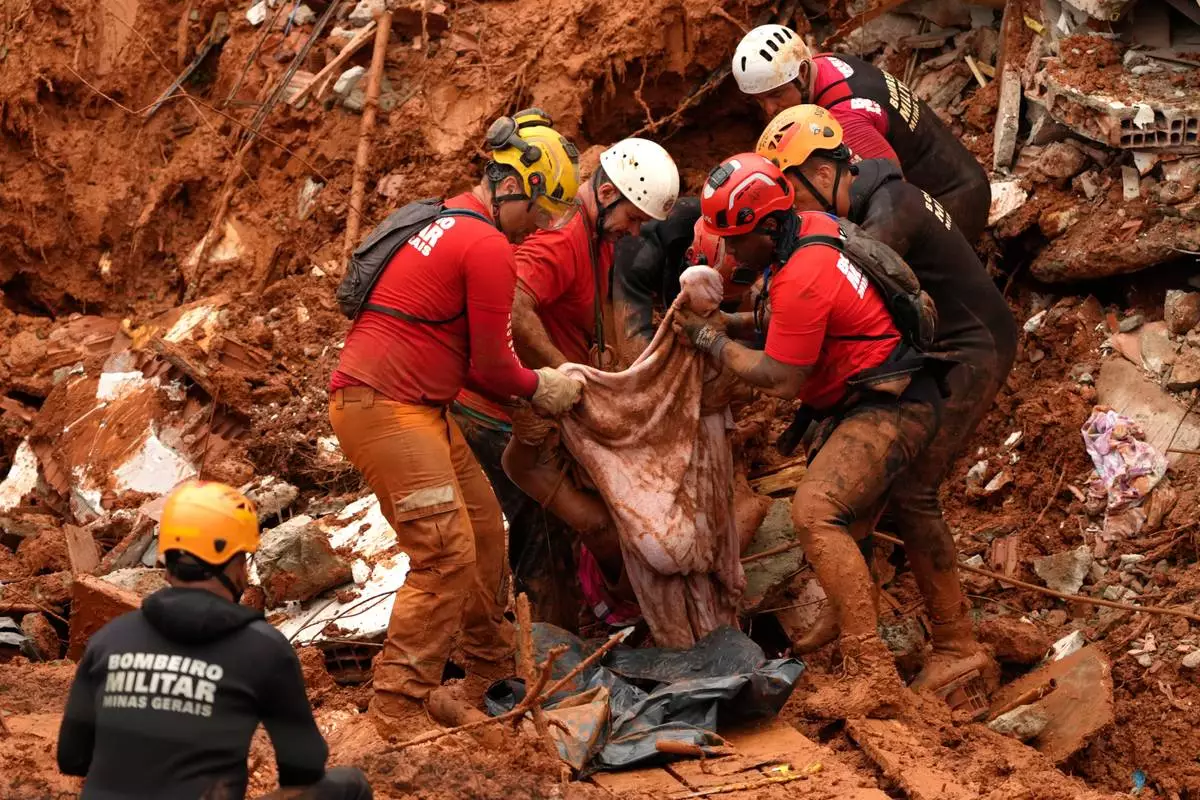
Firefighters recover a body from the site where homes collapsed during heavy rains and severe flooding in the Parque Burnier neighborhood of Juiz de Fora, Minas Gerais state, Brazil, Tuesday, Feb. 24, 2026. (AP Photo/Silvia Izquierdo)