Skip to Content Facebook Feature Image

New Xfinity Store Opens in Fort Lauderdale

News

New Xfinity Store Opens in Fort Lauderdale
News

News

New Xfinity Store Opens in Fort Lauderdale

2026-02-26 22:00 Last Updated At:22:11

FORT LAUDERDALE, Fla.--(BUSINESS WIRE)--Feb 26, 2026--

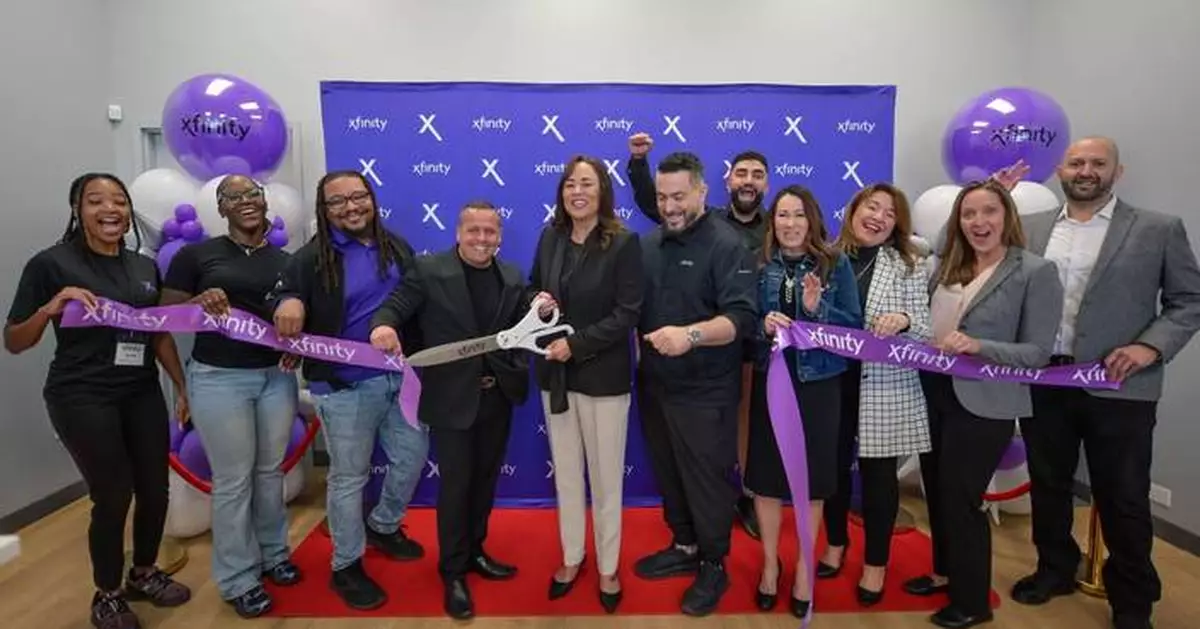
Comcast is celebrating the grand opening of its newest Xfinity Store in South Florida, marking its 10 th retail location in Broward County. Located at 5554 North Federal Highway, Suite 4A, Fort Lauderdale, FL 33308, the store features an interactive, modern design that gives residents the opportunity to explore the full suite of Xfinity products and services.

This press release features multimedia. View the full release here: https://www.businesswire.com/news/home/20260226683507/en/

“We’re excited to welcome this new Xfinity Store to Fort Lauderdale,” said Fort Lauderdale Mayor Dean Trantalis. “Investments like this strengthen our local economy and provide residents with more convenient access to technology and support. It’s great to see companies like Comcast continuing to grow their presence in South Florida and contribute to our vibrant community.”

The Fort Lauderdale location is the 7th new Xfinity store to open in Florida over the past year. Additional Xfinity stores recently opened in Delray Beach, Kendall, Miami Gardens, Naples, North Miami and Tallahassee.

“Our new Fort Lauderdale store gives customers a comfortable space to explore our latest products, including Xfinity Mobile, at their own pace,” said Jackie Guerry Maybeck, VP of Sales & Marketing for Comcast’s Florida Region. “As we grow across Florida, we want to make it easier than ever for people to stop by, ask questions, and get hands-on support right in their own community. This store helps us stay connected to the people we serve every day.”

Comcast leaders, community partners, and Xfinity members came together for a lively grand opening celebration yesterday. The event featured a $25,000 grant presentation to Big Brothers Big Sisters of Broward County. Comcast’s investment will help power the organization’s BIG Futures program, giving local youth the digital skills and confidence they need to succeed in today’s connected world.

The new storefront further strengthens Xfinity’s retail presence in South Florida, joining 9 additional Xfinity Stores located throughout Broward County, including:

Explore Innovative Products
Xfinity Stores are designed so consumers can see products in action.

Engage with a Local, Dedicated Team of Experts
Highly trained and knowledgeable sales consultants are available at Xfinity Stores to provide demonstrations and help new and existing customers sign up for services, learn more about their current services and devices, manage accounts, return or acquire equipment, and more.

The new Xfinity Store in Fort Lauderdale is open Monday through Saturday from 9:00 AM – 8:00 PM, and Sunday from 10:00 AM – 6:00 PM.

For directions and more information, click here.

Visitors can always drop by any Xfinity store to explore at anytime, or go online to https://www.xfinity.com/support/contact-us and click “Xfinity Stores” to make an appointment.

About Comcast Corporation
Comcast Corporation (Nasdaq: CMCSA) is a global media and technology company. From the connectivity and platforms we provide, to the content and experiences we create, our businesses reach hundreds of millions of customers, viewers, and guests worldwide. We deliver world-class broadband, wireless, and video through Xfinity, Comcast Business, and Sky; produce, distribute, and stream leading entertainment, sports, and news through brands including NBC, Telemundo, Universal, Peacock, and Sky; and bring incredible theme parks and attractions to life through Universal Destinations & Experiences. Visit www.comcastcorporation.com for more information.
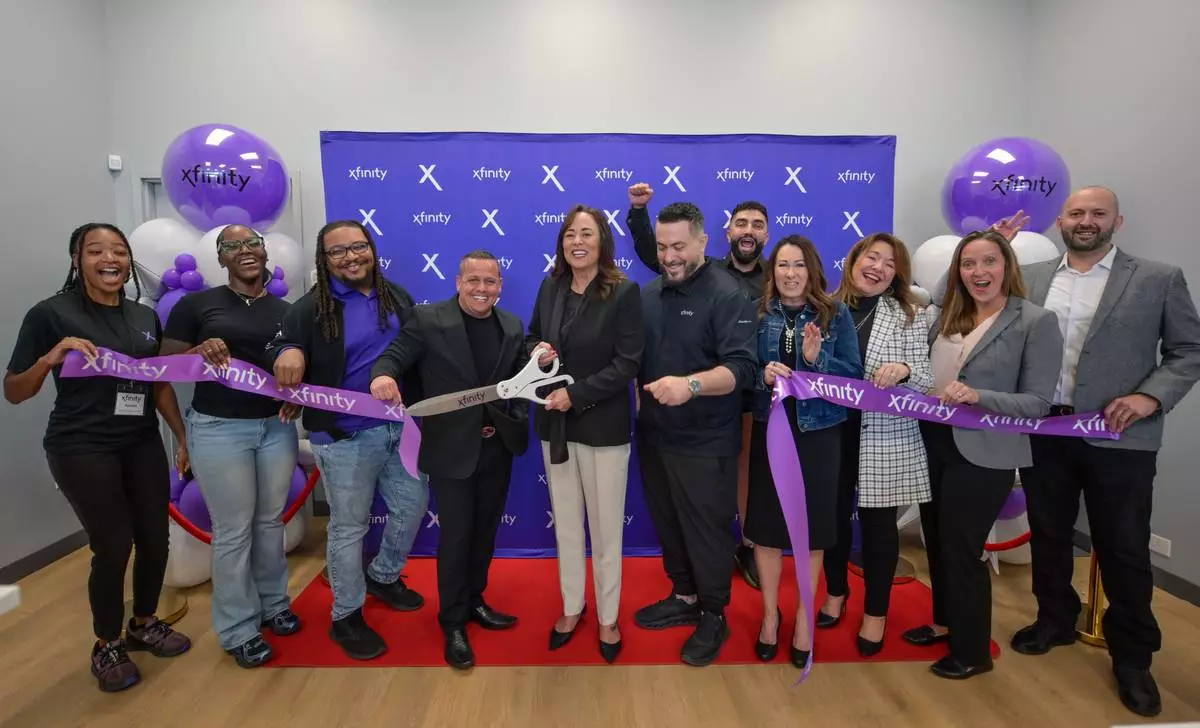
Leaders, employees, and community partners come together for the official ribbon cutting ceremony at the new Xfinity Store.


Leaders, employees, and community partners come together for the official ribbon cutting ceremony at the new Xfinity Store.

SEOUL, South Korea (AP) — South Korea has relaunched a fact-finding commission into its past human rights violations, with a key focus on the extensive fraud and malfeasance that corrupted the nation’s historic foreign adoption program.

The Truth and Reconciliation Commission, the third in the country’s history, began accepting new cases Thursday, months after the previous one’s mandate ended in November with more than 2,100 complaints unresolved.

The new commission will inherit those cases, including 311 submissions by Korean adoptees from the West that were either deferred or incompletely reviewed before the second commission halted a landmark investigation into adoptions in April last year, following internal disputes over which cases warranted recognition as problematic.

Advocates say interest among adoptees is far higher this time, with hundreds already seeking investigations, including many from the United States, who were underrepresented in the previous inquiry even though American parents were by far the biggest recipients of Korean children over the past seven decades.

But investigators who served on the previous commission said it could take months — possibly until May or June — for the new probes to actually get underway. The government has yet to appoint a chair to lead the commission, which has not formed investigative teams and will initially be run by civil servants assigned to receive and register cases.

The new commission, established under a law passed in January expanding its investigative mandate, will also investigate other human rights abuses potentially attributable to the government, including civilian killings around the 1950-53 Korean War, repression during the military dictatorships of the 1960s to 1980s, and decades-long abuses of inmates at welfare facilities.

Under the commission’s three-year mandate, applications for investigation must be submitted until Feb. 25, 2028, although the commission has the power to extend the deadline and mandate for up to five years. Adoptees could also submit their applications with the South Korean embassies or consulates in the countries they live in.

South Korea sent thousands of children annually to the West from the 1970s to the early 2000s, peaking at an average of more than 6,000 a year in the 1980s. The country was then ruled by a military government that saw population growth as a major threat to its economic goals and treated adoptions as a way to reduce the number of mouths to feed, contributing to what’s now possibly the world’s largest diaspora of adoptees.

The suspension of the prior adoption probe in 2025 followed a nearly three-year review of cases across Europe, the U.S. and Australia, during which the second commission confirmed human rights violations in just 56 of 367 complaints filed by adoptees.

Still, the commission issued a significant interim report concluding that the government bears responsibility for a foreign adoption program riddled with fraud and abuse, driven by efforts to reduce welfare costs and carried out by private agencies that often manipulated children’s backgrounds and origins.

The report, which challenged a longstanding narrative shared in South Korea and receiving nations in the West that adoptions were driven mainly by humanitarian concerns, broadly aligned with previous reporting by The Associated Press.

The AP investigations, in collaboration with Frontline (PBS), drew from thousands of documents and dozens of interviews to show how South Korea’s government, Western nations and adoption agencies worked in tandem to supply some 200,000 Korean children to parents overseas, despite years of evidence that many were being procured through corrupt or outright illegal means.

During the height of adoptions in the 1970 and '80s, thousands of children were listed as abandoned to appear adoptable under Western laws, although records suggest most had known relatives. Adoption agencies paid hospitals and orphanages for newborns and other children, and in some cases switched children’s identities to keep adoptions moving when a child died, was too sick to travel, or was reclaimed by birth families. Prioritizing their domestic child demands, Western governments ignored the signs of rampant fraud and sometimes pressured the South Korean government to keep the kids coming.

The previous commission’s report, which also highlighted these problems, prompted a rare apology from South Korean President Lee Jae Myung in October. His government later announced plans to phase out the country’s dwindling foreign adoptions by 2029.

The December announcement came as U.N. human rights investigators expressed “serious concern” over what they described as Seoul’s failure to ensure truth-finding and reparations for violations tied to past adoptions. South Korea approved overseas adoptions of just 24 children in 2025.

Boonyoung Han, an adoptee activist and co-leader of the Danish Korean Rights Group, which led most adoptee applications to the previous commission, said the group submitted more than 300 cases to the newly launched commission Thursday. Once investigative teams are formed, the submissions will be reviewed before the commission decides whether to pursue investigations into those, along with the 311 cases carried over.

Han said 118 of the new applications came from adoptees in Denmark while those in the United States accounted for the second-largest group with 73.

Investigators from the previous commission say a broader review of the systemic problems would require closer scrutiny of adoptions to the United States, where citizenship gaps affecting adoptees have also drawn concern as U.S. President Donald Trump pushes aggressive deportations. U.S. adoptees accounted for just 45 of complaints received by the second commission, most of which were filed by adoptees in Europe.

Some adoptees hope to use the commission’s findings to file damages suits against the South Korean government or their adoption agencies, which would otherwise be difficult because South Korean law places the burden of proof entirely on plaintiffs in civil cases. The new law grants the third commission stronger investigative powers than its predecessor, including the authority to seek search warrants through prosecutors if individuals or institutions refuse to provide evidence.

FILE - Truth and Reconciliation Commission Chairperson Park Sun Young, right, comforts adoptee Yooree Kim during a press conference in Seoul, South Korea, on March 26, 2025. (AP Photo/Ahn Young-joon, File)

FILE - Truth and Reconciliation Commission Chairperson Park Sun Young, right, comforts adoptee Yooree Kim during a press conference in Seoul, South Korea, on March 26, 2025. (AP Photo/Ahn Young-joon, File)

FILE - Peter Møller, second from right, attorney and co-founder of the Danish Korean Rights Group, submits the documents at the Truth and Reconciliation Commission in Seoul, South Korea, Nov. 15, 2022. (AP Photo/Ahn Young-joon, File)

FILE - Peter Møller, second from right, attorney and co-founder of the Danish Korean Rights Group, submits the documents at the Truth and Reconciliation Commission in Seoul, South Korea, Nov. 15, 2022. (AP Photo/Ahn Young-joon, File)

Recommended Articles