MEXICO CITY (AP) — Items found inside the final redoubt in Jalisco state of Nemesio Oseguera Cervantes, “El Mencho,” who was killed by the Mexican army on Sunday, revealed a side to the feared cartel boss few would have imagined: his religious fervor.
The house inside an exclusive subdivision in southern Jalisco state contained a crucifix, as well as a makeshift altar with religious figurines of Our Lady of Guadalupe, Saint Jude Thaddeus and Saint Charbel Makhlouf, along with votive candles with images of saints. In the backyard, images of the Virgin and Saint Jude were carved into large rocks.
On Sunday, Mexican special forces encircled Oseguera Cervante s and captured him after a firefight on the outskirts of Tapalpa. The leader of the Jalisco New Generation Cartel died en route to hospital, authorities said.
Images of the house's inside captured by local media showed a handwritten copy of Psalm 91, which Catholics often invoke to ask God for protection from danger, fear and adversity.
There were also letters, apparently written to Oseguera Cervantes and addressing him familiarly, that made reference to St. Jude, who has a following among criminals, drug users and the marginalized in Mexico.
Oseguera Cervantes maintained a low profile during the nearly two decades that he led the Jalisco cartel. The group was known for spectacular acts of violence and rapid growth, but little was known about his personal life.
Mexican authorities said they tracked one of his lovers to the hideout.
For those who study drug culture like Fabián Acosta Rico, a researcher at the University of Guadalajara and the Center of Religious Studies in Mexico, his apparent religious devotion comes as no surprise.
“We cannot disentangle religion from violence,” Acosta Rico said, noting that the world is full of such examples from the Bushido code of the samurai that included Buddhist beliefs to Italy’s feared Cosa Nostra that often incorporated images of the Virgin Mary or a patron saint in its initiation rituals.
Acosta Rico said that in Oseguera Cervantes’ case it is not so much a traditional Christian religious fervor, but rather a “popular religiousness, a religiousness of the immediate, of everyday life.”
“Man goes to God not expecting forgiveness of sins, or salvation of his soul, but rather because he’s hungry, because he’s cold, because he feels attacked or threatened by danger,” he said.
The links between drug trafficking and religious imagery are not new in Mexico, a majority Catholic country.
Mexico’s Catholic Bishops Conference had previously questioned the use of religious imagery by criminal groups and openly rejected the Santa Muerte, “Holy Death,” cult figure, which fuses pre-Hispanic and Catholic traditions into a representation of a cloaked skeleton that is not recognized by the Roman Catholic Church.
There are documented cases of drug traffickers like Édgar Valdez Villarreal, better known as “La Barbie,” who according to journalist Anabel Hernández’s book “Emma and Other Narco Women,” were deeply devoted to Mexico’s patron saint, Our Lady of Guadalupe.
Ovidio Guzmán López, one of the sons of former Sinaloa Cartel leader Joaquín “El Chapo” Guzmán, was seen during his first capture in 2019 wearing a scapular of the Holy Infant of Atocha, a popular image of the Christ Child around his neck.
Acosta Rico said there is little the Roman Catholic Church can do about the association of drug traffickers and religious imagery in these times of religious freedom. Any person “can, without a problem, use religious symbols as they please and according to their idea,” he said.
“The church already lost its power to be able to implement standards and regulations on the use of religious symbols,” he said.

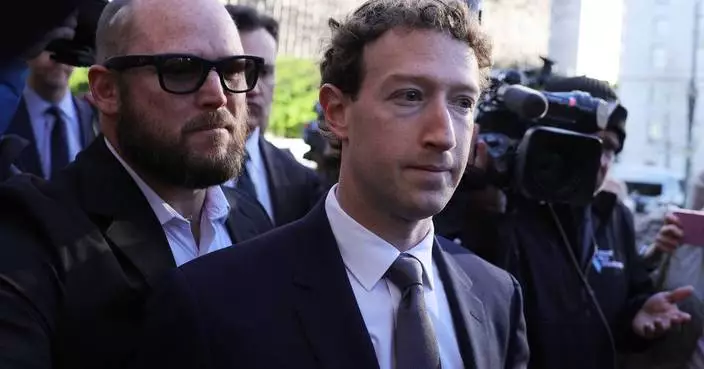
Newspapers hang on display for sale in Mexico City, Monday, Feb. 23, 2026, a day after the Mexican army killed Jalisco New Generation Cartel leader Nemesio Oseguera Cervantes, known as "El Mencho." (AP Photo/Jon Orbach)
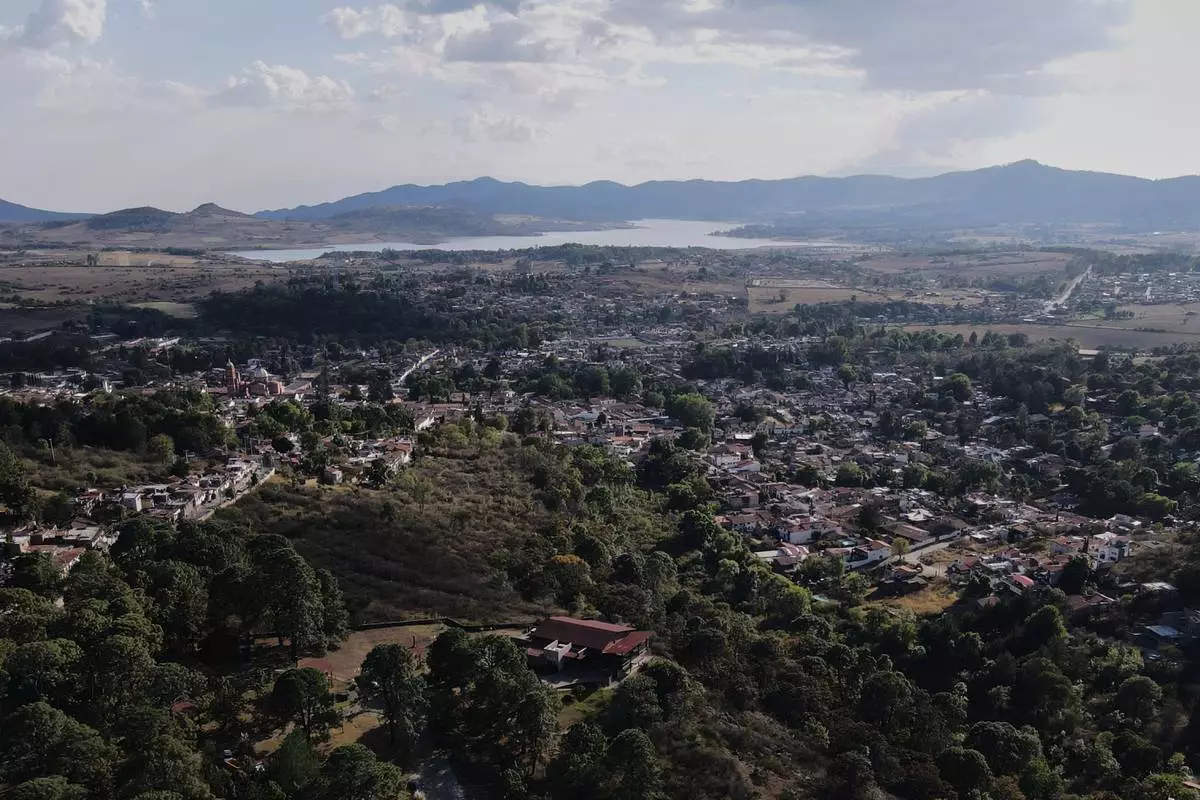
Trees and buildings dot Tapalpa, Mexico, Monday, Feb. 23, 2026, a day after the Mexican army killed Jalisco New Generation Cartel leader Nemesio Oseguera Cervantes, known as "El Mencho." (AP Photo/Marco Ugarte)
WASHINGTON (AP) — Anthropic CEO Dario Amodei said Thursday the artificial intelligence company “cannot in good conscience accede” to the Pentagon’s demands to allow unrestricted use of its technology, deepening the unusually public clash with the Trump administration that is threatening to pull its contract and take other drastic steps by Friday.
The maker of the AI chatbot Claude said in a statement that it’s not walking away from negotiations, but that new contract language received from the Defense Department “made virtually no progress on preventing Claude’s use for mass surveillance of Americans or in fully autonomous weapons.”
Sean Parnell, the Pentagon’s top spokesman, said on social media Thursday that the military “has no interest in using AI to conduct mass surveillance of Americans (which is illegal) nor do we want to use AI to develop autonomous weapons that operate without human involvement.”
Anthropic’s policies prevent its models from being used for those purposes. It’s the last of its peers — the Pentagon also has contracts with Google, OpenAI and Elon Musk’s xAI — to not supply its technology to a new U.S. military internal network.
“It is the Department’s prerogative to select contractors most aligned with their vision,” Amodei wrote in a statement. “But given the substantial value that Anthropic’s technology provides to our armed forces, we hope they reconsider.”
Defense Secretary Pete Hegseth gave Anthropic an ultimatum on Tuesday after meeting with Amodei: Open its artificial intelligence technology for unrestricted military use by Friday, or risk losing its government contract. Military officials warned that they could go even further and designate the company as a supply chain risk, or invoke a Cold War-era law called the Defense Production Act to give the military more sweeping authority to use its products.
Amodei said Thursday that “those latter two threats are inherently contradictory: one labels us a security risk; the other labels Claude as essential to national security.”
Parnell reiterated that the Pentagon wants to “ use Anthropic’s model for all lawful purposes” but didn’t offer details on what that entailed. He said opening up use of the technology would prevent the company from “jeopardizing critical military operations.”
“We will not let ANY company dictate the terms regarding how we make operational decisions,” he said.
The talks that escalated this week began months ago. Amodei said that if the Pentagon doesn't reconsider its position, Anthropic “will work to enable a smooth transition to another provider.”
Sen. Thom Tillis, a North Carolina Republican who is not seeking reelection, said Thursday that the Pentagon has been handling the matter unprofessionally while Anthropic is “trying to do their best to help us from ourselves.”
“Why in the hell are we having this discussion in public?” Tillis told reporters. “This is not the way you deal with a strategic vendor that has contracts.”
He added, “When a company is resisting a market opportunity for fear of negative consequences, you should listen to them and then behind closed doors figure out what they’re really trying to solve.”
Sen. Mark Warner of Virginia, the ranking Democrat on the Senate Intelligence Committee, said he was “deeply disturbed” by reports that the Pentagon is “working to bully a leading U.S. company.”
“Unfortunately, this is further indication that the Department of Defense seeks to completely ignore AI governance,” Warner said in a statement. It “further underscores the need for Congress to enact strong, binding AI governance mechanisms for national security contexts.”
While Pentagon officials say they always will follow the law with their use of AI models, the department has taken steps to change the culture among the military legal ranks.
Hegseth told Fox News last February, weeks after becoming defense secretary, that “ultimately, we want lawyers who give sound constitutional advice and don’t exist to attempt to be roadblocks to anything.”
The same month, Hegseth also fired the top lawyers for the Army and the Air Force without explanation. The Navy’s top lawyer had resigned shortly after the election in late 2024.
O'Brien reported from Providence, Rhode Island. Associated Press writer Ben Finley contributed to this report.
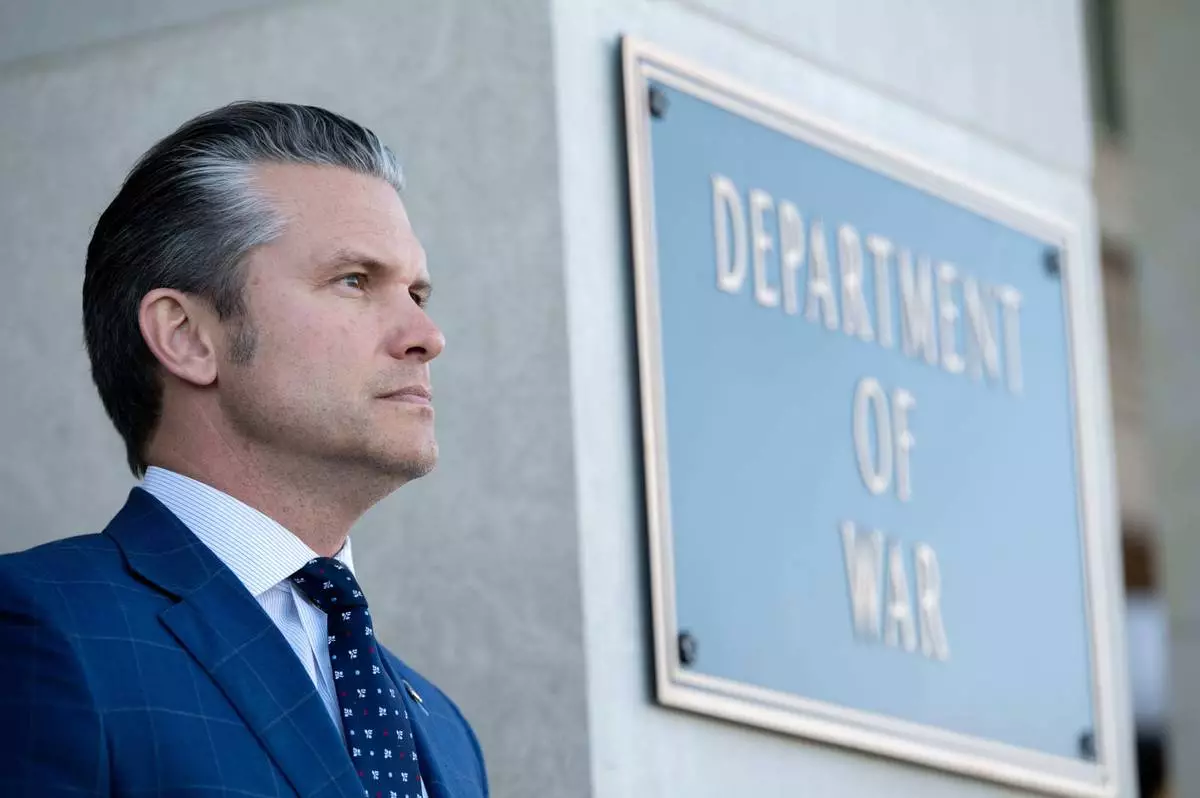
FILE - Defense Secretary Pete Hegseth stands outside the Pentagon during a welcome ceremony for the Japanese defense minister at the Pentagon in Washington, Jan. 15, 2026. (AP Photo/Kevin Wolf, File)

Pages from the Anthropic website and the company's logos are displayed on a computer screen in New York on Thursday, Feb. 26, 2026. (AP Photo/Patrick Sison)