NASHVILLE, Tenn. (AP) — A Tennessee law that threatens local officials with felony charges and possible imprisonment if they vote for so-called "sanctuary policies" on immigration has been ruled unconstitutional after the state declined to defend it in court.
On Wednesday, Nashville Chancellor Russell Perkins signed an agreed order involving the Tennessee attorney general's office, the local district attorney and the seven Nashville-Davidson County metro council members who are plaintiffs in a lawsuit challenging the policy.
For months, Attorney General Jonathan Skrmetti's office has made it clear that it would not defend the provision. Skrmetti, a Republican, told reporters in September that the Constitution has “absolute immunity for all legislative votes, whether at the federal, state, or local levels" even though it is illegal for Tennessee cities and counties to enact sanctuary laws.
Council member Clay Capp said in a news release that the case's outcome ensures that Tennessee elected officials can represent their constituents "without looking over their shoulder at criminal penalties."
“This settlement affirms a basic American principle: the government cannot prosecute you for how you vote,” Capp said in a news release from the American Civil Liberties Union of Tennessee, one of the legal groups representing the plaintiffs. “Tennessee tried to gag local officials with threats of prison time, but the Constitution doesn’t allow that."
Earlier last year, the GOP-supermajority Legislature and Republican Gov. Bill Lee approved legislation to aid the Trump administration with immigration enforcement. It includes the potential Class E felony — punishable by up to six years in prison — against any local elected official voting for or adopting a so-called sanctuary policy, as defined in state law. This could include voting in favor of local government restrictions that impede ICE efforts to detain migrants in the U.S. without permission.
Republican lawmakers kept the provision in a broader immigration bill despite warnings from legislative counsel that the penalty could be unconstitutional.
Legislative GOP leaders defended the penalty, including House Majority Leader William Lamberth, who has called it “the easiest felony in the world to avoid.”
In 2019, sanctuary cities became illegal in Tennessee, threatening governments that don't comply with the loss of state economic development money.
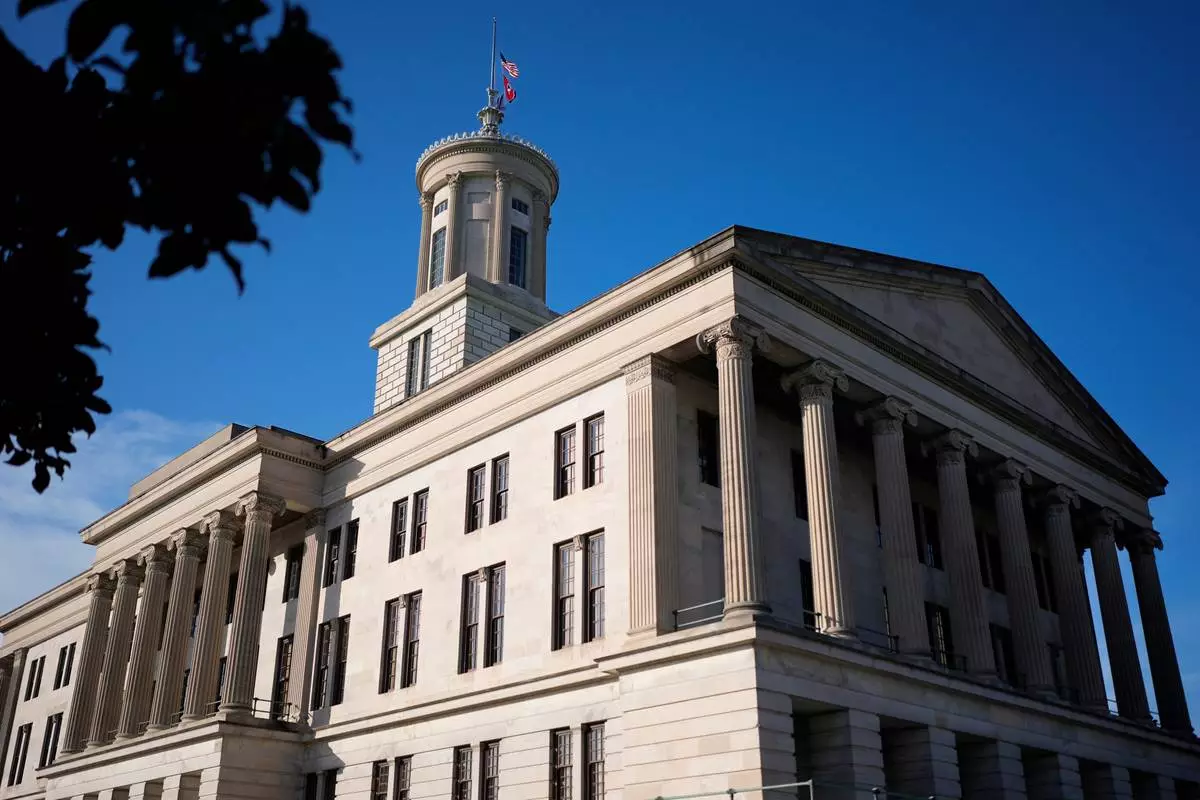
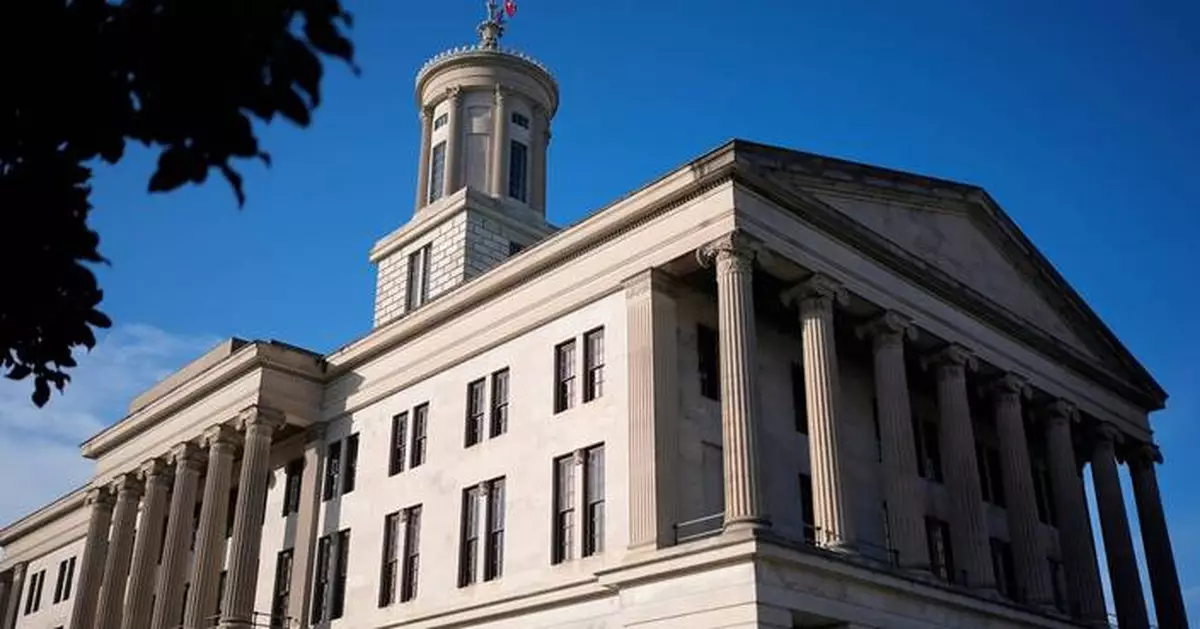
FILE - The Tennessee Capitol is seen, April 23, 2024, in Nashville, Tenn. (AP Photo/George Walker IV, File)
NEW YORK (AP) — Kamala Harris “wrote off rural America" during the 2024 presidential campaign and failed to attack Donald Trump with sufficient “negative firepower," according to a long-awaited post-election autopsy released on Thursday by the Democratic National Committee.
The committee's chair, Ken Martin, shared the 192-page report only after facing intense internal pressure from frustrated Democratic operatives concerned with his leadership. Martin had originally promised to release the autopsy, only to keep it under wraps for months because he was concerned it would be a distraction ahead of the midterms as Democrats mobilize to take back control of Congress.
On Tuesday, Martin apologized for his handling of the situation and conceded that the report was withheld because it “was not ready for primetime."
Although the autopsy criticizes Democrats' focus on “identity politics,” it sidesteps some of the most controversial elements of the 2024 campaign. The report does not address former President Joe Biden’s decision to seek reelection, the rushed selection of Harris to replace him on the ticket or the party's acrimonious divide over the war in Gaza.
“I am not proud of this product; it does not meet my standards, and it won’t meet your standards,” Martin wrote in an essay on Substack on Thursday. “I don’t endorse what’s in this report, or what’s left out of it. I could not in good faith put the DNC’s stamp of approval on it. But transparency is paramount.”
A spokesperson for Harris did not immediately respond to a request for comment.
The initial reaction from Democratic operatives was a mix of bafflement and anger over Martin's handling of the situation.
“Why not say this in 2024, or bring in more people to finish it, instead of turning this into the dumbest media cycle for 7-8 months?” Democratic strategist Steve Schale wrote on social media.
The postelection report, which was authored by Democratic consultant Paul Rivera, calls for “a renewed focus on the voters of Middle America and the South, who have come to believe they are not included in the Democratic vision of a stronger and more dynamic America for everyone.”
“Millions of Americans are suffering from poor access to healthcare, manufacturing and job losses, and a failing infrastructure, yet continue to be persuaded to vote against their best interests because they do not see themselves reflected in the America of the Democratic Party,” the report says.
The autopsy points to a reduction in support and training for Democratic state parties, voter registration shifts and “a persistent inability or unwillingness to listen to all voters.”
Thursday's release comes as Martin confronts a crisis of confidence among party officials who are increasingly concerned about the health of their political machine barely a year into his term. Some Democratic operatives have had informal discussions about recruiting a new chair, even though most believe that Martin’s job wasn't in serious jeopardy ahead of the midterm elections.
The report found that Harris and her allies failed to focus enough on Trump's negatives, especially his felony convictions. This was part of a broader criticism that Democrats' messaging is too focused on reason and winning arguments, “even in cycles when the electorate is defined by rage.”
“There was a decision in the 2024 Democratic leadership not to engage in negative advertising at the scale required,” the report states. “The Trump campaign and supportive Super PACs went full throttle against Vice President Harris, but there was not sufficient or similar negative firepower directed at Trump by Democrats.”
The report continues: “It was essential to prosecute a more effective case as to why Trump should have been disqualified from ever again taking office. The grounds were there, but the messaging did not make the case.”
Trump's attack on Harris' transgender policies were cited as a key contrast.
Specifically, the report suggested the Democratic nominee was “boxed” in by the Trump campaign's “very effective” ad that highlighted Harris' previous statement of support for taxpayer-funded gender-affirming surgeries for prison inmates.
Democratic pollsters believed that “if the Vice President would not change her position – and she did not – then there was nothing which would have worked as a response," the report said.
The report criticized Harris' outreach to key segments of America while condemning the party's focus on “identity politics.”
“Harris wrote off rural America, assuming urban/suburban margins would compensate. The math doesn’t work,” the report says. “You can’t lose rural areas by overwhelming margins and make it up elsewhere when rural voters are a significant share of the electorate. If Democrats are to reclaim leadership in the Heartland or the South, candidates must perform well in rural turf. Show up, listen, and then do it again.”
The report also references Democrats' underperformance with male voters of color.
“Male voters require direct engagement. The gender gap can be narrowed. Deploy male messengers, address economic concerns, and don’t assume identity politics will hold male voters of color,” it says.
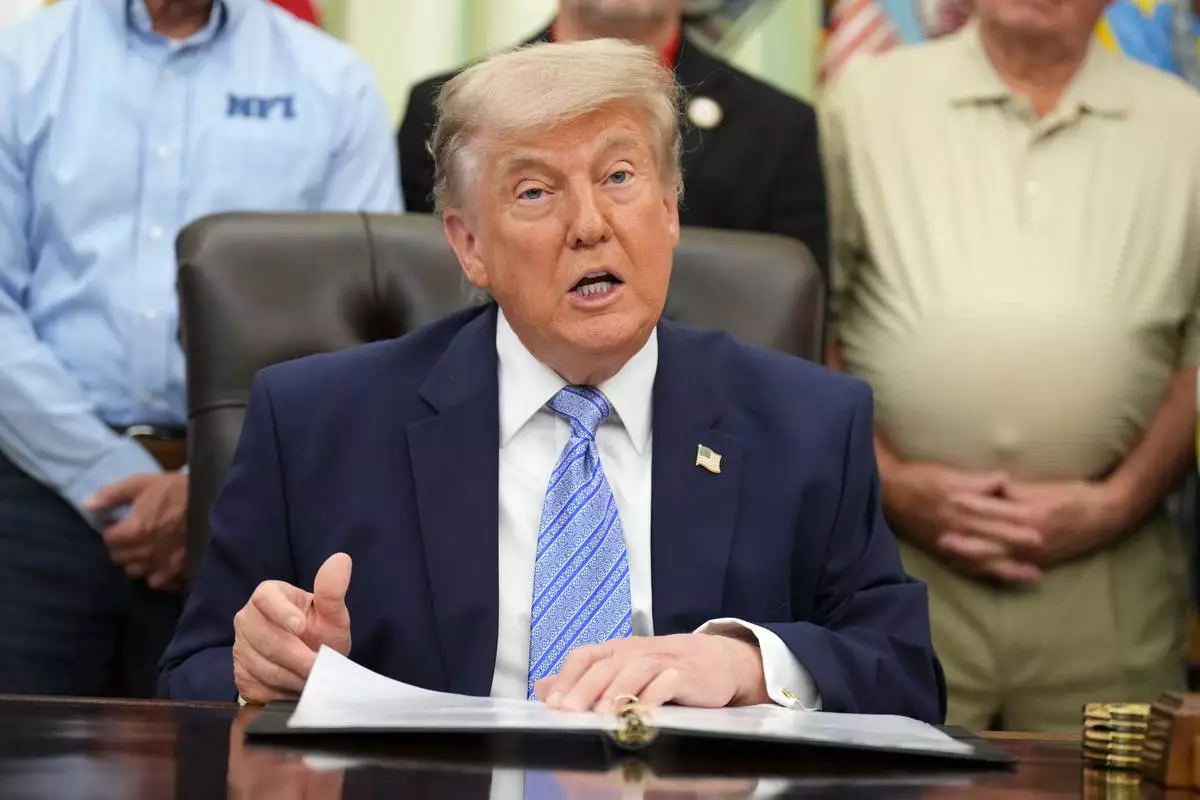
President Donald Trump speaks during an event about loosening a federal refrigerant rule, in the Oval Office at the White House, Thursday, May 21, 2026, in Washington. (AP Photo/Jacquelyn Martin)

Former Vice President Kamala Harris speaks during a fireside chat on Thursday, May 7, 2026, in Las Vegas. (AP Photo/Ty ONeil)
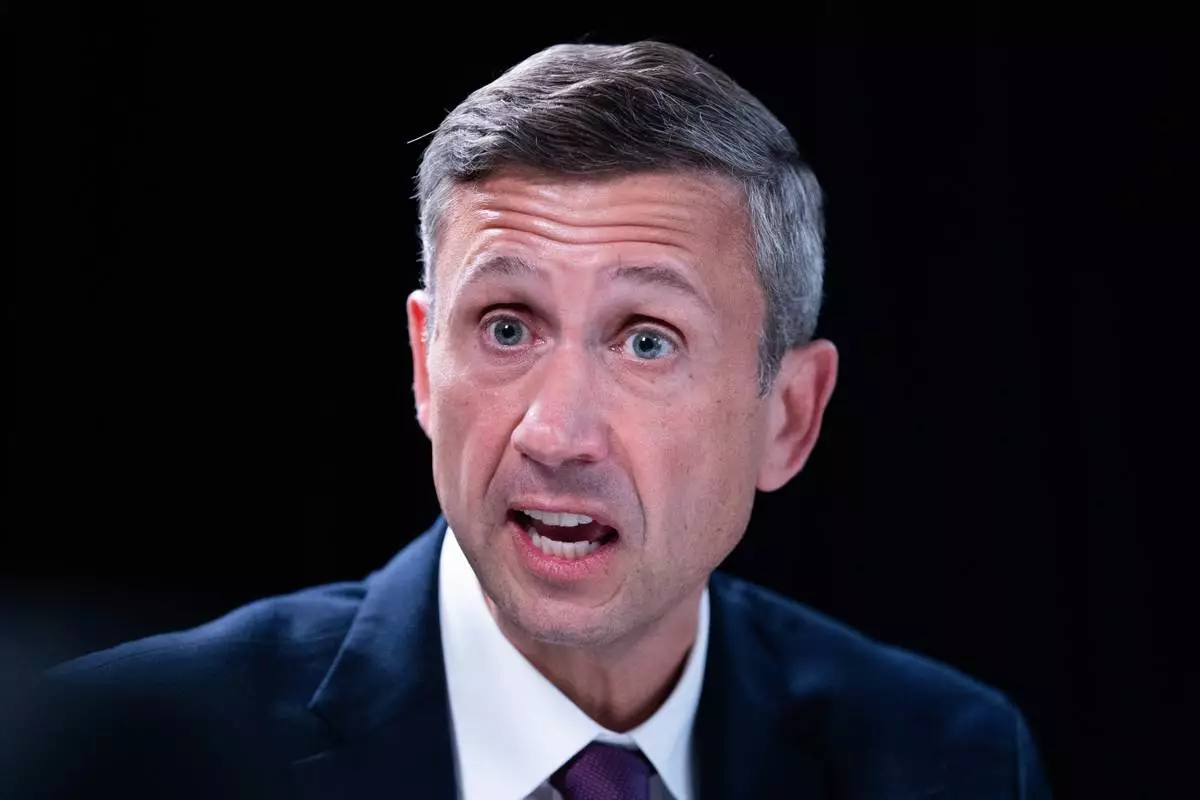
FILE - Democratic National Committee chair Ken Martin speaks during an interview with The Associated Press at DNC headquarters, Jan. 12, 2026, in Washington. (AP Photo/Allison Robbert, File)