MEDELLÍN, Colombia--(BUSINESS WIRE)--Feb 27, 2026--
Mineros S.A. (TSX:MSA, OTCQX: MNSAF, BVC:MINEROS) (“ Mineros ” or the “ Company ”) has concluded its 2025 diamond drilling campaign at the Hemco Property in Nicaragua, completing 52,214 metres of core drilling. The program evaluated regional targets and provided infill data for active mining operations to confirm structural continuity and assess potential resource expansion. All technical disclosures have been reviewed by a Qualified Person in accordance with Canadian National Instrument 43-101 – Standards of Disclosure for Mineral Projects.
This press release features multimedia. View the full release here: https://www.businesswire.com/news/home/20260227005030/en/
Exploration and Delineation Results
The 2025 program successfully identified new mineralized structures and extended known systems. Notable results are categorized by target area below:
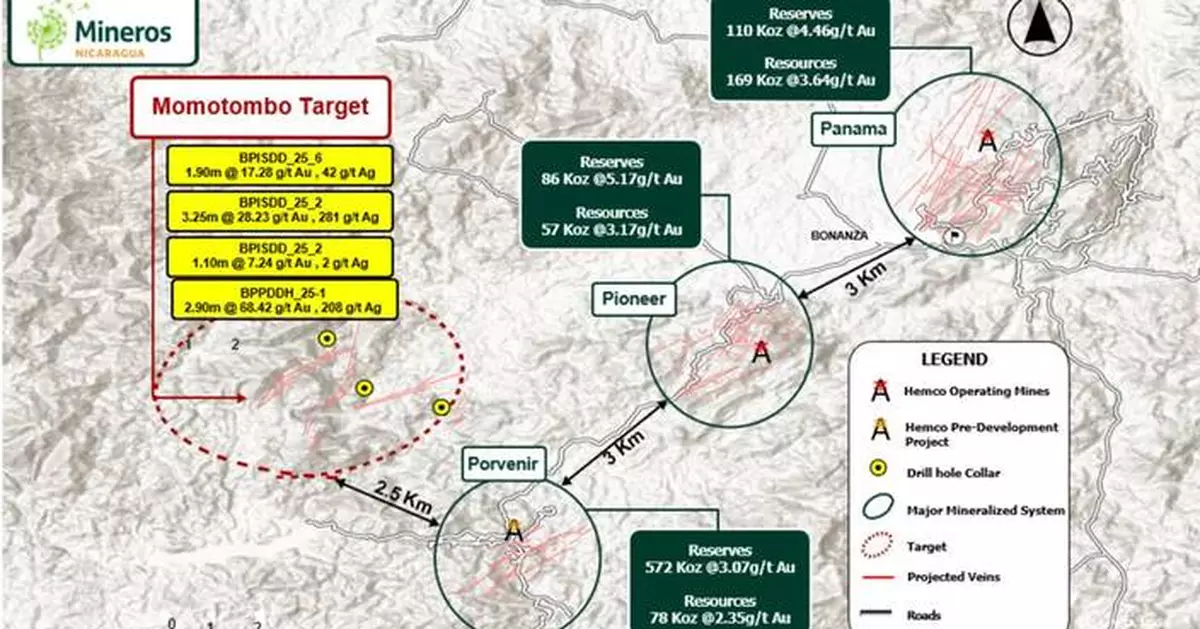
Momotombo Target: This area, situated 2.5 km northwest of the Porvenir project, represents a new mineralized occurrence. Initial drilling, surface trenching, and mapping have identified approximately 400 metres of strike length, which remains open at depth.
BPPDDH_25_1: Intersected 2.90m (core length) grading 68.42 g/t Au and 208 g/t Ag.
BPISDD_25_2: Intersected 3.25m (core length) grading 28.23 g/t Au and 281 g/t Ag.
Porvenir Potential Upside: Drilling targeted the Guillermina, Leticia, and Apoyo vein systems to evaluate vertical and lateral continuity.
Guillermina System: Hole BGUIDDH_25_63 returned 13.90m (core length) grading 10.22 g/t Au, 53 g/t Ag, 9.17% Zn, and 0.41% Cu.
Leticia System: Hole BLDDH_25_43 returned 3.70m (core length) grading 36.58 g/t Au, 130 g/t Ag, 4.58% Zn, and 4.61% Cu.
Apoyo System: This newly identified system successfully extended the known mineralized footprint to the northeast.
Infill Drilling and Operational Support
Infill drill programs conducted at the Panamá and Pioneer Mines were designed to increase data density for near-term mine planning.
La Reforma Vein (Pioneer Mine): Confirmed high-grade continuity within active mining blocks.
BPIODD_25_2261: Intersected 2.35m (core length) grading 26.55 g/t Au.
BPIODD_25_2251: Intersected 12.65m (core length) grading 8.53 g/t Au.
Capitán FW and Atlas Veins (Panamá Mine): Delineation drilling confirmed and locally extended mineralization within existing underground infrastructure.
Carlos David Rios, Vice President of Exploration for Mineros, commented: “Record gold production in 2025 demonstrates the strength of our operating assets. This performance, combined with the prospectivity of the Hemco Property land package, allows us to advance the most ambitious exploration program in Mineros' history. With over 75,000 metres of drilling planned and an expanded soil sampling program underway, we are well-positioned to expand our known mineralization across this district.”
MOMOTOMBO AREA: A POTENTIAL NEW HIGH-GRADE ZONE
The 2025 program led to the discovery of high-grade mineralization at Momotombo, confirming the district’s strong exploration potential. Located 2.5 km northwest of the Porvenir Project (see Figure 1), Momotombo expands the known mineralized footprint. Drilling, trenching, and mapping outline up to 400 metres of strike, with mineralization open at depth. Momotombo will be a priority target in the expanded 2026 program as we advance and define its full scale and value.
Table 1. Momotombo Target - 2025 Drilling Results
POTENTIAL UPSIDE AT PORVENIR
The 2025 drilling program successfully extended high-grade zones near the Porvenir Project. Drilling at the Guillermina and Leticia vein systems confirmed robust vertical continuity at depth, while the newly identified Apoyo Vein System extended the known mineralization to the northeast (see Figure 2 and Figure 3). These structures remain open along strike and at depth, demonstrating potential upside to the Porvenir Project in the near future.
Table 2. Significant drilling Results with potential to expand Mineralization at Porvenir Project
HIGH-GRADE INFILL RESULTS AT PANAMÁ AND PIONEER MINE
The 2025 infill drilling program continues to intersect high-grade mineralization along the main vein systems at our core operations.
At the Pioneer Mine, infill and definition drilling has confirmed the continuity of high-grade zones within the La Reforma Vein system. At the Panamá Mine, drilling has confirmed and locally extended mineralization within the Capitán FW and Atlas vein systems. These results support our near-term mine planning and are expected to support future updates to mine plans and contribute to extending the Life of Mine at both operations.
Table 3. Multiple High-Grade Intercepts Across the La Reforma, Capitan, and Atlas vein systems
ABOUT MINEROS S.A.
Mineros is a Latin American gold mining company headquartered in Medellin, Colombia. The Company has a diversified asset base, with mines in Colombia and Nicaragua and a pipeline of development and exploration projects throughout the region.
The Hemco Property is located approximately 230 kilometers northeast of Managua and benefits from excellent access, established infrastructure, and location within a well-established and mining-friendly jurisdiction. The property comprises a large, contiguous land package of approximately 151,389 hectares and is situated within one of the most prolific and extensive epithermal gold systems in Central America, which has supported multiple gold deposits and long-term mining operations.
QUALITY ASSURANCE, QUALITY CONTROL, AND DATA VERIFICATION
Results from samples taken during the 2025 drilling program were analyzed at ALS Global Peru. The sampling program was conducted under the direction of Carlos David Rios (Geo.Eng.). A secure chain of custody was maintained for delivery to ALS Global in Managua for preparation and subsequently to Lima, Peru for geochemical analysis. Gold was assayed using fire assay (30 g aliquot) with an atomic absorption finish and gravimetric finish for results over 10 ppm. Analysis by aqua regia digestion with a 51-element ICP-ES/MS suite was conducted on all samples.
Carlos David Rios, MAusIMM CP (Geo), VP Exploration for Mineros S.A., a qualified person under National Instrument 43-101, has reviewed and verified the technical information contained in this news release.
Election of Directors – Electoral Quotient System
The Company has been granted an exemption from the individual voting and majority voting requirements applicable to listed issuers under Toronto Stock Exchange policies, on grounds that compliance with such requirements would constitute a breach of Colombian laws and regulations which require the directors to be elected on the basis of a slate of nominees proposed for election pursuant to an electoral quotient system. For further information, please see the Company’s most recent annual information form, available on the Company’s website at https://www.mineros.com.co/ and from SEDAR+ at www.sedarplus.com.
CAUTIONARY NOTE REGARDING MINERAL RESOURCE ESTIMATES
In accordance with applicable Canadian securities regulatory requirements, all Mineral Resource estimates disclosed in this news release have been prepared in accordance with NI 43-101 and are classified in accordance with the CIM Standards.
Mineral Resources, which are not Mineral Reserves, do not have demonstrated economic viability. Pursuant to the CIM Standards, Mineral Resources have a higher degree of uncertainty than Mineral Reserves as to their existence as well as their economic and legal feasibility. Inferred Mineral Resources, when compared with Measured or Indicated Mineral Resources, have the least certainty as to their existence, and it cannot be assumed that all or any part of an Inferred Mineral Resource will be upgraded to an Indicated or Measured Mineral Resource as a result of continued exploration. Pursuant to NI 43-101, Inferred Mineral Resources may not form the basis of any economic analysis, including any feasibility study. Accordingly, readers are cautioned not to assume that all or any part of a Mineral Resource exists, will ever be converted into a Mineral Reserve, or is or will ever be economically or legally mineable or recovered.
FORWARD-LOOKING STATEMENTS
This news release contains “forward looking information” within the meaning of applicable Canadian securities laws. Forward looking information includes statements that use forward looking terminology such as “may”, “could”, “would”, “will”, “should”, “intend”, “target”, “plan”, “expect”, “budget”, “estimate”, “forecast”, “schedule”, “anticipate”, “believe”, “continue”, “potential”, “view” or the negative or grammatical variation thereof or other variations thereof or comparable terminology. Such forward looking information includes, without limitation, statements with respect to the estimate of Mineral Resources, the results of metallurgical studies being conducted; exploration and testing plans; future expansion and upgrading of Mineral Resources; the economic viability of the Porvenir Project and Guillermina; and future development to the Porvenir Project.
Forward looking information is based upon estimates and assumptions of management in light of management’s experience and perception of trends, current conditions and expected developments, as well as other factors that management believes to be relevant and reasonable in the circumstances, as of the date of this news release. While the Company considers these assumptions to be reasonable, the assumptions are inherently subject to significant business, social, economic, political, regulatory, competitive and other risks and uncertainties, contingencies and other factors that could cause actual actions, events, conditions, results, performance or achievements to be materially different from those projected in the forward-looking information. Many assumptions are based on factors and events that are not within the control of the Company and there is no assurance they will prove to be correct.
For further information of these and other risk factors, please see the “Risk Factors” section of the Company’s annual information form dated March 25, 2024, available on SEDAR+ at www.sedarplus.com.
The Company cautions that the foregoing lists of important assumptions and factors are not exhaustive. Other events or circumstances could cause actual results to differ materially from those estimated or projected and expressed in, or implied by, the forward-looking information contained herein. There can be no assurance that forward-looking information will prove to be accurate, as actual results and future events could differ materially from those anticipated in such information. Accordingly, readers should not place undue reliance on forward-looking information.
Forward-looking information contained herein is made as of the date of this news release and the Company disclaims any obligation to update or revise any forward-looking information, whether as a result of new information, future events or results or otherwise, except as and to the extent required by applicable securities laws.
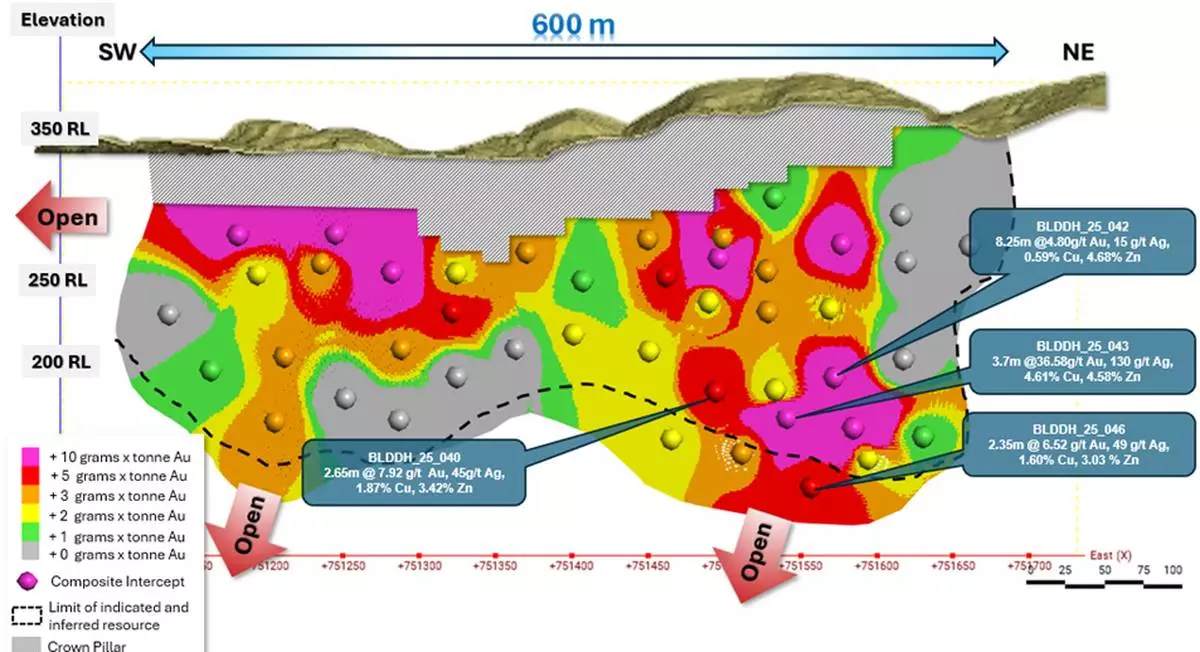
Figure 3. Leticia Longitudinal Section
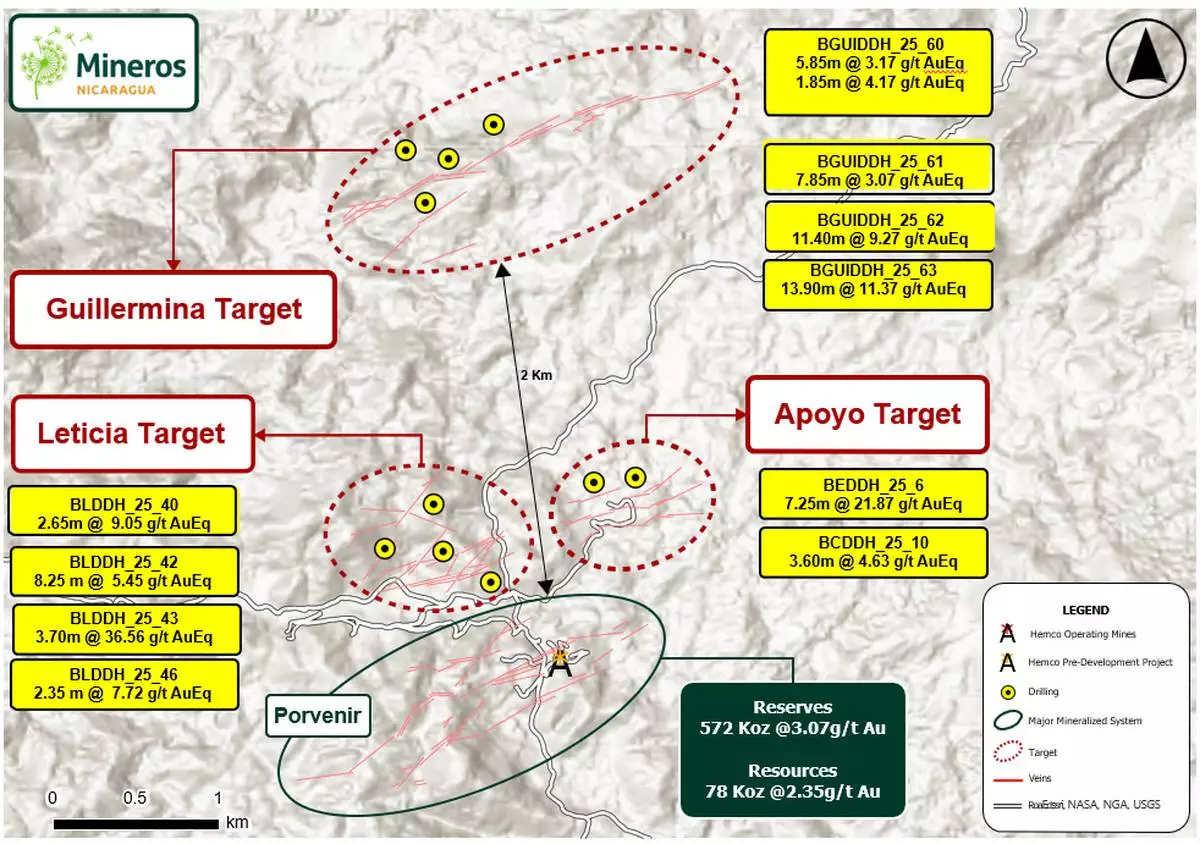
Figure 2. Leticia, Guillermina and Apoyo Vein Systems Location
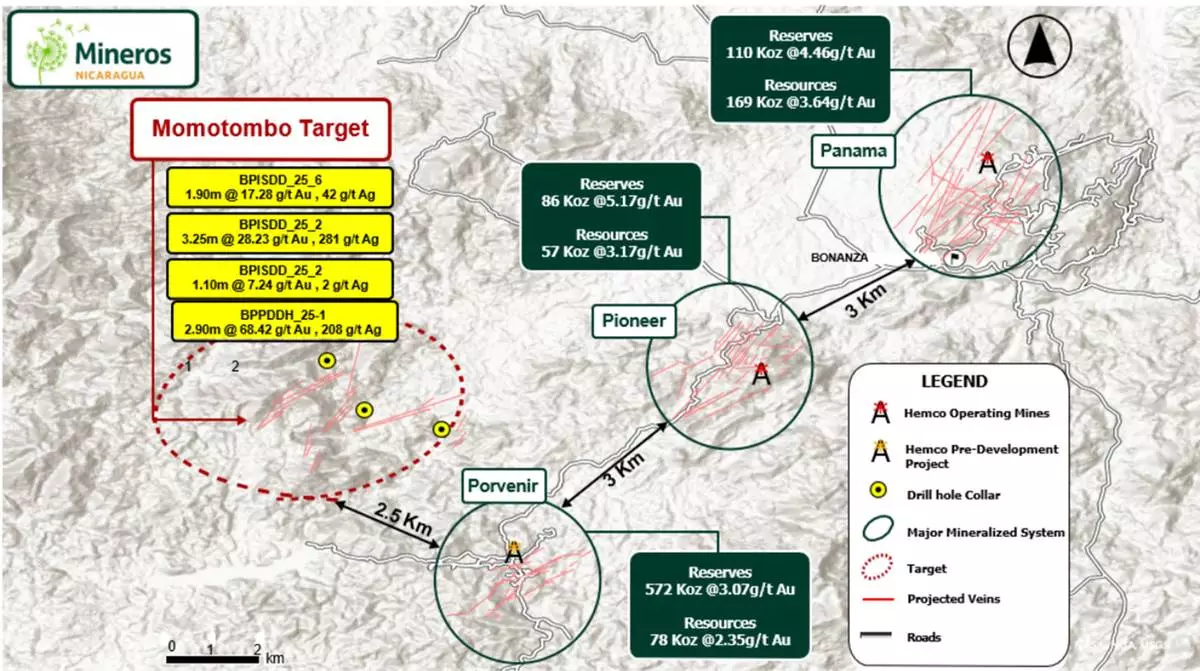
Figure 1. Momotombo Target – Location