Skip to Content Facebook Feature Image

Growing more complex by the day: How should journalists govern use of AI in their products?

ENT

Growing more complex by the day: How should journalists govern use of AI in their products?
ENT

ENT

Growing more complex by the day: How should journalists govern use of AI in their products?

2026-02-27 21:35 Last Updated At:21:40

Like so many sectors of the economy, the news industry is hurtling toward a future where artificial intelligence plays a major role — grappling with questions about how much the technology is used, what consumers should be told about it, whether anything can be done for the journalists who will be left behind.

These issues were on the minds of reporters for the independent outlet ProPublica as they walked picket lines earlier this month. They're inching toward a potential strike, in what is believed would be the first such job action in the news business where how to deal with AI is the chief sticking point.

Few expect this dispute will be the last.

AI has undeniably helped journalists, simplifying complex tasks and saving time, particularly with data-focused stories. News organizations are using it to help sift through the Epstein files. AI suggests headlines, summarizes stories. Transcription technology has largely eliminated the need for a human to type up interviews. These days, even a simple Google search frequently involves AI.

Yet rushing to see how AI can help a financially troubled industry has resulted in several cases of publications owning up to errors.

Within the past year, Bloomberg issued several corrections for mistakes in AI-generated news summaries. Business Insider and Wired were forced to remove articles by a fake author named Margaux Blanchard. The Los Angeles Times had trouble with AI and opinion pieces. Ars Technica said AI fabricated quotes, and the publication that has frequently reported on the risks of overreliance on AI tools embarrassed itself further by failing to follow its policy to tell readers when the tool is used.

The ProPublica dispute is noteworthy for how it touches on issues that are frequently cause for debates. The union representing ProPublica's journalists, negotiating its first contract with the the outlet known for investigative reporting, says it wants commitments that mirror those sought elsewhere in the industry about disclosure and the role of humans in the use of AI.

Along with holding informational pickets, union members pledged overwhelmingly that they would be willing to strike without a satisfactory agreement, said Jen Sheehan, spokeswoman for the New York Guild, the union that represents many journalists in the city.

“It feels to me pretty monumental when we think about the trajectory of AI and journalism,” said Alex Mahadevan, an expert on the topic at the Poynter Institute journalism think tank.

ProPublica has rejected its requests, the union said. Insight into why can be found in an essay, “Something Big is Happening,” that circulated widely this month. Author and investor Matt Shumer, who said he's spent six years building an AI startup, wrote that the technology is advancing so quickly that “if you haven't tried AI in the last few months, what exists today would be unrecognizable to you.”

Small wonder, then, that news executives are reluctant to put guarantees in writing that could quickly become outdated.

Rather than make promises that can't be kept, ProPublica is exploring how technology can create more space for investigative reporting, company spokesman Tyson Evans said. In the “unlikely event” of AI-related layoffs, ProPublica is proposing expanded severance packages for those affected, he said.

“We're approaching AI with both curiosity and skepticism,” Evans said. “It would be a mistake to freeze editorial decisions in a contract that will last years.”

Fifty-seven of 283 contracts at U.S. news organizations negotiated by the NewsGuild-USA contain language related to artificial intelligence, said Jon Schleuss, president of the union that represents more journalists than any in the country. The first such deals happened in 2023, and The Associated Press was one pioneer. He wants provisions in more contracts.

It won't be easy, judging by the reluctance of many outlets to be tied down. The organization Trusting News, which encourages news organizations to develop and make public its policies on AI use, estimates that less than half of U.S. outlets have done so.

“I think it is becoming harder,” Schleuss said, “because too many newsrooms are being run by the greedy side of the organization and not by the journalism side of the organization.”

The guild is pushing for contracts that guarantee AI won't eliminate jobs. That's no surprise; unions exist to protect jobs. Schleuss characterized a proposal that ensures an actual journalist is involved when AI is used as a way to prevent errors and help an outlet build trust with its readers.

“Humans are actually so much better at going out, finding the story, interviewing sources, bringing back the relevant pieces, asking the hard follow-up questions and putting that in a way that people can understand and see, whether it's a news story or a video,” he said. “Humans are way better at doing that than AI ever will be.”

Apparently, not everyone in journalism agrees. Chris Quinn, editor of The Plain Dealer in Cleveland, Ohio, wrote this month of his disgust with a recent college graduate who turned down a job offer because the person had been taught that AI was bad for journalism.

Quinn's newspaper has been sending some of its journalists out to cover stories by interviewing people, collecting quotes and information, then feeding it to a computer to write. While a human will edit what the computer spits out, an integral part of the process — a reporter using his or her judgment about how to tell a story — has been stripped from their hands. Quinn defended it as the best use of limited resources.

Research shows that a vast majority of American consumers believe that it's very important that newsrooms tell the public when AI is used to write stories or edit photographs, said Benjamin Toff, director of the Minnesota Journalism Center at the University of Minnesota. But here's the rub: Such disclosure makes them trust the outlet's stories less, not more.

A significant minority — 30% in a study Toff conducted last year — doesn't want AI used in journalism at all.

Telling a reader that AI was used is not as simple as it sounds. “There are just so many, many uses of AI in journalism, from the very beginning of the reporting process to when you hit publish, that just broadly declaring that when AI is used in the newsgathering process that you have to disclose it, just seems like it is actually a disservice to the reader in some cases,” Poynter's Mahadevan said.

Two lawmakers in New York state — the nation's publishing capital — introduced legislation this month requiring clear disclaimers when artificial intelligence is used in published content. There's no immediate word on its chances for passage, but both sponsors are Democrats in a legislature controlled by that party.

Mahadevan believes it's fair to have policies that requires human involvement — editing to prevent slip-ups, for example. But even these declarations are open to interpretation, he said. If an outlet uses chatbots to answer reader questions, are they being edited by a human being?

“Speaking realistically, the newsroom of the future is going to look completely different than it does today,” he said. “Which means people will lose jobs. There will be new jobs. So I think it's important that we are having these conversations right now because audiences do not want a newsroom completely taken over by AI.”

David Bauder writes about the intersection of media and entertainment for the AP. Follow him at http://x.com/dbauder and https://bsky.app/profile/dbauder.bsky.social.

FILE - The OpenAI logo is displayed on a cellphone with an image on a computer monitor generated by ChatGPT's Dall-E text-to-image model, Dec. 8, 2023, in Boston. (AP Photo/Michael Dwyer, File)
FILE - The OpenAI logo is displayed on a cellphone with an image on a computer monitor generated by ChatGPT's Dall-E text-to-image model, Dec. 8, 2023, in Boston. (AP Photo/Michael Dwyer, File)
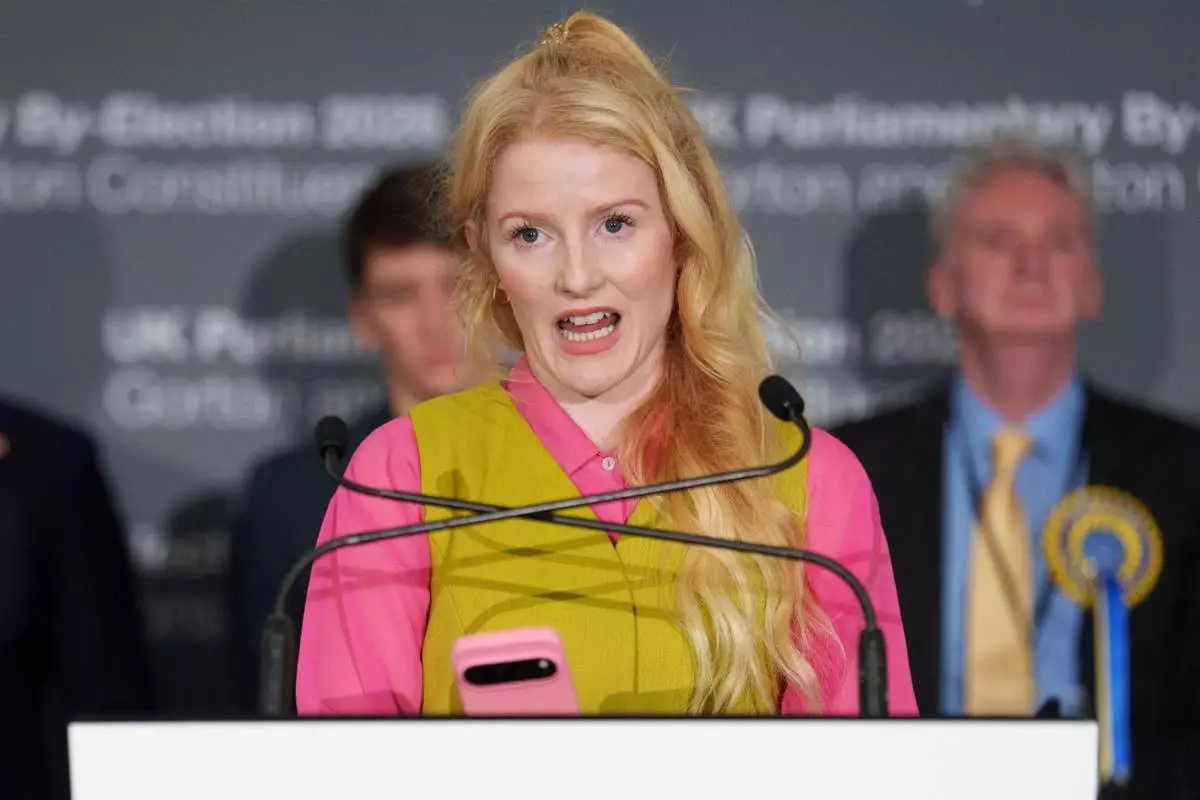
LONDON (AP) — An emphatic election victory for Britain’s environmentalist Green Party is a nightmare for Prime Minister Keir Starmer that raises questions about how long he will continue as leader.

Less than two years after winning power in a landslide, Starmer’s center-left Labour Party not only lost a longtime stronghold in its northern England heartlands — it came third, finishing behind both the left-leaning Greens and the hard-right party Reform U.K.

Thursday’s election in the Gorton and Denton constituency of Greater Manchester was for just one seat out of 650 in the House of Commons. But it’s a glimpse into the messy new reality of British politics, and its consequences could be far-reaching.

Here are takeaways from the election.

The result is a heavy blow to Starmer, whose leadership has staggered through a series of crises and suffered a near-death experience earlier this month.

Since being elected in July 2024, Starmer has struggled to deliver promised economic growth, repair tattered public services and ease the cost of living. His government has been sidetracked by missteps and U-turns over welfare cuts and other unpopular policies.

The next national election does not have to be held until 2029, meaning the main threat to Starmer comes from within his own party. Under British rules, the governing party can change prime minister without having to go to voters.

Three weeks ago it looked like that might happen, when indirect fallout from a trove of Jeffrey Epstein files released in the United States caused discontent to boil over.

Several Labour lawmakers and the party's leader in Scotland called for Starmer to resign, his chief of staff and communications director quit, and his premiership teetered on the brink.

Starmer vowed to stay, and got a reprieve after potential leadership rivals publicly backed him. But his already precarious position is now even shakier, and he faces peril after May 7 local and regional elections, when Labour is expected to do badly.

Jon Trickett, a Labour lawmaker on the left of the party, said Friday that Starmer should “look in the mirror and make a decision about his own personal future.”

Green Party leader Zack Polanski said the result shows that “Labour’s electoral stranglehold is over.”

For a century, U.K. national politics has been dominated by two parties: the Conservatives on the right and Labour on the left. Unlike many European countries, Britain does not have a system of proportional representation, meaning that smaller parties have struggled to break through.

But that is changing. Scotland, Wales and Northern Ireland have their own distinct parties. And new parties on both left and right are snatching an increasing share of the vote.

Reform U.K., the latest party led by anti-immigration campaigner Nigel Farage, has just eight seats in the House of Commons but has topped opinion polls for months, ahead of both Labour and the Conservatives.

The Greens, under their new leader, the “eco-populist” Polanski, have broadened their message beyond environmental concerns to focus on issues including the cost of living, legalization of drugs and support for the Palestinian cause, positioning themselves as an alternative to Labour for left-liberal voters.

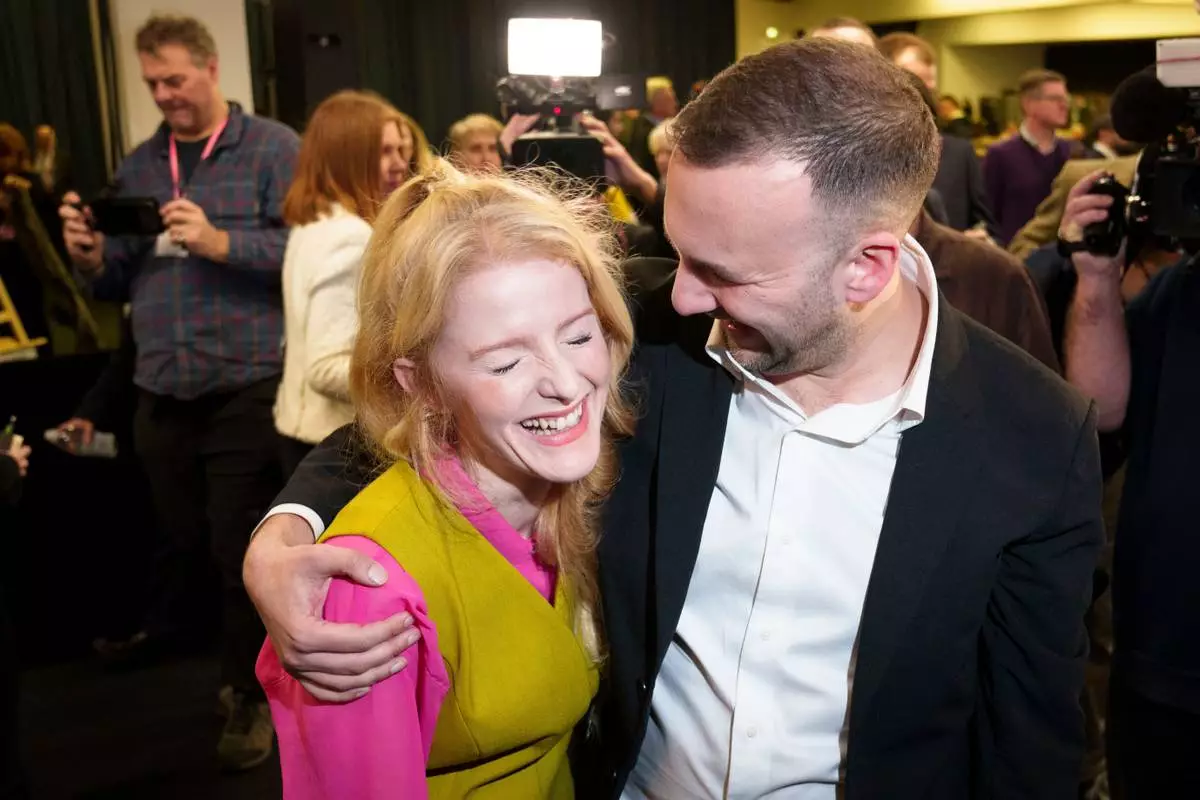
Newly elected lawmaker Hannah Spencer is a 34-year-old plumber who in her victory speech apologized to customers for having to cancel appointments so she could start her new job in Parliament.

She spoke of issues that should be Labour’s terrain: the cost of living, frayed public services and the erosion of opportunities in former industrial areas that traditionally voted Labour.

“For people here in Gorton and Denton who feel left behind and isolated: I see you and I will fight for you,” Spencer said.

The result drives home Labour’s predicament: It faces challenges from both left and right.

Thursday’s election was in a diverse area that has traditional working-class neighborhoods — once strongly Labour, now tilting toward Reform — as well as large numbers of university students and Muslim residents. Many of them feel disillusioned by Labour’s centrist shift under Starmer and the government’s perceived slowness at criticizing Israel’s conduct of the war against Hamas in Gaza — fertile ground for the Green Party.

Rob Ford, a professor of political science at the University of Manchester, said the result was “the nightmare scenario for the incumbent government.”

“They have fallen into the electoral Valley of Death,” Ford wrote on social media. “Rejected in the center. Rejected on the right. And now rejected on the left.”

In the wake of the defeat, many in Labour called for a change of direction, saying efforts to win over “Reform-curious” voters with policies aimed at curbing immigration had alienated many liberal electors.

“If the Labour Party thinks it can win an election by moving on to the territory which has been occupied by Mr. Farage and his party, they’ve made a big mistake,” Trickett told Times Radio. He said the party had made the mistake of assuming "that the progressive voters had nowhere else to go.”

Starmer has been tainted by fallout from scandals about Jeffrey Epstein, a man he never met and in whose crimes he’s not implicated.

The leadership crisis earlier this month was sparked by revelations about the relationship between sex offender Jeffrey Epstein and Peter Mandelson, the veteran Labour politician appointed by Starmer in 2024 to be U.K. ambassador to Washington.

Police are investigating emails suggesting Mandelson passed sensitive government information to Epstein a decade and a half ago. Mandelson was arrested and questioned by detectives this week before being released on bail. He does not face any allegations of sexual misconduct.

Starmer fired Mandelson in September 2025 after evidence emerged that the ambassador had maintained a friendship with Epstein after the financier’s 2008 conviction for sex offenses involving a minor. But recent revelations have stirred up Labour lawmakers’ anger at Starmer’s poor judgment in appointing Mandelson to the Washington job in the first place.

On Friday Starmer acknowledged the result was disappointing, but vowed to “keep on fighting.”

“Incumbent governments quite often get results like that mid-term, but I do understand that voters are frustrated," he said. "They’re impatient for change.”

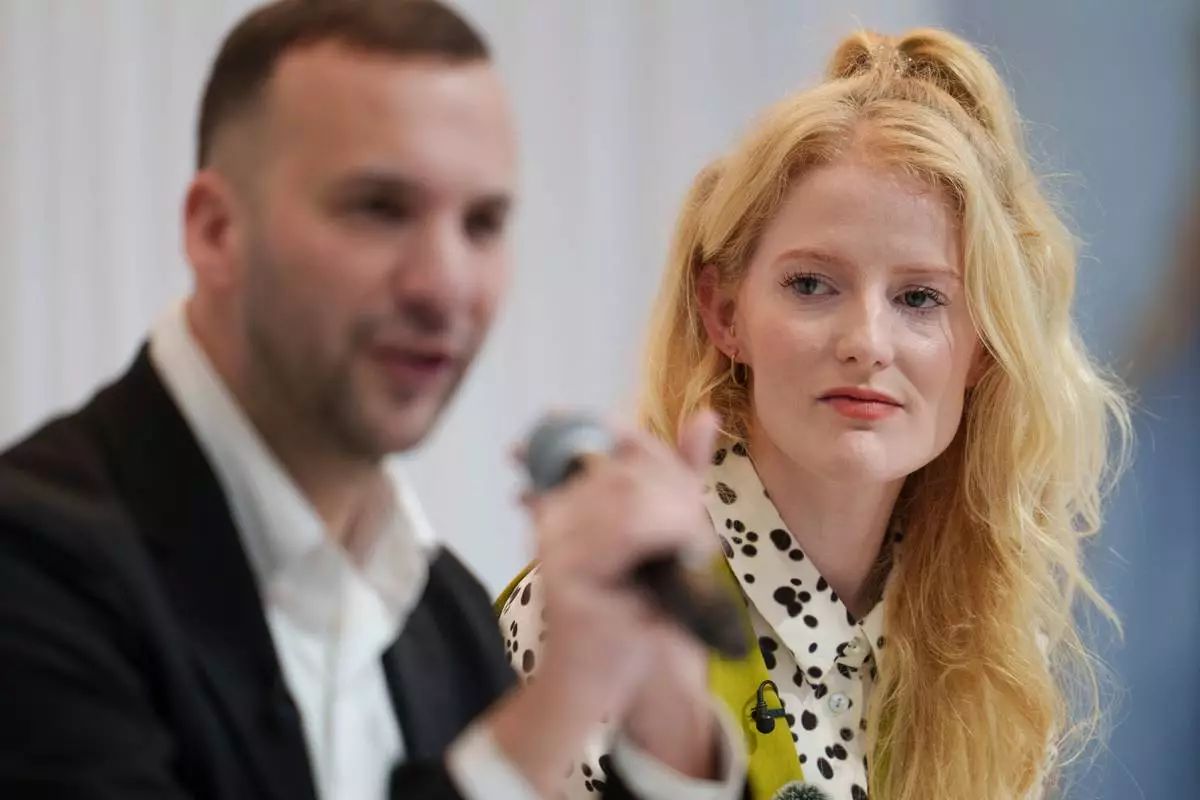
Green Party newly elected Member of Parliament Hannah Spencer looks on as party leader Zack Polanski speaks at a press conference after her win in the Gorton and Denton by-election, in Manchester, England, Friday, Feb. 27, 2026. (AP Photo/Jon Super)

Green Party newly elected Member of Parliament Hannah Spencer looks on as party leader Zack Polanski speaks at a press conference after her win in the Gorton and Denton by-election, in Manchester, England, Friday, Feb. 27, 2026. (AP Photo/Jon Super)

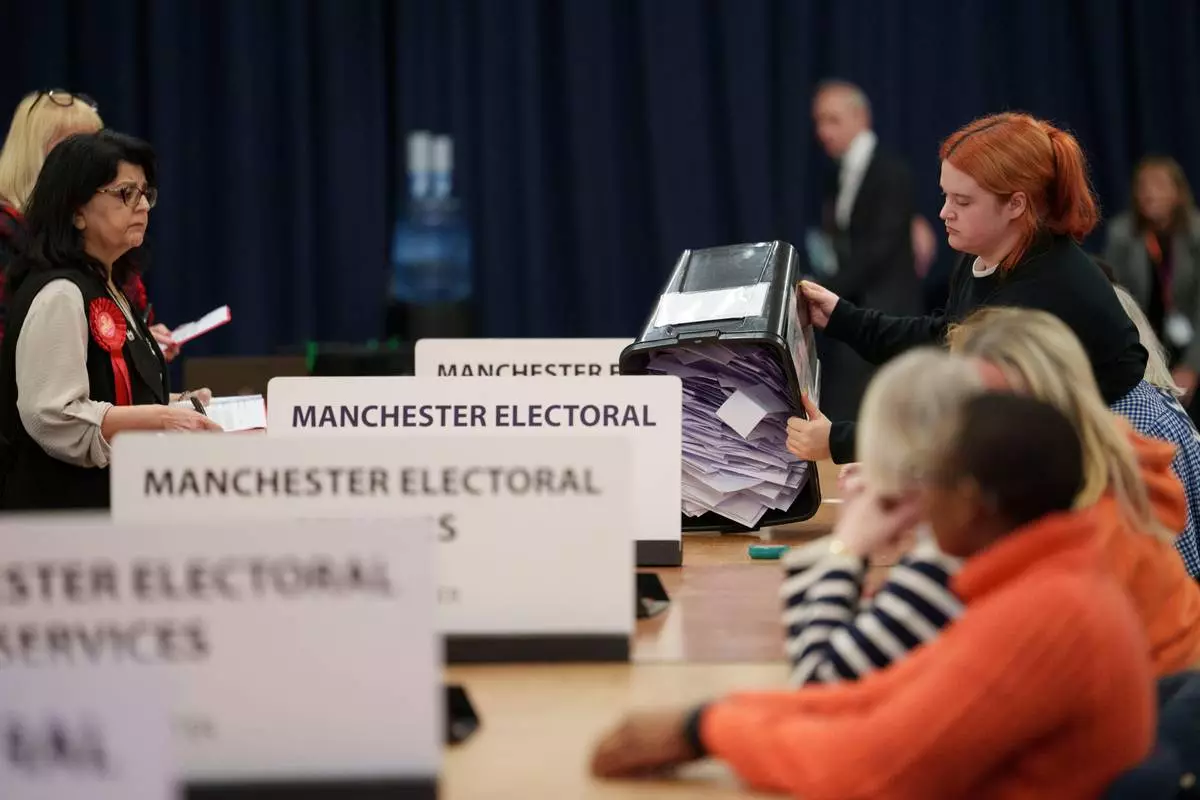
The count begins after voting ends in the Gorton and Denton by-election, Manchester, England, Thursday, Feb. 26, 2026. (AP Photo/Jon Super)

The count begins after voting ends in the Gorton and Denton by-election, Manchester, England, Thursday, Feb. 26, 2026. (AP Photo/Jon Super)

The Green Party candidate Hannah Spencer speaks after winning the Gorton and Denton by-election, Manchester, England, Friday, Feb. 27, 2026. (AP Photo/Jon Super)

The Green Party candidate Hannah Spencer speaks after winning the Gorton and Denton by-election, Manchester, England, Friday, Feb. 27, 2026. (AP Photo/Jon Super)

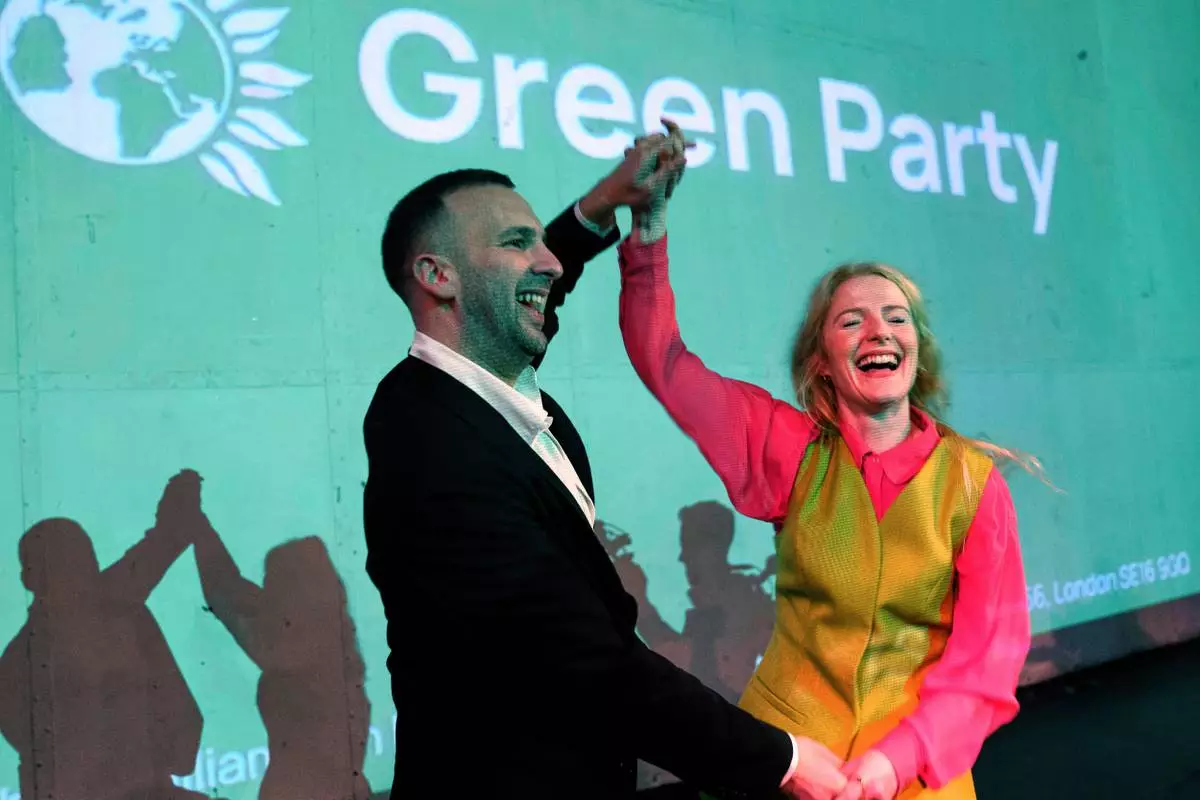
CORRECTS DATE - Greens Party candidate Hannah Spencer, left, stands with party leader Zack Polanski after winning the Gorton and Denton by-election, Manchester, England, Friday, Feb. 27, 2026. (AP Photo/Jon Super)

CORRECTS DATE - Greens Party candidate Hannah Spencer, left, stands with party leader Zack Polanski after winning the Gorton and Denton by-election, Manchester, England, Friday, Feb. 27, 2026. (AP Photo/Jon Super)

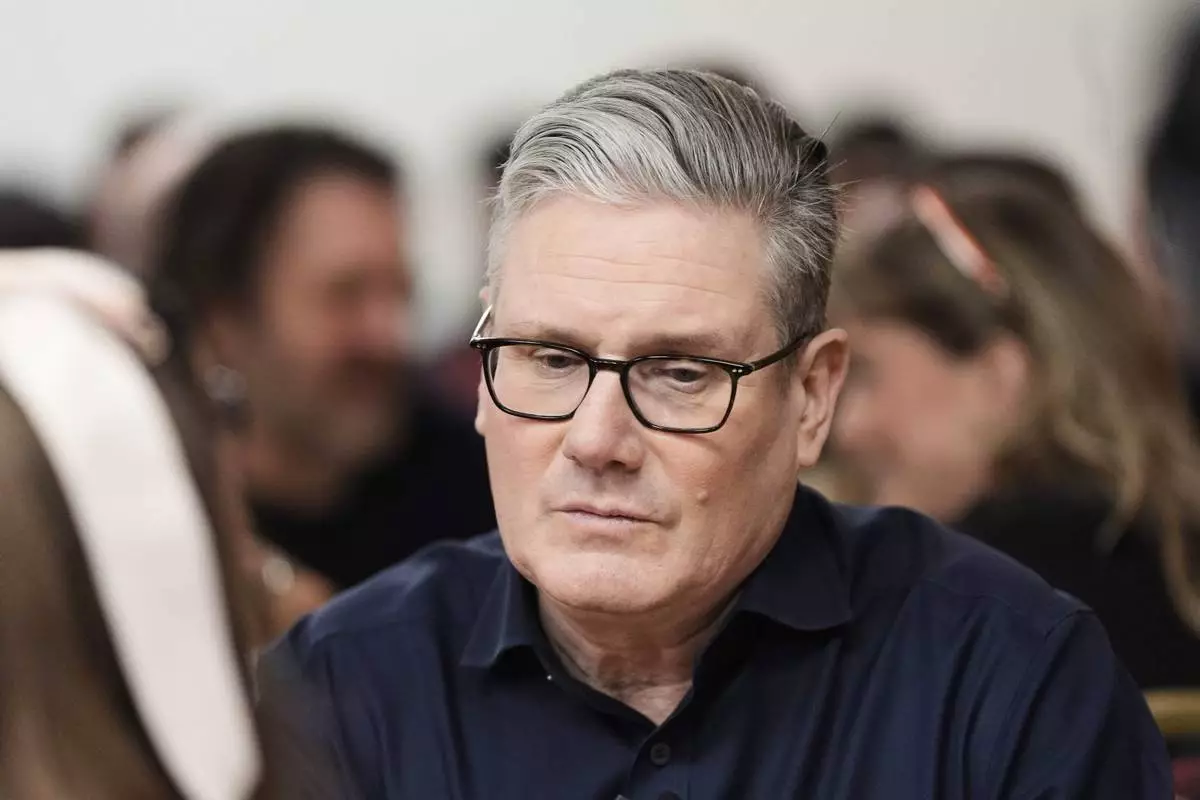
Britain's Prime Minister Keir Starmer meets local party members, in London, Friday, Feb. 27, 2026. (Stefan Rousseau/PA via AP)

Britain's Prime Minister Keir Starmer meets local party members, in London, Friday, Feb. 27, 2026. (Stefan Rousseau/PA via AP)

Green Party candidate Hannah Spencer, right, celebrates with party leader Zack Polanski at a volunteer thank you event after winning the Gorton and Denton by-election, Manchester, England, Friday, Feb. 27, 2026. (AP Photo/Jon Super)

Green Party candidate Hannah Spencer, right, celebrates with party leader Zack Polanski at a volunteer thank you event after winning the Gorton and Denton by-election, Manchester, England, Friday, Feb. 27, 2026. (AP Photo/Jon Super)

Recommended Articles