Without federal legislation codifying rules on athlete compensation and eligibility or an entirely new structure, there is likely no end in sight for the stream of lawsuits being filed by schools and athletes looking out for their interests in college athletics.
Duke and Cincinnati have filed lawsuits demanding their quarterbacks pay damages for allegedly breaching revenue-sharing contracts when they entered the transfer portal. Washington made the same argument and threatened legal action against its quarterback before he acquiesced and returned to the Huskies.
A parade of athletes, starting with Vanderbilt quarterback Diego Pavia in 2024 and continuing with Virginia's Chandler Morris this week, have filed lawsuits challenging eligibility rules and seeking to extend the number of years they can compete — and earn money — in college.
University of Illinois labor and sports law professor Michael LeRoy recalled this week that the House vs. NCAA settlement, which allowed schools to directly pay athletes, was hailed by college sports leaders as the beginning of an era of stability.
“That," LeRoy said, "has been a spectacular miscalculation.”
In 2021, when college athletes began getting paid by third parties for use of their name, image and likeness, the thought was that most deals would give athletes a little pocket money. No one could foresee the life-changing money available to top athletes in 2026 through revenue sharing and NIL deals.
The rationale for athletes wanting to stay in school is to extend their window for making money, and the opportunity to make more money is the reason athletes walk away from rev-share contracts with their schools.
It would seem straightforward that if an athlete signed a rev-share contract requiring them to pay liquidated damages if they leave the school before the end of the contract, that provision would be enforceable.
It's not that simple.
“As a general matter of contract law, liquidated damages are typically enforced to the extent they are considered a good-faith effort to estimate a loss to one of the parties in case of a breach. They are not supposed to be punitive in nature,” said Andrew Hope, a Philadelphia attorney who specializes in contract law and works with schools on NIL matters.
Revenue-sharing contracts pay athletes for their NIL rights, not athletic performance. Hope said athletes argue liquidated damages provisions don't accurately reflect a loss in the value of their NIL to the school simply because they transferred or are seeking a transfer. The schools, of course, argue otherwise.
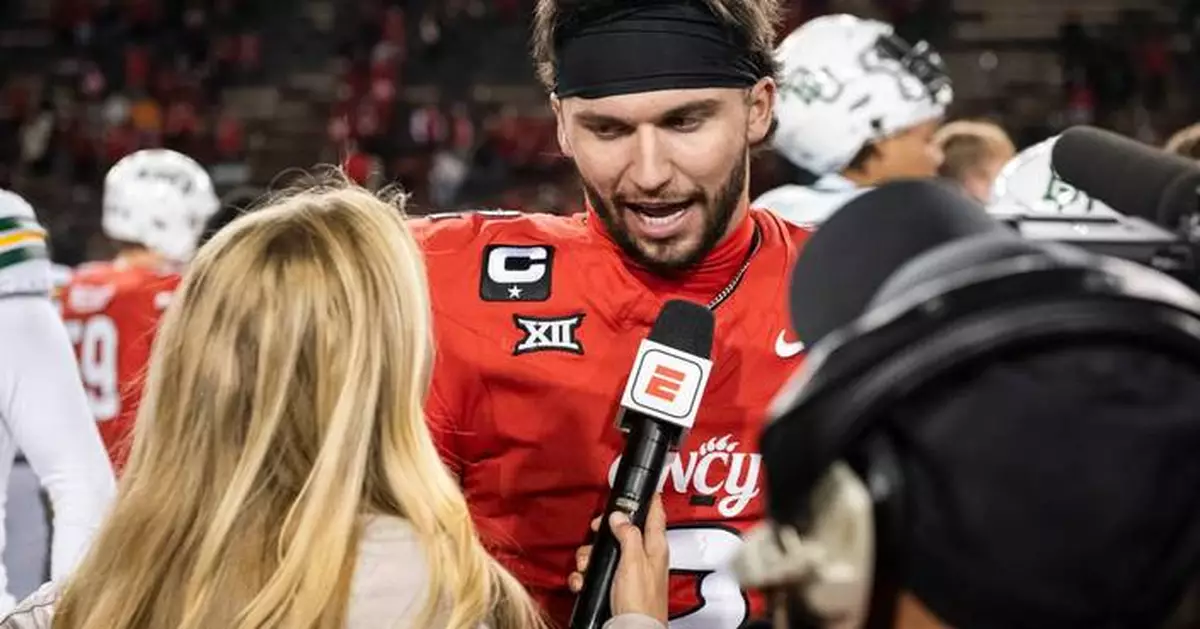
Duke filed a lawsuit seeking to block quarterback Darian Mensah from transferring and reaching a contract with another school, and a negotiated settlement was announced a week later. Cincinnati filed a lawsuit against quarterback Brendan Sorsby demanding he pay $1 million in damages for not fulfilling the second year of his two-year contract. He transferred to Texas Tech.
Sports attorney Mit Winter, based in Kansas City, Missouri, predicted most of the contract disputes will end up with negotiated settlements. He said neither the school nor athlete will want to go through the time and expense of a court battle.
Hope noted that in a traditional employee contract, a non-compete clause would force the athlete to pay damages.
“But you can’t have that,” he said, “because these students aren’t employees.”
The way Winter sees it, one of three things must happen to stop the lawsuits seeking eligibility beyond the traditional four-seasons-over-five years window.
One would be a federal law giving the NCAA an antitrust exemption. The eligibility lawsuits argue the NCAA is limiting economic opportunities by placing a limit on how long someone can make money as a college athlete. The SCORE Act in Congress would provide the antitrust exemption, but the bill's future is in doubt.
Winter said the U.S. Supreme Court could uphold the NCAA's eligibility rules. It should be noted, though, that the high court ruled 9-0 against the NCAA in 2021 in the NCAA vs. Alston case. Justice Brett Kavanaugh famously wrote the NCAA's rules probably would no longer hold up well in future antitrust challenges and added, "The NCAA’s business model would be flatly illegal in almost any other industry in America.”
LeRoy said the NCAA's case for an antitrust exemption is further weakened by the emergence of private equity firms' interest in college athletics.
“The eligibility disputes really come down to: Do you characterize the market for college players as people seeking a degree while concurrently playing a sport? That’s the NCAA's view," LeRoy said. "But courts more often than not accept the players’ characterization that it’s a market for athletic services, it’s commercial in nature. If a court uses the word ‘commercial,’ it’s over for the school and the NCAA.”
Winter said the third solution would be for eligibility rules to be collectively bargained, which would require athletes to be considered employees and unionized.
Winter predicted football and men's and women's basketball players in the Power Four conferences eventually will be considered employees.
“There are more and more people in college athletics who are getting behind an idea like that — some athletic directors and for sure some coaches," he said. “The NCAA itself is still opposed to it. It’s always possible the schools break off from the NCAA and do their own thing.”
If the Power Four, or just the powerful Big Ten and Southeastern conferences, broke away from the NCAA in football and basketball, collective bargaining would settle issues about length of eligibility, whether athletes with professional experience can return to play in college and a host of others that have become gray areas for the NCAA.
This version corrects spelling of Brendan Sorsby's first name.
AP college sports: https://apnews.com/hub/college-sports
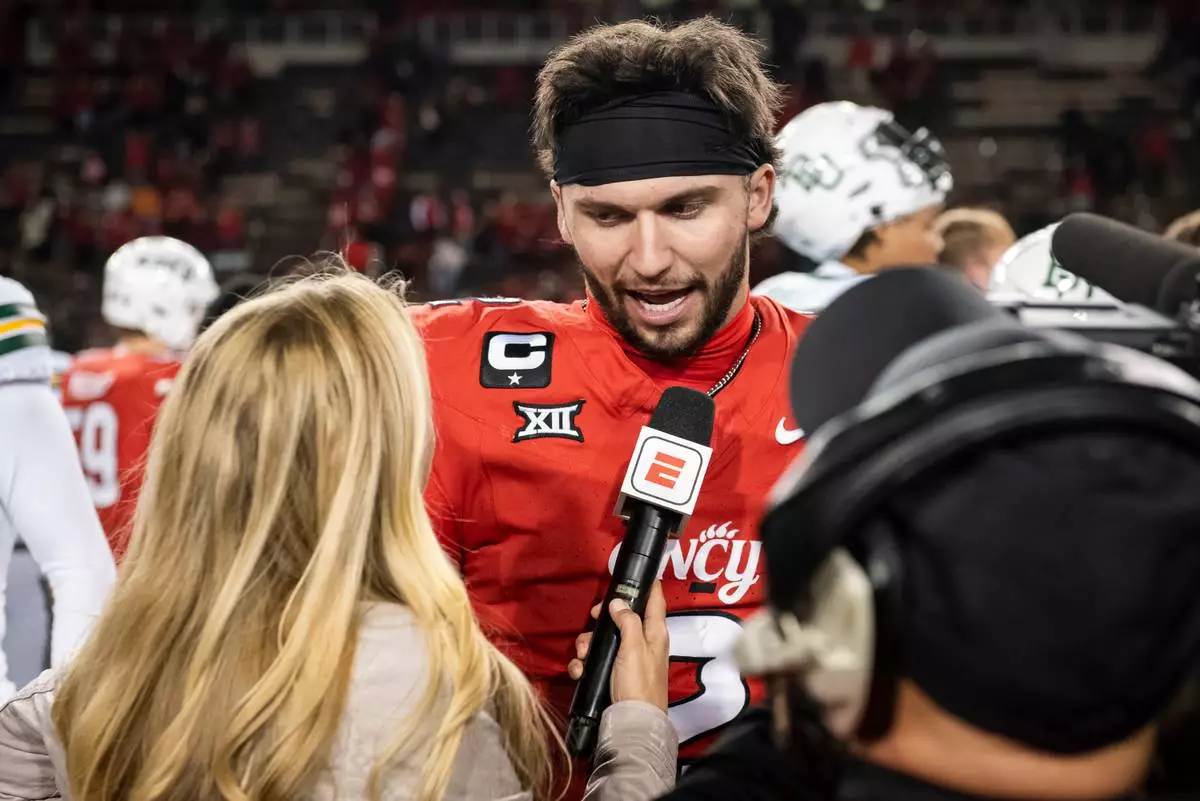
FILE - Cincinnati quarterback Brendan Sorsby (2) is interviewed after a NCAA college football game against Baylor, Saturday, Oct. 25, 2025, in Cincinnati. (AP Photo/Tanner Pearson,File)