MIAMI (AP) — A stolen boat, with 10 people aboard, loaded with weapons, departs the Florida Keys but gunfire erupts before reaching Cuba. The explanation, according to the Cuban government, is the men aboard were terrorists who wanted to infiltrate the country.
The fatal shooting broke out Wednesday amid heightened tensions between the U.S. and Cuba. The ouster of Venezuelan President Nicolás Maduro has led the Trump administration to take a more aggressive stance toward the country's longstanding ideological nemesis in Latin America. It shines fresh attention on the deep-rooted freedom movement among Cuban exiles in south Florida, including some fringe elements who have long sought a violent overthrow of the island's communist leadership.
Armed raids, provocative publicity stunts and protests blurring the lines of legality stretch back decades in the Florida straits. Many of them are led by hard-liner exiles, some who fought in Fidel Castro's guerrilla army that took power in 1959 before breaking ranks when the popular leader converted Cuba into a Soviet satellite.
But such confrontational tactics have faded since the Cold War, leaving many in Miami to speculate the armed incursion was a fabrication of Cuba’s intelligence agencies.
“Cuban Americans today are, whether on the left or on the right, really focused on trying to influence U.S. policy rather than thinking that somehow paramilitary action by small groups are gonna overthrow the Cuban government," said William LeoGrande, an American University government professor who specializes in Cuba.
The shooting left four dead and many questions. Cuba’s government said most of the people on the boat were violent criminals. U.S. Secretary of State Marco Rubio, who rose to prominence surrounded by the Cuban exile politics of Miami, was quick to cast doubt on the Cuban account, saying that the U.S. would investigate what he described as a “highly unusual” sea shootout.
Late Friday, top officials with Cuba’s Ministry of the Interior unveiled the items they said were aboard the boat, including a dozen high-powered weapons and more than 12,800 pieces of ammunition.
The counter-revolutionary groups — with names like Alpha 66 and Omega 7 — were always small in number but were at their strongest in the 1970s and ’80s. Their influence receded as the Reagan administration arrested their leaders for violent attacks on U.S. soil, like an assassination plot targeting Castro during his 1979 visit to the United Nations and the shooting death a year later of a Cuban diplomat in New York.
Antonio Tang joined Alpha 66 shortly after fleeing Cuba and going into exile in Canada in 1981.
He trained in weapons and guerrilla tactics with the volunteer group at a camp in the Everglades called Rumbo Sur — Direction South. Many of its actions were over before they started, he said.
“We were kind of amateurs — and no match for the Cuban military and interior ministry,” said Tang. “They always knew in advance what we were doing. Many folks ended up in jail.”
Ernesto Díaz, deputy secretary general of Alpha 66, described the 10 men as martyrs.
“It is an act of compassion for a Cuban people who are suffering,” Diaz, 86, said. “It was a sacrifice that has demonstrated the nobility and sensitivity towards freedom in Cuba.”
Former Cuban intelligence officer Enrique Garcia said a well-funded Cuban intelligence department — called Q-2 — spent decades co-opting armed resistance groups. In some cases, Cuban agents would fund weapon purchases and drive unsuspecting exiles into plots.
Agents infiltrated Brothers to the Rescue, which lost four members in 1996 when Cuban fighter jets shot down their airplanes in the Florida straits.
“This strategy —seemingly still in place— sought to portray the Cuban exile community as extremist and link the U.S. government and agencies to such activities,” said Garcia, who defected to the U.S. in 1989. “The U.S. intelligence community is aware and must have documented in its archives that this was a permanent modus operandi of the Cuban intelligence service.”
Garcia said he can’t remember any covert act of the sort Cuba has denounced in at least three decades.
He also finds the timing of the attack suspicious. The Trump administration has asserted almost unprecedented pressure on Havana to open its economy and relinquish almost seven decades of single-party rule.
Marina Luz Padron, whose ex-husband, Hector Cruz Correa, was among those reported killed, appealed for privacy as the family mourns. She described her ex-husband as an excellent father to their 4-year-old child, who still hasn’t been told about his fate.
“If he went to Cuba it was because he wanted freedom for his country,” Padron told The Associated Press in a brief interview.
Other family members spoke to Spanish language influencers in Miami describing their loved ones as peaceful and far removed from what Cuban officials denounced as a “terrorist” incursion.
Ibrahim Bosch, president of the Republican Party of Cuba, another exile group, said that Michel Ortega Casanova, one of those killed, was the leader of his party in Tampa for a while until he requested to be replaced so he could spend more time to with his family.
“He was an excellent person, very hardworking, very dedicated to his family,” Bosch said. “He always had the hope of freedom for Cuba.”
But Florida resident Misael Ortega Casanova said his brother — an American citizen who has lived in the U.S. for more than 20 years and still agonizes over the suffering that Cubans endure — was on an “obsessive and diabolical” quest for Cuba’s freedom.
“They became so obsessed that they didn’t think about the consequences nor their own lives,” Misael told The Associated Press.
Catalini reported from Morrisville, Pennsylvania.
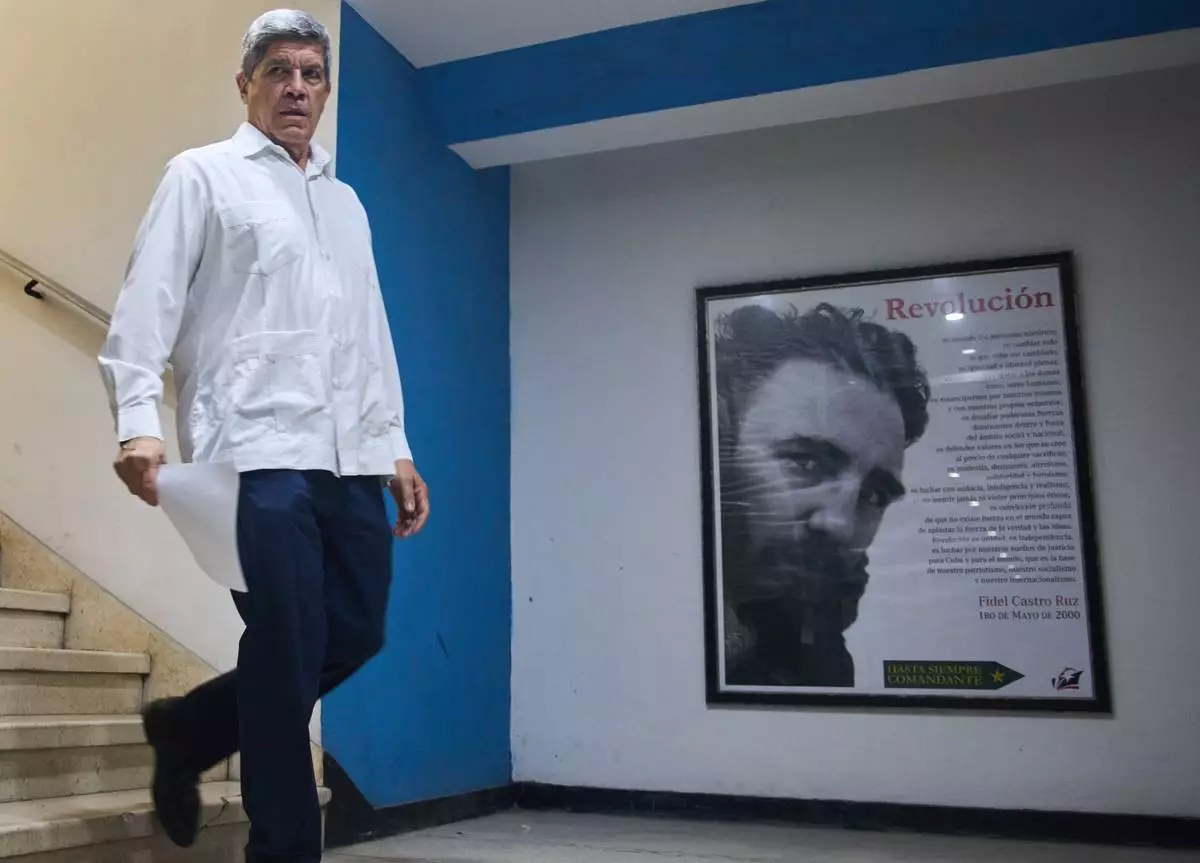
Cuba's Deputy Foreign Minister Carlos Fernandez de Cossio walks to give a declaration about a deadly boating shooting in Cuba waters, in Havana, Thursday, Feb. 26, 2026. (AP Photo/Ramon Espinosa)
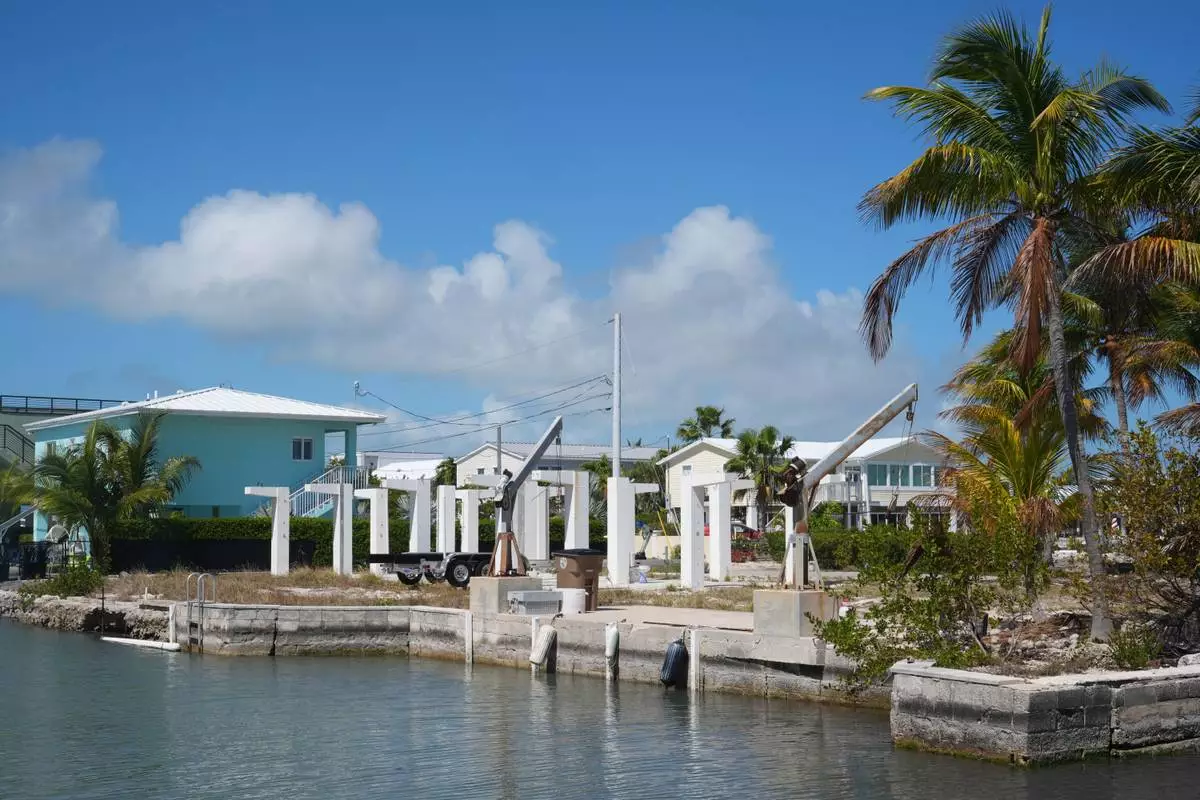
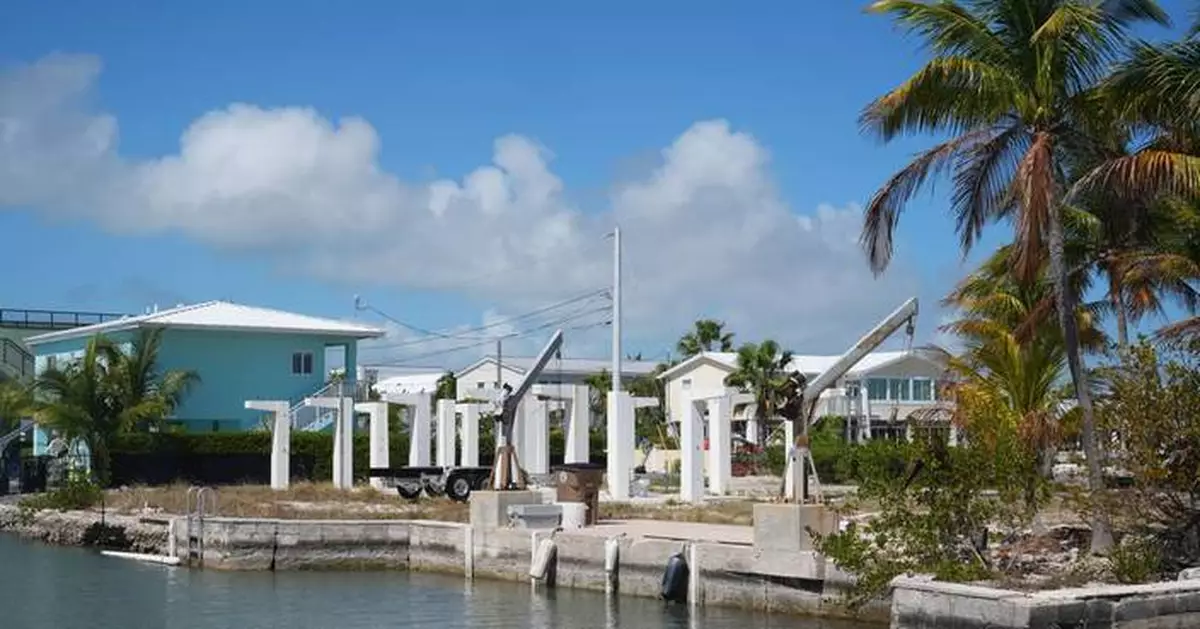
The dock where a 1981 Pro Line boat was reported stolen from the Florida Keys Friday, Feb. 27, 2026. (AP Photo/Marta Lavandier)
OMAHA, Neb. (AP) — The fate of Nebraska's “blue dot” — a small, but significant factor in presidential politics — will take center stage Tuesday as Democratic voters select a congressional nominee in the state's high-profile 2nd District.
The Omaha-area district, where Republican U.S. Rep. Don Bacon is retiring, is one of the Democratic Party's biggest targets this midterm season. It's also a national focus every four years in presidential contests because Nebraska is one of just two states that splits its electoral votes. The 2nd District has gone to Democratic presidential candidates three out of five times since 2008 — a “blue dot” in an otherwise sea of red.
Three Democrats are seen as the top contenders in Tuesday's primary: state Sen. John Cavanaugh, political activist Denise Powell and district court clerk Crystal Rhoades. Republican Brinker Harding, an Omaha City Council member endorsed by President Donald Trump, is running unopposed on the GOP side.
Cavanaugh, more than anyone else on Tuesday's ballot, has been under attack from both parties.
Some Democratic opponents argue that a primary victory for Cavanaugh would jeopardize the district's “blue dot” status because he'd be leaving his valuable state legislative seat, making it easier for Republicans in the Nebraska Legislature to change the law that allows the state to split its electoral votes.
The issue has defined the primary contest perhaps more than any other.
The Democratic argument against Cavanaugh has little to do with his politics or policies.
His opponents and groups backing them have flooded mailboxes, airwaves and social media warning that if he wins the congressional primary, Nebraska's Republican governor would appoint a conservative Republican to replace him in the Legislature.
That move, they say, could give state Republicans enough votes to enact a conservative wish list that includes stricter limitations on abortion and transgender rights.
It could also empower Republicans to enact midcycle redistricting or change the state's unusual system of splitting presidential electoral votes, some Democrats argue. Republicans failed in 2024 to pass a bill that would have made Nebraska the 49th state to award its Electoral College votes on a winner-take-all basis.
“Our Blue Dot. We fought hard for it. But if John Cavanaugh goes to Congress, it could all fall down,” cautions one TV ad by the super PAC New Democrat Majority.
EMILY’s List, a national group that supports women running for office, has put its reach and money behind Powell, calling Cavanaugh’s candidacy “a gift to MAGA Republicans.”
Republican groups have sent out mailers and social media posts claiming Cavanaugh “is in agreement with President Donald Trump” and showing a photo of Cavanaugh overlaid on a photo of the president, making it appear as if the two are standing together.
“Clearly, the Republicans know that I’m the strongest general election candidate,” Cavanaugh said. “And so they’re trying to hurt me.”
The attacks on Cavanaugh show Democrats and Republicans believe he has the best chance of winning the general election, said Paul Landow, a former Nebraska Democratic Party executive director.
He called the “blue dot” attacks disingenuous, noting Republicans already have a filibuster-proof majority in the Legislature but have still failed to pass key elements of their agenda because it is unpopular even among GOP lawmakers. The argument that a Cavanaugh win could weaken the state’s “blue dot” also assumes Democrats won’t pick up additional legislative seats this year, he said.
“There’s so many things that have to fall into place for this alleged danger to the ‘blue dot,’” Landow said. “It’s just wild speculation.”
While all the Democratic contenders cite affordability and opposition to Trump administration policies — from immigration and healthcare to military actions — the top three contenders began attacking one another more aggressively in the days leading up to the primary.
Candidates and allied groups have spent more than $2.6 million on TV and digital advertising since Jan. 1, according to the advertising tracking company AdImpact. Nearly all of that has been by or on behalf of Cavanaugh and Powell.
Cavanaugh has spent about $375,000. Powell's campaign has spent almost as much — $345,000 — but with the help of groups backing her, campaign advertising has been overwhelmingly pro-Powell.
Powell co-founded Women Who Run Nebraska, a political action committee that supports progressive female candidates, and she has a decade of Democratic political activism. She's never held office but said her deep connections have helped her with independents and third-party voters who make up nearly 30% of the district's electorate.
“My name recognition has increased dramatically,” Powell said, adding that "people are really connecting with my message.”
Rhoades carries her own name recognition after 20 years in public service and running a slew of successful local Democratic elections — including that of Omaha Mayor John Ewing, who unseated a longtime Republican last year. Rhoades has raised a fraction of what Cavanaugh and Powell have amassed, but said she's intentionally eschewing campaign ads and instead blanketing the city with door-knocking and personal contact with voters.
Both Powell and Rhoades have leaned heavily into the concern that Democrats' influence in the district will erode if Cavanaugh is elected to Congress.
The winner of Tuesday's primary will head to a highly competitive general election. Trump won the district in 2016, and the retiring Bacon, who has clashed with Trump, has held the House seat for five terms.
Also on Tuesday's ballot is the race for U.S. Senate, where Republican incumbent Pete Ricketts is seeking a full term, following his 2023 appointment and 2024 special election victory to replace Republican Ben Sasse.
Ricketts faces four Republican primary challengers, but he’s already looking ahead to an expected general election contest against independent candidate Dan Osborn, an industrial mechanic and military veteran who came within 7 points of defeating Republican U.S. Sen. Deb Fischer in her 2024 reelection bid. Running in the Democratic primary are William Forbes and Cindy Burbank.
In the race for governor, incumbent Republican Gov. Jim Pillen faces five primary challengers, while former state Sen. Lynne Walz and frequent candidate Larry Marvin compete for the Democratic nomination. Marvin previously ran for U.S. Senate four times since 2012.
Peoples reported from New York.
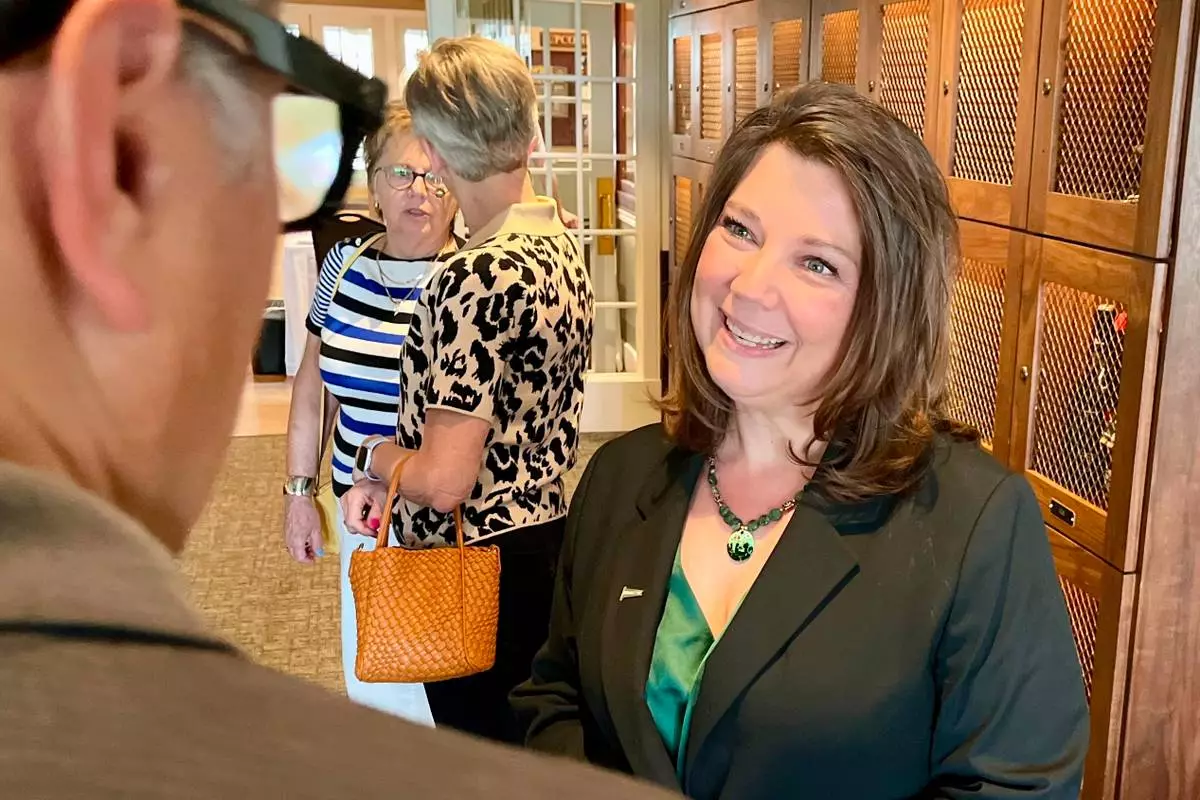
District county clerk Crystal Rhoades speaks at a fundraising event Thursday, April 16, 2026, in Omaha, Neb. (AP Photo/Margery A. Beck)
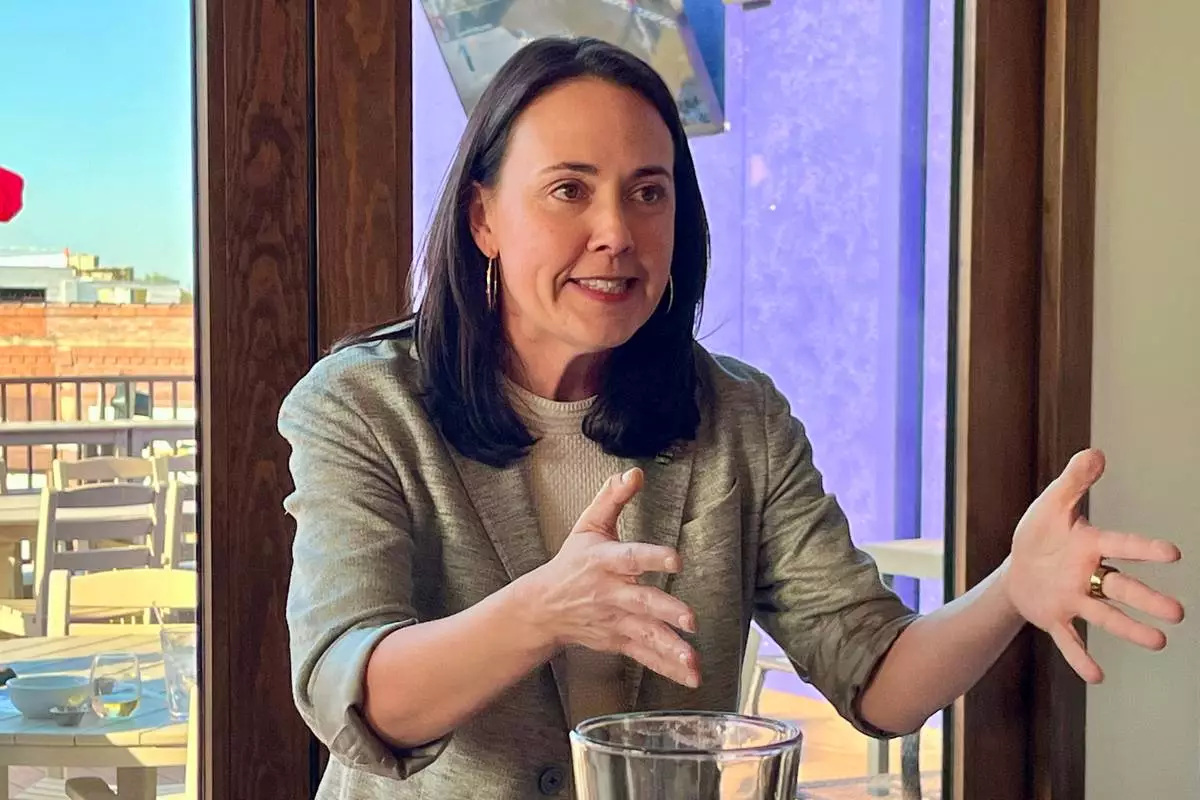
Political activist Denise Powell speaks at a fundraising event Thursday, April 16, 2026, in Omaha, Neb. (AP Photo/Margery A. Beck)
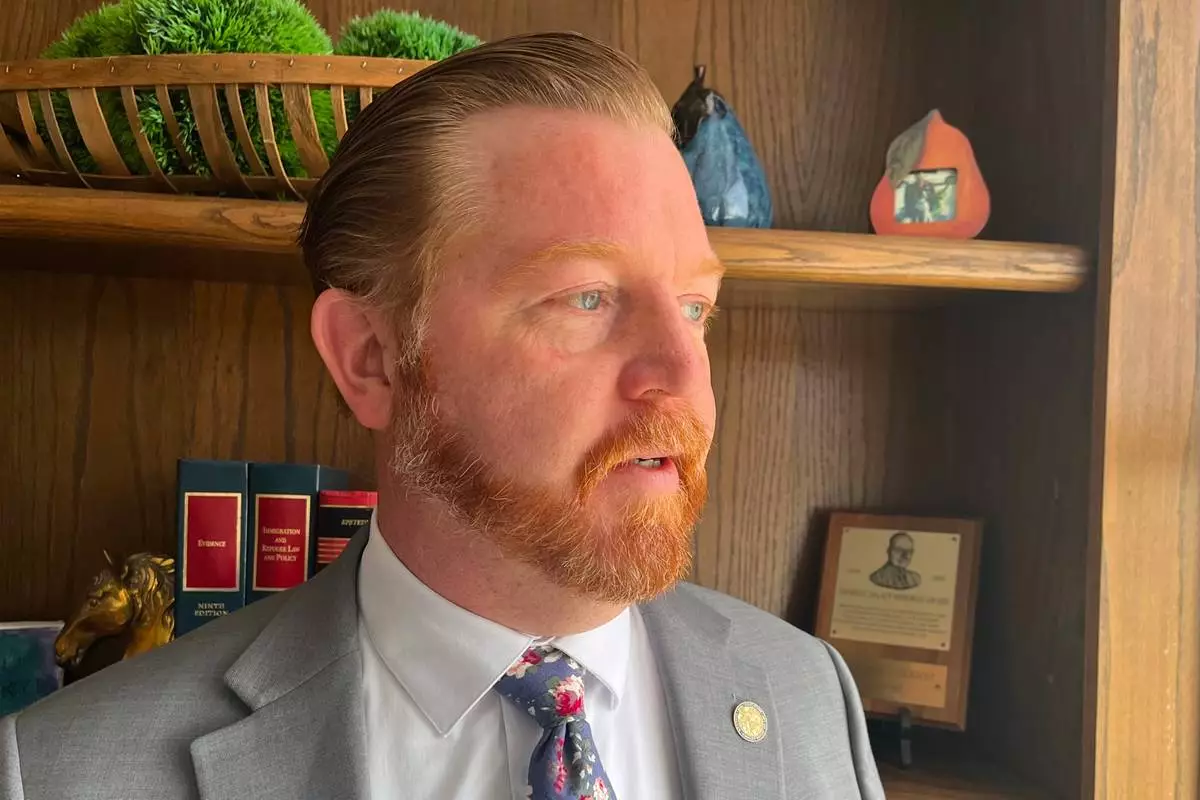
State Sen. John Cavanaugh speaks at an office in Lincoln, Neb., Friday, April 10, 2026. (AP Photo/Margery A. Beck)